
Store-bought emergency food gets you through the first month. Preserving your own harvest — from the garden, the orchard, or the bulk aisle — is what carries a household through a whole season or longer. Every method below trades time, money, and shelf life differently. Here’s the honest breakdown.
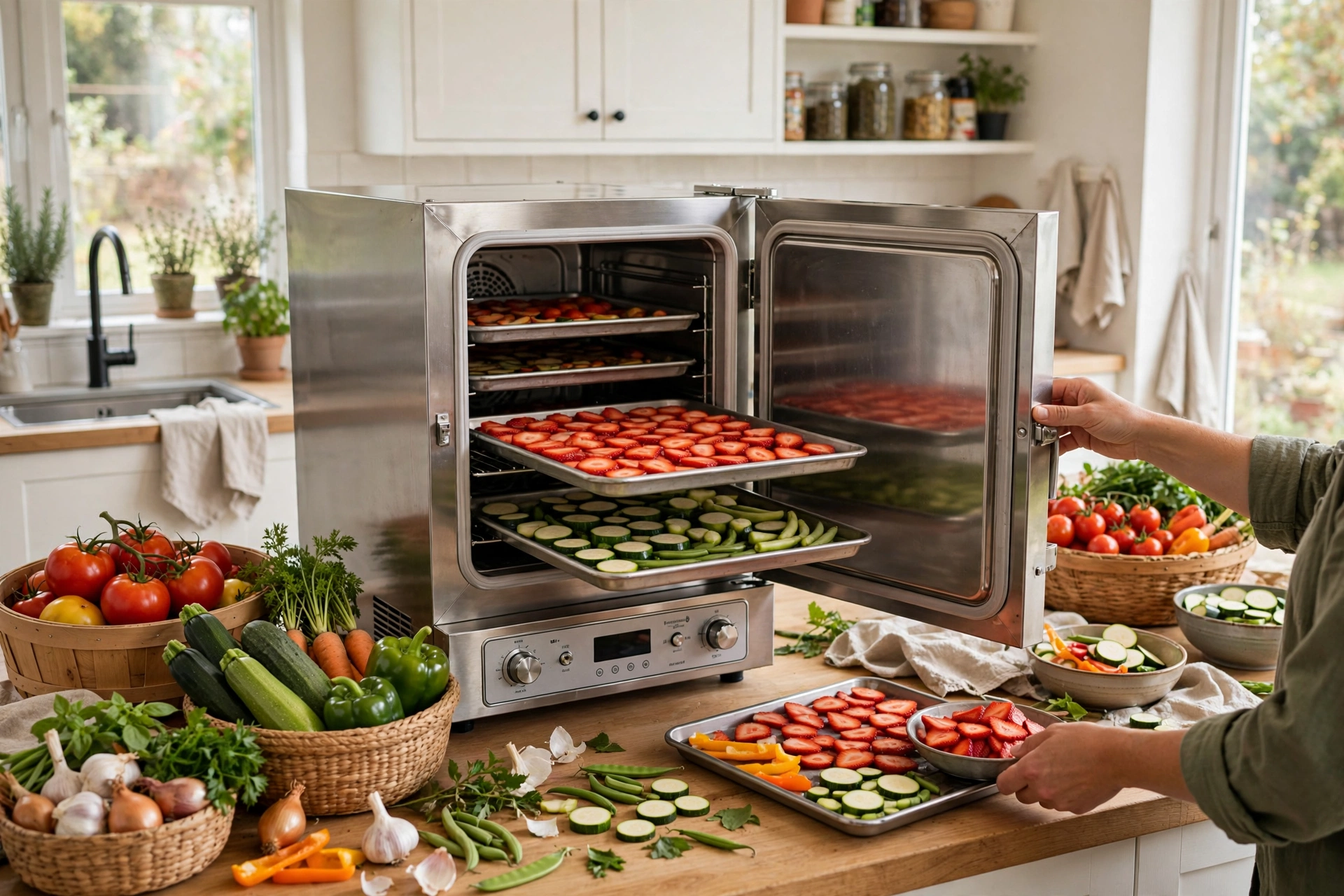
Freeze Drying at Home
The gold standard. A home freeze dryer removes 98%+ of moisture while keeping up to 97% of nutrition, and properly packed food lasts 25 years. It’s also the priciest entry point — quality machines run $1,600 to $4,000 — but the math works if you run it regularly: bulk produce and meat at sale prices, dried and stored, beats buying pre-made kits dollar for dollar within a couple of years. Read our full freeze dryer comparison: Harvest Right vs Blue Alpine vs Stay Fresh.
Dehydrating
The budget workhorse. A $60–$300 dehydrator handles fruits, vegetables, jerky, and herbs. Shelf life is shorter than freeze-dried (6–12 months typically, longer with vacuum sealing), and texture changes more — but for garden surplus it’s unbeatable value.
Pressure Canning
The only safe way to can low-acid foods — meats, soups, beans, vegetables. A quality pressure canner is a one-time purchase that lasts decades, and home-canned food keeps 2–5 years. The learning curve is real but short, and the USDA guidelines are clear.
Fermenting
Sauerkraut, kimchi, pickles, hot sauce. Fermentation needs almost no equipment — jars, salt, and time — and produces food that’s arguably more nutritious than fresh. Shelf life is months under refrigeration, longer with proper canning after fermenting.
Smoking & Curing
For meat preservation with flavor as the bonus. Electric smokers have made this accessible; curing salts and proper technique handle the safety side. Jerky, summer sausage, and smoked fish all keep for months.
Vacuum Sealing & Mylar Storage
The finishing step for almost every method above. Oxygen is the enemy of shelf life — vacuum sealers, mylar bags, and oxygen absorbers are cheap insurance that multiply the life of everything you preserve.
Where to Start
New to all of this? Start with our Food & Water Planner to figure out how much your household actually needs, then read how to build the right shelf before you buy a single jar. And see how we rate every product we review — no paid placements, ever.
Equipment reviews for freeze dryers, dehydrators, pressure canners, and vacuum sealers are in testing now.