Every food plan has an end date — unless you can grow more. Heirloom seeds are the only “food storage” that multiplies: one packet becomes a garden, becomes next year’s seed, indefinitely. That’s why serious preservers keep a seed vault next to their food buckets.
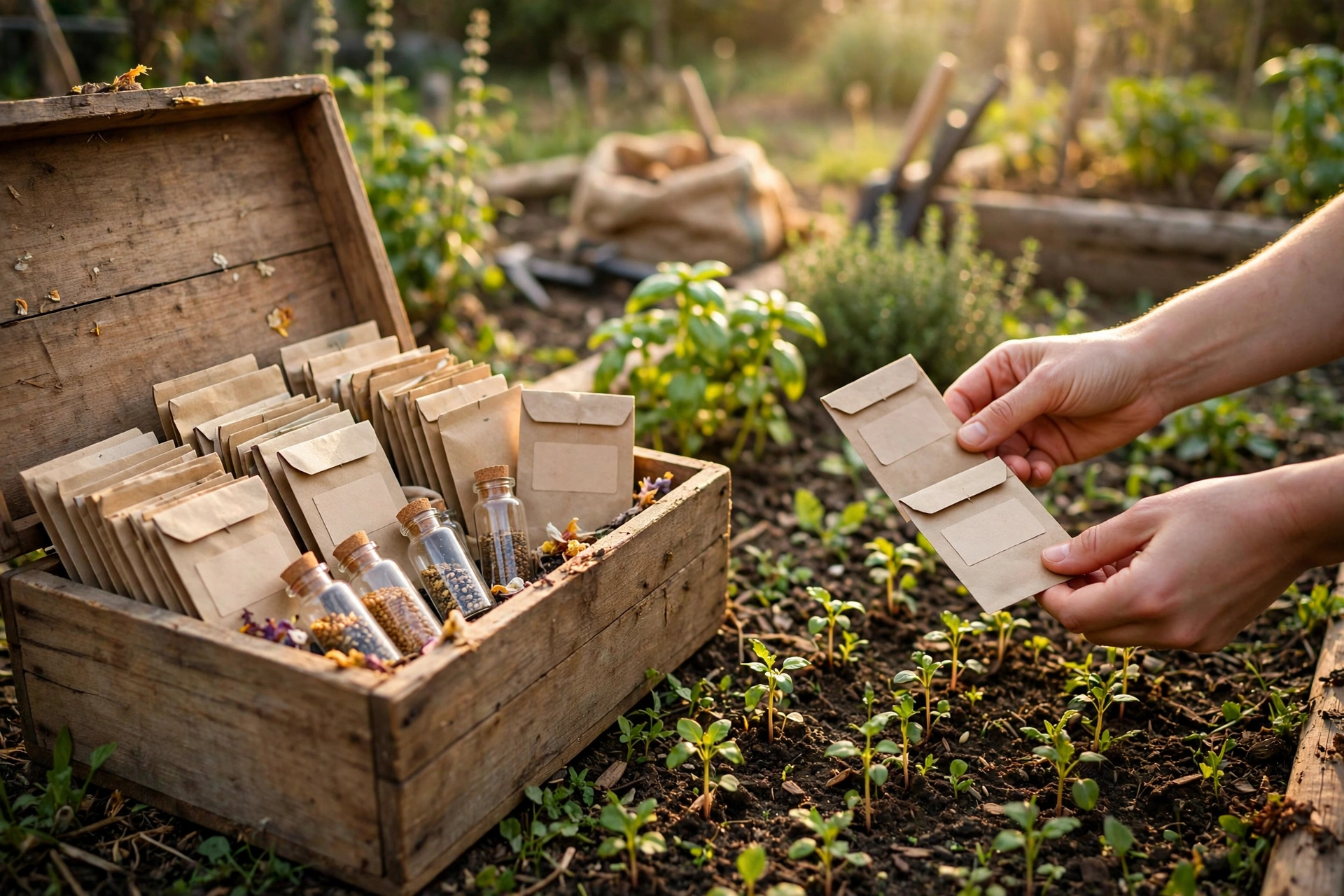
Why Heirloom, Not Hybrid
Hybrid seeds don’t grow true — save their seeds and you get unpredictable offspring. Heirloom (open-pollinated) varieties breed true, so the seeds you save this year plant next year’s garden. For preservation purposes, heirloom isn’t a preference, it’s a requirement.
What Makes a Good Seed Vault
- Variety count vs. usefulness — 50 varieties sounds impressive until half won’t grow in your climate. Match varieties to your growing zone.
- Seed count per variety — enough for multiple plantings plus failures, because failures happen
- Packaging — moisture-proof, ideally with germination rates printed and dated
- Germination rates — reputable sellers test and publish them; 85%+ is the bar
- Storage life — most vegetable seeds keep 3–5 years in cool, dry, dark conditions; some (onions) fade faster, some (tomatoes) last a decade
Storing Seeds Long-Term
Cool, dry, dark, airtight. A mason jar with a desiccant pack in the back of a closet beats a fancy vault in a hot garage. We’ll publish the full storage protocol with germination testing data.
Growing What You Store
The most overlooked step: grow your vault varieties now, while mistakes are cheap. A seed you’ve never planted is a gamble; a variety you’ve grown three seasons running is a plan.
Seed vault reviews with germination testing are in progress. Meanwhile, plan your food needs with our Food & Water Planner.