
Affiliate Disclosure: Truly Preserved is reader-supported. When you buy through links on this page, we may earn a commission at no extra cost to you. As an Amazon Associate, Truly Preserved earns from qualifying purchases. Learn more.
Clean water is the other half of food preparedness — and the filter market is full of big claims and fine print. This comparison is built from published specs, current prices, certifications, and aggregated owner feedback from review sites, forums, and long-term ownership reports. We don’t own these filters; we did the homework so you can see the full picture before spending.
The Short Version
- Best for home preparedness: Berkey Big Berkey ($367). No power, no plumbing, works on raw water, and the cheapest cost per gallon of any home system. Read the caveats below before buying — they’re real.
- Best budget pick: Sawyer Squeeze (~$30). A 3-ounce go-bag classic with a near-infinite filter life. Not a home system on its own — pair it with one.
- Best portable purifier: GRAYL GeoPress ($100). The only portable here that handles viruses — built for travel, not daily home use.
- Best certified purity: AquaTru Classic ($375 on sale). The most lab-certified contaminant removal of the group — but it needs electricity, so it’s dead in a power outage.
- Best cheap entry: ZeroWater 12-cup (~$35). Verified lead and PFAS removal for under $40 — but the most expensive long-term option here. Renters, take note.
Head-to-Head Specs
| Filter | Price | Capacity | Filter life | Cost per gallon | Needs power? |
|---|---|---|---|---|---|
| Berkey Big Berkey | $367 | 2.25 gal | ~6,000 gal/pair | ~2–3¢ | No |
| AquaTru Classic | $375 (sale) | 0.75 gal tank | ~6 mo / ~130/yr | ~22–26¢ | Yes |
| LifeStraw Home Studio | $65 | 7 cups | 264 gal membrane; carbon every 2 mo | ~17–21¢ | No |
| ZeroWater 12-cup | ~$35 | 12 cups | 20–40 gal (2–4 wks) | ~38–75¢ | No |
| GRAYL GeoPress | $100 | 24 oz | 65 gal / 350 presses | ~46¢ | No |
| Sawyer Squeeze | ~$30 | On demand | Up to 100,000 gal | A fraction of a cent | No |
Prices and specs from manufacturer and retailer listings, October 2026. Always confirm before buying.
Berkey Big Berkey: The Off-Grid Standard (With Caveats)
Our score: 7/10 — the off-grid standard with the cheapest cost per gallon of any home system here — held back by the certification questions and the element-supply fight detailed below.
The Big Berkey is the name everyone knows in preparedness circles: a 2.25-gallon stainless gravity system that needs no power and no plumbing. Black Berkey elements claim to remove 200+ contaminants — bacteria, viruses, lead, pharmaceuticals, PFAS, microplastics — while keeping minerals. At roughly 2–3 cents per gallon, it’s the cheapest home-system water you’ll find.
What owners love: no electricity or plumbing, stainless durability, great taste, and filters that last years. What they complain about: slow flow compared to electric systems, fiddly priming of new elements, and the premium upfront price.
The caveats, honestly: Berkey systems are not NSF-certified as a system — you’re trusting the manufacturer’s own test data. Independent testing has challenged the fluoride-removal claims when using the PF-2 add-on filters. And in September 2026, a federal appeals court declined to pause the EPA’s stop-sale order on Black Berkey elements (the dispute is over whether the silver in the elements makes them a regulated “pesticide” — Berkey says it’s a labeling fight, not a safety one). Practical upshot: standalone Black Berkey elements sold online right now are likely counterfeit; Berkey is transitioning to a sanctioned replacement called the Phoenix Element.
Buy it if: you want grid-down water security with the lowest operating cost. Skip it if: you need third-party-certified contaminant removal, or the element-supply uncertainty bothers you.
Check the current price on Amazon →
AquaTru Classic: The Most Certified Purity
Our score: 9/10 — the most lab-certified contaminant removal in this group, with zero installation. It only loses points for needing electricity.
AquaTru is countertop reverse osmosis with no installation — and the most certified contaminant removal in this group: IAPMO-certified to NSF/ANSI standards 41, 53, 58, 401, and P473, covering 84 contaminants including lead, PFAS, fluoride, and chromium-6. If “prove it in a lab” is your standard, this is the one.
What owners love: best-in-class certified filtration, excellent taste, no plumber required. What they complain about: the 0.75-gallon tank means refilling 5–6 times a day for a family, a real countertop footprint, a waste-water tray to empty, and a low pump hum.
The honest limitations: it needs electricity — in a power outage it’s a paperweight, which matters for preparedness. RO also strips minerals (there’s no mineral stage on the Classic). And you should know: in 2026, unproven allegations by former employees against the parent company’s leadership led some independent reviewers to delist AquaTru pending resolution. The product’s certifications stand on their own, but we mention it because we said we’d tell you everything.
Buy it if: you want the most lab-verified purity with zero installation. Skip it if: off-grid resilience matters to you, or a small tank and daily refills would drive you crazy.
Check the current price on Amazon →
LifeStraw Home Studio: The Glass Pitcher
Our score: 8/10 — certified PFAS protection in a glass pitcher at a sane price; the 2-month carbon filter cycle is the recurring annoyance.
A 7-cup hand-blown glass pitcher — no plastic touching your water — with a two-stage system: a membrane microfilter (264-gallon life) plus carbon and ion-exchange filters that are certified for lead, mercury, chlorine, and PFAS/PFOA/PFOS. At $65, it’s the cheapest way into certified PFAS protection.
What owners love: glass construction, easy filter swaps, and a stark taste improvement. What they complain about: the carbon filter needs replacing every 2 months, which feels wasteful and adds up; slower pour than basic pitchers; and it does not remove fluoride, which surprises some buyers.
Buy it if: you want glass instead of plastic and certified PFAS protection at a sane price. Skip it if: fluoride removal matters to you, or six carbon filters a year sounds annoying.
Check the current price on Amazon →
ZeroWater 12-Cup: Cheapest to Buy, Priciest to Own
Our score: 6/10 — the best entry price in the group and genuinely certified — but the most expensive water here over time. Buy it as a stopgap, not a system.
ZeroWater’s 5-stage pitcher (now under Culligan ownership) is IAPMO-certified for lead, chromium, and PFOA/PFOS, includes a TDS meter so you always know when the filter is done, and routinely sells for around $35 — sometimes under $20 on sale. For a renter who needs verified lead/PFAS removal this week, nothing beats the entry price.
What owners love: the best taste scores of any pitcher in lab testing, true zero-TDS water, and the TDS meter. What they complain about: filters last 2–4 weeks (20–40 gallons), the math gets ugly fast, and filtering is slow — 5–10 minutes per fill.
The trap: at roughly 38–75 cents per gallon, ZeroWater is the most expensive long-term option in this comparison — one analysis put 3-year total cost at over $2,000 for a 1.5-gallon-a-day household. The cheap pitcher is the expensive filter.
Buy it if: you’re a renter needing certified filtration right now for under $40. Skip it if: you’re filtering daily volume — look at AquaTru or LifeStraw Home instead.
Check the current price on Amazon →
GRAYL GeoPress: The Travel Purifier
Our score: 8/10 — the only true purifier among the portables — virus protection in a bottle. Heavy, hard to press, and cartridges die fast in silty water.
The GeoPress is the only portable here that’s a true purifier — it handles viruses, not just bacteria and protozoa — which is what sets it apart for international travel. One press (about 8 seconds of effort) turns 24 ounces of sketchy water into safe drinking water, and owners consistently rate its taste above other portable filters.
What owners love: purifier-level confidence abroad, great taste, near-indestructible build. What they complain about: it’s genuinely hard to press — you need body weight, and it gets worse as the cartridge ages; at nearly a pound it’s heavy for hiking; and cartridges last just 65 gallons (~46¢/gallon) and clog fast in silty water.
Buy it if: you travel internationally and want virus protection in a bottle. Skip it for: backpacking (too heavy) or a go-bag (cartridges die too fast).
Check the current price on Amazon →
Sawyer Squeeze: The Go-Bag Essential
Our score: 8/10 — three ounces, about $30, and a cost per gallon that rounds to zero. Not a home system on its own — pair it with one.
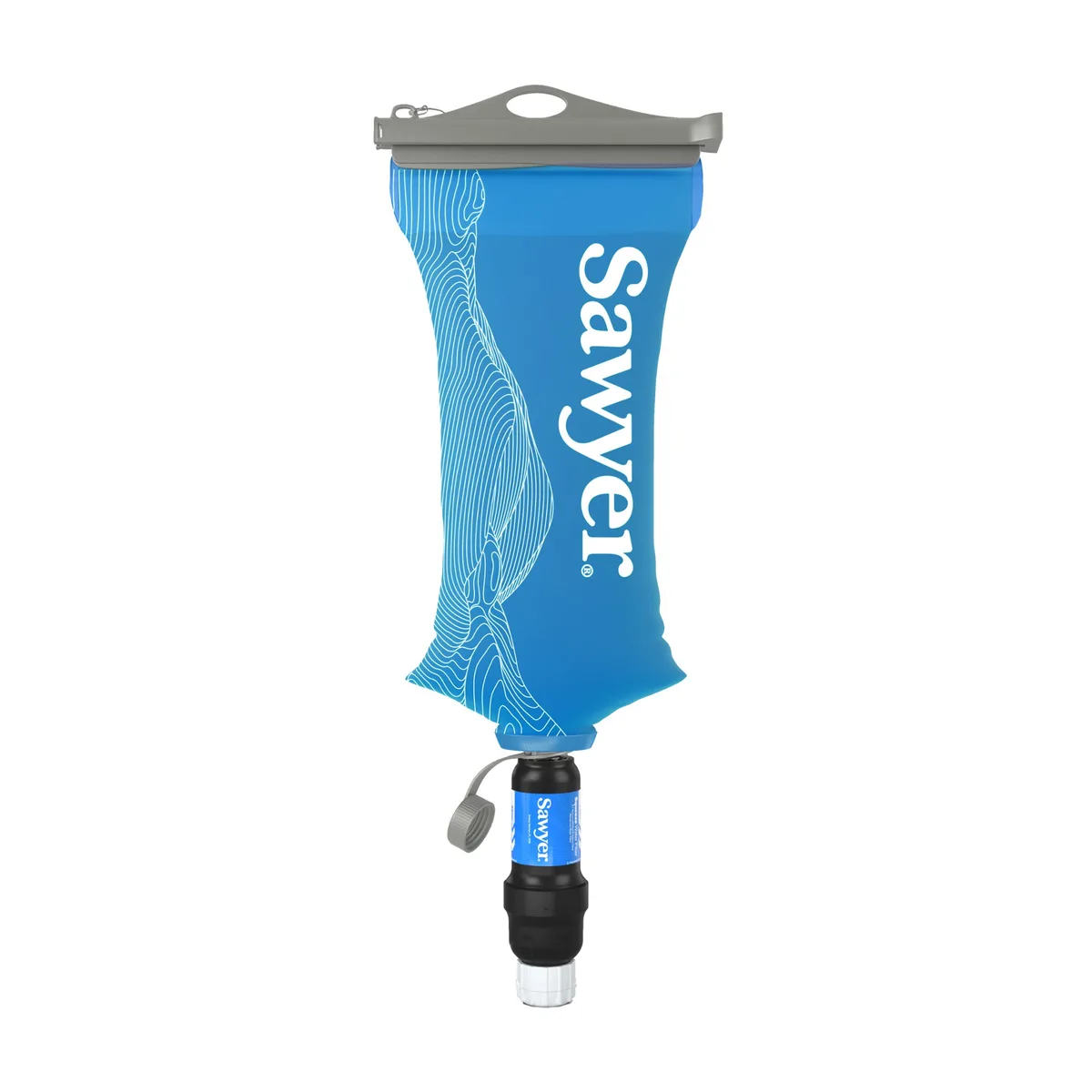
Three ounces, about $30, a lifetime warranty, and a filter rated up to 100,000 gallons with backflushing — the cost per gallon rounds to zero. It’s the classic bug-out-bag filter for a reason: squeeze, gravity-feed, or inline with a hydration bladder, it just works.
Know its limits: it’s a filter, not a purifier — it handles bacteria, protozoa, and microplastics but not viruses, chemicals, or heavy metals. Owners also warn that the included pouches are flimsy (many upgrade to tougher bladders) and that a frozen filter membrane can crack invisibly — don’t let it freeze.
Buy it if: you’re building a go-bag or want backup redundancy for pennies. Don’t rely on it as your only home system — pair it with one of the above.
Check the current price on Amazon →
What a Gallon Actually Costs You
Sticker price lies; cost per gallon tells the truth. Ranked cheapest to most expensive over time: Sawyer Squeeze (fractions of a cent) → Berkey (~2–3¢) → LifeStraw Home (~17–21¢) → AquaTru (~22–26¢) → GRAYL (~46¢) → ZeroWater (~38–75¢). A $35 pitcher can easily cost you $2,000 over three years; a $367 Berkey can cost you almost nothing after purchase. Run the filter math before you fall for the sticker.
Two Things Worth Knowing
On Berkey’s legal situation: as of fall 2026, the EPA’s stop-sale order on Black Berkey elements remains in effect pending appeal, and Berkey is moving to a replacement element. If you buy, buy the system from an authorized dealer and be skeptical of loose elements on marketplaces.
On certifications: “tested to NSF standards” and “NSF certified” are not the same thing. AquaTru, LifeStraw Home’s carbon stage, and ZeroWater carry actual third-party certifications; Berkey and GRAYL cite manufacturer or protocol testing. Decide how much that distinction matters to you — for some buyers it’s everything, for others it’s noise.
Questions Buyers Ask
Which of these works when the power is out? Everything here except the AquaTru. The Berkey is gravity-fed, the LifeStraw and ZeroWater are pitchers, and the GRAYL and Sawyer work by hand — no electricity anywhere. The AquaTru needs power for its pump, so in an outage it stops entirely.
Which filter is cheapest to own over time? The Sawyer Squeeze, at a fraction of a cent per gallon, then the Berkey at roughly 2–3 cents per gallon. The trap is ZeroWater: the pitcher costs about $35, but at 38–75 cents per gallon it is the most expensive option in this comparison over three years.
Is Berkey in legal trouble? As of fall 2026, the EPA stop-sale order on Black Berkey elements remains in effect pending appeal — Berkey describes it as a labeling dispute over the silver in the elements, not a safety finding. If you buy, buy the system from an authorized dealer, and be skeptical of loose elements sold on marketplaces, which are likely counterfeit. Berkey is transitioning to a replacement called the Phoenix Element.
Which of these is actually certified? AquaTru carries IAPMO certification to NSF/ANSI standards 41, 53, 58, 401, and P473. LifeStraw Home’s filters and ZeroWater also carry third-party certifications for specific contaminants. Berkey and GRAYL rely on manufacturer or protocol testing instead — capable products, but you are trusting the maker’s own data.
What should a renter buy? ZeroWater if you need verified lead and PFAS removal this week for under $40 — just budget for filters every 2–4 weeks. LifeStraw Home if you want certified PFAS protection in a glass pitcher at $65 and can live with a carbon filter change every 2 months.
Keep Comparing
This review sits in our Preserve the Water hub alongside our other water guides. Planning the food half too? The Food & Water Planner works out how much of both a household actually needs.
Last updated: October 14, 2026.
Talk it over with other readers. The Truly Preserved Community on Facebook is where readers compare notes on food storage, water, and backup power — and where your questions help decide what we research next. Join the group →