
The Bluetti Apex 300 is the serious outage box: 3,840W of output with both 120V and 240V from a single unit — the combination that runs a well pump, a workshop, or a real kitchen load instead of just the lights. It starts with 2,764.8Wh built in, enough for a fridge for days, and it stacks with expansion batteries when the outage plan grows. This is the box for a house that loses power for real and can’t afford to find out what “essentials only” means at hour thirty.
Truly Preserved is reader-supported. If you buy through a link on this page we may earn a commission at no extra cost to you. Nobody pays for placement or scores.
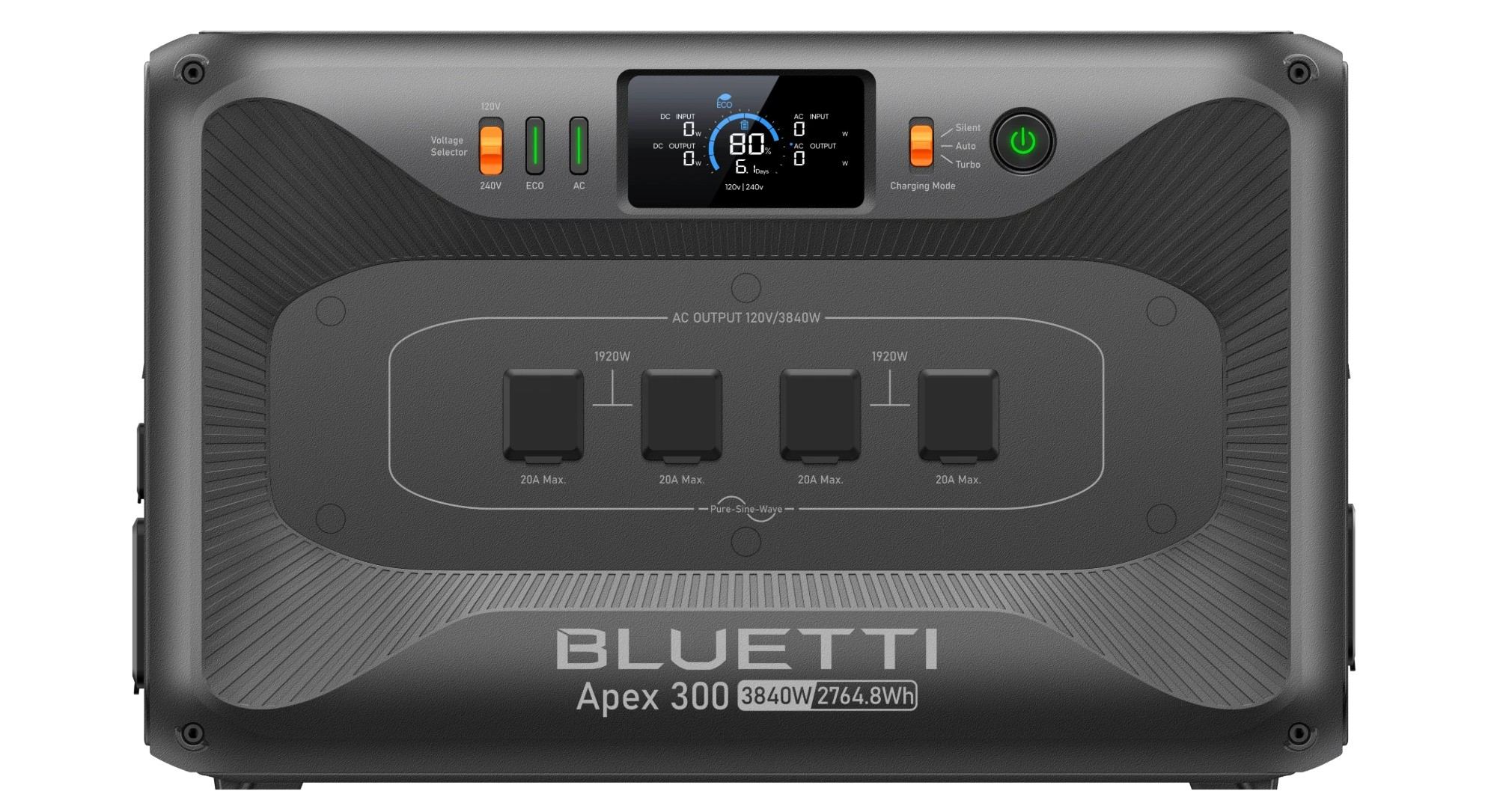
Photo: Bluetti.
Bluetti’s own store lists the Apex 300 at $1,699 today (checked November 22, 2026). Confirm the price before you buy — Bluetti’s sale pricing moves often.
Why this box fits the whole-house job
It does 240V without a second unit. Most stations this size are 120V only, which quietly rules out the loads that matter most in a rural outage — the well pump first among them. The Apex 300 puts out 120V and 240V from one box at 3,840W, so a pump, a freezer, and the kitchen can share one plan instead of a generator’s noise and fuel runs.
The fridge math is days, not hours. Bluetti’s own runtime table puts a typical fridge (about 500Wh a day as it cycles) at 4.7 days on the built-in battery alone. Add the freezer and the basics and you are still measuring the outage in days — and every expansion pack you stack pushes that further out.
It grows in honest steps. The 2,764.8Wh inside is the floor, not the ceiling: up to six B300K expansion packs take the system to about 19.4 kWh, and B500K packs are supported for bigger builds. Solar input runs to 2,400W, and Turbo charging from a wall or generator takes it to about 80% in 45 minutes — the refill speed a multi-day outage actually demands.
How we know: this page is built from Bluetti’s published specs and runtime tables and the independent reviews we aggregated for our research. We don’t own this power station; we did the homework.

Jackery Explorer 1000 V2
The most capacity (1,070Wh) in the lightest box (23.8 lb), the longest fridge runtime here, and a 59-minute emergency fast-charge.
$559.00 from Amazon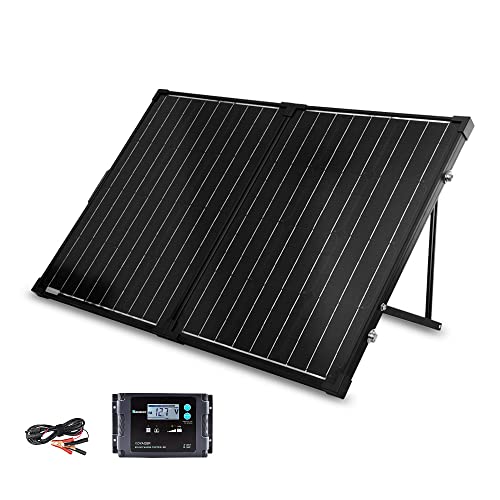
Renogy 100W Solar Suitcase
A folding suitcase panel from Renogy for the same job — easy to store with the station and quick to set out when the power goes.
$154.98 from Amazon
Key specs
| Capacity | 2,764.8Wh built in |
| Output | 3,840W continuous |
| Voltage | 120V and 240V from one unit |
| Battery | LiFePO4 |
| Expansion | Up to about 19.4 kWh with six B300K packs; B500K packs also supported |
| Solar input | Up to 2,400W |
| Wall charging | Turbo mode: about 80% in 45 minutes |
| Warranty | 5 years |
Specs from Bluetti’s product page, November 2026. Solar panels and expansion batteries are sold separately.
Best for
- Homes on a well — the pump is the load that decides whether you can stay in the house
- Multi-day outage country: ice storms, hurricane season, rural feeders that come back last
- Fridge plus freezer plus the basics, measured in days
- Buyers who want one box now and a battery stack they can grow into

EcoFlow DELTA 2 Max
The bigger box in the same comparison, for households whose outage list runs past the basics and needs more stored energy before solar or a generator has to help.
$977.00 from Amazon
Bluetti Elite 200 V2
The station our home-backup comparison leads with for fridge, lights and router duty: 2,073.6Wh of capacity and 2,600W of output, so a microwave and a fridge compressor can run at the same time.
Check the price
Jackery Explorer 2000 v2
By far the lightest and quietest 2kWh box here — the same class as the Bluetti, in a station one person can actually move room to room.
$999.00 from AmazonNot for
- Apartments and small spaces: this is a place-it-once installation, not a closet box
- Essentials-only budgets — if the list is a router and some lights, the 1–2 kWh class does it for half the money
- A full-size electric dryer on high heat: most draw more than the 3,840W ceiling — check the appliance plate before you count on it
- Anyone who needs it to be quiet power for a bedroom: at this size it lives in a garage, utility room, or barn

Renogy 100W Rigid Panel
The rigid budget standard — the label figures are the RNG-100D's standard test numbers.
$76.49 from Amazon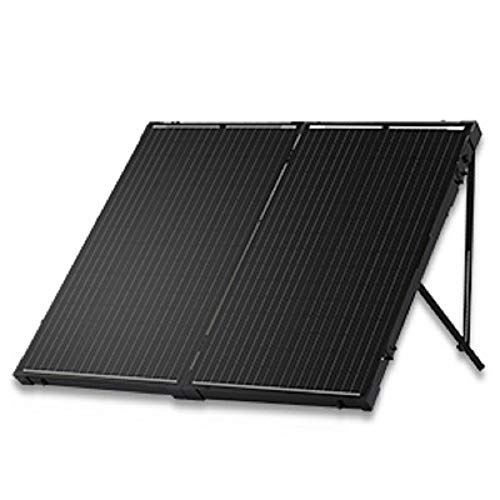
Renogy 200W Monocrystalline Panel
The rigid 200W (RSP200D) — same pairing rules, roof-mount money.
$271.99 from Amazon
Anker SOLIX C1000
Anker's 1,056Wh station — the step-up option if you want one box that covers the fridge plus the rest of the essentials through a longer outage.
Check the priceOwning and setting it up
Plan the install, not the shelf. Between the unit and any expansion packs, this is a small power wall. Pick its home near the loads it serves, with ventilation and room to stack packs later, and wire the 240V plan with an electrician if a transfer switch is involved.
Panels are extra. The 2,400W solar figure is an input limit. Filling 2,764.8Wh — let alone a 19.4 kWh stack — takes a real array; budget for it when you price the system.
Medical gear: big capacity tempts people to put medical equipment on the plan. Do full trial runs at home while the grid is still up, and never let any battery be the only plan for equipment someone depends on to breathe.

Bluetti PV350 Solar Panel, 350W
The largest foldable Bluetti panel — a few of these start to make a real dent in refilling the Apex 300's 2,764.8Wh from sunlight alone.
Check Availability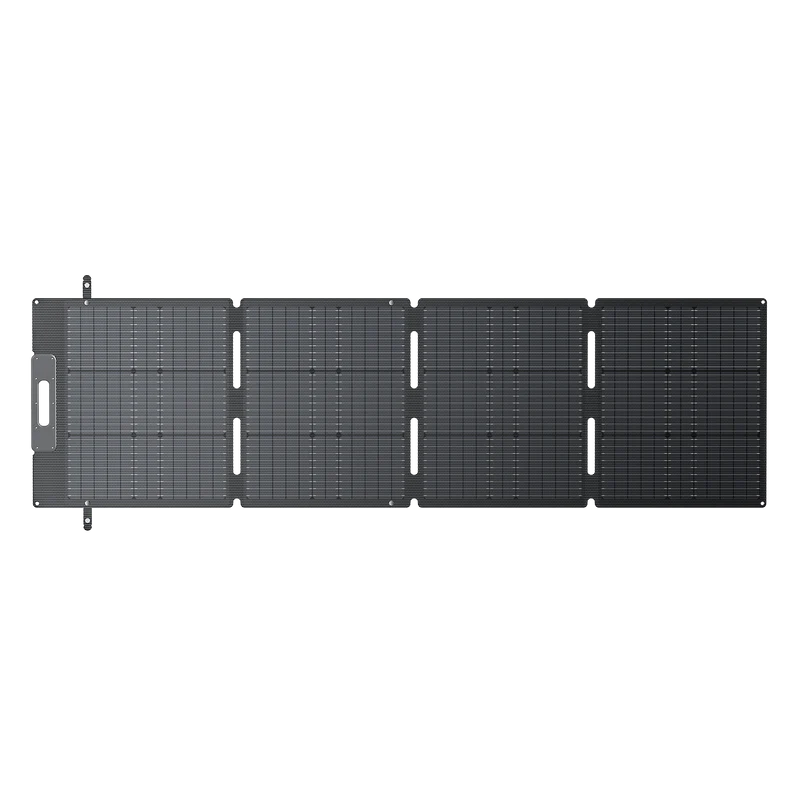
Bluetti PV200 Solar Panel, 200W
The 200W building block for the array this page's owning notes call for — add panels as the budget allows toward that 2,400W input limit.
$329.99 from Bluetti
EcoFlow 110W Solar Panel
A smaller foldable panel for topping up smaller loads or keeping a reserve charged — not a whole-house refill on its own, but easy to store and set out.
Check AvailabilityQuestions people ask
How long will the Apex 300 run a refrigerator?
Bluetti’s own runtime table says 4.7 days for a fridge using about 500Wh a day, on the built-in battery alone. A bigger or older fridge drawing 1,000–1,500Wh a day lands closer to two days. Every B300K pack you add puts roughly another 2,764.8Wh — several more fridge-days — on the stack.
Can it really run a well pump?
Yes — that is the point of the 240V output. Most household well pumps draw 1,000–2,500W while running and cycle on and off, so runtime is measured in days of normal water use rather than hours of continuous pumping. Check your pump’s plate rating against the 3,840W ceiling, including its startup surge, before you count on it.
How fast does it recharge?
Turbo charging from a wall outlet or generator reaches about 80% in 45 minutes. From solar, the 2,400W input limit means a full refill of the base unit in under two hours of strong sun with enough panels feeding it — and proportionally longer as you add expansion packs.
Can you add more battery later?
Yes — expansion is this box’s whole design. B300K packs (2,764.8Wh each) stack up to six deep for about 19.4 kWh total, and B500K packs are supported for larger systems. Buy the base unit for this winter; add packs when the budget or the outage history says so.
Price on this page last checked at Bluetti’s store on November 22, 2026.
Don’t need 240V? The smaller box we recommend for fridge-and-basics duty is the Bluetti Elite 200 V2, and our solar generator comparison shows how the whole class stacks up.
Viewers also searched for these items.

Anker SOLIX PS100
Anker's bifacial 100W panel — a smaller, easy-to-store option that still puts real charge back into the box on a sunny day.
Check the price
Honda EU2200i
48 dBA at light load and a 3-year warranty — you pay for the name, and owners say it earns it.
$1,199.00 from Amazon
Champion 4250 Dual Fuel Inverter
Fridge and freezer together, on gas or propane, for about 20 cents per running watt.
$695.00 from AmazonPrices shown on this page were last checked November 26, 2026 — prices change; check before you buy.