
Truly Preserved is reader-supported. If you buy through a link on this page we may earn a commission at no extra cost to you. Nobody pays for placement or scores.
THE SHORT ANSWER
The difference is the barrier. A mylar bag is a foil laminate that blocks oxygen and light, and with an oxygen absorber inside it keeps dry food for years — our mylar guide works to a 10-to-20-year storage standard. A vacuum seal bag is plain plastic with no foil barrier: the machine pulls the air out once, on sealing day, and the film itself does the rest. Vacuum bags win the months-long jobs — freezer meat, portions you will use this season — and mylar wins everything measured in years.
This answer is built strictly on two of our own published comparisons: the mylar bags guide (post 452) and the vacuum sealers comparison (post 620). If a claim below is not in one of those two pages, it is not here.
Barrier vs no barrier
A mylar bag is a laminate of PET plastic, aluminium foil, and polyethylene. Our mylar guide is plain about which layer does what: the foil layer is the oxygen and light barrier, and the plastic layers give puncture resistance and the heat-seal surface. At 5 mil per side — the floor serious packing sources set — that construction is rated for 10-to-20-year storage.
A vacuum seal bag has no foil layer. It is textured plastic, embossed with channels so an edge sealer can pull the air out through the bag’s mouth. The vacuum is real, but it happens once. Our vacuum sealers comparison puts the limit in one sentence: a vacuum sealer does not extend the life of dry staples the way an oxygen absorber does, because the absorber removes the oxygen a vacuum leaves behind in the food itself — the air hiding inside a kernel of rice or a fold of pasta that no pump can reach.
What happens over years
Oxygen keeps trying to get in; the two bags answer that differently. In mylar, the foil slows transmission to a crawl and the absorber inside keeps mopping up what does get through — PackFreshUSA notes an oversized absorber keeps absorbing leaked oxygen even years later. The system defends itself for as long as the seal holds.
A vacuum bag’s defense is a single heat seal and a thin plastic wall. Our sealers comparison found the repeat owner complaint across thousands of ratings was not weak suction — it was failed seals discovered months later in the freezer. And the freezer is where vacuum bags post their best numbers: makers claim up to five times longer than ordinary wrapping, and owner reports line up with meat holding quality for two to three years instead of months. That is a strong result — for the freezer. Nothing in either of our guides supports reading it as a pantry number.

Score out of 10
Wallaby 1-Gallon Mylar Bags
The mylar side — the bags our storage guide scores at the top of the long-term table.
Check Availability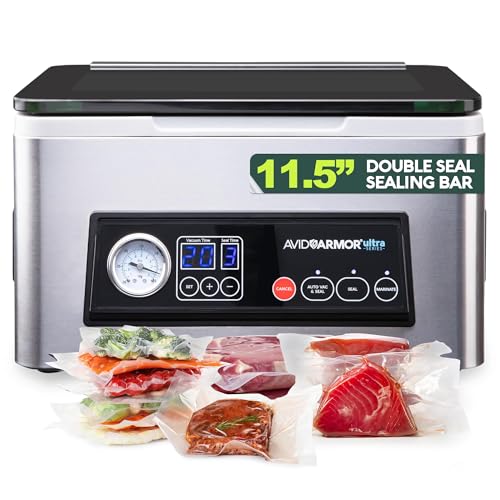
Avid Armor USV20 Chamber Vacuum Sealer
When vacuum sealing wins — short-term and freezer work — the USV20 is the chamber sealer our storage guides name.
$349.00 from AmazonTexture, puncture, and the food itself
The bags feel different because they are built for different machines. Mylar is smooth and thick — which is why an edge vacuum sealer cannot vacuum it: there are no channels for the air to leave by. Mylar is sealed with heat and an absorber instead, and only a chamber machine can vacuum a mylar pouch. Vacuum bags are thinner, embossed, and made to collapse tight around food.
Puncture and pressure cut opposite ways. Five-mil mylar stands up to the sharp edges of pasta and grain better than thin film, though our guide is honest that 5 mil is the floor, not armor. Vacuum pressure, meanwhile, is hard on the food: our sealers comparison cites a test kitchen that measured 29% breakage on crunchy items even on a sealer’s Gentle setting. An absorber takes the oxygen out without squeezing anything — one reason fragile freeze-dried food and dry staples belong to the mylar route.
| Job | Better bag | Why |
|---|---|---|
| Rice and beans for 10+ years | Mylar + absorber | Foil barrier; absorber keeps working |
| Freezer meat, 1–3 years | Vacuum seal | Stops freezer burn; flat portions |
| Soups and marinades | Vacuum (chamber) | Liquid stays put while it seals |
| Freeze-dried meals and moist food | Vacuum / chamber mylar | Pulling air out is the point |
Read the table as two tools, not a contest. Most stocked kitchens end up owning both: mylar and absorbers for the deep pantry that nobody touches for years, a vacuum sealer for the freezer and the working stock that turns over every season. The mistake is asking either bag to do the other’s job.
Viewers also searched for these items.



FoodSaver Elite Liquid Plus
It senses bags and moisture for you — at the highest price per inch of seal bar here.
$218.56 from AmazonFrequently asked questions
Can I vacuum seal a mylar bag?
Not with a standard edge sealer — smooth mylar has no channels, so the air has no path out. Our sealers comparison found the chamber machine (the Avid Armor USV20) can vacuum a mylar pouch thanks to its chamber design and longer seal times. For dry staples, though, the absorber does the work and the vacuum adds little.
Do vacuum seal bags need oxygen absorbers too?
For freezer jobs, no — the vacuum and the cold do the work. For dry staples meant to keep for years, our sealers guide is direct: oxygen absorbers inside a heat-sealed mylar bag are the standard method, because the absorber removes oxygen the vacuum leaves behind in the food itself.
Which bag protects better against light?
Mylar, and it is not close. The foil layer that blocks oxygen also blocks light completely. A vacuum bag is clear plastic — fine inside a dark freezer, a poor choice for food sitting on a lit shelf.
Can a vacuum bag go in a bucket for long-term storage?
The bucket adds crush and rodent protection, but it does not add a barrier. The bag inside is still plain plastic with a one-time vacuum. Buckets earn their keep holding mylar — the liner system our mylar guide prices out — not rescuing vacuum bags from their film.
Sources & freshness: Built on our mylar bags guide (laminate construction, 5-mil floor, 10-to-20-year standard) and our vacuum sealers comparison (freezer life, seal failures, chamber vs edge sealing), both read in full for this answer.
More answers like this one: This question belongs to Preserve the Pantry and our food storage questions page. The two guides behind it: best mylar bags and best vacuum sealers.
Talk it over with other readers. The Truly Preserved Community on Facebook is where readers compare notes on food storage, water, and backup power — and where your questions help decide what we research next. Join the group →
Prices shown on this page were last checked November 26, 2026 — prices change; check before you buy.