
Truly Preserved is reader-supported. If you buy through a link on this page we may earn a commission at no extra cost to you. Nobody pays for placement or scores.
THE SHORT ANSWER
Yes, they will chew through the buckets — eventually, and through mylar bags in minutes. Rodent teeth never stop growing, and a plastic bucket is a chew toy standing between a rat and a food smell. What actually protects stored food is layers: mylar for oxygen and light, inside a hard container for teeth, inside a room with the entry holes sealed. A mouse fits through a gap the width of a pencil — about ¼ inch — so sealing the room is worth more than any single container upgrade.
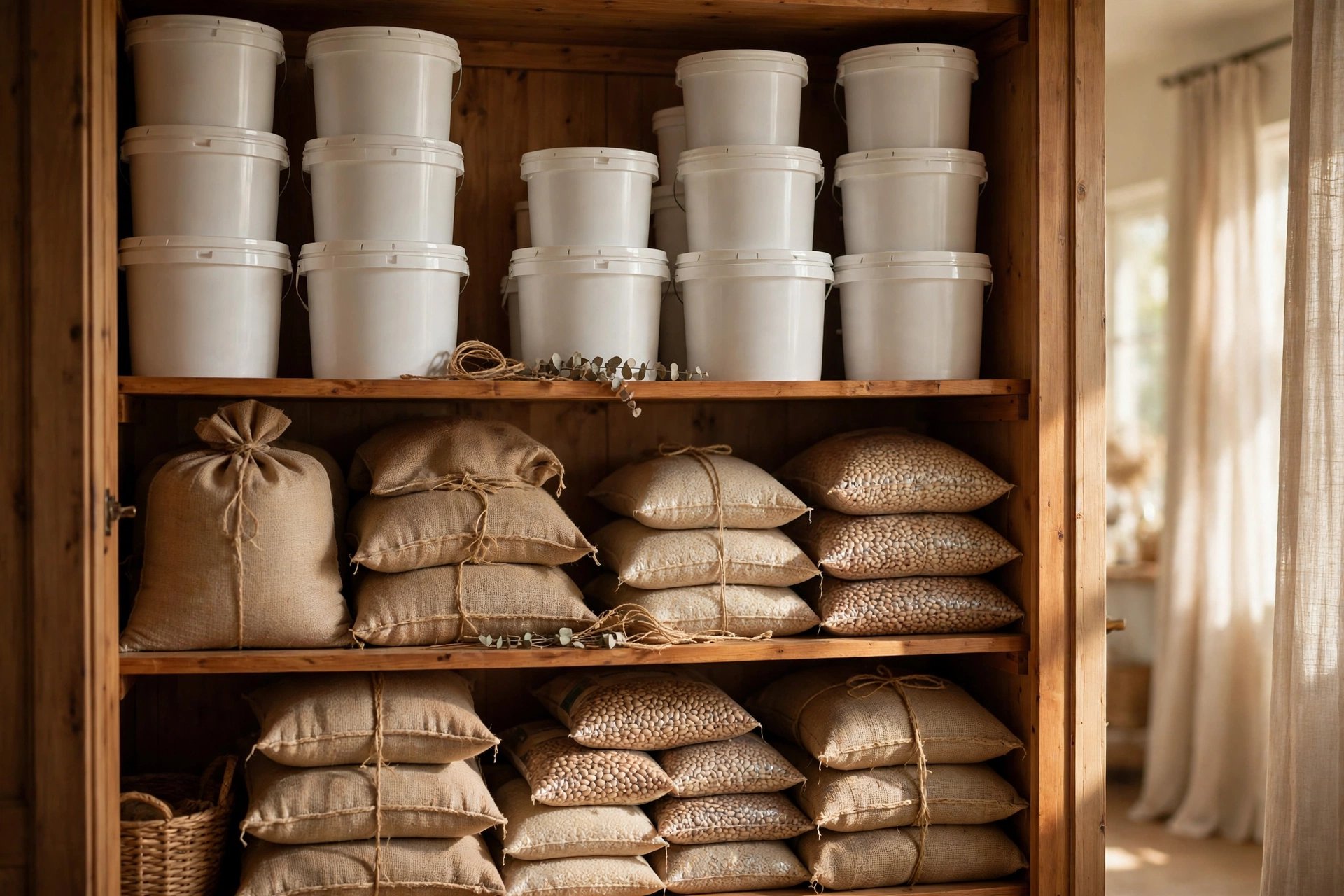
The forum version of this question usually arrives with a photo: a bucket lid gnawed at the rim, a mylar bag shredded overnight, droppings on the shelf. The owner did everything the food-storage guides said — mylar, oxygen absorbers, sealed buckets — and lost food anyway, because those guides solve a different problem. Mylar stops oxygen and light. It was never armor.
Think of rodent defense as three walls, because a determined rat defeats any one of them. The food barrier (mylar and absorbers) keeps food fresh. The container barrier keeps teeth off the food. The building barrier keeps rodents out of the room entirely — and it’s the one most people skip.
Wall One: The Container That Keeps Teeth Off the Food
Inside the room, food lives in hard containers: food-grade buckets with tight lids for bulk staples, gasket-sealed bins for the working supply, metal where you can manage it. Gamma-seal lids matter here for a practical reason — a lid that’s easy for you to open properly gets closed properly every time, and a bucket left cracked open is an invitation with a food smell attached. Our long-term food storage containers comparison scores the bins and vaults by seal and build. Thin tote bins from the hardware store are the weak point in most pantries: the plastic is soft, the lids flex, and a rat works an edge the way you’d work a loose tooth.

Gamma Seal Lids for 5-Gallon Buckets (3-pack)
A screw-down gasketed lid turns a storage bucket into a sealed container you can open daily without pry tools — so it stays sealed the other 23 hours.
$73.99 from Amazon
Vittles Vault Airtight Container, 35 lb
Thick walls, a gasketed spin lid, and a shape that stacks — built for pet food, adopted by half the storage pantries we see for flour and rice in active rotation.
Check AvailabilityWall Two: Seal the Room, Not Just the Food
Extension pest guidance runs on one measurement: a young mouse passes through a hole about ¼ inch across — pencil-width — and a rat through about ½ inch. Walk the storage room with that gauge in mind. The gaps that matter are the ones nobody looks at: where pipes and conduit pass through walls, the space under the door, vents without screens, and the corner where two walls meet the floor. Copper mesh or steel wool packed into a hole, then sealed over, defeats chewing in a way foam never will — rodents gnaw foam out and move in. Keep the perimeter honest, too: pet food and bird seed stored in the same room are the attractant that brings them to your buckets in the first place, the same lesson as our weevil answer tells from the insect side.
Wall Three: Make the Room a Bad Place to Live
Traps along walls — rodents travel edges, not open floor — checked on a rhythm, and no food, water, or nesting material left available. Skip the folk layer: mothballs are a pesticide used off-label around food, ultrasonic plugs have no evidence behind them, and scent deterrents fade in days. The bay leaf version of this myth gets its own hearing in our bay leaves answer — the short version is that smells don’t stop hungry animals; barriers do.

Millennium Energy Bars (SOS Food Lab)
Nine real flavors and the only bar here people call genuinely good. Single 400-calorie bars made for go-bags and school kits.
$19.99 from Amazon

COSORI Dehydrator
A fruit roll sheet in the box, temperature set to the degree, and a 48-hour timer that ends the batch before it over-dries.
$135.99 from AmazonShould Buckets Sit Directly on a Concrete Floor?
The companion question in every thread, and the answer is: get them up if you can. Concrete wicks moisture and breathes it against whatever sits on it, so a bucket on bare slab lives in a permanently damp boundary layer — lids and labels suffer first, and the floor of the bucket stays colder than the room, which invites condensation when temperatures swing. A pallet, a sheet of plywood, or simple shelving that lifts buckets a few inches breaks the contact and lets air move underneath. The concrete itself won’t eat through a food-grade bucket, and mice don’t care whether the bucket is raised — this one is about moisture, not pests. But a raised, sealed, hard-containered stack is the whole system working at once.

Palouse Hard Red Wheat Berries
Beans are one leg; berries are another — they store as long and mill into the flour beans cannot become.
$70.95 from Amazon

Gardeners Basics Seed Vault
Exact per-variety counts printed on the listing, a resealable mylar outer bag, plant markers included — and a storage guide honest enough to argue with its own Amazon page.
$23.95 from AmazonFollow-Up Questions
Will rats chew through a bucket in one night?
A bag, yes. A bucket usually takes longer — they work edges and rims over repeated visits. That’s the good news buried in the bad: droppings, gnaw marks, or a scratched lid are an early-warning system, if you’re looking at your storage on a rhythm instead of once a year.
Do metal trash cans work for bulk storage?
Yes — a galvanized can with a tight lid is the oldest rodent-proof bulk container there is, with mylar bags inside doing the freshness work. Line it, bag the food, and it’s a genuinely good system for a garage or barn.
What about poison bait stations?
Outside the storage room, placed by the label, they have a role. Inside the food room, a poisoned rodent dies in a wall and the food absorbs the lesson. Exclusion and traps protect food; poison protects buildings, at a distance.
Viewers also searched for these items.


Saratoga Farms 5-Gallon Stackable
Stack storage off the floor, away from the runs.
$318.79 from Amazon
Frequently Asked Questions
How small a hole can a mouse really fit through?
About ¼ inch — if its head fits, the body follows. That’s the gauge for the room-sealing walk: any gap a pencil slides into gets sealed.
Is mylar ever enough on its own?
Against oxygen and light, yes — that’s its job. Against teeth, claws, and beaks, no barrier film is. Mylar always rides inside something hard in a room rodents can reach.
When do rodents hit food storage hardest?
Autumn. The first cold nights push field rodents indoors looking for exactly what your storage room offers. The room-sealing walk belongs on the September list, before the migration, not after the first gnawed lid.
Exclusion and container guidance per university extension pest-management publications, including the University of Minnesota Extension on stored-food pests and pest-proof containers.
This question came from our harvest of what readers ask in the forums. See the rest of the list: What People Are Asking About Food Storage.
Prices shown on this page were last checked November 26, 2026 — prices change; check before you buy.
Talk it over with other readers
The Truly Preserved Community on Facebook is where readers compare notes on food storage, water, and backup power — and where your questions help decide what we research next.