
Truly Preserved is reader-supported. If you buy through a link on this page we may earn a commission at no extra cost to you. Nobody pays for placement or scores.
THE SHORT ANSWER
Freezing sweet corn, whole kernel style: husk tender, freshly gathered corn, water-blanch the ears 4 minutes, cool them promptly, and cut the kernels from the cob at about 2/3 the depth of the kernels. Package with 1/2 inch of headspace, seal, and freeze. Freezing it on the cob instead? Blanch by ear size — 7 minutes for small ears (1 1/4 inches or less across), 9 minutes for medium (1 1/4 to 1 1/2 inches), 11 minutes for large (over 1 1/2 inches) — and cool promptly and completely, or the corn takes on a “cobby” taste. Every figure is the National Center for Home Food Preservation’s, credited at the bottom.
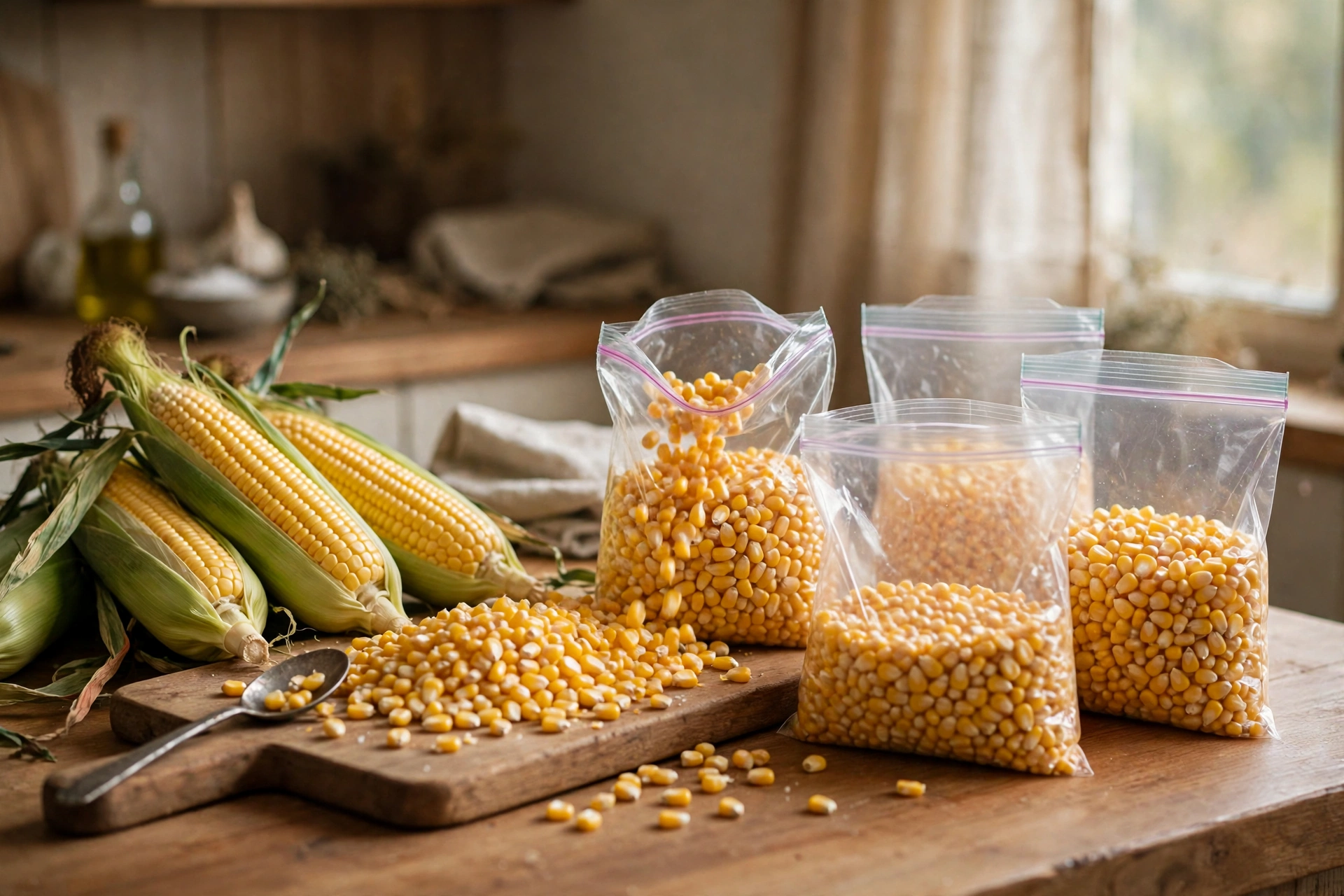
Sweet corn is the garden vegetable that most punishes delay. Its sugars start converting the hour it is picked, which is why the National Center for Home Food Preservation’s instruction begins with selection: only tender, freshly gathered corn in the milk stage. Freezing is the easiest preservation method in this whole program — no canner, no jars — but it has exactly one step that cannot be skipped or shortened, and that step is the blanch.
Putting up the same harvest by jar instead? The canning counterpart is in our Guides hub — and if freezer space is the real bottleneck, canning green beans shows the pressure-canner pattern the corn would follow too.
What You Need
Fresh sweet corn, picked the same day if at all possible. A pot big enough to hold ears in freely boiling water, a bowl of cold water for prompt cooling, a sharp knife for cutting kernels, and freezer packaging — bags or containers you can seal with 1/2 inch of headspace. A vacuum sealer earns its keep here: corn frozen flat in sealed bags stacks like books and gives up its freezer space grudgingly to nothing.

Ziploc Freezer Bags, Quart, 114 Count
The quart freezer bag is the package the recipe assumes — filled with 1/2 inch of headspace, sealed, frozen flat.
$26.48 from Amazon
Nesco VS-12 Vacuum Sealer
Vacuum-sealed corn stacks flat, keeps its color, and gives freezer burn no air to work with.
$108.18 from Amazon
FoodSaver Elite Vacuum Sealer
The step-up sealer with a liquid mode — for cream-style corn days as well as whole kernel.
$218.56 from AmazonBefore You Start
Decide the form before the water boils, because the blanch times differ. Whole kernel corn — the versatile form, ready for soups, skillets, and casseroles — blanches 4 minutes on the cob and gets cut afterward. Corn on the cob blanches by ear diameter: 7, 9, or 11 minutes. Cream style corn blanches 4 minutes, then the kernel tips are cut and the cobs scraped. All three start the same way: husk and trim the ears, remove the silks, and wash.
How to Freeze Sweet Corn, Step by Step
- Select and prep. Choose tender, freshly gathered corn in the milk stage. Husk and trim the ears, remove silks, and wash.
- Blanch. Whole kernel and cream style: water blanch 4 minutes. On the cob: 7 minutes for small ears 1 1/4 inches or less in diameter, 9 minutes for medium ears 1 1/4 to 1 1/2 inches, 11 minutes for large ears over 1 1/2 inches.
- Cool promptly. Get the corn into cold water right away. For corn on the cob, cool promptly and completely — the National Center warns that incomplete cooling leaves a “cobby” taste.
- Cut (whole kernel). Drain, then cut the kernels from the cob at about 2/3 the depth of the kernels — deep enough for full kernels, shallow enough to leave the tough cob base behind. For cream style, cut off the kernel tips and scrape the cobs with the back of a knife to press out the milky juice.
- Package. Fill bags or containers leaving 1/2 inch of headspace. On-the-cob ears get drained and packaged whole.
- Seal and freeze. Press out excess air (or vacuum seal), label with the date, and freeze flat.
The Numbers: Blanching Times
| Form | Blanch time | Notes |
|---|---|---|
| Whole kernel (on the cob, before cutting) | 4 minutes | Cut kernels at about 2/3 their depth; 1/2-inch headspace |
| Cream style | 4 minutes | Cut tips, scrape cobs; 1/2-inch headspace |
| On the cob — small ears, 1 1/4 in. or less | 7 minutes | Cool promptly and completely |
| On the cob — medium ears, 1 1/4 to 1 1/2 in. | 9 minutes | Cool promptly and completely |
| On the cob — large ears, over 1 1/2 in. | 11 minutes | Cool promptly and completely |
Two more tools earn their place here: the biggest pot in the kitchen does the blanching, and the corn that will not fit the freezer can be dried instead:

Granite Ware 21.5-Quart Water Bath Canner
Blanching happens in the biggest pot in the kitchen — this is the one sized for a full load of cobs at once.
Check Availability
ThermoPro TP03H Thermometer
An instant-read thermometer confirms the cooling and reheating temperatures this procedure depends on, instead of guessing from steam and habit.
$8.99 from AmazonCommon Mistakes
Skipping or shortening the blanch. Blanching is what stops the enzymes that wreck flavor, color, and texture in frozen storage. Unblanched corn tastes it within weeks.
Slow cooling. Corn left warm in a pile keeps cooking and takes on the cobby flavor the National Center warns about. Cool promptly, and for on-the-cob corn, cool completely.
Cutting too deep. The instruction is about 2/3 the depth of the kernels. Cutting to the cob adds tough, woody bits to every bag.
Freezing yesterday’s corn. The procedure starts with freshly gathered corn in the milk stage for a reason — corn picked two days ago freezes as two-day-old corn.
Storage and Rotation
Freeze packages flat, label every one with the date, and rotate — oldest bags to the front, eaten first. Keep packages sealed until use; a bag that loses its seal goes to the top of the meal plan, not back into long storage.
Viewers also searched for these items.
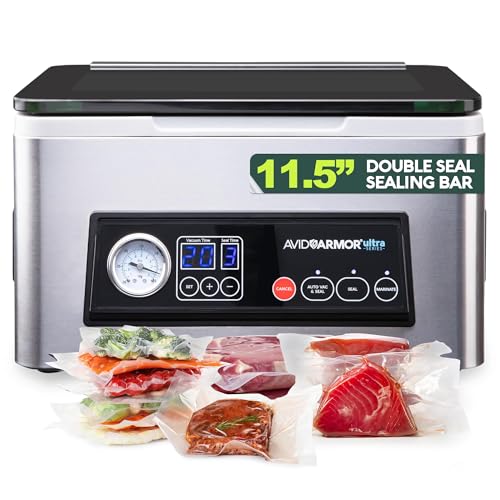
Avid Armor USV20 Chamber Vacuum Sealer
The chamber machine for harvest-day volume — bags at a fraction of strip-sealer cost.
$349.00 from Amazon
Etekcity Kitchen Scale
A kitchen scale turns a garden pile into known pounds, which is what the per-pound ratios and yield figures in this guide are planned from.
$9.99 from Amazon
Blue Alpine Medium Select
Faster cycles — 12 to 20 hours on Blue Alpine's figures — quarter-sheet trays, and silicone mats in the box. More machine than a first month needs; the one to read about before you buy twice. Use code TRULYPRESERVED at checkout.
Check the priceFrequently Asked Questions
Can I freeze corn without blanching it?
The tested procedure blanches every form of frozen corn — 4 minutes for whole kernel and cream style, 7 to 11 minutes on the cob by size. Skipping it trades a few minutes now for stale, tough corn later.
Why does my frozen corn on the cob taste “cobby”?
The National Center for Home Food Preservation names the cause directly: the ears were not cooled promptly and completely after blanching.
How deep should I cut the kernels?
About 2/3 the depth of the kernels — full kernels without the tough base where they meet the cob.
How much headspace do I leave?
1/2 inch, for both whole kernel and cream style corn.
Procedure and blanching times: National Center for Home Food Preservation, “Freezing Corn,” from So Easy to Preserve, University of Georgia Cooperative Extension.
Prices shown on this page were last checked November 26, 2026 — prices change; check before you buy.
Talk it over with other readers
The Truly Preserved Community on Facebook is where readers compare notes on food storage, water, and backup power — and where your questions help decide what we research next.