
Truly Preserved is reader-supported. If you buy through a link on this page we may earn a commission at no extra cost to you. Nobody pays for placement or scores.
THE SHORT ANSWER
Apple butter: cook 8 pounds of apples slowly in 2 cups of cider and 2 cups of vinegar until soft, press the fruit through a colander, food mill, or strainer, then cook the pulp with 2¼ cups of white sugar, 2¼ cups of packed brown sugar, 2 tablespoons of ground cinnamon, and 1 tablespoon of ground cloves until it passes the spoon test. Fill hot, sterile half-pint or pint jars at 1/4-inch headspace and process 5 minutes in a boiling water canner at 0–1,000 feet, 10 minutes at 1,001–6,000 feet, and 15 minutes above 6,000 feet; quarts take 10, 15, and 20 minutes. The batch makes about 9 to 10 pints. Every figure on this page comes from the USDA source credited at the bottom.
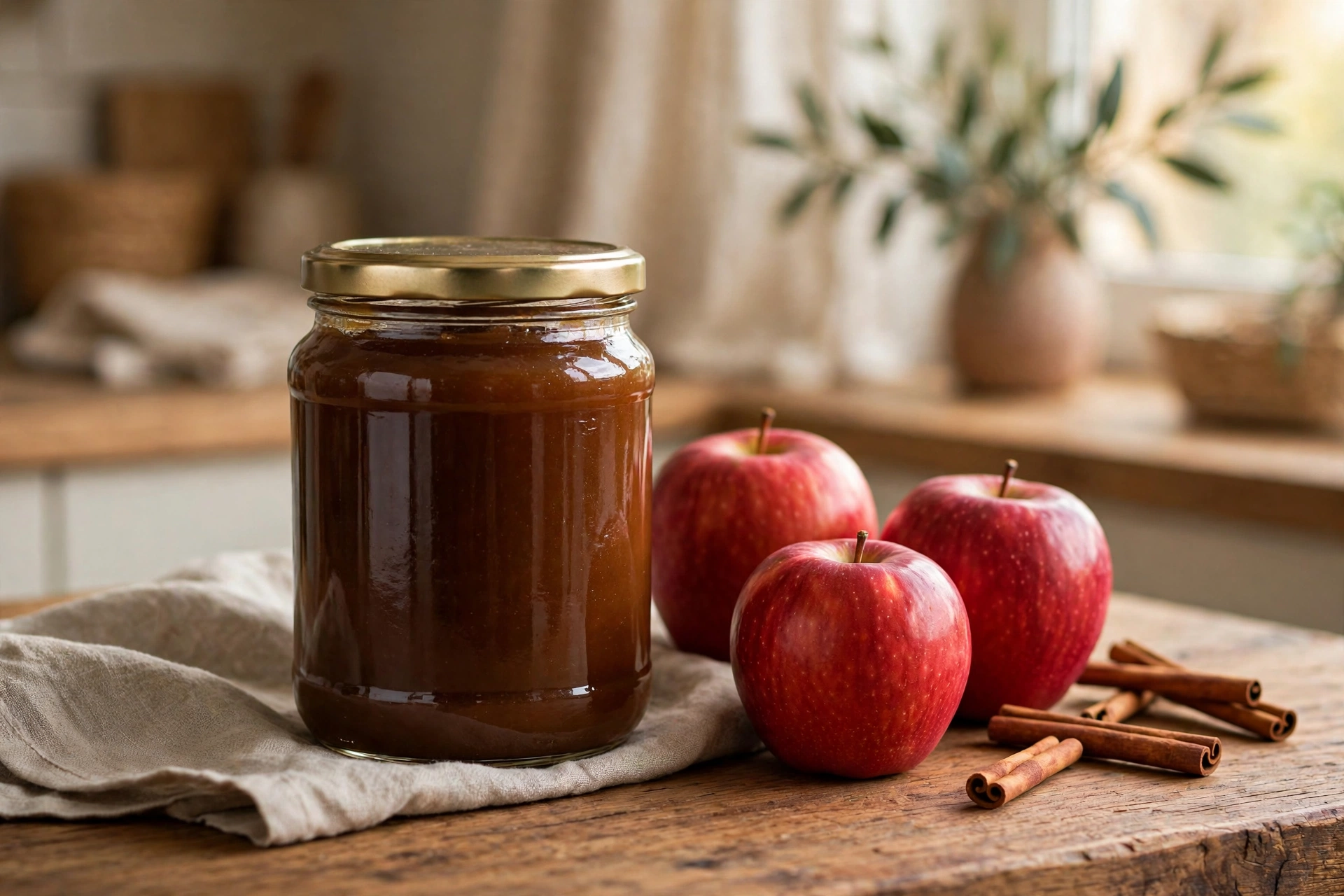
Apple butter contains no butter. It is applesauce that kept cooking — cider, vinegar, sugar, and spice reduced slowly until the pulp turns dark, thick, and spreadable, the kind of jar that makes plain toast taste like pie filling. It is the fall project for the bushel that outlasted fresh eating and pies, and unlike the jams in this series it asks for patience instead of speed: there is no pectin package and no one-minute boil, just a long cook and a simple test for doneness.
This guide follows the USDA’s tested procedure exactly: its pounds, its cups, its spices, and its minutes. The general water bath method is covered in how to can food in mason jars if this is your first time at the canner, and this guide is part of our preservation guides. Apples show up on this shelf twice more: as a clear apple jelly and in the peach-pineapple reduced-sugar fruit spread.
What You Need
The USDA names the varieties that give good results: Jonathan, Winesap, Stayman, Golden Delicious, Macintosh, or other tasty apple varieties — 8 pounds of them. Then 2 cups of apple cider, 2 cups of vinegar, 2¼ cups of white sugar, 2¼ cups of packed brown sugar, 2 tablespoons of ground cinnamon, and 1 tablespoon of ground cloves. You also need a colander, food mill, or strainer for pressing the cooked fruit, half-pint, pint, or quart jars with new two-piece lids, and a boiling water canner.

Ball Half-Pint Mason Jars, 12-Pack
Half-pint and pint jars are this recipe's main tested sizes, and sterile jars ready before the spoon test keep hot butter from waiting in the pot.
Check Availability
Granite Ware 21.5-Quart Water Bath Canner
A boiling water canner is the only processing method the USDA apple butter procedure is tested for, with separate minutes for pints and quarts your altitude decides.
Check Availability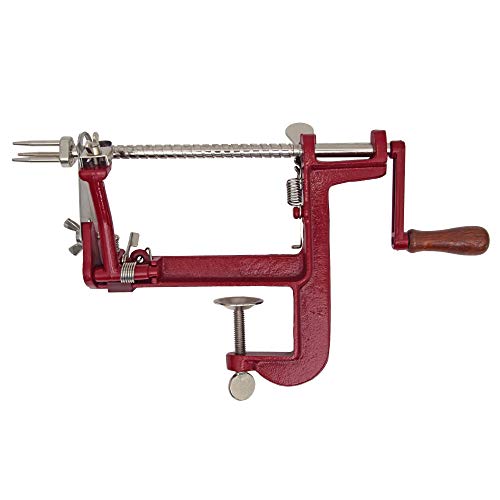
Johnny Apple Peeler
A countertop apple peeler speeds the prep on 8 pounds of apples; the recipe still quarters and cores by hand, but peeling and slicing stop being the long half of the job.
$34.99 from AmazonBefore You Start
Two things about this recipe surprise first-time makers, and both are in the source. First, the vinegar: 2 cups of it cook with the cider from the start, and the recipe gives no reduced or substitute version — it is part of the tested formula. Second, the jars: fill hot into sterile half-pint or pint jars, while quart jars need not be presterilized. Know which size you are filling before the pulp reaches the spoon test, because the processing table gives quarts their own, longer row.
How to Make Apple Butter, Step by Step
- Prepare the apples. Wash the apples, remove the stems, and quarter and core the fruit. The recipe does not call for peeling — the skins come out at the straining step.
- Cook until soft. Cook the apples slowly in the 2 cups of cider and 2 cups of vinegar until soft.
- Press the fruit. Press the cooked fruit through a colander, food mill, or strainer to make a smooth pulp.
- Cook the pulp down. Cook the fruit pulp with the white sugar, brown sugar, cinnamon, and cloves, stirring frequently, until it thickens.
- Test for doneness. Remove a spoonful and hold it away from the steam for 2 minutes — it is done if the butter remains mounded on the spoon. Or spoon a small quantity onto a plate: when a rim of liquid does not separate around the edge of the butter, it is ready for canning.
- Fill the jars. Fill hot into sterile half-pint or pint jars, leaving 1/4-inch headspace. Wipe the rims and adjust the two-piece lids.
- Process in a boiling water canner for the time for your jar size and altitude in the table below, then let the jars cool undisturbed and check every seal.
The Numbers: Processing Times
Apple butter is one of the few spreads in this series with a tested quart size — and quarts get their own minutes.
| Jar size | 0–1,000 ft | 1,001–6,000 ft | Above 6,000 ft |
|---|---|---|---|
| Half-pints or pints | 5 minutes | 10 minutes | 15 minutes |
| Quarts | 10 minutes | 15 minutes | 20 minutes |
Headspace is 1/4 inch for every size. Yield is about 9 to 10 pints.
An apple glut usually means more than butter. The extra apples dry into rings and chips for snacking, and these are the two tools that side of the job runs on.

ThermoPro TP03H Thermometer
An instant-read thermometer confirms the canner water and your kitchen work honestly, and earns its drawer space across every other preserving job in this series.
$8.99 from Amazon
Ziploc Freezer Quart Bags
Freezer quart bags hold the blackberry jam overflow that does not fit this batch, portioned flat so a winter smoothie or second batch thaws fast.
$26.48 from AmazonCommon Mistakes
Cooking the pulp too fast. The recipe’s word is slowly, and the pulp stage asks for frequent stirring. Apple butter scorches on the bottom of a rushed pot, and a scorched batch cannot be unstirred.
Skipping the doneness test. There is no timer that replaces the spoon test. Butter canned before it mounds on the spoon — or before a plate sample stops weeping a rim of liquid — is applesauce in a jar, not butter.
Cutting the vinegar because it sounds odd. The 2 cups are part of the tested formula the processing times belong to. The finished butter does not taste like vinegar; it tastes like concentrated, spiced apple.
Processing quarts on the pint row. Quarts take 10, 15, and 20 minutes by altitude — double the low-altitude pint time. Jar size is part of the process, not a detail.
Reaching for bland apples. The source names tasty varieties for a reason: a long cook concentrates whatever flavor the apples bring, and watery, flat fruit makes flat butter.
Storage and Shelf Life
Store sealed jars in a cool, dark, dry place with the bands removed, and label each jar with the date. Sweet spreads are best if eaten within one year, so rotate the shelf and eat the oldest jars first. A jar that does not seal goes in the refrigerator and gets used first. Once a jar is opened, keep it refrigerated.
Viewers also searched for these items.

Ball Regular Mouth Canning Lids, 96 Count
New lids are what the two-piece closure in this procedure assumes; a failed seal on a long-cooked butter is the most expensive jar on the shelf to lose.
$36.99 from Amazon
Etekcity Digital Kitchen Scale
A kitchen scale confirms the 8 pounds of apples the recipe is built on, which matters more in a no-pectin recipe where fruit, cider, and sugar carry the whole set.
$9.99 from Amazon
FoodSaver Elite Vacuum Sealer
A vacuum sealer handles the freezer side of an apple glut — sliced fruit for pies — with a design that tolerates juicy loads.
$218.56 from AmazonFrequently Asked Questions
Why is there vinegar in apple butter?
Because the tested USDA recipe puts 2 cups of vinegar in with the cider at the first cook. It is part of the formula the processing times were tested with, and the long cook leaves the flavor as background tartness under the spice.
How do I know when apple butter is done?
Use the recipe’s own tests: a spoonful held away from the steam for 2 minutes stays mounded on the spoon, or a small spoonful on a plate shows no rim of liquid separating around the edge.
Can I make it with less sugar?
Not by editing this recipe. The tested reduced-sugar route for apples exists — a reduced-sugar apple butter made with sucralose is published by extension sources — but it is a different recipe with its own procedure, not this one with sugar removed.
How much does one batch make?
About 9 to 10 pints from 8 pounds of apples — roughly twice the yield of the jam recipes in this series, which is why this is the bushel recipe.
Procedure, quantities, and processing times: USDA Complete Guide to Home Canning, Guide 2, “Apple Butter,” Agriculture Information Bulletin No. 539, USDA, revised 2015, via the National Center for Home Food Preservation.
Prices shown on this page were last checked November 26, 2026 — prices change; check before you buy.
Talk it over with other readers
The Truly Preserved Community on Facebook is where readers compare notes on food storage, water, and backup power — and where your questions help decide what we research next.