
Truly Preserved is reader-supported. If you buy through a link on this page we may earn a commission at no extra cost to you. Nobody pays for placement or scores.
THE SHORT ANSWER
Apple jelly with powdered pectin: measure 4 cups of apple juice into a large saucepot, stir in 1 box of powdered pectin (with 1/2 teaspoon of butter or margarine if you want less foam), bring it to a full rolling boil, stir in 5 cups of sugar, and boil exactly 1 minute. Ladle into prepared jars to within 1/4 inch of the tops and process half-pints for 10 minutes in a boiling water canner at 0–1,000 feet, 15 minutes at 1,001–6,000 feet, and 20 minutes above 6,000 feet. The batch makes about 6 half-pint jars. Every figure on this page comes from the tested source credited at the bottom.
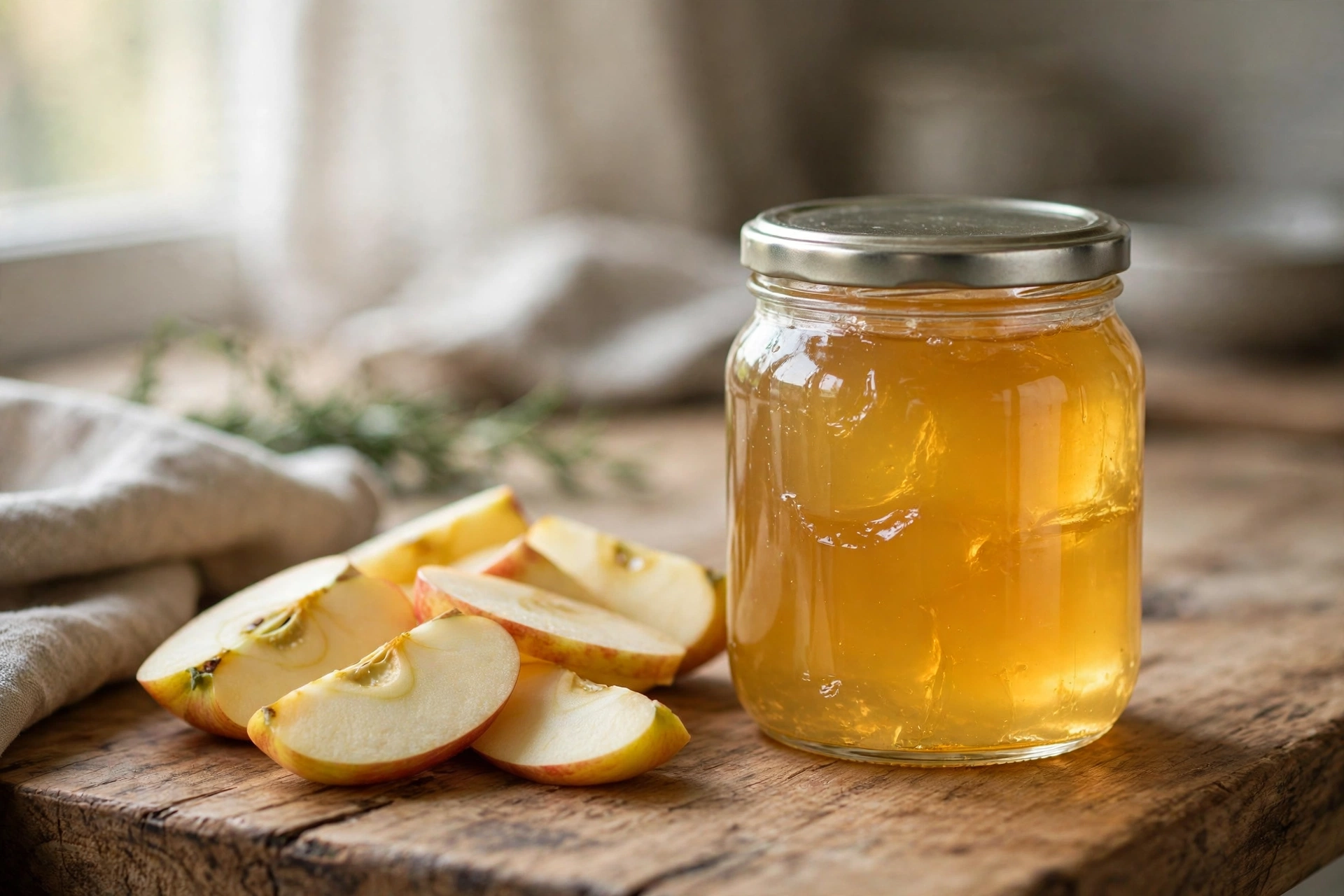
Apple jelly is the showpiece of the sweet-spreads shelf: no pulp, no seeds, just clear amber juice set firm enough to hold its shape and glow when the jar catches the light. It is also the quickest jelly here to put together, because this tested version starts from juice rather than fruit — no cooking down and straining apples before the jelly making can begin. The trade the recipe makes is honesty about where its directions come from: apple is on the national list of jellies whose complete directions are provided with the packaged pectin, and this guide follows the pectin maker’s tested recipe as published by University of California extension.
If the water bath itself is new to you, how to can food in mason jars walks the general process before you start, and this guide is part of our preservation guides. For the same fruit cooked the slow way, see apple butter; for the juice-first method with a different fruit, see grape jelly.
What You Need
Four cups of apple juice, 1 box of powdered fruit pectin, and 5 cups of sugar, measured into a separate bowl before you start. The 1/2 teaspoon of butter or margarine is optional and is there only to reduce foaming. You also need about 6 half-pint jars with new two-piece lids, a 6- or 8-quart saucepot — jelly foams up hard and needs the room — and a boiling water canner. Use the pectin this recipe is written for; powdered and liquid pectins are not interchangeable in the same recipe.

Ball Half-Pint Mason Jars, 12-Pack
Half-pint jars are the tested jar size for this apple jelly recipe, and having the full count washed and hot before the kettle boils keeps the one-minute finish from becoming a scramble.
Check Availability
Granite Ware 21.5-Quart Water Bath Canner
A boiling water canner is the only processing method this apple jelly recipe is tested for, and its rack keeps jars upright and off the pot bottom through the full process time.
Check Availability
Ball Regular Mouth Canning Lids, 96 Count
New lids are what the two-piece closure in this recipe assumes; fresh seals are the difference between a shelf of apple jelly and a refrigerator full of jars to use first.
$36.99 from AmazonBefore You Start
Bring the boiling-water canner, half full with water, to a simmer. Wash the jars and screw bands in hot soapy water and rinse with warm water, prepare the lids following the manufacturer’s instructions, and drain the jars well before filling. One honest note about this recipe’s clock: its processing times — 10 minutes at low altitude — are longer than the 5 minutes on most of the pectin jellies in this series, because they are the times printed with this pectin recipe. Use the table below, not a neighboring recipe’s.
How to Make Apple Jelly, Step by Step
- Measure the juice. Measure 4 cups of apple juice into a 6- or 8-quart saucepot.
- Add the pectin. Stir the box of powdered pectin into the juice in the saucepot. Add the 1/2 teaspoon of butter or margarine to reduce foaming, if desired.
- First boil. Bring the mixture to a full rolling boil — a boil that doesn’t stop bubbling when stirred — on high heat, stirring constantly.
- Add the sugar. Stir in all 5 cups of sugar.
- Boil exactly 1 minute. Return the mixture to a full rolling boil and boil exactly 1 minute, stirring constantly. Remove from the heat and skim off any foam.
- Fill the jars. Ladle the hot jelly immediately into the prepared jars, filling to within 1/4 inch of the tops. Wipe the rims, center the lids, and screw the bands down fingertip-tight.
- Process in a boiling water canner for the time for your altitude in the table below. Let the jars cool, undisturbed, 12 to 24 hours, and check the seals.
The Numbers: Processing Times
These are the times printed with this recipe — note they run 5 minutes longer per band than the pectin jellies sterilized and processed on the national center’s tables.
| Jar size | 0–1,000 ft | 1,001–6,000 ft | Above 6,000 ft |
|---|---|---|---|
| Half-pints | 10 minutes | 15 minutes | 20 minutes |
Fill to within 1/4 inch of the jar tops. Yield is about 6 half-pint jars.
Juice is not the only thing an apple glut produces. The extra apples dry into rings and chips for snacking, and these are the two tools that side of the job runs on.

Etekcity Kitchen Scale
A kitchen scale confirms the 8 pounds of apples the recipe is built on, which matters more in a no-pectin recipe where fruit, cider, and sugar carry the whole set.
$9.99 from Amazon
Ziploc Freezer Quart Bags
Freezer quart bags hold the blackberry jam overflow that does not fit this batch, portioned flat so a winter smoothie or second batch thaws fast.
$26.48 from AmazonCommon Mistakes
Borrowing another jelly’s processing time. This recipe’s table says 10, 15, and 20 minutes. The 5-minute rows on neighboring jelly pages belong to recipes that start with presterilized jars; swapping tables between recipes is how a batch ends up under-processed.
Cutting the sugar. Five cups is the tested proportion for 4 cups of juice and a box of powdered pectin. Sugar is structural in a pectin jelly, and reducing it is the most common reason a batch stays syrup.
Swapping pectin forms. This recipe is written for powdered pectin, stirred into the juice before the sugar. Liquid pectin is added at a different point in its own recipes and is not interchangeable here.
Boiling by feel instead of the clock. The recipe’s finish is exact: a full rolling boil, held for exactly 1 minute. Under-boiled jelly sets soft; over-boiled jelly can break its gel the other way.
Moving the jars too soon. The recipe gives the jars 12 to 24 hours of undisturbed cooling before the seals are checked. Jostling hot jars is a quiet cause of failed seals and disturbed sets.
Storage and Shelf Life
Store sealed jars in a cool, dark, dry place with the bands removed, and label each jar with the date. Sweet spreads are best if eaten within one year, so rotate the shelf and eat the oldest jars first. A jar that does not seal goes in the refrigerator and gets used first. Once a jar is opened, keep it refrigerated.
Viewers also searched for these items.
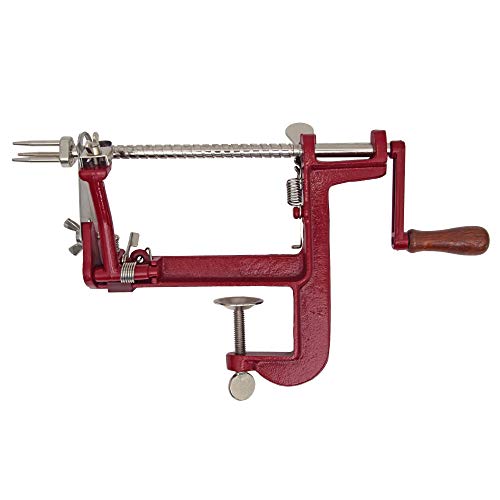
Johnny Apple Peeler
A countertop apple peeler keeps a juice-making apple session moving when you press your own fruit, coring and slicing at a pace a paring knife cannot match.
$34.99 from Amazon
ThermoPro Instant-Read Thermometer
An instant-read thermometer confirms the canner water and your kitchen work honestly, and earns its drawer space across every other preserving job in this series.
$8.99 from Amazon
FoodSaver Elite Vacuum Sealer
A second vacuum sealer option for the freezer side of a apple jelly glut, with a liquid-friendly design for juicy fruit portions.
$218.56 from AmazonFrequently Asked Questions
Why does this jelly process longer than the others in this series?
Because that is the table printed with this recipe. The pectin maker’s directions, as published by University of California extension, process half-pints for 10 minutes at 0–1,000 feet — and a tested recipe’s times travel with the recipe, not with the fruit.
Can I reduce the sugar?
Not in this recipe. A reduced-sugar jelly needs a pectin and a recipe tested for reduced sugar — see our reduced-sugar fruit spread for the tested route on cutting sugar safely.
Do I have to add the butter?
No. The 1/2 teaspoon of butter or margarine is optional and only reduces foaming. Skim well at the end if you leave it out.
How much jelly does one batch make?
About 6 half-pint jars from 4 cups of apple juice.
Recipe, quantities, and processing times: “Apple Jelly,” the Sure-Jell powdered pectin recipe as published by the University of California Cooperative Extension Master Food Preservers, via UC Agriculture and Natural Resources. Apple is among the jellies the National Center for Home Food Preservation lists as made from the complete directions provided with packaged pectin.
Prices shown on this page were last checked November 26, 2026 — prices change; check before you buy.
Talk it over with other readers
The Truly Preserved Community on Facebook is where readers compare notes on food storage, water, and backup power — and where your questions help decide what we research next.