
Truly Preserved is reader-supported. If you buy through a link on this page we may earn a commission at no extra cost to you. Nobody pays for placement or scores.
THE SHORT ANSWER
Plum jam with powdered pectin: crush 6 cups of fully ripe plums (about 3½ pounds), stir in 1 package of powdered pectin, bring to a full boil, add 8 cups of sugar, and boil hard for exactly 1 minute. Fill hot, sterile half-pint or pint jars at 1/4 inch of headspace and process 5 minutes in a boiling water canner at 0–1,000 feet, 10 minutes at 1,001–6,000 feet, and 15 minutes above 6,000 feet. The batch makes about 9 half-pint jars. Every figure on this page comes from the tested source credited at the bottom.
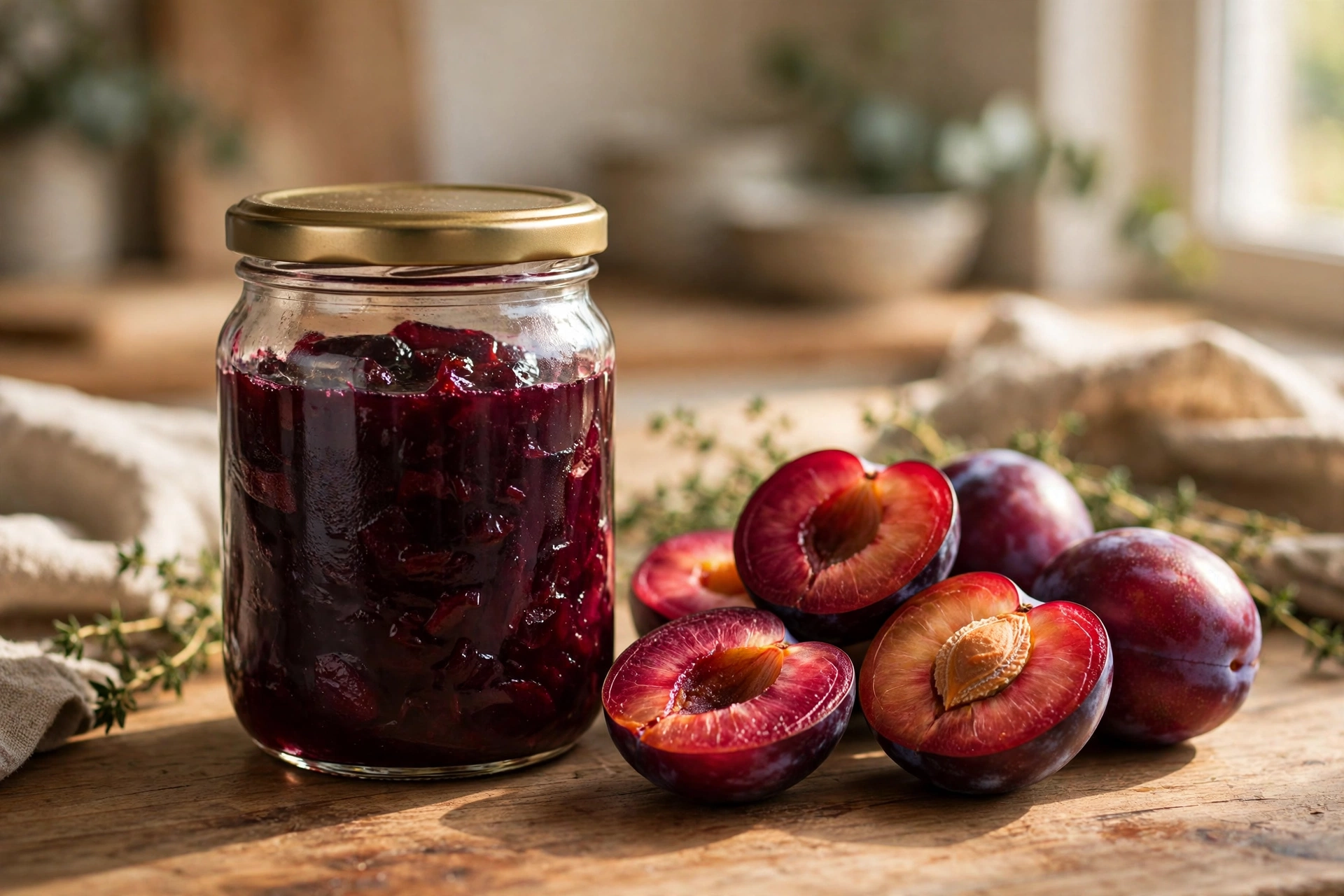
Plum jam is the sleeper of the sweet-spreads shelf — deep garnet, tart under the sweet, and the jar bakers reach for when a filling or a glaze needs backbone. Plums bring more of their own pectin than most jam fruits, but this tested recipe still runs on a package of powdered pectin, which is what makes it fast and certain: no long boil, no guessing at a gel point, just one hard minute and into the jars. The one piece of real work is the pits, and the recipe has a trick for the clingy ones.
This guide follows the tested recipe exactly: its cups, its pectin, its sugar, and its minutes. The general water bath method is covered in how to can food in mason jars if this is your first time at the canner, and this guide is part of our preservation guides. The same powdered-pectin method runs the flagship strawberry jam and the peach jam — stone fruit behaves much the same in the kettle.
What You Need
About 3½ pounds of fully ripe plums — enough for 6 cups once they are cut into pieces, pitted, and crushed — plus 1 package of powdered pectin and 8 cups of sugar. That is the whole ingredient list; this tested recipe carries no lemon juice. If the flesh clings tightly to the pits, the recipe’s answer is a small amount of water and a few minutes of slow cooking to soften the fruit before pitting. You also need half-pint or pint jars with new two-piece lids, a kettle large enough for a full rolling boil, and a boiling water canner. Buy the pectin fresh; the added-pectin directions warn that old pectin may result in poor gels.

Ball Half-Pint Mason Jars, 12-Pack
Half-pint jars are the tested jar size for this plum jam recipe, and having the full count washed and hot before the kettle boils keeps the one-minute finish from becoming a scramble.
Check Availability
Granite Ware 21.5-Quart Water Bath Canner
A boiling water canner is the only processing method this plum jam recipe is tested for, and its rack keeps jars upright and off the pot bottom through the full process time.
Check Availability
Ball Regular Mouth Canning Lids, 96 Count
New lids are what the two-piece closure in this recipe assumes; fresh seals are the difference between a shelf of plum jam and a refrigerator full of jars to use first.
$36.99 from AmazonBefore You Start
Sterilize the canning jars and prepare the two-piece lids according to the manufacturer’s directions, as the recipe directs — this is a 5-minute process at low altitude, and short processes start with sterile jars. Sort fully ripe plums and wash them before cutting. Measure everything before the kettle goes on the heat: once the plums and pectin reach a boil, the recipe moves fast and there is no pause in it for measuring sugar or fighting a stubborn pit.
How to Make Plum Jam, Step by Step
- Prepare the fruit. Sort fully ripe plums, wash them, cut them into pieces, and remove the pits. If the flesh clings tightly to the pits, cook the plums slowly in a small amount of water for a few minutes until they soften, then remove the pits. Crush the fruit.
- Measure and add pectin. Measure 6 cups of crushed plums into a kettle. Add the package of powdered pectin and stir well.
- First boil. Place the kettle on high heat and, stirring constantly, bring it quickly to a full boil with bubbles over the entire surface.
- Add the sugar. Pour in all 8 cups of sugar at once and keep stirring.
- Boil hard 1 minute. Heat again to a full bubbling boil and boil hard for 1 minute, stirring constantly. Then remove the kettle from the heat and skim.
- Fill the jars. Fill the hot jam immediately into hot, sterile jars, leaving 1/4 inch of headspace. Wipe the rims with a dampened clean paper towel and adjust the two-piece lids.
- Process in a boiling water canner for the time for your altitude in the table below, then let the jars cool undisturbed and check every seal.
The Numbers: Processing Times
One row covers both jar sizes this recipe is tested for. Altitude changes the minutes, not the recipe.
| Jar size | 0–1,000 ft | 1,001–6,000 ft | Above 6,000 ft |
|---|---|---|---|
| Half-pints or pints | 5 minutes | 10 minutes | 15 minutes |
Headspace is 1/4 inch. Yield is about 9 half-pint jars.
Not every plum belongs in jam. The overflow dries into chewy plum halves for snacking and baking, and these are the two tools that side of the job runs on.
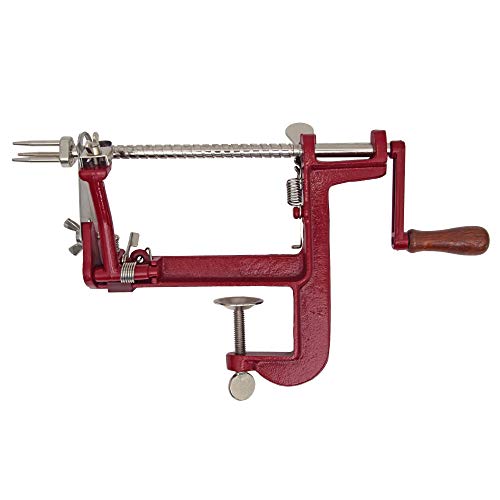
Johnny Apple Peeler
A countertop apple peeler speeds the prep on 8 pounds of apples; the recipe still quarters and cores by hand, but peeling and slicing stop being the long half of the job.
$34.99 from Amazon
Ziploc Freezer Quart Bags
Freezer quart bags hold the blackberry jam overflow that does not fit this batch, portioned flat so a winter smoothie or second batch thaws fast.
$26.48 from AmazonCommon Mistakes
Fighting clingstone pits raw. The recipe builds the workaround in: a few minutes of slow cooking in a small amount of water softens the flesh so the pits come free. Mangled, half-pitted fruit measures wrong and cooks unevenly.
Cutting the sugar. Eight cups is the tested proportion for 6 cups of crushed plums and a package of powdered pectin. Sugar is structural in a pectin jam; reducing it is the most common reason a batch stays syrup.
Using underripe plums. The recipe calls for fully ripe fruit. Plums are unusual — some carry enough natural pectin to gel on their own — but this recipe’s balance of fruit, added pectin, and sugar was tested at full ripeness.
Calling a simmer a boil. The first boil is a full boil with bubbles over the entire surface, and the final boil is a hard boil held for a full minute, stirring constantly. A gentle burble does not count.
Doubling the batch. A doubled kettle heats differently and routinely fails to set. Nine jars at a time, made twice, beats eighteen jars of syrup.
Storage and Shelf Life
Store sealed jars in a cool, dark, dry place with the bands removed, and label each jar with the date. Sweet spreads are best if eaten within one year, so rotate the shelf and eat the oldest jars first. A jar that does not seal goes in the refrigerator and gets used first. Once a jar is opened, keep it refrigerated.
Viewers also searched for these items.

Etekcity Digital Kitchen Scale
A kitchen scale weighs the fruit this recipe measures by the pound, so the crush that goes into the kettle matches the amount the sugar and pectin were tested against.
$9.99 from Amazon
ThermoPro Instant-Read Thermometer
An instant-read thermometer confirms the canner water and your kitchen work honestly, and earns its drawer space across every other preserving job in this series.
$8.99 from Amazon
FoodSaver Elite Vacuum Sealer
A second vacuum sealer option for the freezer side of a plum jam glut, with a liquid-friendly design for juicy fruit portions.
$218.56 from AmazonFrequently Asked Questions
Do I peel the plums?
No. The recipe’s preparation is wash, cut into pieces, and remove the pits — no peeling. The skins cook into the jam and are part of its color and tartness.
Can I reduce the sugar?
Not in this recipe. A reduced-sugar spread needs a recipe and a pectin tested for reduced sugar — see our reduced-sugar fruit spread, which interestingly allows plums among its fruit combinations. This jam is balanced at 8 cups.
Why is there no lemon juice in this recipe?
Because the tested recipe does not call for any. Plums and powdered pectin set this jam as written; adding ingredients the recipe does not list changes a tested formula into an untested one.
How much jam does one batch make?
About 9 half-pint jars from 6 cups of crushed plums.
Procedure, quantities, and processing times: “Plum Jam — with powdered pectin,” adapted from “How to Make Jellies, Jams and Preserves at Home,” Home and Garden Bulletin No. 56, Extension Service, USDA (1982 reprint), via the National Center for Home Food Preservation.
Prices shown on this page were last checked November 26, 2026 — prices change; check before you buy.
Talk it over with other readers
The Truly Preserved Community on Facebook is where readers compare notes on food storage, water, and backup power — and where your questions help decide what we research next.