
Truly Preserved is reader-supported. If you buy through a link on this page we may earn a commission at no extra cost to you. Nobody pays for placement or scores.
THE SHORT ANSWER
Pepper jelly, the tested Golden Pepper Jelly from the University of Georgia: purée 5 cups of chopped yellow bell peppers and 1/2 cup of chopped Serrano chile peppers in 1½ cups of white distilled vinegar (5%), boil the purée 10 minutes, strain it, then cook 2¼ cups of that juice with 5 cups of sugar and 1 pouch (3 ounces) of liquid pectin, boiling hard for exactly 1 minute. Fill hot, pre-sterilized half-pint jars at 1/4-inch headspace and process 5 minutes in a boiling water canner at 0–1,000 feet, 10 minutes at 1,001–6,000 feet, and 15 minutes above 6,000 feet. The batch makes about 5 half-pint jars. Do not reduce the vinegar — it is what makes this low-acid pepper recipe safe for a water bath. Every figure on this page comes from the source credited at the bottom.
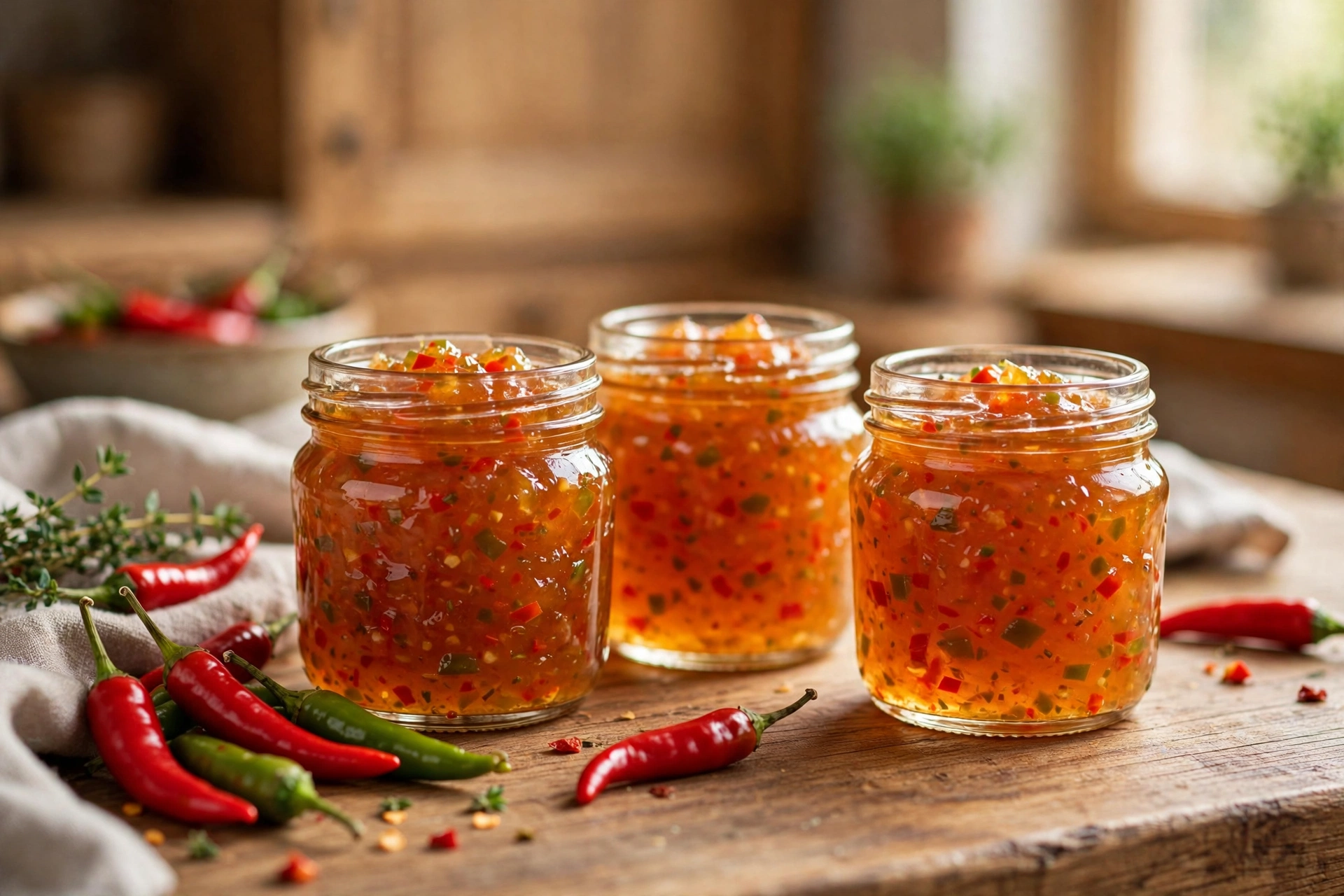
Pepper jelly is the one jar in this series that is not a breakfast food first. It is the appetizer jar — spooned over cream cheese with crackers, glazed onto pork, set out where guests can find it. It is also the one recipe here where the safety logic is different in kind, not just degree. Peppers are a low-acid food; what makes this jelly safe for a boiling water canner is the measured vinegar, and the source says so in plain words: the addition of vinegar to the low-acid sweet and hot peppers makes this recipe safe for boiling water canning, and the amount must not be reduced.
This guide follows the University of Georgia’s tested Golden Pepper Jelly exactly — the pepper jelly developed and released by the National Center for Home Food Preservation’s own program. Note before you shop: this recipe uses liquid pectin, not powdered, and the two forms are not interchangeable. The general water bath method is covered in how to can food in mason jars, and this guide is part of our preservation guides alongside the fruit jellies like grape jelly that share its one-minute boil.
What You Need
Five cups of chopped yellow bell peppers — about 4 large fleshy peppers as purchased — and 1/2 cup of chopped Serrano chile peppers, about 5 peppers as purchased. Then 1½ cups of white distilled vinegar at 5% acidity, 5 cups of sugar, and 1 pouch (3 ounces) of liquid pectin. You also need half-pint jars with lids and ring bands, a blender or food processor, a jelly bag for straining (several layers of cheesecloth may also be used), an 8- or 10-quart saucepan, and a boiling water canner. And gloves: the source’s caution is to wear plastic or rubber gloves and not touch your face while handling or cutting hot peppers.

Ball Half-Pint Mason Jars, 12-Pack
Half-pint jars are the tested jar size for this pepper jelly recipe, and having the full count washed and hot before the kettle boils keeps the one-minute finish from becoming a scramble.
Check Availability
Granite Ware 21.5-Quart Water Bath Canner
A boiling water canner is the only processing method this pepper jelly recipe is tested for, and its rack keeps jars upright and off the pot bottom through the full process time.
Check Availability
Ball Regular Mouth Canning Lids, 96 Count
New lids are what the two-piece closure in this recipe assumes; fresh seals are the difference between a shelf of pepper jelly and a refrigerator full of jars to use first.
$36.99 from AmazonBefore You Start
Three rules govern this recipe, and all three come straight from its notes. First, do not reduce the vinegar — the vinegar is the acid that makes low-acid peppers safe for water bath canning, and the vinegar and sugar amounts are also what the added pectin needs to form a gel. Second, keep the membrane in the hot peppers: the recipe removes stems and seeds but leaves the membrane, because the capsaicin that carries the heat is located there. Third, this jelly is a half-pint recipe — the source notes it is best to use half-pint jars, and its table gives no other size.
How to Make Pepper Jelly, Step by Step
- Prepare the jars. Wash and rinse half-pint canning jars, pre-sterilize them, and keep them hot until ready to fill. Prepare lids and ring bands according to the manufacturer’s directions.
- Trim the peppers. Wash all peppers thoroughly and remove the stems and seeds. Do not remove the membrane from the hot peppers, since the capsaicin for pepper heat is located there. Gloves on, and do not touch your face.
- Purée. Place the sweet and hot peppers in a blender or food processor. Add enough of the vinegar to purée the peppers, then purée.
- Boil and strain. Combine the pepper-vinegar purée and the remaining vinegar in an 8- or 10-quart saucepan. Heat to a boil, then boil 10 minutes to extract flavors and color. Remove from the heat and strain through a jelly bag into a bowl.
- Cook the jelly. Measure 2¼ cups of the strained pepper-vinegar juice into the saucepan. Stir in the 5 cups of sugar until dissolved and return the mixture to a boil.
- Add the pectin. Add the pouch of liquid pectin, return to a full rolling boil, and boil hard for 1 minute, stirring constantly. Remove from the heat and skim off the foam quickly.
- Fill and process. Fill the hot jelly immediately into hot, pre-sterilized half-pint jars, leaving 1/4-inch headspace. Wipe the rims with a dampened clean paper towel and apply the prepared lids. Process in a boiling water canner for the time for your altitude below, then let the jars cool, undisturbed, 12 to 24 hours and check for vacuum seals.
The Numbers: Processing Times
Half-pints are the only jar size in this recipe’s table.
| Jar size | 0–1,000 ft | 1,001–6,000 ft | Above 6,000 ft |
|---|---|---|---|
| Half-pint jars | 5 minutes | 10 minutes | 15 minutes |
Headspace is 1/4 inch. Yield is about 5 half-pint jars. The source also prints an optional 10-minute process (10, 15, and 20 minutes by the same altitude bands) that may provide a stronger vacuum, with jars that would not need to be pre-sterilized — the 5-minute process above is the recipe’s main table.
Pepper season produces more than jelly. The extra peppers freeze well for winter cooking, chopped and bagged, and these are the two tools that side of the job runs on.

Ziploc Freezer Quart Bags
Freezer quart bags hold the pepper jelly overflow that does not fit this batch, portioned flat so a winter smoothie or second batch thaws fast.
$26.48 from Amazon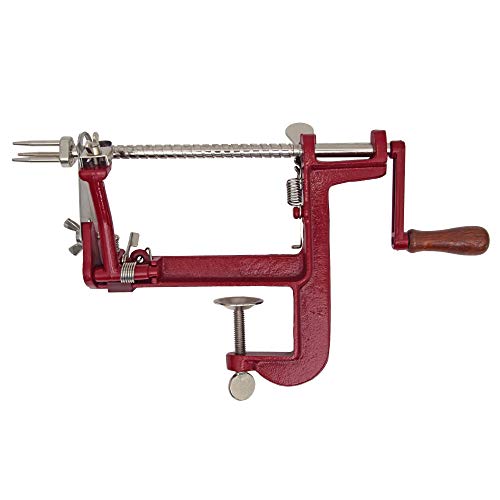
Johnny Apple Peeler
A countertop apple peeler speeds the prep on 8 pounds of apples; the recipe still quarters and cores by hand, but peeling and slicing stop being the long half of the job.
$34.99 from AmazonCommon Mistakes
Reducing the vinegar. This is the safety mistake, not a flavor preference. The source states it flatly: the vinegar makes this low-acid pepper recipe safe for boiling water canning — do not reduce the amount of vinegar.
Seeding out the heat and expecting the same jelly. The recipe removes stems and seeds but keeps the membrane in the hot peppers, because that is where the capsaicin is. Strip the membrane and you have changed both the heat and the tested preparation.
Grabbing powdered pectin. This recipe is written for a 3-ounce pouch of liquid pectin, added after the sugar. Powdered and liquid pectins are not interchangeable, and they enter their recipes at different points.
Using pint jars because they are on the shelf. The source says it is best to use half-pint jars and gives process times for half-pints only. A jar size with no tested time is not a jar size for this recipe.
Touching your face mid-prep. The caution is printed at the top of the recipe for a reason: wear plastic or rubber gloves while handling hot peppers, and if you do not wear gloves, wash your hands thoroughly with soap and water before touching your face or eyes.
Storage and Shelf Life
Let the processed jars cool undisturbed for 12 to 24 hours and check for vacuum seals before storing sealed jars in a cool, dark, dry place, bands removed and labeled with the date. Sweet spreads are best if eaten within one year. The source adds two specifics for this jelly: refrigerate any leftover jelly from filling jars and enjoy it freshly made, and refrigerate the jelly once sealed jars are opened for use.
Viewers also searched for these items.

ThermoPro Instant-Read Thermometer
An instant-read thermometer verifies the temperatures everywhere else in the preserving kitchen, even though this jelly's finish is judged by its one-minute rolling boil.
$8.99 from Amazon
Etekcity Digital Kitchen Scale
A kitchen scale helps when pepper shopping runs by weight, so the cups of chopped peppers the recipe measures start from a known pile of produce.
$9.99 from Amazon
FoodSaver Elite Vacuum Sealer
A second vacuum sealer option for the freezer side of a pepper jelly glut, with a liquid-friendly design for juicy fruit portions.
$218.56 from AmazonFrequently Asked Questions
Can I use different peppers?
Within the recipe’s own notes, yes. Other colors of sweet pepper can be substituted — they will give the jelly a different color — and other hot peppers can also be substituted. The source advises starting with a mild hot pepper flavor and increasing it to personal taste. The amounts do not change.
Can I make it less tart by cutting the vinegar?
No. The recipe’s note is explicit: do not reduce the amount of vinegar. It is the acid that makes low-acid peppers safe for boiling water canning, and the vinegar and sugar amounts are also required for the pectin to gel.
Why liquid pectin here when the other jellies use powdered?
Because that is the recipe as tested and released by the University of Georgia. Pectin form is part of a tested formula — the liquid pouch goes in after the sugar comes to a boil, the reverse of the powdered-pectin order in this series’ fruit jellies.
How much jelly does one batch make?
About 5 half-pint jars — the smallest batch in this series, and a good size for a first pepper jelly.
Procedure, quantities, and processing times: “Golden Pepper Jelly,” developed at the University of Georgia, Athens, and released by Elizabeth L. Andress, Ph.D., May 2018, via the National Center for Home Food Preservation.
Prices shown on this page were last checked November 26, 2026 — prices change; check before you buy.
Talk it over with other readers
The Truly Preserved Community on Facebook is where readers compare notes on food storage, water, and backup power — and where your questions help decide what we research next.