
Truly Preserved is reader-supported. If you buy through a link on this page we may earn a commission at no extra cost to you. Nobody pays for placement or scores.
THE SHORT ANSWER
The tested reduced-sugar route is a specific recipe, not a regular jam with sugar left out: the USDA’s peach-pineapple spread. Combine 4 cups of drained peach pulp with 2 cups of drained unsweetened crushed pineapple and 1/4 cup of bottled lemon juice, add up to 2 cups of sugar only if you want it — the recipe may be made with none — boil gently for 10 to 15 minutes, and fill jars at 1/4-inch headspace. Process half-pints for 15 minutes at 0–1,000 feet, 20 minutes at 1,001–3,000 feet, 20 minutes at 3,001–6,000 feet, and 25 minutes above 6,000 feet; pints take 20, 25, 30, and 35 minutes. The batch makes 5 to 6 half-pints. Every figure on this page comes from the USDA source credited at the bottom.
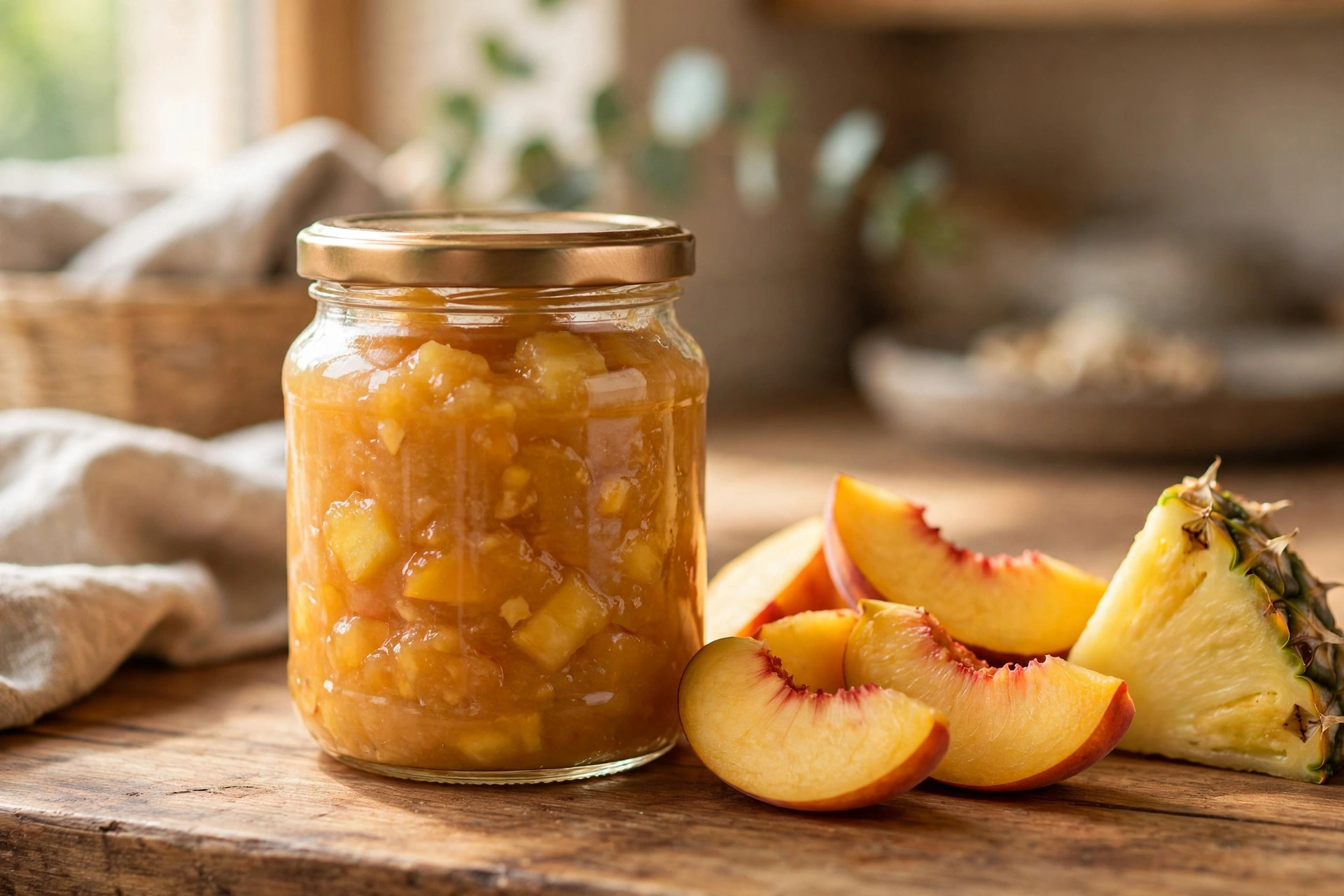
Every jam maker eventually asks the same question: can I just use less sugar? The honest answer from the tested sources is no — and yes. No, you cannot take a regular jam recipe and cut its sugar: in a standard pectin recipe the sugar is part of the gel and part of the preservation, and the national guidance says plainly not to substitute sweeteners for the required sugar in recipes calling for regular liquid or powdered pectins. Yes, you can can a genuinely reduced-sugar spread — if you use a recipe that was tested to work that way. This guide teaches that recipe, and the rules around it.
The recipe is the USDA’s peach-pineapple spread, and it works on a different principle from the jams: no pectin package at all, just drained fruit pulp cooked gently until it thickens, then processed for times closer to a fruit purée than to a jam. The general water bath method is covered in how to can food in mason jars, and this guide is part of our preservation guides. When you want the full-sugar version of the same fruit, peach jam is the tested recipe; the flagship strawberry jam shows what the sugar is doing in a regular pectin jam.
What You Need
Four to 6 pounds of firm, ripe peaches — enough to yield 4 cups of drained peach pulp by the procedure below — plus 2 cups of drained unsweetened crushed pineapple and 1/4 cup of bottled lemon juice. Sugar is genuinely optional in this recipe: it may be made without sugar or with up to 2 cups, according to taste or preference, and non-nutritive sweeteners may be added. You also need a jelly bag or a strainer lined with four layers of cheesecloth for draining the pulp, half-pint or pint jars with new two-piece lids, and a boiling water canner.

Ball Half-Pint Mason Jars, 12-Pack
Half-pint jars are the tested jar size for this reduced-sugar fruit spread recipe, and having the full count washed and hot before the kettle boils keeps the one-minute finish from becoming a scramble.
Check Availability
Granite Ware 21.5-Quart Water Bath Canner
A boiling water canner is the only processing method this reduced-sugar fruit spread recipe is tested for, and its rack keeps jars upright and off the pot bottom through the full process time.
Check Availability
Ball Regular Mouth Canning Lids, 96 Count
New lids are what the two-piece closure in this recipe assumes; fresh seals are the difference between a shelf of reduced-sugar fruit spread and a refrigerator full of jars to use first.
$36.99 from AmazonBefore You Start
Understand what this spread is before you make it. With little or no sugar and no added pectin, it sets soft — a spoonable fruit spread, not a firm jam — and its processing times are much longer than a jam’s, because the recipe is processed like a fruit purée. One more rule from the source: if aspartame is the sweetener you add, its sweetening power may be lost within 3 to 4 weeks. And the standing rule for everything else on this shelf: never create a reduced-sugar version by editing a regular recipe — this spread exists precisely because improvising that edit is not tested or safe to assume.
How to Make a Reduced-Sugar Fruit Spread, Step by Step
- Prepare the peaches. Thoroughly wash 4 to 6 pounds of firm, ripe peaches and drain well. Peel and remove the pits. Grind the fruit flesh with a medium or coarse blade, or crush it with a fork — do not use a blender.
- Cook and drain the pulp. Place the ground or crushed fruit in a 2-quart saucepan. Heat slowly to release the juice, stirring constantly, until the fruit is tender. Place the cooked fruit in a jelly bag or a strainer lined with four layers of cheesecloth and allow the juice to drip about 15 minutes. Save the juice for jelly or other uses.
- Measure the pulp. Measure 4 cups of the drained fruit pulp for making the spread. The recipe may also be made with any combination of peaches, nectarines, apricots, and plums.
- Combine. Combine the 4 cups of pulp, the 2 cups of drained unsweetened crushed pineapple, and the 1/4 cup of bottled lemon juice in a 4-quart saucepan. Add up to 2 cups of sugar, if desired, and mix well.
- Boil gently. Heat and boil gently for 10 to 15 minutes, stirring enough to prevent sticking.
- Fill the jars. Fill the jars quickly, leaving 1/4-inch headspace. Adjust the lids.
- Process in a boiling water canner for the time for your jar size and altitude in the table below — note this table has four altitude bands, not the three the jams use. Let the jars cool undisturbed and check every seal.
The Numbers: Processing Times
Reduced sugar means longer processing: these times are closer to a fruit purée’s than to a jam’s, and the altitude bands split at 3,000 feet as well as 1,000 and 6,000.
| Jar size | 0–1,000 ft | 1,001–3,000 ft | 3,001–6,000 ft | Above 6,000 ft |
|---|---|---|---|---|
| Half-pints | 15 minutes | 20 minutes | 20 minutes | 25 minutes |
| Pints | 20 minutes | 25 minutes | 30 minutes | 35 minutes |
Headspace is 1/4 inch. Yield is 5 to 6 half-pints.
The drained peach juice from step 2 is not waste — the recipe itself says to save it for jelly or other uses, and surplus fruit from the same shopping trip freezes well for later batches. These are the two tools that side of the job runs on.

Ziploc Freezer Quart Bags
Freezer quart bags portion the surplus fruit for the next batch of spread, and the drained peach juice this recipe saves freezes flat until jelly day.
$26.48 from Amazon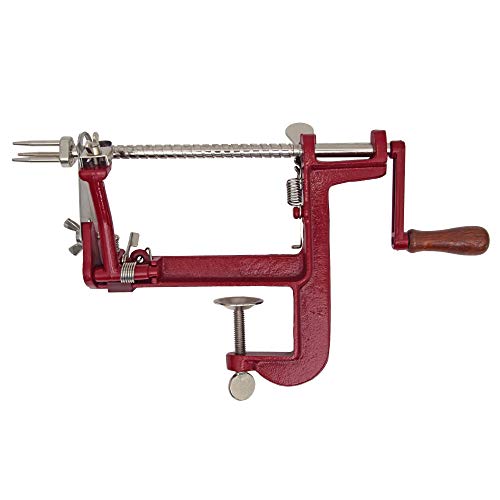
Johnny Apple Peeler
A countertop apple peeler speeds the prep on 8 pounds of apples; the recipe still quarters and cores by hand, but peeling and slicing stop being the long half of the job.
$34.99 from AmazonCommon Mistakes
Cutting the sugar in a regular jam recipe. The single most common reduced-sugar error. Regular powdered and liquid pectins need their recipe’s sugar to gel and preserve; the national guidance says not to substitute sweeteners for the required sugar in those recipes. Reduced sugar starts from a recipe tested for it — like this one.
Using the jam processing times. Five minutes is a jam time. This spread processes 15 minutes for half-pints at low altitude and climbs from there, because a low-sugar pulp is processed like a fruit purée. The recipe and its table travel together.
Blending the peaches. The recipe says grind with a medium or coarse blade or crush with a fork — and says do not use a blender. The pulp’s texture is part of how this spread cooks and thickens.
Expecting a firm jam set. There is no pectin package in this recipe and sugar is optional, so the finished spread is soft and spoonable by design. Judging it against a full-sugar jam’s set leads people to overcook a spread that was already right.
Improvising other fruits. The tested allowance is specific: any combination of peaches, nectarines, apricots, and plums. Other fruits are not a tested version of this recipe, however reasonable they sound.
Storage and Shelf Life
Store sealed jars in a cool, dark, dry place with the bands removed, and label each jar with the date. Sweet spreads are best if eaten within one year, and reduced-sugar spreads deserve the front of the rotation — without sugar’s preservative help they are the jars to eat first, and if you sweetened with aspartame, the source notes its sweetening power may be lost within 3 to 4 weeks. A jar that does not seal goes in the refrigerator and gets used first. Once a jar is opened, keep it refrigerated.
Viewers also searched for these items.

Etekcity Digital Kitchen Scale
A kitchen scale weighs the fruit this recipe measures by the pound, so the crush that goes into the kettle matches the amount the sugar and pectin were tested against.
$9.99 from Amazon
ThermoPro Instant-Read Thermometer
An instant-read thermometer confirms the canner water and your kitchen work honestly, and earns its drawer space across every other preserving job in this series.
$8.99 from Amazon
Nesco VS-12 Vacuum Sealer
A second vacuum sealer option for freezing the fruit portions this spread runs on, sized for everyday kitchen batches.
$108.18 from AmazonFrequently Asked Questions
Can I make this with no sugar at all?
Yes — that is the recipe’s headline feature. It may be made without sugar or with up to 2 cups, according to taste or preference, and non-nutritive sweeteners may be added. The processing times are the same either way.
Can I reduce the sugar in the strawberry or peach jam instead?
No. Those are regular powdered-pectin recipes whose sugar is required for the gel. The national guidance offers two tested doors to lower sugar: a recipe tested without it, like this spread, or a special no-sugar-needed pectin used with its own package directions. Editing a regular recipe is neither.
Why does this spread process so much longer than jam?
Because with the sugar reduced or absent, the spread is processed like a fruit purée — the national center’s own description of this recipe. Longer times at every altitude are the price of the missing sugar, and they are not optional.
How much spread does one batch make?
Five to 6 half-pints from 4 cups of drained peach pulp and 2 cups of pineapple.
Procedure, quantities, and processing times: USDA Complete Guide to Home Canning, Guide 2, “Reduced-Sugar Peach-Pineapple Spread,” Agriculture Information Bulletin No. 539, USDA, revised 2015, via the National Center for Home Food Preservation. Reduced-sugar rules: National Center for Home Food Preservation, “Canned Foods for Special Diets” and “Making Jams and Jellies with Added Pectin.”
Prices shown on this page were last checked November 26, 2026 — prices change; check before you buy.
Talk it over with other readers
The Truly Preserved Community on Facebook is where readers compare notes on food storage, water, and backup power — and where your questions help decide what we research next.