
Truly Preserved is reader-supported. If you buy through a link on this page we may earn a commission at no extra cost to you. Nobody pays for placement or scores.
THE SHORT ANSWER
Freeze-drying herbs is the simplest batch the machine runs: wash and dry the herbs, layer them on trays in a single layer the way you would layer kale or other leafy vegetables — Harvest Right’s own instruction — pre-freeze if you can, and run a full cycle. The herbs are done when they feel crisp, dry, or brittle with no cold or soft spots, Utah State University Extension’s dryness test. Package at once in thick Mylar (5 to 7 mil, no clear windows) with an oxygen absorber, or in jars kept dark, and store cool, dark, and dry. Extension guidance puts properly packaged freeze-dried food at 10 to 15 years of stability and recommends using home freeze-dried food within 5 to 10 years for quality. Every figure on this page comes from the maker and extension guidance credited at the bottom.
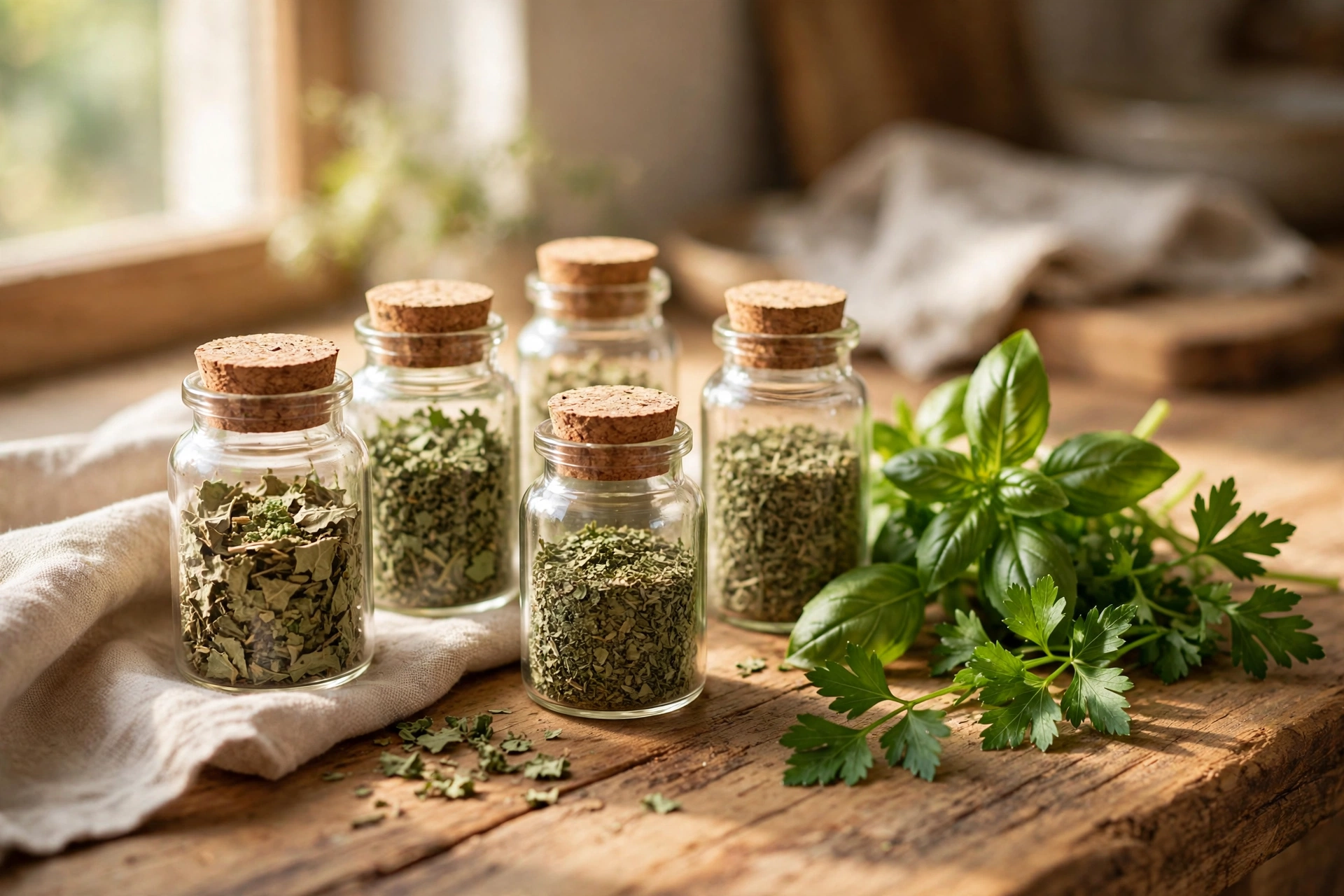
Every herb gardener knows the September problem: the basil, sage, and parsley are at their peak all at once, and the choice is to use them this week or watch them turn brown. Harvest Right opens its herbs section with exactly that question — what do you do with store-bought or homegrown sage and basil before they spoil and turn brown? — and its answer is the freeze dryer. Because the water leaves and the flavor compounds stay, the maker states that freeze-dried herbs are just as potent as fresh herbs when the water is removed.
This guide follows the makers’ published guidance and Utah State University Extension’s freeze-drying guide, and it is part of our preservation guides. If you are new to the machine, how a freeze dryer works explains the cycle, and Blue Alpine vs. Harvest Right compares the two makers whose guidance this series draws on. The same single-layer method runs the aromatics in how to freeze-dry garlic and onions — with one strong-smell difference that page covers.
What You Need
Fresh herbs — garden or store-bought, picked before they turn. Trays that fit your machine, and silicone mats or parchment if your herbs are small-leaved and prone to scattering. Thick Mylar bags (5 to 7 mil, without clear plastic windows, per Utah State’s packaging guidance) with oxygen absorbers for the storage batch, or clean jars for the working supply — Harvest Right’s storage guidance lists canning jars as a storage option when they are kept out of the light in a dark, cool location. That is the whole list: no blanching is called for in the makers’ herb guidance, no oil, no salt.
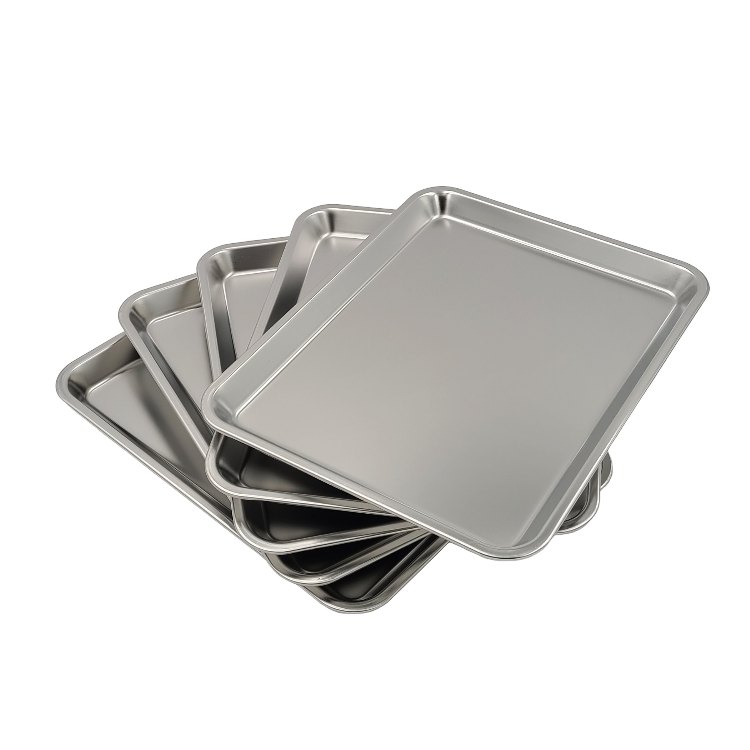
Blue Alpine Freeze Dryer Trays, Medium
A second tray set keeps garden herbs moving at harvest peak, when everything ripens in the same week.
Check the price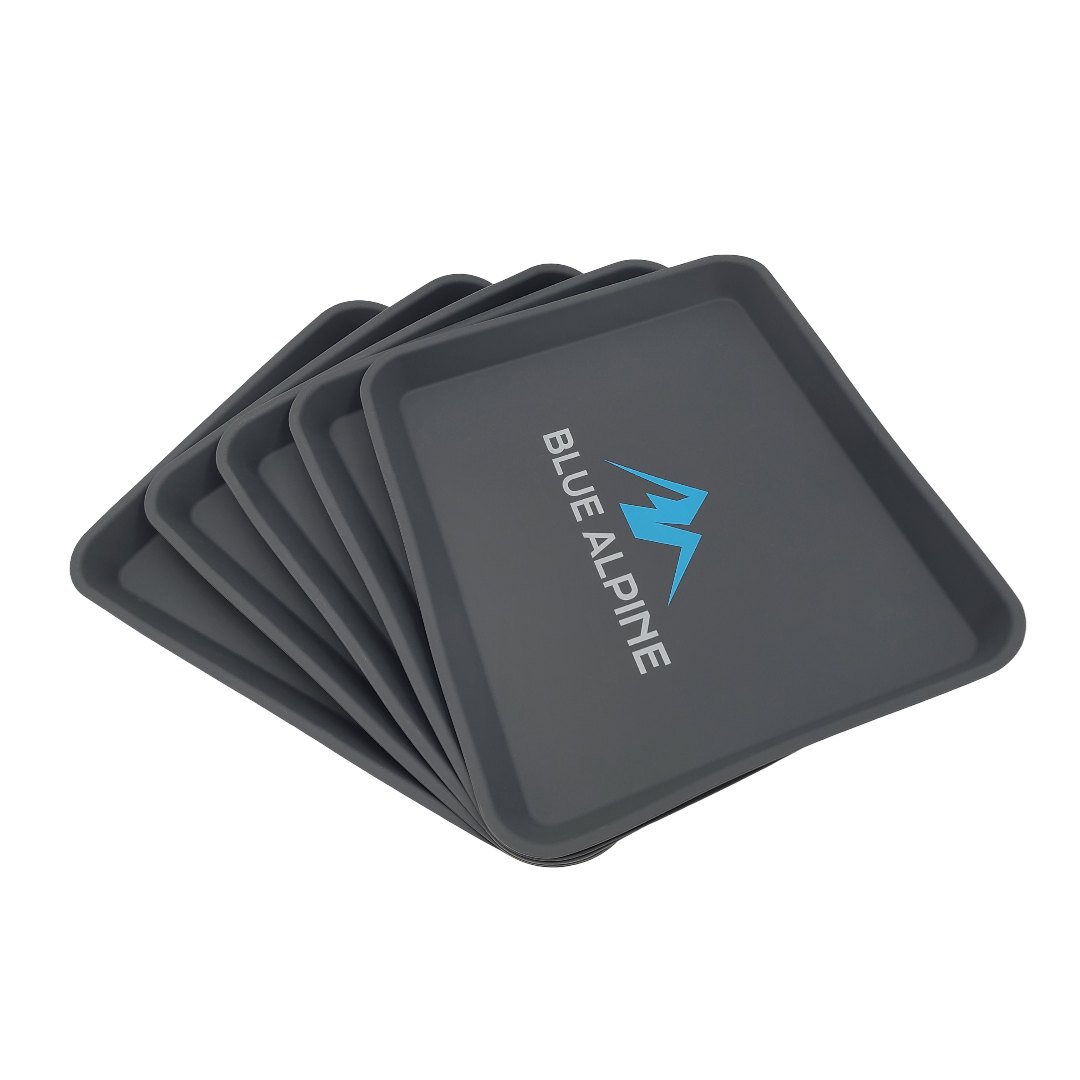
Blue Alpine Silicone Mats, Medium
Silicone mats stop small leaves from scattering across bare trays and make a crumbly finished batch easy to gather.
Check the price
Ball Half-Pint Mason Jars, 12-Pack
Half-pint jars are the working-supply form for dried herbs - small, dark-cupboard friendly, and opened often.
Check AvailabilityBefore You Start
Three extension rules carry this batch. First, sanitation: freeze-drying does not kill bacteria or other microbes — it preserves them — so clean equipment, clean work surfaces, and washed herbs matter, per Utah State. Second, the single layer: extension guidance is to lay foods in a single layer on trays with space between pieces to allow for uniform drying, and herbs, being thin leaves, are the food that rule fits best. Third, plan the packaging before the cycle ends. Dried herbs are light, dry, and eager to pull moisture back from the air; the gap between “cycle done” and “sealed” should be minutes. Extension guidance also recommends pre-freezing foods in your freezer before loading, which helps achieve faster, more even drying and maintains better texture.
How to Freeze-Dry Herbs, Step by Step
- Pick and wash. Harvest herbs fresh, wash them, and shake or pat them dry. Remove any leaves that have already turned.
- Layer the trays. Harvest Right’s method: layer the herbs onto trays just like you would do with kale or other leafy vegetables. Single layer, space between pieces, stems included or stripped — strip thick stems if you want the finished herbs ready to crumble.
- Pre-freeze if you can. Freeze the trays in your household freezer first, per extension guidance. It steadies a light, loose load and can shorten the machine’s own freezing stage, where the machine takes food to −40°F or colder.
- Run a full cycle. Let the machine run its complete freeze and dry cycle. The makers publish no per-food tested time for herbs, and the machine senses moisture and finishes when the load is dry — thin leaves are simply at the quick end of what the machine does.
- Check for dryness the extension way. The herbs should feel crisp, dry, or brittle, with no cold or soft spots. A leaf that bends instead of crumbling goes back for more dry time.
- Package immediately. Fill thick Mylar bags, add an oxygen absorber to each, and seal at once — or fill jars for the working supply and keep them in a dark, cool place. Harvest Right notes that once a container has been opened, its oxygen absorber no longer works and should be replaced before resealing.
- Store cool, dark, and dry, with the herb and date on every bag. Freeze-dried herbs go straight into recipes as they are, or get spritzed back toward fresh in a plastic bag with a spray bottle, per the maker’s rehydration guidance for leafy herbs and vegetables.
The Numbers: Machine Settings and Storage
Freeze-dryer makers do not publish per-food tested times the way the USDA publishes canning times. What the makers and extension publish are the defaults, the checks, and the storage figures in this table.
| Checkpoint | The figure | Source |
|---|---|---|
| Tray loading | Single layer, space between pieces | Utah State Extension |
| Piece thickness | Most foods 1/4 to 1/2 inch | Utah State Extension |
| Machine freezing stage | −40°F or colder | Harvest Right |
| Dryness test | Crisp, dry, or brittle — no cold or soft spots | Utah State Extension |
| Water activity, properly dried | About 0.3 or below | Utah State Extension |
| Packaging | Mylar 5–7 mil, no windows, plus oxygen absorber | Utah State Extension |
| Stability, properly packaged | 10–15 years, sometimes up to 25 | Utah State Extension |
| Recommended use window, home freeze-dried | 5–10 years for quality | Utah State Extension |
Harvest Right makes one stronger claim for herbs specifically — that freeze-dried herbs will be just as potent as fresh and the flavor will last 25 years. That is the maker’s figure, printed here as the maker states it; the extension figures above are the conservative planning numbers, and flavor herbs are at their best well inside them.
Herbs are not the only way the garden gets preserved. The overflow that does not go in the freeze dryer dries well in a dehydrator, and these are the two machines that side of the job runs on.

Blue Alpine Medium Select
The Blue Alpine medium machine whose maker's published guidance this series draws on, sized for family dessert batches.
Check the price
JB Black Gold Pump Oil
Pump oil is a consumable, not an accessory — a spare bottle on the shelf means an oil change never waits on shipping mid-season.
$54.50 from AmazonCommon Mistakes
Piling the trays. A mounded tray of basil dries at the edges and stays damp in the middle. Single layer, space between pieces — the extension rule exists for exactly this load.
Skipping the wash. Freeze-drying does not kill bacteria; it preserves them. Washed herbs and clean trays are the safety step, because there is no cooking step later for a herb that goes straight into a finished dish.
Bagging on feel alone. Leaves can feel dry while a thick stem still holds moisture. The test is crisp, dry, or brittle with no cold or soft spots — check the thickest stems, not the thinnest leaves.
Storing jars on a sunny counter. Harvest Right’s jar guidance comes with its condition: out of the light, in a dark, cool location. Light is what ages dried herbs fastest in a clear jar.
Running herbs with strong-smelling foods. Herbs pick up their neighbors’ character in a mixed batch, and the strong aromatics — garlic and onions — are the documented case. Give each its own run.
Storage and Shelf Life
Utah State Extension states that freeze-dried foods can remain safe and stable for 10 to 15 years — sometimes up to 25 — in airtight, moisture-proof packaging kept cool, dark, and dry, and recommends consuming home freeze-dried products within 5 to 10 years for quality, because home production loses nutrients and quality faster than commercial. For herbs, quality means aroma: rotate the working jar, keep the storage bags sealed, and replace the oxygen absorber any time a bag is opened and resealed. Date every bag.
Viewers also searched for these items.
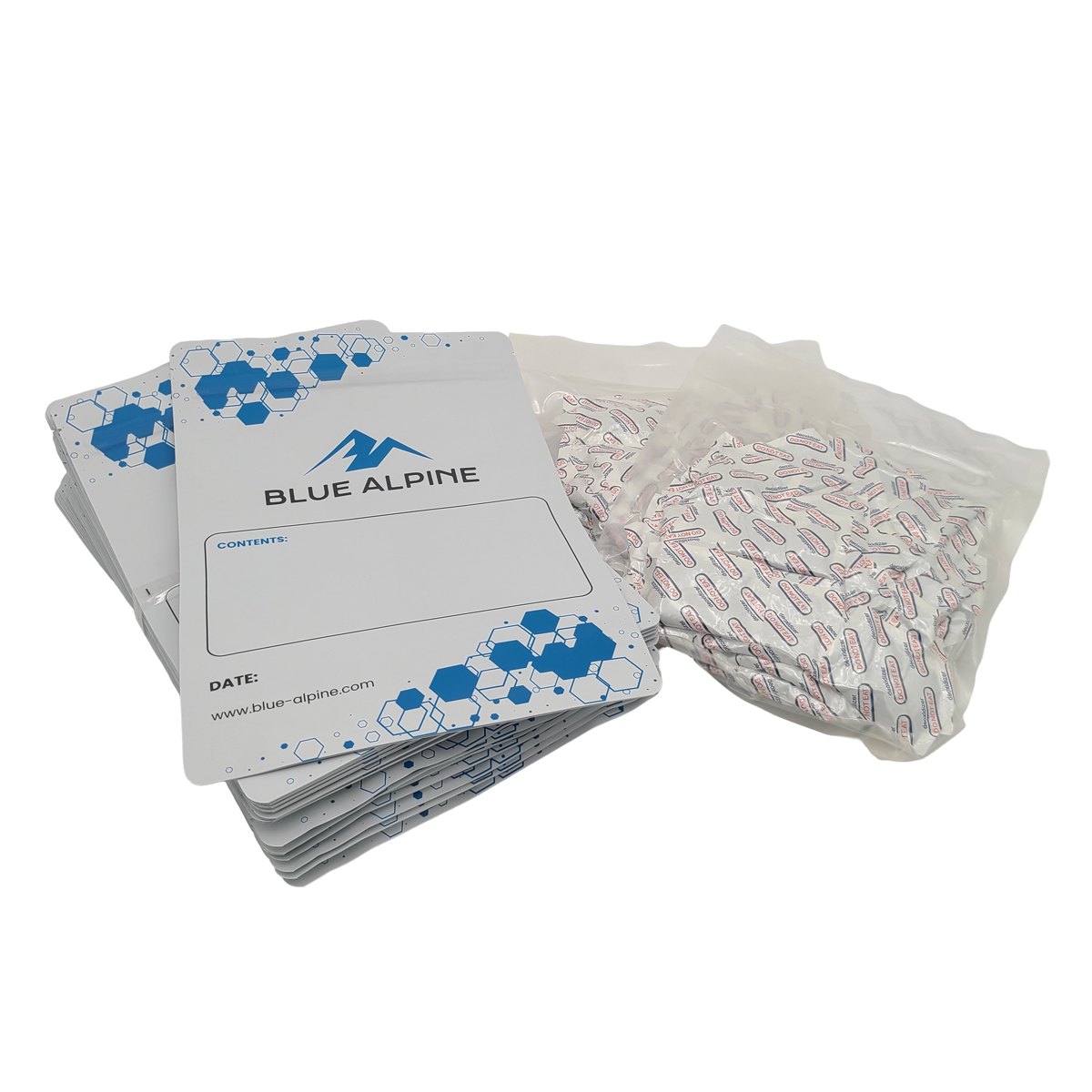
Blue Alpine Mylar Bags with Oxygen Absorbers
The maker's Mylar bags with absorbers for the storage share of the herb harvest, sealed away from light.
Check the price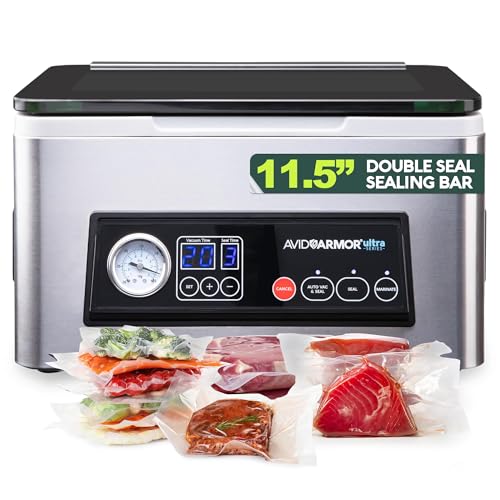
Avid Armor USV20
The high-volume chamber machine for households packaging whole runs at once.
$349.00 from Amazon
Metronic 8-Inch Impulse Sealer
An impulse sealer closes the Mylar storage bags of herbs cleanly and repeatably.
$39.99 from AmazonFrequently Asked Questions
Do I need to blanch herbs before freeze-drying?
Extension guidance recommends blanching or steaming vegetables to inactivate enzymes, but the makers’ herb guidance calls for no blanching — layer the herbs on trays like kale and run the cycle. Follow the herb method for herbs.
How do I use freeze-dried herbs later?
Straight into recipes as they are, per Harvest Right — the maker states they are as potent as fresh once the water is removed, so season with a light hand the first time. Leafy herbs can also be spritzed with water in a plastic bag to bring them back toward fresh, per the maker’s rehydration guidance.
How long does a batch of herbs take?
No tested per-food time is published; the machine senses dryness and ends the cycle on its own. Thin, single-layer leaves are among the lightest loads the machine runs, but the dryness check — crisp and brittle, no soft spots — is what decides your batch.
Can I mix different herbs in one batch?
Yes, with one caution from the makers’ guidance: keep strong-smelling foods in their own batch, because aromas can transfer to other foods in the machine. Mild herbs together are fine; garlic and onions get their own run.
Procedure: Harvest Right, “Guide to Freeze Drying” (herbs and storage guidance), via Harvest Right’s published guide; safety, packaging, and shelf-life figures: Utah State University Extension, “Can I Freeze-Dry That? A Practical Guide to Safe and Effective Freeze-Drying,” via Utah State University Extension.
Prices shown on this page were last checked November 26, 2026 — prices change; check before you buy.
Talk it over with other readers
The Truly Preserved Community on Facebook is where readers compare notes on food storage, water, and backup power — and where your questions help decide what we research next.