
Truly Preserved is reader-supported. If you buy through a link on this page we may earn a commission at no extra cost to you. Nobody pays for placement or scores.
THE SHORT ANSWER
Peel firm, ripe bananas, cut them into 1/8-inch slices, dip them for 10 minutes in a citric acid or other antidarkening solution, and dry them at 140°F until they are tough and leathery. Colorado State University Extension gives 6 to 10 hours — times are ranges, and the tough-and-leathery test, checked on cooled slices, decides. Every figure on this page comes from the credited extension source at the bottom.
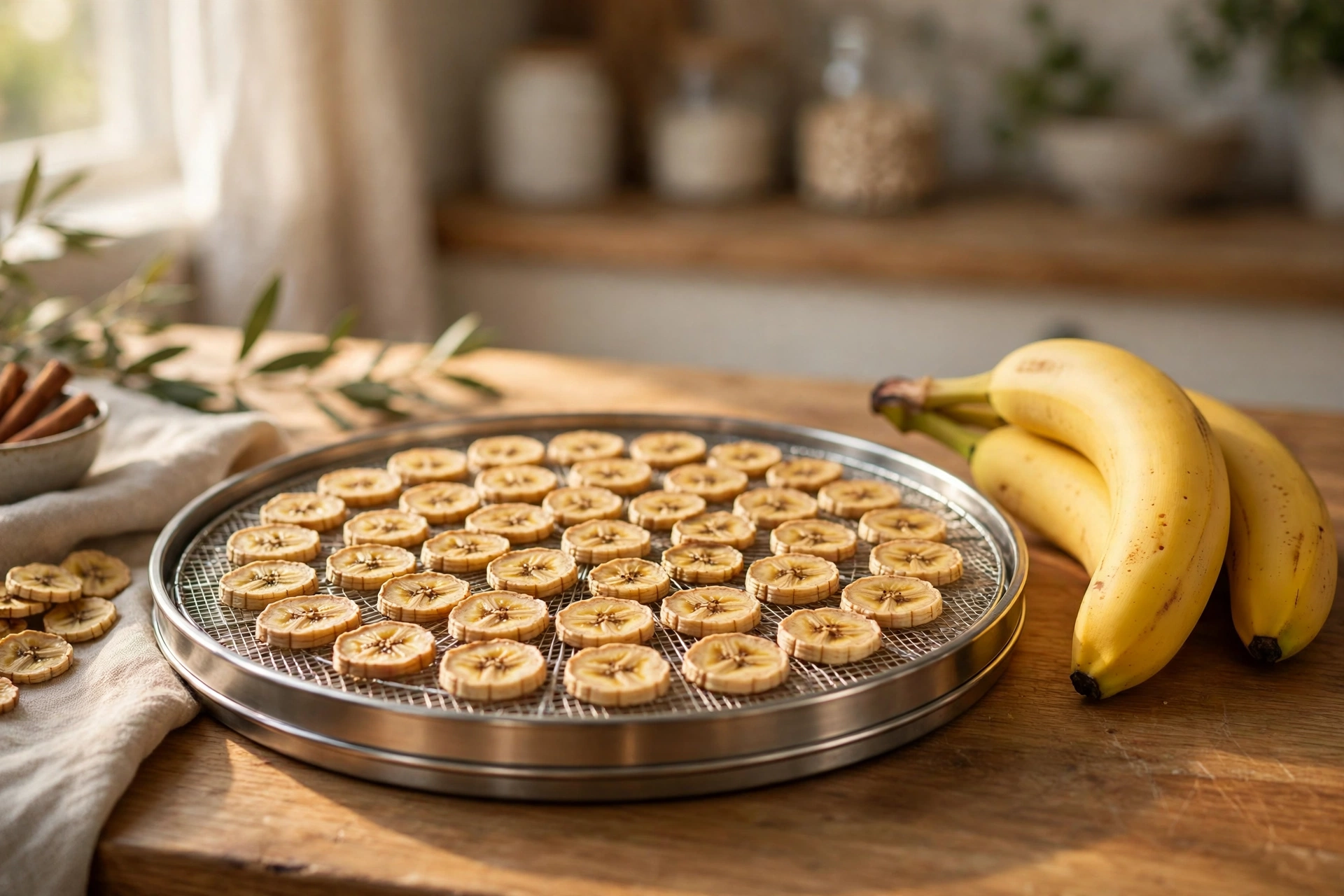
Dried bananas are the snack that rescues the bunch nobody finished. A banana at the firm, ripe stage — yellow, fragrant, not yet freckled into mush — dries into sweet, chewy slices that keep for months instead of days, travel without bruising, and need nothing added to taste like candy. Colorado State lists bananas among the fruits that dry well, and its introduction names ripe bananas specifically as the kind of extra produce drying exists for.
This guide follows Colorado State University Extension’s fruit-drying table exactly: its slice thickness, its dip, its temperature and its dryness test. This guide is part of our preservation guides, alongside the category’s first guide, how to dehydrate apples, which uses the same dip-and-dry pattern. If the machine comes first, best dehydrator for beginners is the roundup to read.
What You Need
Select firm, ripe fruit — that is the whole shopping list rule. Immature fruit lacks flavor and color, and overmature fruit can turn soft and mushy, and drying does not improve either one. Wash and clean the fruit, and sort out anything with decay, bruises or mold. For the pretreatment, pick one antidarkening solution from the table below: ascorbic acid, citric acid or lemon juice, each mixed and used exactly as the source gives it. You also need a dehydrator that holds 140°F and trays for a single layer of slices.
Plan the batch around the dip, not around the knife. Once bananas are peeled they begin darkening on contact with air, which is why the procedure cuts peeled fruit directly into the solution rather than slicing a whole bunch onto a board first. Work in a rhythm — peel, slice, straight into the dip, start the next banana while the first slices soak — and the 10-minute soak stops being dead time. Tray space matters too: slices go down in a single layer, and a bunch of bananas covers more tray than most people expect once it is cut into 1/8-inch rounds. If the machine fills before the bunch is finished, hold the remaining fruit unpeeled rather than peeled; an intact banana waits patiently, a peeled one does not.

Nesco Snackmaster Pro Dehydrator
Stacking trays suit banana batches — a whole bunch sliced at 1/8 inch fills several layers and this machine holds 140°F across them.
$64.39 from Amazon
ThermoPro Instant-Read Thermometer
A thermometer check confirms the trays are truly at 140°F, the temperature the banana time range is built on.
$8.99 from Amazon
Etekcity Digital Kitchen Scale
Weighing slices into the dip in even batches keeps the 10-minute soak and the drying time consistent tray to tray.
$9.99 from AmazonBefore You Start
Pretreating is not optional decoration for a light-colored fruit like banana. Colorado State recommends it for two reasons: it keeps light-colored fruit from darkening during drying and storage, and research it cites shows an acidic dip enhances the destruction of potentially harmful bacteria during drying. Cut the peeled fruit directly into the solution so slices never sit out browning while you finish the bunch. And test dryness on cooled slices — warm fruit seems softer, moister and more pliable than it actually is, which is how under-dried batches get packed.
A word on the solutions themselves, because the guide gives three and they are not interchangeable in strength. Ascorbic acid is the most effective of the antidarkening treatments Colorado State lists, and commercial antioxidant mixtures are described as not as effective as pure ascorbic acid, though more readily available. Whichever you choose, mix it at the strength in the table, cut the fruit directly into it, and give every slice its full soak — a dip that is really a splash does not do the job the research behind this method measured.
How to Dehydrate Bananas, Step by Step
- Choose firm, ripe bananas. Peel them. Fruit that is already soft and mushy will not dry into good slices.
- Slice 1/8 inch thick. Cut the peeled bananas into 1/8-inch slices, as even as you can manage — even slices finish together.
- Dip for 10 minutes. Dip the slices in citric acid or another antidarkening/antimicrobial solution for 10 minutes. The standard mixes are in the numbers table below.
- Drain well. Remove the slices from the solution with a slotted spoon and drain them well.
- Load in a single layer. Arrange the slices in a single layer on the trays, not touching in clumps.
- Dry at 140°F. Dry at 140°F for the source’s range of 6 to 10 hours, checking cooled slices as you approach the short end.
- Test tough and leathery. The batch is done when the slices are tough and leathery. Cool a few slices first, squeeze a handful — if no moisture is left on your hand and the pieces spring apart when released, they are dry.
The Numbers: Temperature, Time and the Leathery Test
The pretreatment mixes come from the same Colorado State guide as the drying table, so the dip and the drying figures match.
| Food | Preparation | Drying temperature | Drying time | Done when |
|---|---|---|---|---|
| Bananas | Peel; cut in 1/8-inch slices; dip 10 minutes in citric acid or other antidarkening/antimicrobial solution | 140°F | 6 to 10 hours | Tough and leathery |
| Ascorbic acid dip (pretreatment) | 2 1/2 tablespoons (34 grams) pure ascorbic acid crystals in 1 quart (1000 milliliters) cold water; soak 10 minutes | — | 10-minute soak | — |
| Citric acid dip (pretreatment) | 1 teaspoon (5 grams) citric acid in 1 quart (1000 milliliters) cold water; soak 10 minutes | — | 10-minute soak | — |
| Lemon juice dip (pretreatment) | Equal parts lemon juice and cold water; soak 10 minutes | — | 10-minute soak | — |
Times are ranges and the dryness test decides. Slice thickness, humidity and air circulation all move the finish inside that 6 to 10 hour window, and the test is always run on slices cooled to room temperature.
Not every banana has to be dried. The overflow freezes well for smoothies and baking, vacuum-sealed or bagged, and puréed banana also dries as a leather — these are the tools the freezing side of the job runs on.

FoodSaver Elite Vacuum Sealer
Frozen banana pieces for smoothies keep their color and flavor far better vacuum-sealed than loose in a bag.
$218.56 from Amazon
Ziploc Freezer Quart Bags
Quart freezer bags portion the bananas that get frozen instead of dried, ready to drop into baking.
$26.48 from AmazonCommon Mistakes
Starting with speckled, soft bananas. The table calls for firm, ripe fruit. A banana that is already mushy gives you mushy slices that dry unevenly and taste flat.
Skipping the dip. Undipped banana slices darken through drying and storage, and they lose the bacteria-destruction benefit the source credits to the acidic pretreatment.
Slicing thick and thin in the same batch. The procedure is built on 1/8-inch slices. Thick pieces lag hours behind thin ones, so half the tray over-dries while the other half is still moist.
Testing warm slices. Warm fruit feels more moist and pliable than it is. Cool the test slices to room temperature before you judge them, every time.
Packing the same day without conditioning. Some slices will be moister than others. Conditioning, described under Storage, evens that moisture out before the jar is sealed for months.
Storage and Shelf Life
When drying is complete, condition the bananas: place the cooled, dried fruit loosely in large plastic or glass containers about two-thirds full, cover lightly, and store in a warm, dry, well-ventilated place for four to 10 days, stirring or shaking daily to separate the pieces. If beads of moisture form inside, return the fruit to the trays for further drying and repeat the conditioning. Then pack in small amounts in dry, scalded glass jars or moisture- and vapor-proof containers, label with the name, date and pretreatment, seal tightly, and store in a cool, dry, dark place or in the refrigerator or freezer. Properly stored, dried fruits keep well for six to 12 months; discard anything with off odors or signs of mold.
In the kitchen, dried banana slices work anywhere a sweet, chewy bite belongs: eaten plain as a snack, stirred into granola and hot cereals, chopped into salads and baked goods, or carried as trail food that cannot bruise, leak or spoil on a warm day. Colorado State’s serving guidance for dried fruit generally is simple — most pieces need no extra sweetening, and a few grains of salt or a squeeze of citrus at serving can sharpen the flavor. Work through jars oldest first, and treat the six to 12 month window as the quality window it is.
Viewers also searched for these items.

Cosori Food Dehydrator, 6 Stainless Trays
Six stainless trays give banana slices single-layer room without crowding, so they finish together.
$135.99 from Amazon
IRIS USA Airtight Container, 30 lb, with Wheels
An airtight 30-pound container corrals the jars and bags of a season's dried fruit in one sealed bin.
$23.99 from AmazonFrequently Asked Questions
Why do my banana slices turn brown?
That is what the pretreatment prevents. Dip slices for 10 minutes in an ascorbic acid, citric acid or lemon juice solution before drying, exactly as the table above gives each mix.
Can I dry bananas without a dip?
The Colorado State procedure includes the dip — it is listed in the banana row of the drying table, not offered as an option — and the guide recommends pretreating light-colored fruit before drying.
How thick should banana chips be?
1/8 inch, per the source table. That thickness is what the 6 to 10 hour range and the tough-and-leathery test are built on.
How long do dried bananas keep?
Properly stored dried fruit keeps well for six to 12 months in a cool, dry, dark place, per Colorado State. Use them within a year for best nutrient retention.
Procedure, pretreatments, temperature, times and dryness test: Colorado State University Extension, “Drying Fruits,” via Colorado State University Extension.
Prices shown on this page were last checked November 26, 2026 — prices change; check before you buy.
Talk it over with other readers
The Truly Preserved Community on Facebook is where readers compare notes on food storage, water, and backup power — and where your questions help decide what we research next.