
Last updated: October 31, 2026
Short answer: Yes — the chart is on this page, and the rule behind it is simple. Freeze drying takes out the water and almost nothing else, so a food’s dried weight is its fresh weight minus its water. A pound of lean ground beef (about 69% water) dries to about 0.32 lb, and you add that same water back — about 310 grams, or 1.3 cups — to rehydrate it. Fat does not dry out, so fatty foods dry heavier than lean ones.
“Is there a conversation chart or something that shows Non-FD to FD? i.e. 3 lbs Non-FD hamburger = 1 lb FD hamburger.” That question comes from Bud Millis in a large freeze-drying group, and it sat unanswered there — along with a second one, from Jennifer Tutwiler, asking the same thing by volume: 5 pounds of shredded cheese equals how many quarts, dried? This page is the master chart both of them asked for, built from published water-content data instead of guesses, plus the method that lets you convert any food we did not list — including whole meals like chili and lasagna.
The Rule Behind Every Number on This Page
A freeze dryer removes water. It does not remove fat, protein, fiber, or sugar — those all stay, which is why freeze-dried food keeps its shape and most of its nutrition, and why the math is plain subtraction. If a food is 75% water, then 1 pound of it holds about 0.75 lb of water and 0.25 lb of everything else. Dry it down to the roughly 2% moisture a finished batch should carry, and you get about 0.26 lb of dried food. To bring it back, you add the water you took out — the same water, measured by weight. One gram of water is one millilitre, so a kitchen scale does the whole job: water to add, in grams, equals fresh weight minus dried weight, in grams.
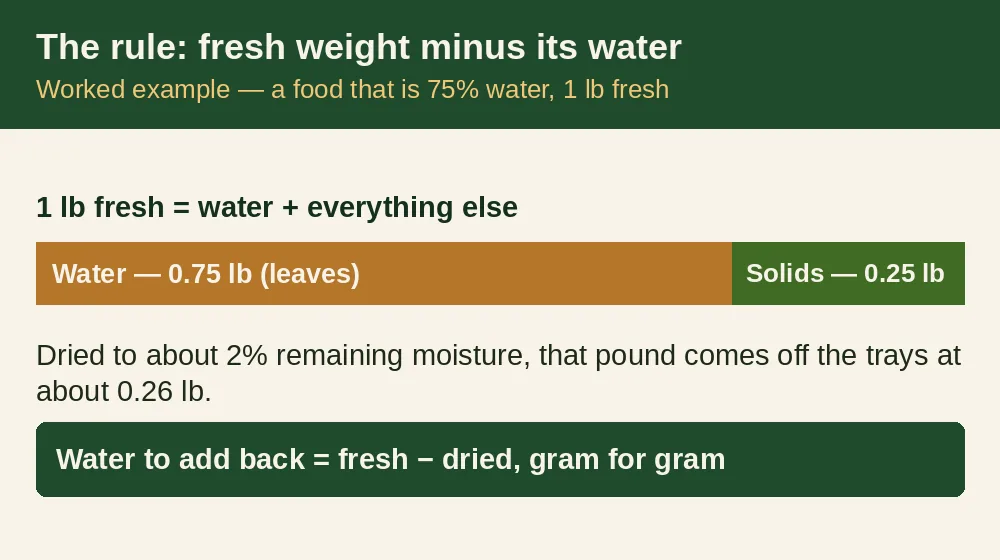
That last point fixes the most common rehydration mistake we saw in the group. One member dried a food that weighed 150 grams going in and 40 grams coming out, and asked whether 90 grams of water was right. It is not — 150 minus 40 is 110. The dried food needs its 110 grams of water back, not a rounder number. Weigh before, weigh after, subtract: that is the whole procedure, and the chart below is just that subtraction done ahead of time for the foods people dry most.
The Master Chart: Fresh Weight to Freeze-Dried Weight
Every row starts from 1 pound (454 grams) of fresh food. Water content is the U.S. Department of Agriculture’s published figure for that food, raw unless the row says cooked. Dried weight assumes the batch is dried to about 2% remaining moisture. Your batch will land close to these numbers, not on them to the gram — a riper banana or a leaner chicken breast shifts its own water a little — which is why the weigh-before-and-after method further down is the one to trust for a specific tray.
| Food (1 lb fresh) | Water in it | Dries to | Water to add back |
|---|---|---|---|
| Ground beef, 90% lean, raw | 69% | 0.32 lb (144 g) | 310 g — 1.3 cups |
| Ground beef, 80% lean, raw | 62% | 0.39 lb (176 g) | 278 g — 1.2 cups |
| Ground beef, 70% lean, raw | 55% | 0.46 lb (209 g) | 246 g — 1.0 cup |
| Chicken breast, no skin, raw | 75% | 0.26 lb (116 g) | 338 g — 1.4 cups |
| Eggs, whole, raw | 76% | 0.25 lb (111 g) | 343 g — 1.4 cups |
| Milk, whole | 88% | 0.12 lb (56 g) | 398 g — 1.7 cups |
| Cheddar cheese | 37% | 0.64 lb (292 g) | 162 g — 0.7 cup |
| Rice, white, cooked | 68% | 0.33 lb (148 g) | 306 g — 1.3 cups |
| Spaghetti, cooked | 62% | 0.39 lb (176 g) | 278 g — 1.2 cups |
| Potato, raw | 79% | 0.21 lb (97 g) | 357 g — 1.5 cups |
| Sweet corn, raw | 76% | 0.25 lb (111 g) | 343 g — 1.4 cups |
| Carrots, raw | 88% | 0.12 lb (56 g) | 398 g — 1.7 cups |
| Green beans, raw | 90% | 0.10 lb (46 g) | 408 g — 1.7 cups |
| Broccoli, raw | 89% | 0.11 lb (51 g) | 403 g — 1.7 cups |
| Apple, raw, with skin | 86% | 0.14 lb (65 g) | 389 g — 1.6 cups |
| Banana, raw | 75% | 0.26 lb (116 g) | 338 g — 1.4 cups |
| Peach, raw | 89% | 0.11 lb (51 g) | 403 g — 1.7 cups |
| Strawberries, raw | 91% | 0.09 lb (42 g) | 412 g — 1.7 cups |
Two things in this table surprise people the first time they see them. The first is how little is left of the high-water foods: a pound of strawberries dries to about an ounce and a half, which is why a full tray of berries comes out feeling like almost nothing, and why roughly 10 pounds of fresh strawberries make about a pound dried — a yield home dryers report often, and one the water math predicts. The second is the ground beef rows, so they get their own section next.
Was Bud Right? 3 Pounds of Hamburger, Checked
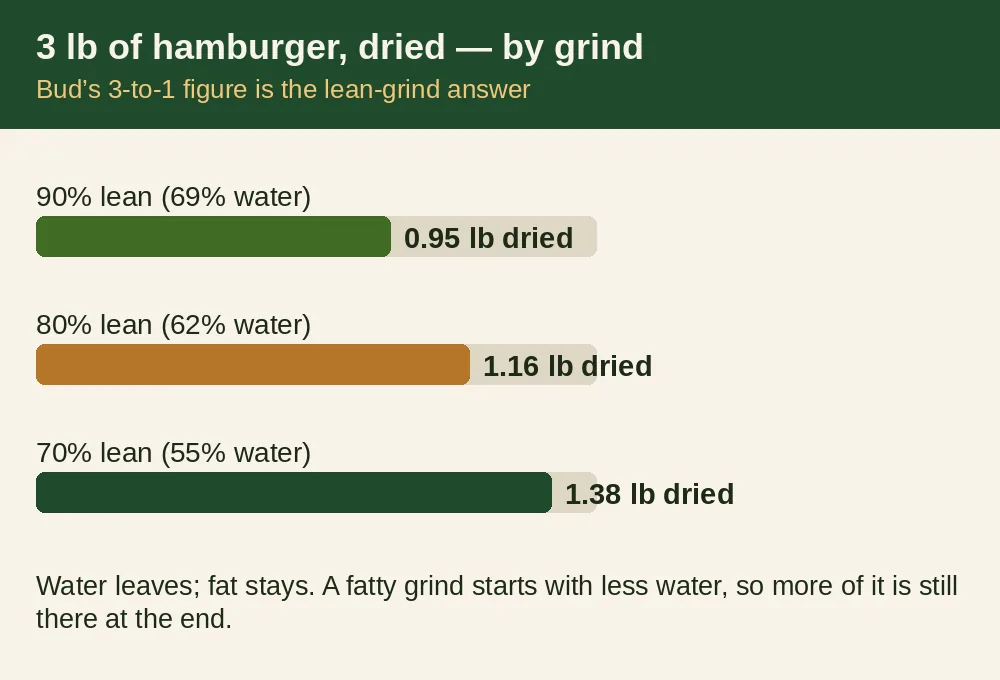
Mostly, yes — with one condition. Three pounds of fresh hamburger dries to about 0.95 lb if the grind is 90% lean, about 1.16 lb at 80% lean, and about 1.38 lb at 70% lean. Bud’s 3-to-1 figure is the lean-grind answer. The reason the grind matters is the fat rule: water leaves, fat stays. A fatty grind has less water in it to begin with — 55% against the lean grind’s 69% — so more of the fresh pound is still there at the end, and that leftover fat is also why fatty freeze-dried meat stores for months rather than decades and can turn rancid in the bag. If you are drying ground beef to put away long-term, the lean rows are the ones to plan on, and draining cooked beef before it goes on the trays moves a fatty grind partway toward the lean rows by taking fat out before the water leaves.
What About Volume? The Cheese Question
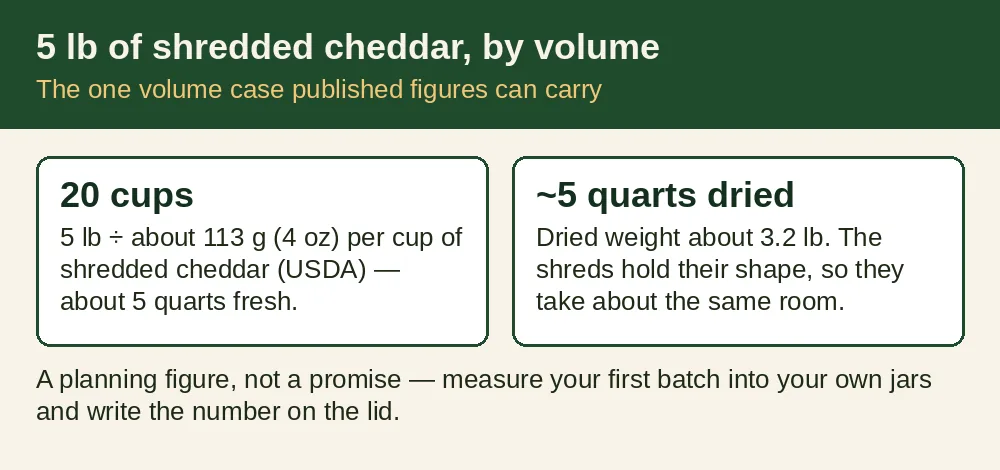
Jennifer’s version of the question — 5 pounds of shredded cheese equals how many quarts, dried? — is harder to chart honestly, and it is worth saying why. Weight converts cleanly because water content is published data. Volume depends on how fine the shred is and how loosely it sits in the jar, and no published source pins that down food by food, so a full volume chart would be invented numbers. Cheese is the one case we can work from published figures: the USDA puts a cup of shredded cheddar at about 113 grams (4 ounces), so 5 pounds of shredded cheddar is about 20 cups — 5 quarts — before it dries. Freeze-dried food holds its shape as it dries (that is the whole point of drying it frozen), so the dried shreds take up roughly the same room: about 5 quarts of dried shredded cheese, weighing about 3.2 pounds. Treat that as a planning figure, not a promise — then do what the experienced members of that group do and measure your first batch into the jars you actually use, and write your own number on the lid. For every other food, volume is a measure-it-once job, not a chart job.
The Weigh-Before-and-After Method (For Anything Not on the Chart)
This is the method that circulates in the freeze-drying groups as folk advice, and it is sound — it is how you convert a food we did not list, or a whole meal, which no chart can carry because every cook’s chili is a different recipe.
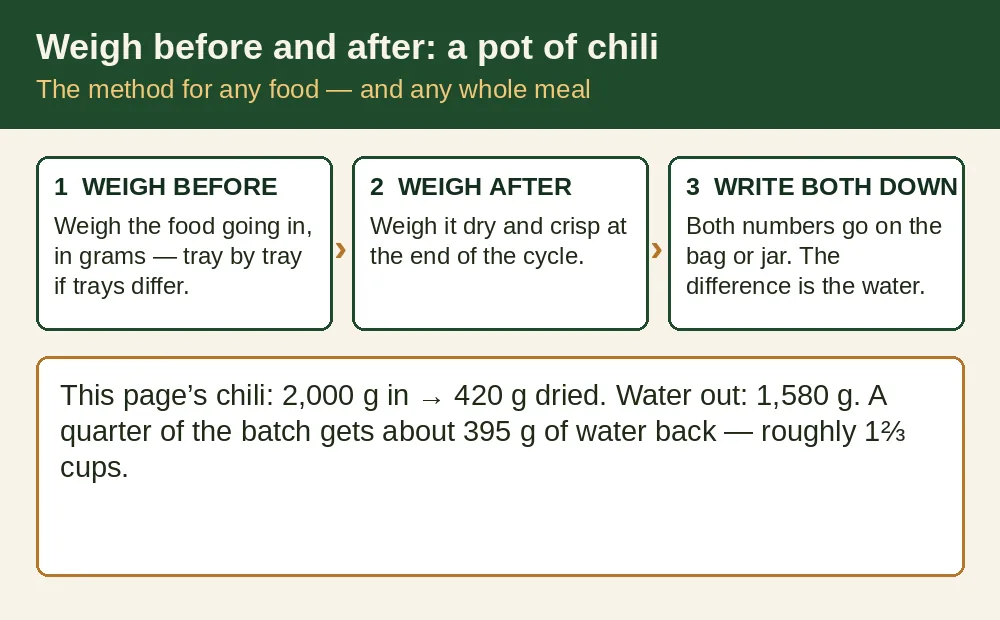
- Weigh the food before the cycle, in grams, and write the number down — tray by tray if the trays hold different foods.
- Weigh it again when the cycle finishes and the food is dry and crisp.
- Write both numbers on the bag or jar. The difference is the water that came out, and it is exactly the water to add back, gram for gram, when you rehydrate that portion.
For a meal, weigh the whole batch. A pot of chili that goes in at 2,000 grams and comes off the trays at 420 grams took out 1,580 grams of water; whoever eats a quarter of that batch adds back about 395 grams — roughly 1⅔ cups — of water. Lasagna works the same way by total batch weight. The chart’s per-food rows are for ingredients; the scale is for everything else. If you do not want to do the subtraction by hand each time, our Freeze-Dried Conversion Calculator runs the same math from the chart’s data — pick the food, enter the fresh amount in pounds, ounces, grams, or kilograms, and it returns the dried weight and the water to add back.
Using the Chart to Plan Storage and Meals
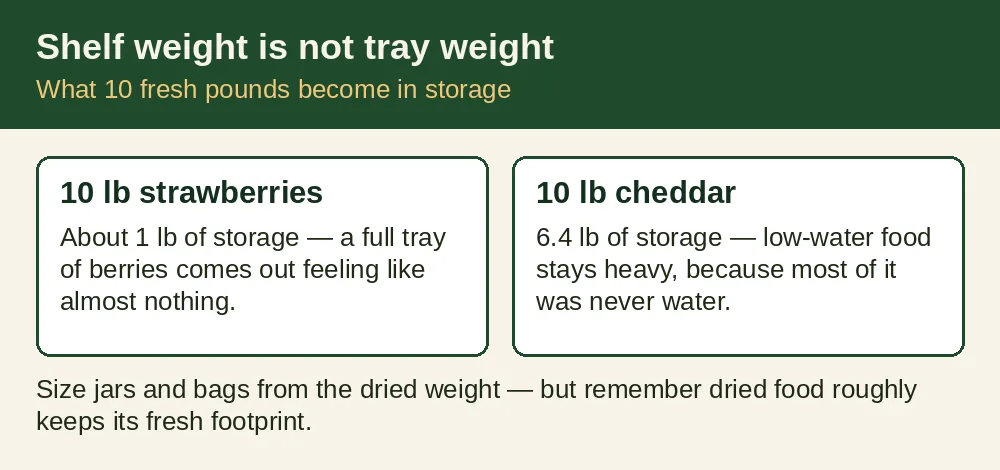
The chart earns its keep in three places. First, tray planning: a batch is limited by fresh weight, but your shelf is filled by dried weight, and the two are wildly different numbers for wet foods — 10 pounds of strawberries is a pound of storage, while 10 pounds of cheddar is 6.4 pounds of storage. Second, jar and bag sizing: work backward from the dried weight, and remember the dried food roughly keeps its fresh footprint, so a pound of fresh apple slices wants about the jar a pound of fresh slices filled, even though it weighs 0.14 lb. Third, meal math in reverse: if a recipe calls for a pound of fresh ground beef, the dried amount to pull is 0.32 lb of the lean grind plus its 1.3 cups of water — the calculator linked above runs that direction too, from the dried amount you have to the fresh amount it replaces.
Where These Numbers Come From
Water percentages are the USDA’s, from USDA FoodData Central (look any food up there yourself — the water line is the first nutrient listed). The drying method and the point that freeze-dried food keeps its shape follow the National Center for Home Food Preservation’s freeze-drying guidance and Utah State University Extension’s freeze-drying pages. Dried weights on this page are computed from those published water figures at about 2% remaining moisture; they are desk math from published data, not a claim that we dried every food on the list. Foods we could not source a solid water figure for are not on the chart — a shorter chart we can stand behind beats a longer one with guesses in it.
Follow-Up Questions
How much water do I add to rehydrate a freeze-dried meal like chili or lasagna?
You add back the water the batch lost, and the batch’s own weights are the only honest source: weigh the meal before the cycle and after it, and the difference is the water, gram for gram, split by portion. If nobody weighed it, start with about 1 cup of hot water per cup of dried meal, let it sit 10–15 minutes, and add more a spoonful at a time — you can always add water, and you cannot take it out.
Does the chart change if the food goes in cooked instead of raw?
Yes, because cooking changes the starting water. Cooked rice and cooked spaghetti have their own rows on the chart because that is the form people dry them in. Ground beef is charted raw; beef that is cooked and drained first has already lost water and fat in the pan, so it starts lighter in both — weigh that tray before the cycle and use the method above rather than the raw rows.
Why did my batch come out heavier than the chart says?
Usually one of two things: the food was fattier or less watery than the chart’s version of it — a 70% lean grind against the 90% row is the classic case — or the batch was not fully dry, and water still in the food is weight on the scale. A finished batch should be crisp and dry to the center of the thickest piece; if the weight is high and the centers are soft or cold, it needs more dry time, not a different chart.
FAQ
Is there a conversion chart that shows fresh to freeze-dried amounts?
Yes — the chart on this page converts 1 pound of fresh food to its freeze-dried weight and the water to add back, for 18 common foods, from USDA water-content data. Ground beef runs 0.32–0.46 lb dried per fresh pound depending on the grind; strawberries run about 0.09 lb.
How many pounds of fresh hamburger make 1 pound freeze-dried?
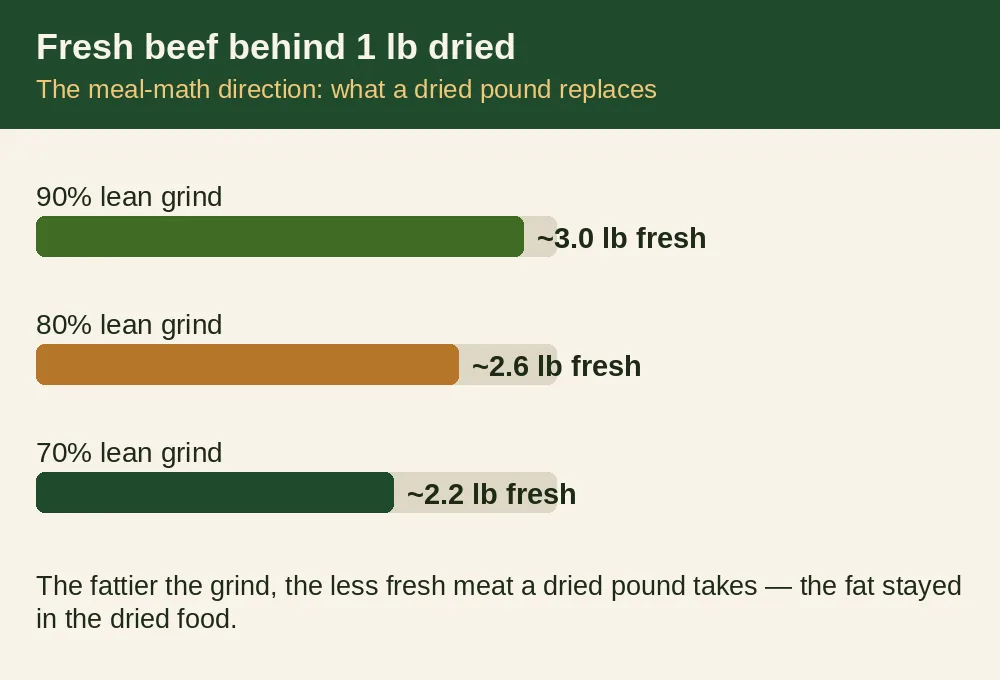
About 3 pounds if the grind is lean (90% lean dries at almost exactly 3-to-1), about 2.6 pounds at 80% lean, and about 2.2 pounds at 70% lean. The fattier the grind, the less fresh meat a dried pound takes, because the fat stays in the dried food.
5 pounds of shredded cheese is how many quarts freeze-dried?
About 5 quarts. Five pounds of shredded cheddar measures about 20 cups (5 quarts) fresh by the USDA’s cup weight, and freeze-dried shreds hold their shape, so the dried cheese takes about the same room while weighing about 3.2 pounds. Measure your first batch — shred size moves the number.
How do I convert a food that is not on the chart?
Weigh it before the cycle and after it, in grams. Fresh weight minus dried weight is the water that came out, and that same weight of water is what goes back in at rehydration. The method works for any food and for whole meals, and our conversion calculator covers the chart’s foods in any unit.
Does freeze drying remove fat or sugar along with the water?
No. Freeze drying removes water and essentially only water. Fat, sugar, protein, and fiber all stay in the food — which is why dried weight is predictable from water content alone, and why very fatty foods dry heavy and store shorter than lean ones.
Keep Exploring Freeze-Dried Food
This question belongs to the freeze-dried food cluster in What People Are Asking About Freeze-Dried Food — our hub for the freeze-drying questions readers ask most, from what can and can’t go in the dryer to how long the food keeps once it’s open. Start there for the full list, or run your own numbers in the Freeze-Dried Conversion Calculator.
Truly Preserved is reader-supported. When you buy through links on this page, we may earn a commission at no extra cost to you. As an Amazon Associate, Truly Preserved earns from qualifying purchases. Read our full affiliate disclosure.
Talk it over with other readers
The Truly Preserved Community on Facebook is where readers compare notes on food storage, water, and backup power — and where your questions help decide what we research next.