
Truly Preserved is reader-supported. If you buy through a link on this page we may earn a commission at no extra cost to you. Nobody pays for placement or scores.
THE SHORT ANSWER
Yes — with a line drawn under it. The Survival Tabs (the chewable tablets from The Survival Tabs / Lohas Farms) are labeled gluten-free by the maker, and the published ingredient list contains no wheat, barley, rye, malt, or oats. But the maker publishes no gluten-free certification, no gluten test result, and no statement about the facility the tabs are made in — so a reader with celiac disease cannot verify safety from anything the maker has put in print. And one warning before anything else: a different product also sold on Amazon as “Survival Tabs” is a ration bar made of 60% wheat flour. Check the brand and the ingredient list, not just the name.
This question lands in our inbox in two versions. One is from readers stocking a gluten-free shelf who want a small, light, no-cook backup. The other is from celiac readers, for whom “gluten-free” is not a preference but a medical line. The maker’s pages answer both versions with the same two words — “Gluten Free” — repeated on every product page and never explained. So we read the maker’s own ingredient list, its nutrient page, its Q&A, and its fine print, and separated the three things that get blurred into one claim: what’s in the tablet, what the label asserts, and what a third party has actually verified.
What does the maker’s gluten-free claim actually cover?
The maker’s gluten-free claim covers the recipe, stated in its own words — and nothing beyond the recipe is documented. On the 15-day Maple bottle page, The Survival Tabs describes the product as “GLUTEN FREE, NON-GMO & HIGH-QUALITY PROTEIN,” and its product-details list repeats “Gluten Free & Non-GMO.” The same wording appears on the Orange pouch page and in the comparison table printed across the maker’s store, where every size — 24, 180, 720 tabs and up — gets a check mark in the Gluten Free row.
Here is what does not appear anywhere we could find on the maker’s site: a certification. No GFCO mark, no other certifier’s name, no parts-per-million figure, no testing claim. That matters because certification is the tier where someone besides the maker checks the work — GFCO, the best-known program, requires products to test at or below 10 parts per million of gluten with facility audits behind it. The FDA’s labeling rule lets a maker print “gluten-free” on a product under 20 parts per million without any third-party certification at all. Survival Tabs sit in that second tier: a manufacturer’s label claim, lawful and specific, with no published test number behind it.
The maker’s own Q&A page, read carefully, hedges further than its product pages do. Asked whether the tabs are vegan or gluten-free, it answers that “some options may be vegan or gluten-free” and tells readers to “carefully read the product labels or contact the manufacturer.” Its product-education page goes further still: no universal suitability claim should be made, and every statement should be checked against the current package. When the maker’s careful pages are more cautious than its sales pages, believe the careful pages.
What’s actually in Survival Tabs?

Survival Tabs are a milk tablet, not a grain bar — the first ingredient on the maker’s nutrient page is non-fat dry milk solids, and there is no grain ingredient of any kind in the published list. The full list, as the maker publishes it: non-fat dry milk solids, sucrose, vegetable oils (sunflower and/or safflower), calcium phosphate, then a vitamin and mineral blend (ascorbic acid, vitamin E acetate, niacinamide, ferrous fumarate, zinc gluconate, and the rest of the label panel), with natural and artificial flavors, and Dutch-processed cocoa in the chocolate flavor.
Two honest gaps in that list. First, “natural and artificial flavors” is not broken out — flavorings are a standard place where a celiac reader wants a direct answer from the maker, and the maker does not give one in print. Second, milk is the real allergen story here, and the maker says so itself in its blog: the tabs “do contain milk solids, so they may not be suitable for those with dairy allergies or following a strict vegan diet.” There is no boxed “Contains: Milk” allergen line on the nutrient page we read — the milk is obvious from ingredient one, but a dairy-allergic reader has to spot it there rather than in an allergen statement.
Survival Tabs 180-Tab Bottle (Maple)
The maker labels these gluten-free and the published ingredient list holds no wheat, barley, rye, malt or oats — but as this page shows, there is no certification or test result behind the label, so celiac readers should treat it as unverified and everyone else as a glove-box backup, not a meal plan.
$48.95 from AmazonAre Survival Tabs safe for celiac disease?
That is the one question the published record cannot answer, and we won’t pretend otherwise. A celiac-safe answer needs one of two things: a certification with testing behind it, or a maker’s statement about the production facility and cross-contact controls. The Survival Tabs publish neither. Nothing in the maker’s material says the tabs are made on shared equipment with wheat — and nothing says they aren’t. The absence cuts both ways, which is exactly the problem: “no evidence of a risk” is not the same as “evidence of no risk.”
So the practical guidance splits by reader. If you avoid gluten by preference or mild sensitivity, the ingredient list is genuinely reassuring — there is no gluten ingredient to avoid, and the recipe is built on milk and sugar, not grain. If you have celiac disease, treat these the way the maker’s own education page tells you to: check the current package when it arrives, and ask the maker directly about certification and facility practices before the tabs go into the shelf you are counting on. A food you cannot eat safely in an emergency is not emergency food.
Watch out: the wheat “Survival Tabs” that aren’t this brand
The most dangerous result for this search is a name collision. Amazon also sells compressed ration bars under the name “Survival Tabs” from a brand listed as BDH, and those bars are a completely different product: their published ingredient list starts with wheat flour at 60%, and their allergen information reads, plainly, “Wheat.” At least one listing in that family is even titled as a gluten-free ration bar while its sibling listings carry the wheat-flour recipe.
This is how a careful reader ends up with wheat in a gluten-free stockpile: the search term matches, the title reassures, and the ingredient list — the only part that matters — never gets read. The chewable tablets covered on this page are sold by The Survival Tabs (Lohas Farms), come as round tablets in a bottle or pouch, and list milk first. If the product in front of you is a vacuum-sealed bar whose first ingredient is wheat flour, it is not this product, whatever the listing title calls it.
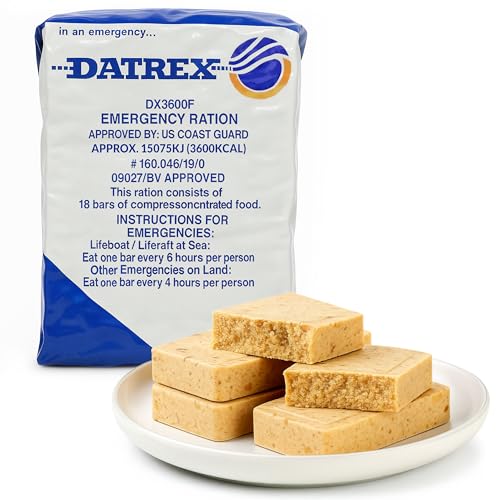
Datrex 3600
Eighteen individually wrapped 200-calorie bars and a six-ingredient label — the pack that stays fresh after you open it.
$24.99 from Amazon
Nesco VS-12
A full-featured countertop sealer for bagging batches before they go into storage.
$108.18 from Amazon
How much food is a Survival Tab, really?
A Survival Tab is 20 calories, and the maker’s own serving is 12 tabs a day — 240 calories, 4 grams of protein, 12 grams of sugar, and 100% of the daily value for most of the 15 vitamins and minerals on its panel (calcium is the exception, at 20%). That math is the context the gluten-free answer needs: this is a micronutrient bridge, not a meal. Twelve percent of a 2,000-calorie day is what the tabs provide, and the maker’s newer writing concedes the point — the tabs are “not meant to replace food entirely” and are designed to supplement other food, even though older maker copy claims a person can survive four to five months on tabs alone. We found no independent verification of that survival claim; treat it as the maker’s marketing, not a planning number.
| Measure | Survival Tabs (maker’s figures) |
|---|---|
| Per tab | 20 calories |
| Per day (12 tabs) | 240 calories, 4 g protein |
| 180-tab bottle | 15 days at the maker’s serving |
| Shelf life | 25 years unopened; 90 days opened |
The bottle math, at prices verified today: the 180-tab Maple bottle is $45.99 at the maker’s own store and $44.95 at the Amazon Buy Box — about $3.07 per 240-calorie day, which works out to roughly $12.80 per 1,000 calories. Set that beside our emergency food cost dataset, where full-calorie buckets run a fraction of that per 1,000 calories, and the tabs’ role is clear: they are priced as vitamin insurance that needs no water, no cooking, and almost no space — not as a cheap way to buy calories. Owners who bought them expecting food say the quiet part out loud in reviews: the recurring complaints are a chalky, dry, Tums-like texture, a thirst that follows it, and flavor fatigue across a day’s twelve tabs. The recurring praise is the other side of the same coin — compact, shelf-stable for decades, mildly sweet like a milkshake powder, and hunger quieted for a few hours.


Grayl GeoPress
The only portable here that handles viruses — built for travel, not daily home use.
$99.95 from Amazon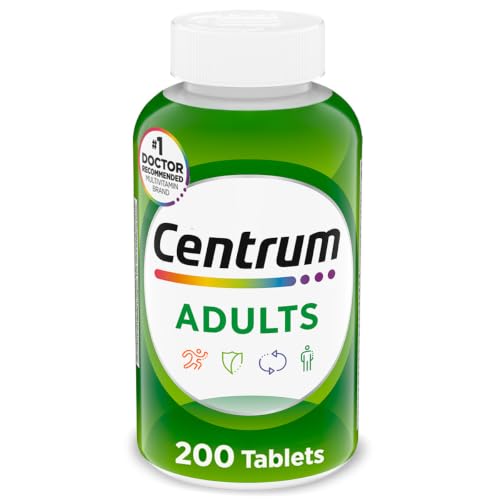
Centrum Adult Multivitamin
The boring, complete answer to the BYU numbers: one bottle covers a person for months, stores beside the food, and costs less than a single freeze-dried entree.
$12.00 from AmazonIf you need food that is certified gluten-free instead
For a celiac reader who needs actual meals, the certified route exists and it is freeze-dried. Mountain House states on its own site that its gluten-free meals are certified by the Gluten-Free Certification Organization (GFCO) and carry the GF logo on the package — its named certified meals include Chicken & Mashed Potatoes and the Breakfast Skillet. That is the tier of proof Survival Tabs do not publish: a certifier, a testing threshold, and a logo tied to specific products. Our Mountain House vs Peak Refuel comparison covers the line’s cost per 1,000 calories if you are pricing a certified shelf. ReadyWise also sells a dedicated gluten-free collection per its own FAQ — we verified the collection exists in the maker’s words, but the word “certified” for it appears in retailer copy, not in the maker’s FAQ we read, so we are not printing it as a certified claim here.
If the tabs themselves fit your situation — no celiac disease, a glove-box or desk-drawer backup, vitamins to stretch real food — this is the bottle this page’s math is built on:
The Survival Tabs, 180-tab bottle (15-day, Maple). Labeled gluten-free by the maker; no gluten ingredients; milk-based. 25-year shelf life unopened.
Prices last checked: November 10, 2026. The maker’s store listed the same bottle at $45.99 the same day; shop both.
Questions readers ask next
Do Survival Tabs contain milk or dairy?
Yes — non-fat dry milk solids are the first ingredient in Survival Tabs, and the maker states plainly that the tabs contain milk solids. They are not dairy-free and not vegan, whatever the gluten-free label suggests about dietary fit.
How long do Survival Tabs last?
Survival Tabs carry a 25-year shelf life unopened, per the maker, and 90 days once opened before they begin losing efficacy. The same maker copy that claims 25 years also suggests rotating stock every two to three years for maximum food value — both lines are the maker’s; the 25-year figure is the storage claim, the rotation note is the maker’s own hedge.
Can you live on Survival Tabs alone?
The maker’s older copy claims a person can survive four to five months on Survival Tabs exclusively, at 240 calories a day. Its newer pages walk that back: the tabs are a supplement, “not meant to replace food entirely,” and 240 calories a day is a deep deficit that costs body weight by design. Plan on them as a bridge beside real food — our ration bar comparison covers the calorie-dense end of that bridge.
Frequently asked questions
Are Survival Tabs gluten-free?
Survival Tabs are labeled gluten-free by their maker, and the published ingredient list contains no wheat, barley, rye, malt, or oats. The maker publishes no certification, test result, or facility statement, so the claim rests on the maker’s word and the ingredient list alone.
Are Survival Tabs safe for celiac disease?
That cannot be verified from published maker material. With no certification and no cross-contact statement, a celiac reader should check the current package and ask the maker about certification and facility practices before relying on the tabs.
What are the ingredients in Survival Tabs?
Non-fat dry milk solids first, then sucrose, vegetable oils (sunflower and/or safflower), calcium phosphate, and a vitamin-mineral blend with natural and artificial flavors; the chocolate flavor adds Dutch-processed cocoa. No grain ingredient appears in the list.
How many Survival Tabs do you eat per day?
The maker’s serving is 12 tabs a day: 240 calories, 4 grams of protein, and 100% of the daily value for most of the 15 listed vitamins and minerals. A 180-tab bottle is 15 days at that serving.
Are the ration bars called “Survival Tabs” on Amazon the same product?
No. Bars sold under the Survival Tabs name by BDH are a different product whose first ingredient is wheat flour (60%) with a wheat allergen statement. The chewable tablets from The Survival Tabs / Lohas Farms are milk-based tablets in a bottle or pouch.
Sources & freshness: The Survival Tabs maker’s nutrient, product, Q&A, and education pages (thesurvivaltabs.com), read November 10, 2026; Mountain House’s gluten-free statement (mountainhouse.com); ReadyWise FAQ (readywise.com); Amazon state and prices checked the same day via Keepa and camelcamelcamel.
More answers like this one: this page is part of What People Are Asking About Food Storage, where the shelf-life, safety, and stocking questions from prepping forums get the same sourced treatment.
Talk it over with other readers. The Truly Preserved Community on Facebook is where readers compare notes on food storage, water, and backup power — and where your questions help decide what we research next. Join the group →
Viewers also searched for these items.

COSORI Dehydrator
A fruit roll sheet in the box, temperature set to the degree, and a 48-hour timer that ends the batch before it over-dries.
$135.99 from Amazon
Blue Alpine Medium Select
Faster cycles — 12 to 20 hours on Blue Alpine's figures — quarter-sheet trays, and silicone mats in the box. More machine than a first month needs; the one to read about before you buy twice. Use code TRULYPRESERVED at checkout.
Check the price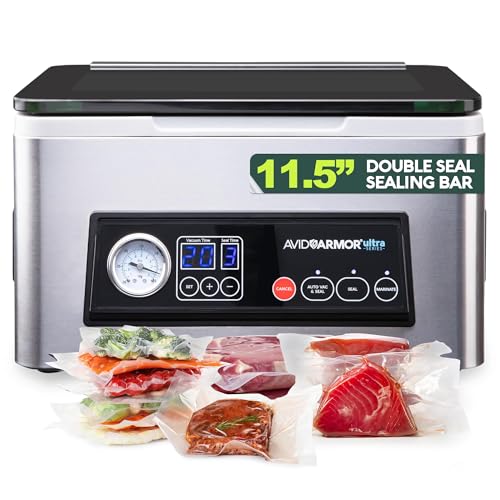
Avid Armor USV20
The chamber machine: soups, marinades and smooth cheap pouches — if it fits in an 11 x 10 pouch.
$349.00 from AmazonPrices shown on this page were last checked November 26, 2026 — prices change; check before you buy.