
Truly Preserved is reader-supported. If you buy through a link on this page we may earn a commission at no extra cost to you. Nobody pays for placement or scores.
THE SHORT ANSWER
Yellow-flesh peaches are canned in a boiling-water canner, hot pack or raw pack, in a very light, light, or medium syrup — or in water, apple juice, or white grape juice. Leave ½-inch headspace. Hot pack: pints 20 minutes and quarts 25 minutes at 0–1,000 feet. Raw pack: pints 25 minutes and quarts 30 minutes. An average of 17½ pounds fills a 7-quart canner load. White-flesh peaches are not canned with this process at all — the USDA says to freeze them instead. Every figure on this page comes from the USDA’s tested procedure, credited at the bottom.
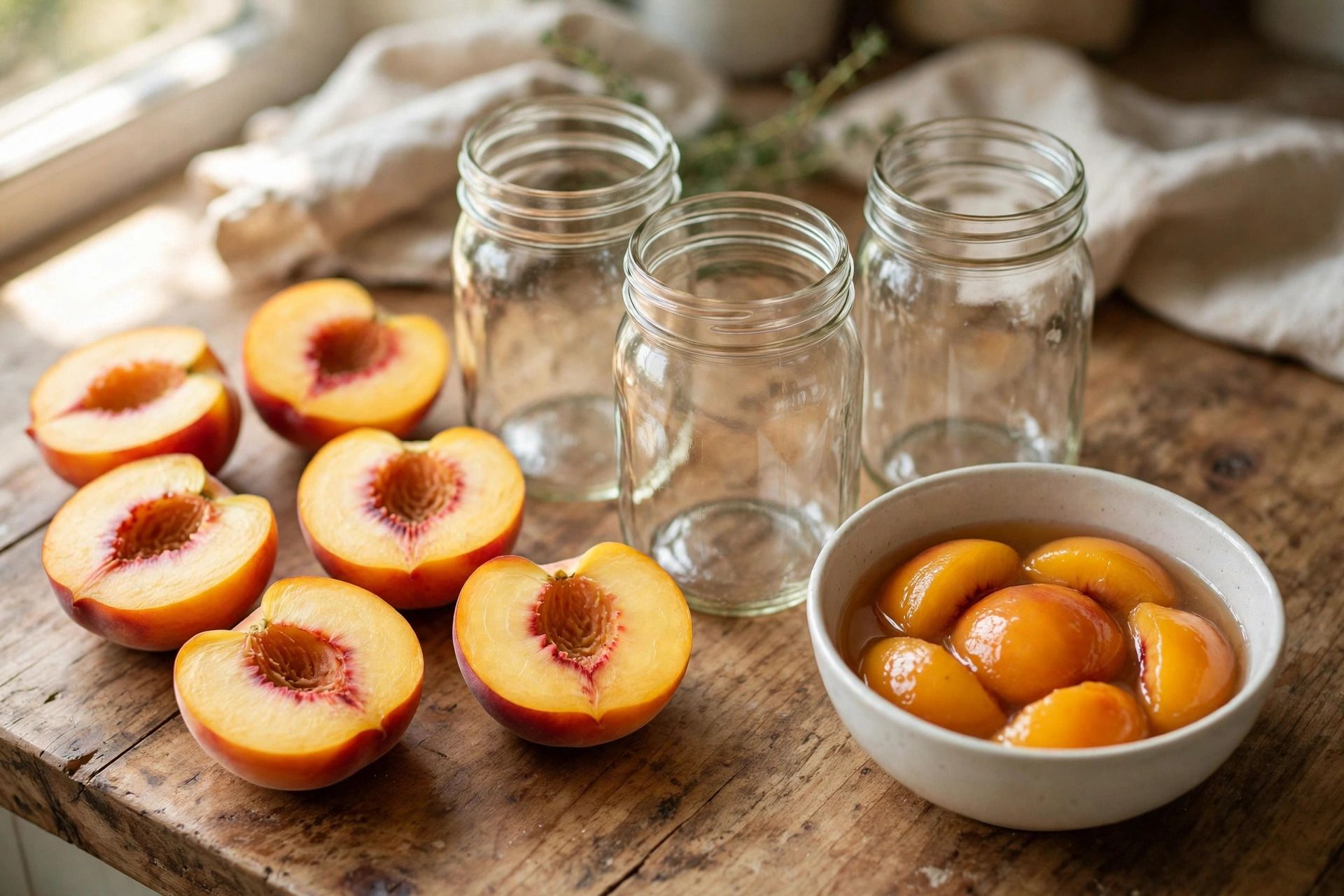
A jar of canned peaches is summer kept — ripe fruit in light syrup that eats like dessert straight off the shelf. Peaches are a high-acid fruit, so this is boiling-water canning, gentler than the vegetable run, with the syrup as a flavor and texture choice rather than a safety one.
This guide follows the USDA’s tested procedure for halved or sliced peaches exactly, hot pack and raw pack. If the method choice is still open, water bath or pressure canner — which should a beginner buy explains where fruit lands, and how to can food in mason jars covers the general process. This guide is part of our preservation guides, and the same syrup table serves how to can applesauce season.
What You Need
An average of 17½ pounds is needed per canner load of 7 quarts, and an average of 11 pounds per load of 9 pints. A bushel weighs 48 pounds and yields 16 to 24 quarts — an average of 2½ pounds per quart. For quality, choose ripe, mature yellow-flesh peaches of ideal quality for eating fresh or cooking. You also need a boiling-water canner, pint or quart jars with new lids, and your packing liquid: a very light, light, or medium syrup (measures in the table below), or water, apple juice, or white grape juice.

Granite Ware 21.5-Quart Water Bath Canner
A 21.5-quart water bath canner is the tested route for peaches — hot-pack quarts process 25 minutes at low altitude — and it holds a full 7-quart load.
Check Availability
Etekcity Kitchen Scale
The load is measured in pounds — about 17½ pounds of peaches for a seven-quart canner load, 2½ pounds per quart — and a flat kitchen scale is how you know the load is right before the jars fill.
$9.99 from Amazon
Ball Regular Mouth Canning Lids, 96 Count
Flat lids are single-use, and peach season moves fast once the fruit is ripe. The 96-count box keeps a fresh lid on every jar.
$36.99 from AmazonBefore You Start
One caution outranks everything else on this page: do not use this process to can white-flesh peaches. The USDA states that some white-flesh varieties are higher in pH than traditional yellow varieties — the natural pH of some can exceed 4.6, making them a low-acid food — and there is no low-acid pressure process for them and no researched acidification procedure for boiling-water canning. Freezing is the recommended method for white-flesh peaches. For yellow peaches, the remaining decisions are quality ones: hot pack over raw (the USDA notes raw packs make poor quality peaches), and which syrup strength your family likes.
How to Can Peaches, Step by Step
- Peel the peaches. Dip the fruit in boiling water for 30 to 60 seconds until the skins loosen. Dip quickly in cold water and slip off the skins.
- Cut and hold. Cut in half, remove the pits, and slice if desired. To prevent darkening, keep the peeled fruit in an ascorbic acid solution while you work.
- Make the packing liquid. Prepare and boil a very light, light, or medium syrup — measures are in the table below — or heat water, apple juice, or white grape juice.
- Hot pack. Place the drained fruit in the syrup, water, or juice in a large saucepan and bring to a boil. Fill jars with the hot fruit and cooking liquid, leaving ½-inch headspace, with halves layered cut side down.
- Or raw pack. Fill jars with raw fruit, cut side down, and add hot water, juice, or syrup, leaving ½-inch headspace.
- Close the jars. Wipe each rim clean, center a new lid, and screw the band down fingertip-tight.
- Process. Use the time for your pack, jar size, and altitude in the table below. Let the jars cool undisturbed and check every seal before the jars go on the shelf.
The Numbers: Times, Pressures, and Amounts
Boiling-water canner — hot pack and raw pack have different times:
| Style of pack | Jar size | 0–1,000 ft | 1,001–3,000 ft | 3,001–6,000 ft | Above 6,000 ft |
|---|---|---|---|---|---|
| Hot | Pints | 20 min | 25 | 30 | 35 |
| Hot | Quarts | 25 min | 30 | 35 | 40 |
| Raw | Pints | 25 min | 30 | 35 | 40 |
| Raw | Quarts | 30 min | 35 | 40 | 45 |
Syrups for a 7-quart canner load, from the USDA syrup table — or pack in water, apple juice, or white grape juice instead:
| Syrup type | Approx. % sugar | Cups water (7-qt load) | Cups sugar (7-qt load) |
|---|---|---|---|
| Very light | 10 | 10½ | 1¼ |
| Light | 20 | 9 | 2¼ |
| Medium | 30 | 8¼ | 3¾ |
Headspace is ½ inch for both packs and both jar sizes.
Plenty of ripe peaches are better dried or frozen than canned — dried peach halves keep without syrup at all, and the freezer takes the overflow. These are the two tools that side of the job runs on.

COSORI Dehydrator
Peach halves dry down to a fraction of their fresh weight and keep without syrup or a canner — the dehydrator route this section weighs against the jars.
$135.99 from Amazon
Ziploc Freezer Quart Bags
Quart freezer bags handle the frozen overflow — peeled slices go in flat, stack tight, and come out ready for pies and smoothies.
$26.48 from AmazonCommon Mistakes
Canning white-flesh peaches. The USDA’s caution is a hard stop: no process on this page — and no pressure process either — is tested for white-flesh peaches. Freeze them.
Raw-packing for convenience. The USDA says it plainly: raw packs make poor quality peaches. The hot pack’s brief boil is what keeps the fruit packed down and the jars full.
Letting peeled fruit sit in open air. Peeled peaches darken while you work. The procedure holds them in an ascorbic acid solution until the syrup is ready.
Using the hot-pack time for a raw pack. Raw-pack jars need 5 minutes more than hot-pack jars at every altitude — 25 against 20 minutes for pints at 0–1,000 feet. Match the row to the pack.
Guessing at altitude. Boiling-water times step up at 1,001, 3,001, and above 6,000 feet. Find your band in the table before the canner heats.
Storage and Shelf Life
Store sealed jars in a cool, dark, dry place with the bands removed, and label each jar with the date and the syrup used. Home-canned peaches hold their best quality for about a year; rotate the shelf so the oldest jars get eaten first. A jar with a failed seal goes in the refrigerator and gets eaten within a few days, or gets reprocessed with a fresh lid within 24 hours.
Viewers also searched for these items.
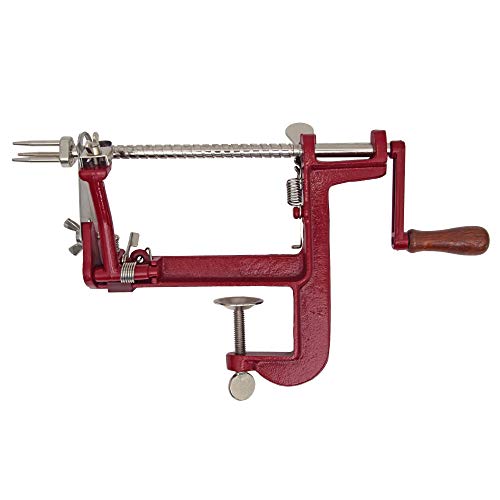
Johnny Apple Peeler
A countertop peeler speeds the peeling half of peach day — and the same tool carries the apple run when applesauce season follows peaches.
$34.99 from Amazon
ThermoPro TP03H Thermometer
Syrup goes over the peaches hot — an instant-read thermometer confirms it is at a boil before the jars fill.
$8.99 from Amazon
Presto 16-Quart Pressure Canner (01755)
The pressure canner for the rest of the harvest — the low-acid vegetables that share this kitchen run on pressure, not a water bath.
$151.63 from AmazonFrequently Asked Questions
Can I can white-flesh peaches?
No. The USDA states that some white-flesh varieties can exceed pH 4.6, there is no low-acid pressure process for them and no researched acidification procedure for boiling-water canning, and freezing is the recommended method instead.
Do peaches have to be canned in syrup?
No. The procedure allows a very light, light, or medium syrup, or plain water, apple juice, or white grape juice. The syrup is a flavor, color, and shape choice — the USDA syrup table notes it does not prevent spoilage; the process does that.
Hot pack or raw pack — which is better?
The USDA’s verdict is in the procedure: raw packs make poor quality peaches. Hot pack also processes 5 minutes faster per jar size.
How many peaches do I need?
An average of 17½ pounds for 7 quarts, or 11 pounds for 9 pints. A bushel is 48 pounds and yields 16 to 24 quarts.
Procedure, times, and amounts: USDA Complete Guide to Home Canning, Guide 2, “Peaches — Halved or Sliced,” with syrup measures from the USDA’s “Preparing and Using Syrups” table, via the National Center for Home Food Preservation.
Prices shown on this page were last checked November 26, 2026 — prices change; check before you buy.
Talk it over with other readers
The Truly Preserved Community on Facebook is where readers compare notes on food storage, water, and backup power — and where your questions help decide what we research next.