
Truly Preserved is reader-supported. If you buy through a link on this page we may earn a commission at no extra cost to you. Nobody pays for placement or scores.
THE SHORT ANSWER
Hot-smoked salmon, the University of Alaska Fairbanks Cooperative Extension method: cut the fish into pieces not more than 1 inch thick, brine it in a solution of 1½ pounds of salt per gallon of water — chilled to 38°F or lower first — for 20 minutes to 3 hours, using 3 parts brine to 1 part fish. Refrigerate it below 38°F while the salt evens out, 2 to 24 hours, form the tacky surface coat in the smoker for 30 minutes to 3 hours, then hot-smoke until the internal temperature reaches at least 160°F. Every figure on this page comes from that extension publication, credited at the bottom.
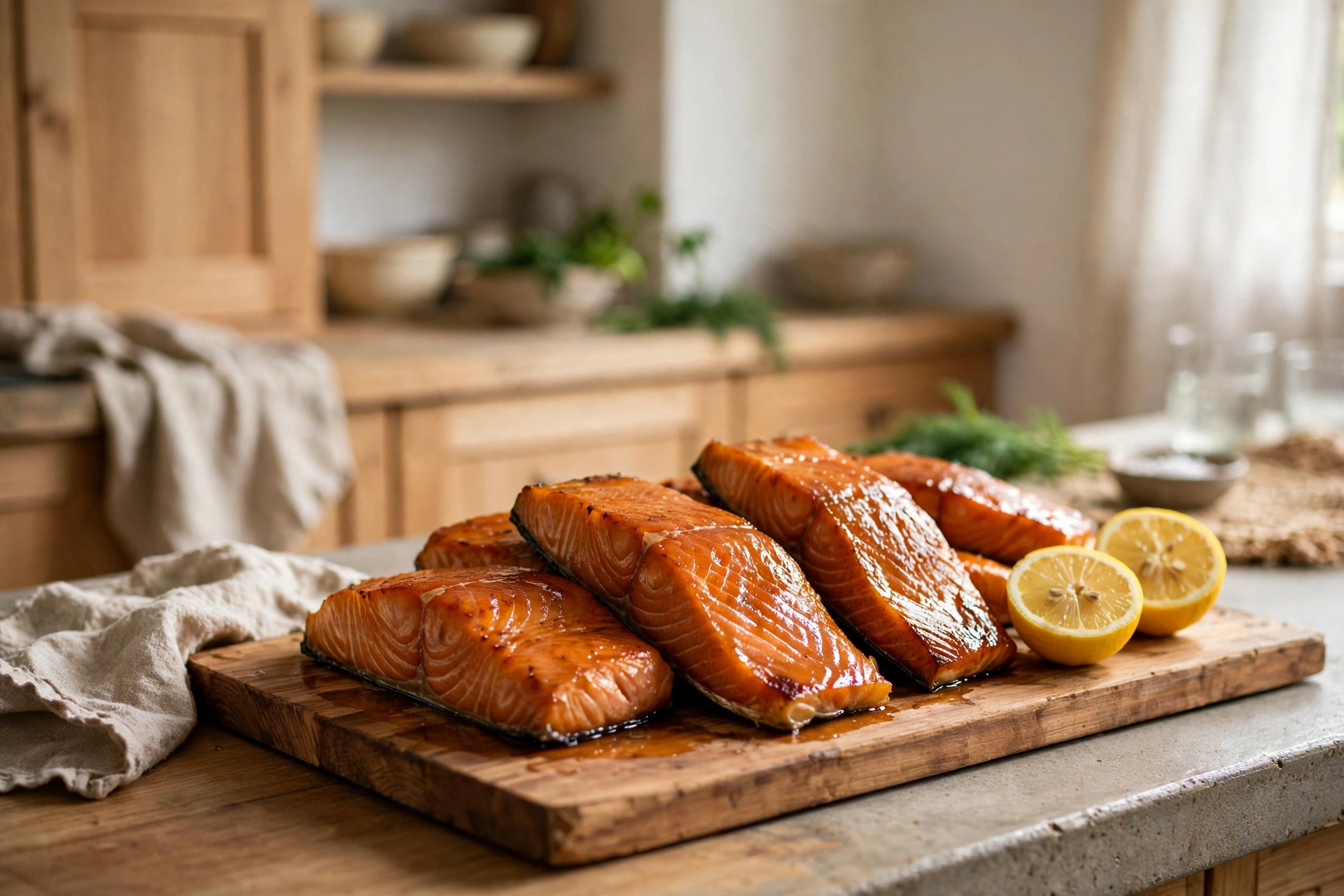
Smoked salmon is where Alaska’s extension service has done the deepest home-preservation work in the country, and this guide follows its publication because fish is unforgiving: the same publication warns that today’s lightly salted, lightly smoked fish is not a preserved product — the salt and smoke are not sufficient to prevent bacterial spoilage — so the safety of the finished fish rests on cold handling, a measured brine, and a real finish temperature, not on tradition.
This guide covers the hot-smoked method only: the fish is cooked through in the smoker. Cold smoking — where the internal temperature stays below 90°F — is described in the source so you can recognize it, but it produces a raw product and is not the method taught here. This guide is part of our preservation guides collection. The nitrite question that comes up with commercial smoked salmon is covered on how to use curing salt safely: note that the Alaska method below uses plain salt only, and specifically warns against curing salts in fish brines at home because the nitrite is hard to distribute evenly.
What You Need
Fresh or properly frozen salmon — fatty fish such as salmon brine and smoke much more easily than lean fish. For the brine: salt of the kinds the publication names — kosher salt, vacuum-dried salt, dairy salt, pickling and canning salt, or flake salt — at 1½ pounds of salt per gallon of water. The brine-to-fish ratio is 3 parts brine to 1 part fish. You also need refrigerator space that holds below 38°F, smoker racks, and a thermometer that reads the fish’s internal temperature.

Morton Canning and Pickling Salt, 4 lb
Pickling and canning salt is one of the salts the Alaska publication names for fish brines — the 1½-pounds-per-gallon brine is built on plain salt like this.
$2.68 from Amazon
ThermoPro Instant-Read Thermometer
The hot-smoke finish is an internal temperature of at least 160°F, and only a thermometer in the thickest piece can call it.
$8.99 from Amazon
Etekcity Digital Kitchen Scale
The brine is measured by weight — 1½ pounds of salt per gallon of water — and a kitchen scale is how that figure is met.
$9.99 from AmazonBefore You Start
Cold is the first ingredient. The ideal temperature for holding fish through preparation is below 38°F, and the publication notes that home refrigerators are often 40°F or higher — check yours with an appliance thermometer and adjust it before the fish arrives. Parasites are the second consideration: they can be destroyed by freezing the raw fish at 0°F for two weeks or longer before salting and smoking, and the hot-smoke finish of at least 160°F exceeds the 150°F the publication gives as required to kill parasites. Third, keep raw and finished fish apart: never handle raw fish where the finished smoked product is kept.
How to Cure and Smoke Salmon, Step by Step
- Prepare the fish. Clean the fish carefully to remove slime, blood, and dirt. Fillet or split it, leaving the skin on, and cut it into uniform pieces not more than 1 inch thick, so no part gets oversalted.
- Make and chill the brine. Dissolve 1½ pounds of salt per gallon of water, then chill the brine to 38°F or lower before the fish goes in.
- Brine the fish. Place the fish in the brine for 20 minutes to 3 hours, depending on the desired taste, at 3 parts brine to 1 part fish.
- Rest it cold. Refrigerate the brined fish below 38°F while the salt becomes evenly distributed — equilibration takes 2 to 24 hours depending on thickness, 6 to 8 hours for a 1-inch-thick fillet.
- Form the surface coat. Set the fish skin side down on lightly oiled smoker racks in a warmed smoker with no wood chips yet, and dry it 30 minutes to 3 hours, until the surface is tacky and slightly shiny and the texture noticeably firmer. That coat is the pellicle, and it seals in moisture.
- Hot-smoke to temperature. Smoke the fish until its internal temperature reaches at least 160°F. The temperature is the finish line, not the clock.
- Cool and store cold. Cool the finished fish and refrigerate or freeze it. Lightly smoked fish is a refrigerated food, not a shelf food.
The Numbers: Brine, Cold, and Heat
| Checkpoint | The figure |
|---|---|
| Piece thickness | Not more than 1 inch thick |
| Holding temperature during preparation | Below 38°F |
| Brine strength | 1½ pounds of salt per gallon of water |
| Brine temperature before use | Chilled to 38°F or lower |
| Brine-to-fish ratio | 3 parts brine to 1 part fish |
| Brining time | 20 minutes to 3 hours |
| Equilibration, refrigerated below 38°F | 2 to 24 hours (6 to 8 hours for a 1-inch-thick fillet) |
| Pellicle drying in the smoker | 30 minutes to 3 hours |
| Hot-smoked finish | Internal temperature of at least 160°F |
| Cold smoke (for recognition, not this method) | Internal temperature below 90°F |
| Parasite freeze, before salting and smoking | 0°F for two weeks or longer |
Finished smoked salmon portions freeze best sealed tight, with the air out. The two sealers that handle fish portions day in and day out:

Nesco VS-12 Vacuum Sealer
Smoked salmon freezes in meal-size sealed portions; vacuum sealing keeps the smoke flavor in and freezer air out.
$108.18 from Amazon
FoodSaver Elite Vacuum Sealer
The step-up sealer with a liquid mode, for oily fish portions that weep moisture as they seal.
$218.56 from AmazonCommon Mistakes
Using the wrong salt. The publication names the salts that belong in a fish brine — kosher, vacuum-dried, dairy, pickling and canning, or flake salt. It also says to avoid curing salts in this brine: the nitrite is hard to spread evenly through fish at home.
Brining warm. Brine made and used at room temperature skips the publication’s first control. Chill it to 38°F or lower before the fish goes in.
Cutting thick pieces. Pieces over 1 inch thick brine unevenly and may spoil during smoking. Uniform, thinner pieces are the method.
Skipping the pellicle. Fish that goes into smoke still wet takes smoke unevenly and loses moisture. The tacky, shiny coat is a step, not a garnish.
Treating smoked fish as shelf-stable. The publication is explicit: lightly salted and smoked fish is not a preserved product. Refrigerate it, freeze it, and keep it away from raw fish.
Storage and Shelf Life
Store the finished fish refrigerated below 38°F, or freeze it in sealed portions for longer keeping. Because this method’s salt and smoke do not preserve the fish on their own, treat smoked salmon as a fresh cooked food: cold at all times, and thawed in the refrigerator, never on the counter.
Viewers also searched for these items.

Mrs. Wages Pickling and Canning Salt
A second named-class brine salt in a resealable pouch — the same additive-free pickling salt rule the publication's salt list follows.
$19.32 from Amazon
Ziploc Freezer Quart Bags
Quart freezer bags for the salmon portions that get eaten first, frozen flat and thawed one meal at a time.
$26.48 from Amazon
IRIS USA Airtight Container, 30 lb, with Wheels
Airtight dry storage for the brine salt and spices between fish days, kept sealed against kitchen humidity.
$23.99 from AmazonFrequently Asked Questions
Why does this method use no curing salt?
The Alaska publication warns against curing salts in home fish brines because the nitrite in them is hard to distribute evenly. Its brine is plain salt, measured at 1½ pounds per gallon of water. The commercial rules for nitrite in smoked salmon are a separate subject, covered on our curing salt guide.
What temperature finishes hot-smoked salmon?
An internal temperature of at least 160°F, per the Alaska extension publication — a figure it sets for bacterial reduction, above the 150°F it gives for killing parasites.
How long does the fish sit after brining?
Equilibration runs 2 to 24 hours in the refrigerator below 38°F, depending on thickness — 6 to 8 hours for a 1-inch-thick fillet — before the pellicle forms in the smoker.
Can I cold-smoke salmon instead?
Cold smoke keeps the fish below 90°F inside, which means it is never cooked. This guide teaches the hot-smoked method, which finishes at 160°F; cold-smoked fish is a raw product with a different risk profile.
Method and figures: University of Alaska Fairbanks Cooperative Extension, “Smoking Fish at Home,” FNH-00325, via via the University of Alaska Fairbanks Cooperative Extension.
Prices shown on this page were last checked November 26, 2026 — prices change; check before you buy.
Talk it over with other readers
The Truly Preserved Community on Facebook is where readers compare notes on food storage, water, and backup power — and where your questions help decide what we research next.