
Every inch of rain that lands on your roof is water you either catch or watch run down the street. This calculator turns your roof into gallons: how much one storm puts within reach, how much a year of rain adds up to, and how much storage it takes to hold a storm instead of losing it. It pairs with the storage math in our Preserve the Water hub — that page covers keeping water safe; this one covers catching it in the first place. No sign-up, and nothing you type leaves your browser.
Run your roof
One downspout usually drains about a quarter of a roof. Two downspouts into barrels is half; a tank plumbed to every gutter is the whole thing.
Kentucky and the Southeast run 45–55 inches a year; much of the Plains runs 20–30; the desert Southwest, under 12. Your water utility or a quick search for your town’s average will pin it down.
—
—
—
—
A Worked Example
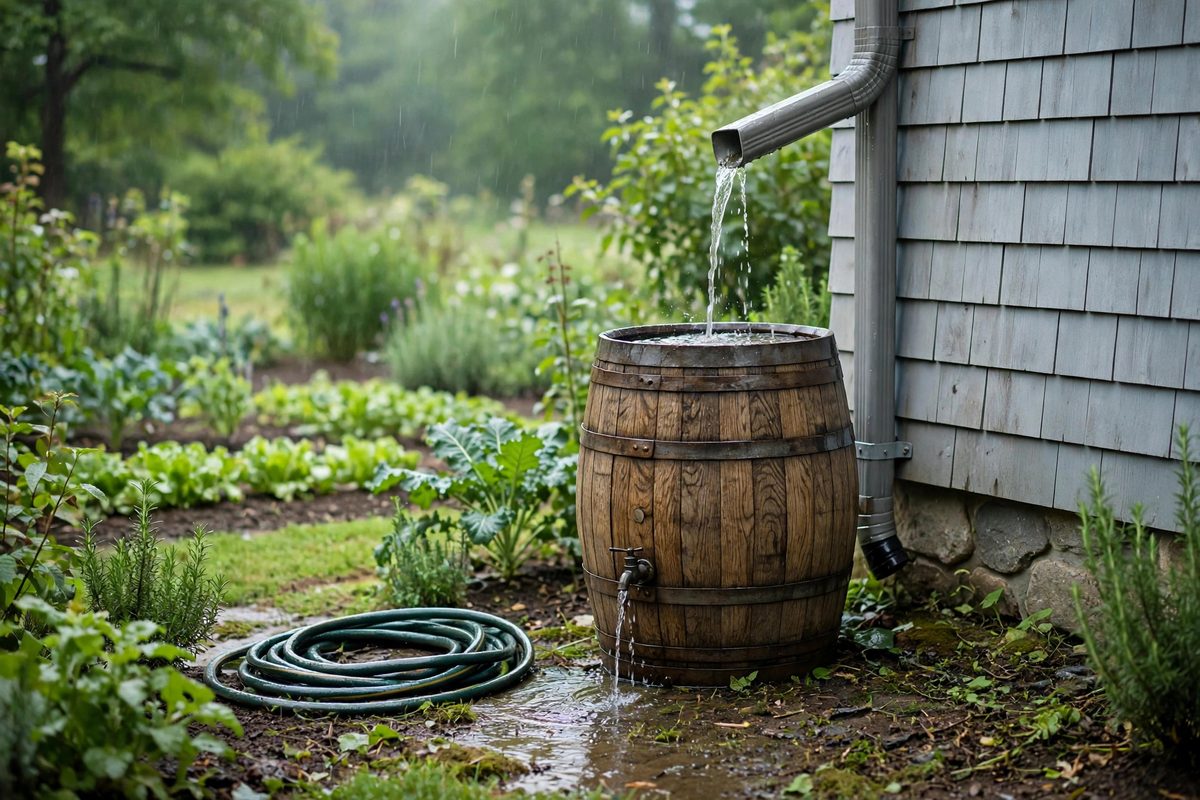
Take the defaults above: a 50-by-30-foot ranch roof — 1,500 square feet — in asphalt shingle, with one downspout feeding a barrel, in a 45-inch rainfall climate. One inch of rain puts about 199 gallons down that one downspout. A year of ordinary rain sends about 8,900 gallons past it — roughly 162 barrel-fills. Nobody stores a year of rain, and the example shows why the storage question is really a storm question: four 55-gallon barrels in a row catch one full inch-storm with a little room to spare. The roof was never the limit. The barrel count was.
How to Use This Calculator
- Measure the footprint, not the slope. Rain falls straight down, so what matters is the ground area your roof covers. Length times width of the house is close enough — a steep roof catches the same rain as a flat one over the same footprint.
- Count only what you will actually tap. Most homes start with one downspout. Leave the share at 25 percent until a second barrel or a tank is really plumbed in.
- Size storage to the storm line, not the year line. The per-year number tells you what the roof is worth. The per-storm number tells you what to buy.
- Then decide what the water is for. Garden and flushing water can go straight from barrel to use. Drinking water needs treatment first — see the question below.
What the Numbers Leave Out
The efficiency figures are the honest middle of what each roof material sheds. Real roofs lose a little more to splash, overflowing gutters in a downpour, and the first minutes of a storm washing dust off the shingles — which is why many setups route the first flush of each storm away from the barrel and catch the cleaner water behind it. Treat the outputs as planning numbers, the same way you would a fuel estimate: close enough to buy the right size, not a promise to the gallon.
One more planning truth: caught rain is only a supply if it stays clean and covered. A sealed, screened barrel keeps out mosquitoes, leaves, and algae. If the goal is drinking water in an emergency rather than a garden supply, plan on treatment — a gravity filter like the Big Berkey is the no-power way most of our readers handle it, and it is the filter that anchors our water filter comparison.
Questions People Ask
How much rain does it take to fill a 55-gallon barrel?
On the worked example’s roof share — one downspout of a 1,500-square-foot shingle roof — about a quarter inch of rain fills a barrel. Bigger tapped share, less rain needed. Run your own roof above; the per-inch line divided by 55 is your answer in barrels.
Can I drink rainwater straight off the roof?
Not safely, no. Roof runoff picks up bird droppings, dust, and whatever the shingles shed. For the garden and for flushing it is fine as it falls. For drinking, filter and disinfect it first — treat it like any other found water source, because that is what it is.
Is it legal to collect rainwater?
In most states, yes, for home use, with no permit at all. A few places set limits on barrel counts or total gallons, and some newer neighborhoods restrict visible tanks through HOA rules. It takes two minutes to check your state and local rules before you buy storage.
Which roof catches the most water?
Metal, and it is not close — a metal roof sheds about 95 percent of what lands on it and gives the cleanest runoff of the common materials. Shingle runs around 85 percent, tile around 75. If you are re-roofing anyway and water catching matters to you, that gap is worth real gallons.
Do I need a huge roof for this to be worth it?
No. Even 500 square feet tapped at one downspout yields around 65 gallons per inch of rain on shingles — a barrel a storm — which covers a vegetable garden through most dry spells. Small roofs fill small storage more often; that is a feature, not a flaw.
Making caught water drinkable
A barrel makes rainwater available. These are the filters from our head-to-head comparison that make it safe to drink:
Big Berkey
The countertop gravity filter: fill it from the barrel, no power and no plumbing, and it does the treatment work while sitting there.
Sawyer Squeeze
The pocket-size squeeze filter for the bug-out bag and the bucket kit — the small, cheap layer of the water plan.
GRAYL GeoPress
The press-bottle purifier: fill, press, drink — the one that handles the questionable sources the others cannot.
As an Amazon Associate, Truly Preserved earns from qualifying purchases. It never changes a score or a number on this page.