
Truly Preserved is reader-supported. If you buy through a link on this page we may earn a commission at no extra cost to you. Nobody pays for placement or scores.
THE SHORT ANSWER
Grape jelly with powdered pectin: start with 5 cups of grape juice (about 3½ pounds of Concord grapes and 1 cup of water), stir in 1 package of powdered pectin, bring it to a full rolling boil, add 7 cups of sugar, and boil hard for exactly 1 minute. Fill hot, sterile jars at 1/4 inch of headspace and process half-pints or pints for 5 minutes in a boiling water canner at 0–1,000 feet, 10 minutes at 1,001–6,000 feet, and 15 minutes above 6,000 feet. The batch makes about 8 or 9 half-pint jars. Every figure on this page comes from the tested source credited at the bottom.
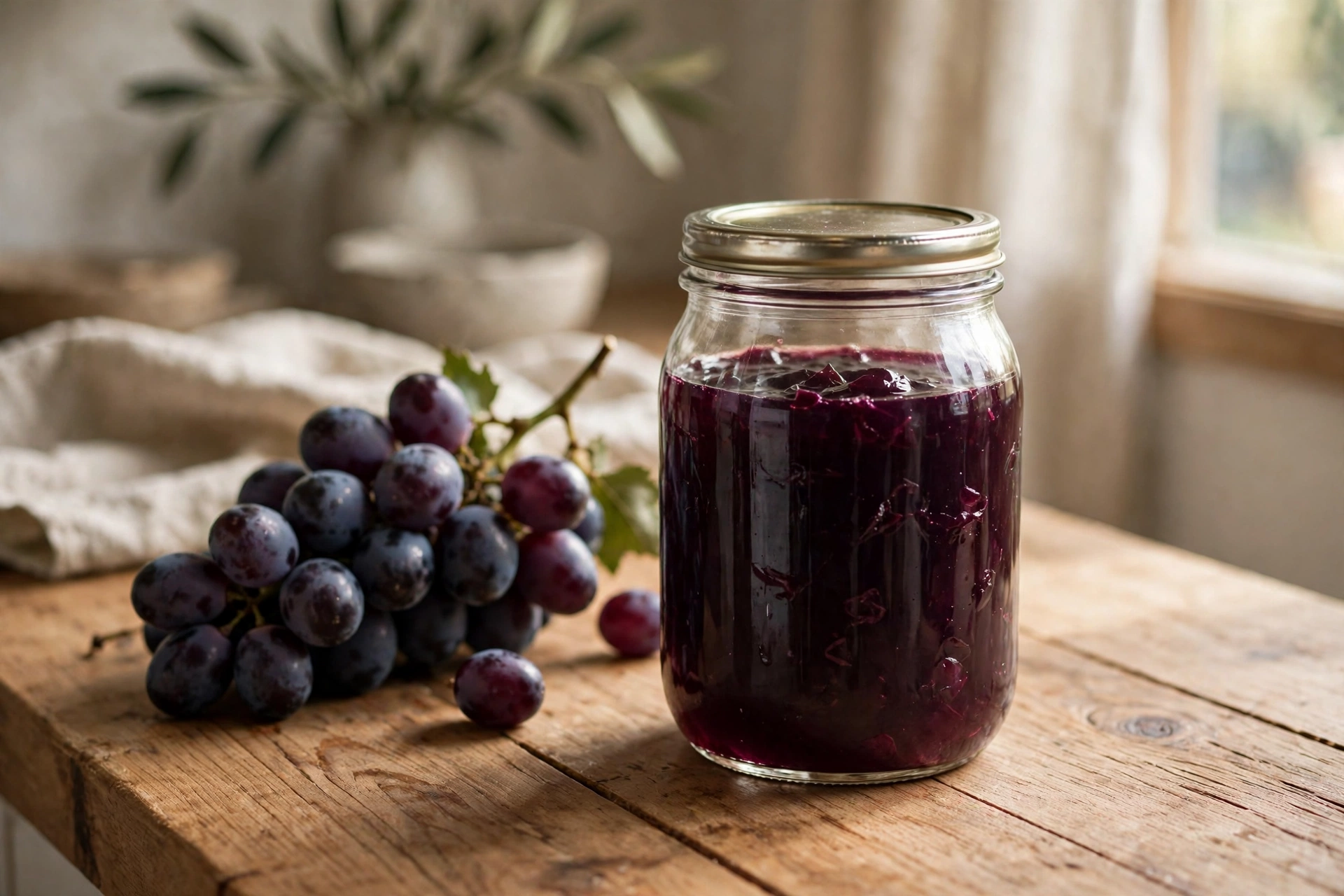
Grape jelly is the jar that tastes like childhood — deep purple, clear enough to read light through, and firm enough to hold its shape on toast. It is also the jelly that rewards patience before the cooking even starts: Concord grapes form tartrate crystals as their juice sits, and the tested recipe builds in an overnight rest so those crystals come out in the strainer instead of clouding your jars. Skip that step and the jelly still sets, but it will not be the sparkling jar you were picturing.
This guide follows the tested recipe exactly: its juice, its pectin, its sugar, and its minutes. If you are new to the water bath side of the work, how to can food in mason jars walks the general process for both canning methods, and this guide is part of our preservation guides covering the whole sweet-spreads shelf. The method here is the same one behind our strawberry jam — fruit or juice, powdered pectin, one hard minute of boiling — applied to juice instead of crushed fruit.
What You Need
Fully ripe Concord grapes first: about 3½ pounds of grapes and 1 cup of water make the 5 cups of juice the recipe calls for. Then 1 package of powdered pectin and 7 cups of sugar — that is the whole ingredient list. You also need half-pint or pint jars with new two-piece lids, a kettle big enough for a hard-rolling boil, cheesecloth for the second straining, and a boiling water canner. Buy the pectin fresh for this batch; the added-pectin directions are plain that old pectin may result in poor gels.

Ball Half-Pint Mason Jars, 12-Pack
Half-pint jars are the tested jar size for this grape jelly recipe, and having the full count washed and hot before the kettle boils keeps the one-minute finish from becoming a scramble.
Check Availability
Granite Ware 21.5-Quart Water Bath Canner
A boiling water canner is the only processing method this grape jelly recipe is tested for, and its rack keeps jars upright and off the pot bottom through the full process time.
Check Availability
Ball Regular Mouth Canning Lids, 96 Count
New lids are what the two-piece closure in this recipe assumes; fresh seals are the difference between a shelf of grape jelly and a refrigerator full of jars to use first.
$36.99 from AmazonBefore You Start
Sterilize the canning jars and prepare the two-piece lids according to the manufacturer’s directions, as the recipe directs — this is a 5-minute process at low altitude, and short processes start with sterile jars. Plan the juice a day ahead: the overnight stand in a cool place is part of the recipe, not a suggestion, because it is what keeps tartrate crystals out of the finished jelly. Measure the juice, pectin, and sugar before the kettle goes on the heat. Once the juice and pectin reach a boil, the recipe moves fast and there is no pause in it for measuring.
How to Make Grape Jelly, Step by Step
- Prepare the grapes. Sort, wash, and remove the stems from fully ripe grapes. Crush the grapes, add 1 cup of water, cover, and bring to a boil on high heat. Reduce the heat and simmer for 10 minutes.
- Extract and rest the juice. Extract the juice, then let it stand in a cool place overnight to prevent tartrate crystals forming in the jelly. Strain it through two thicknesses of damp cheesecloth to remove the crystals that have formed.
- Measure and add pectin. Measure 5 cups of juice into a kettle. Add the package of powdered pectin and stir well.
- First boil. Place the kettle on high heat and, stirring constantly, bring it quickly to a full rolling boil that cannot be stirred down.
- Add the sugar and boil hard. Add all 7 cups of sugar, keep stirring, and heat again to a full rolling boil. Boil hard for 1 minute, then remove from the heat and skim off the foam quickly.
- Fill the jars. Pour the hot jelly immediately into hot, sterile jars, leaving 1/4 inch of headspace. Wipe the rims with a dampened clean paper towel and adjust the two-piece lids.
- Process in a boiling water canner for the time for your altitude in the table below, then let the jars cool undisturbed and check every seal.
The Numbers: Processing Times
One row covers both jar sizes this recipe is tested for. Altitude changes the minutes, not the recipe.
| Jar size | 0–1,000 ft | 1,001–6,000 ft | Above 6,000 ft |
|---|---|---|---|
| Half-pints or pints | 5 minutes | 10 minutes | 15 minutes |
Headspace is 1/4 inch. Yield is about 8 or 9 half-pint jars.
A grape harvest rarely stops at one batch of jelly. The extra grapes freeze well for winter baking and smoothies, and these are the two tools that side of the job runs on.

Ziploc Freezer Quart Bags
Freezer quart bags hold the grape jelly overflow that does not fit this batch, portioned flat so a winter smoothie or second batch thaws fast.
$26.48 from Amazon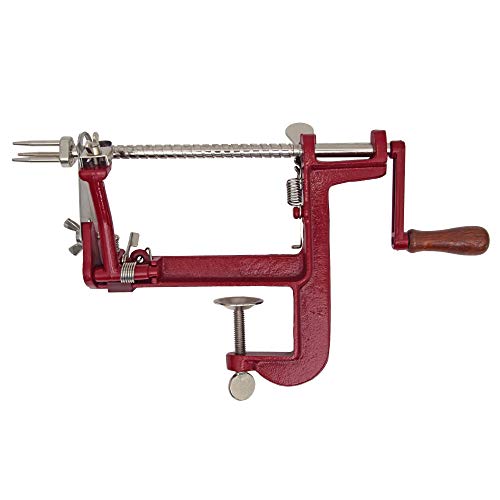
Johnny Apple Peeler
A countertop apple peeler speeds the prep on 8 pounds of apples; the recipe still quarters and cores by hand, but peeling and slicing stop being the long half of the job.
$34.99 from AmazonCommon Mistakes
Skipping the overnight rest. Fresh grape juice carries tartrate crystals that form as it sits. The recipe’s overnight stand and second straining exist to remove them; jelly made from unrested juice can turn gritty and cloudy in the jar.
Squeezing the juice bag dry. Forcing the last juice out pushes pulp and crystal sediment through the cloth. Jelly is the clear spread — let the juice drip and accept the smaller yield.
Cutting the sugar. Seven cups is the tested proportion for 5 cups of juice and a package of powdered pectin. Sugar is structural in a pectin jelly; less sugar is the most common reason a batch stays syrup.
Swapping pectin forms. This recipe is written for powdered pectin, added before the sugar. Liquid pectin goes in at a different point and is not interchangeable with powdered in the same recipe.
Doubling the batch. A doubled kettle heats differently and routinely fails to set. If you have juice for two batches, make the recipe twice instead of doubling it once.
Storage and Shelf Life
Store sealed jars in a cool, dark, dry place with the bands removed, and label each jar with the date. Sweet spreads are best if eaten within one year, so rotate the shelf and eat the oldest jars first. A jar that does not seal goes in the refrigerator and gets used first. Once a jar is opened, keep it refrigerated.
Viewers also searched for these items.

Etekcity Digital Kitchen Scale
A kitchen scale weighs the fruit this recipe measures by the pound, so the crush that goes into the kettle matches the amount the sugar and pectin were tested against.
$9.99 from Amazon
ThermoPro Instant-Read Thermometer
An instant-read thermometer confirms the canner water and your kitchen work honestly, and earns its drawer space across every other preserving job in this series.
$8.99 from Amazon
FoodSaver Elite Vacuum Sealer
A second vacuum sealer option for the freezer side of a grape jelly glut, with a liquid-friendly design for juicy fruit portions.
$218.56 from AmazonFrequently Asked Questions
Can I use bottled grape juice instead of fresh grapes?
The tested recipe is written around juice you extract from about 3½ pounds of Concord grapes. The added-pectin directions note that commercially canned or frozen juices can be used with packaged pectins generally, but this recipe’s figures — 5 cups of juice, 7 cups of sugar — belong to the fresh-grape version as written.
Why does the juice have to stand overnight?
To keep tartrate crystals out of the jelly. Letting the juice stand in a cool place lets the crystals form in the juice, where the second straining through damp cheesecloth can remove them, instead of in your finished jars.
Can I reduce the sugar?
Not in this recipe. A reduced-sugar jelly needs a recipe and a pectin tested for reduced sugar — see our reduced-sugar fruit spread for the tested route. This jelly is balanced at 7 cups for the juice and pectin given.
How much jelly does one batch make?
About 8 or 9 half-pint jars from 5 cups of grape juice.
Procedure, quantities, and processing times: “Grape Jelly — with powdered pectin,” adapted from “How to Make Jellies, Jams and Preserves at Home,” Home and Garden Bulletin No. 56, Extension Service, USDA (1982 reprint), via the National Center for Home Food Preservation.
Prices shown on this page were last checked November 26, 2026 — prices change; check before you buy.
Talk it over with other readers
The Truly Preserved Community on Facebook is where readers compare notes on food storage, water, and backup power — and where your questions help decide what we research next.