
Truly Preserved is reader-supported. If you buy through a link on this page we may earn a commission at no extra cost to you. Nobody pays for placement or scores.
THE SHORT ANSWER
Freeze-dry the soup you already made — Harvest Right’s guide runs it in both directions: cook your favorite soup as usual, freeze-dry the leftovers, and rehydrate them later. The safety figures come first, from USDA FSIS: refrigerate leftovers within 2 hours (1 hour if the temperature is over 90°F), keep the refrigerator at 40°F or below, use refrigerated leftovers within 3 to 4 days, and reheat leftovers to 165°F — soups, sauces, and gravies by bringing them to a rolling boil. Skim the fat and remove as much grease as possible before the trays load, spread or freeze the soup in shallow portions, run a full cycle, check for dryness, and seal at once in thick Mylar (5 to 7 mil, no clear windows) with an oxygen absorber. Every figure on this page comes from the FSIS, maker, and extension guidance credited at the bottom.
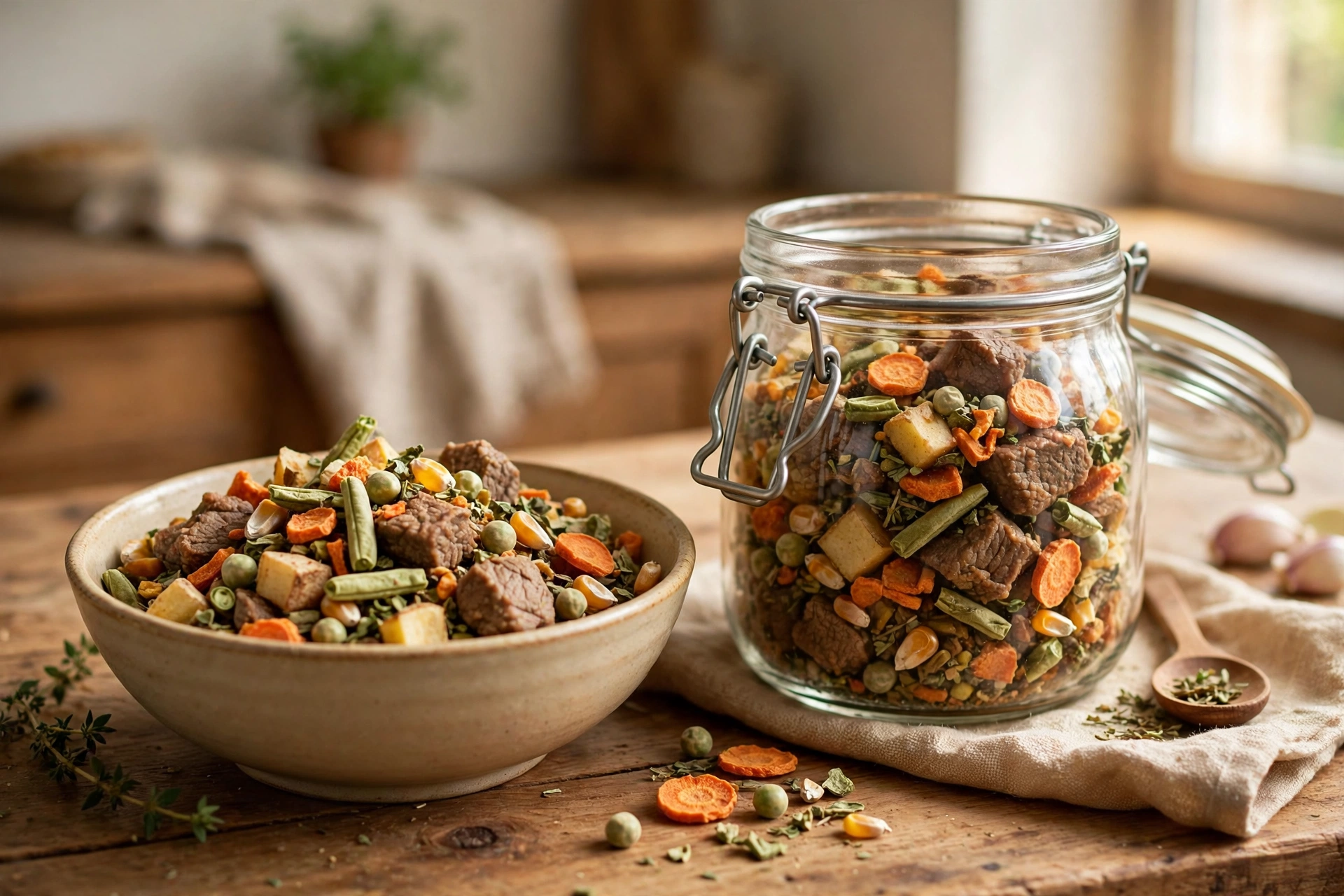
A pot of soup is the most natural freeze-drying batch there is. Soup and stew are cooked in quantity, eaten in part, and wasted in part — and the freeze dryer turns the leftover half into a shelf-stable meal that rehydrates in minutes. Harvest Right built a whole section of its guide around exactly this: freeze-dry soup ingredients together as a kit, or make the soup, freeze-dry what is left, and bring it back later “without losing nutrients,” in the maker’s words.
This guide follows USDA FSIS leftover-safety guidance for everything that happens before the machine, the makers’ published guidance for the cycle itself, and Utah State University Extension for packaging and storage. It is part of our preservation guides. For the machine itself, see our home freeze dryer roundup and how a freeze dryer works; for the liquid staple that goes into half the soups on earth, see how to freeze-dry milk.
What You Need
Cooked soup or stew, cooled and handled by the FSIS rules below. Shallow containers for rapid cooling — FSIS is specific that a big pot of soup takes a long time to cool and should be divided into smaller containers so it cools quickly. Trays that fit your machine, a freezer for pre-freezing the trays, thick Mylar bags (5 to 7 mil, without clear plastic windows, per Utah State), oxygen absorbers, and a way to seal the bags. A ladle and a skimmer earn their keep: the fat you pull off before drying is fat that cannot go rancid in the bag.
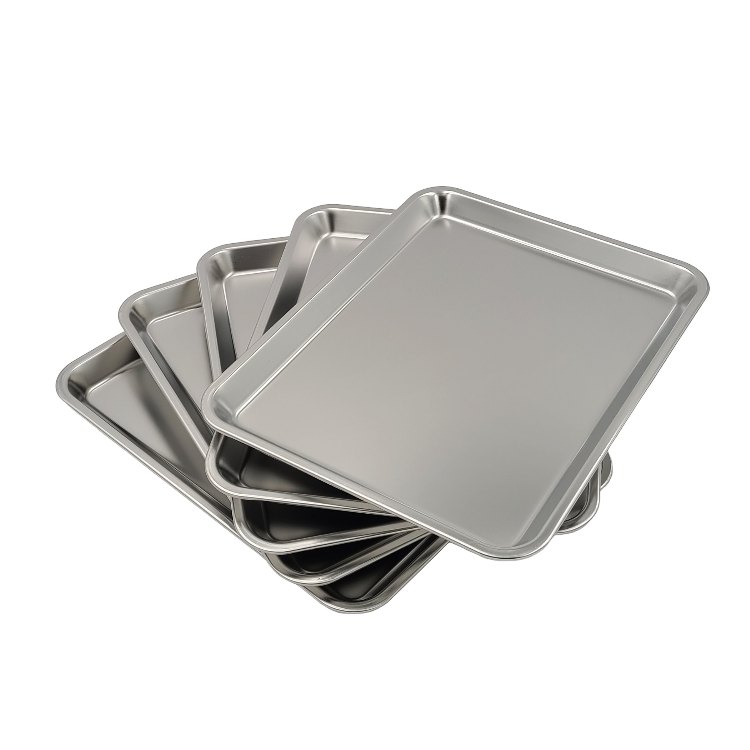
Blue Alpine Freeze Dryer Trays, Medium
A second tray set lets soup pre-freeze flat in the freezer while the current batch is still in the machine.
Check the price
Ziploc Freezer Quart Bags
Quart freezer bags portion and flatten soup for pre-freezing before it ever reaches a tray.
$26.48 from Amazon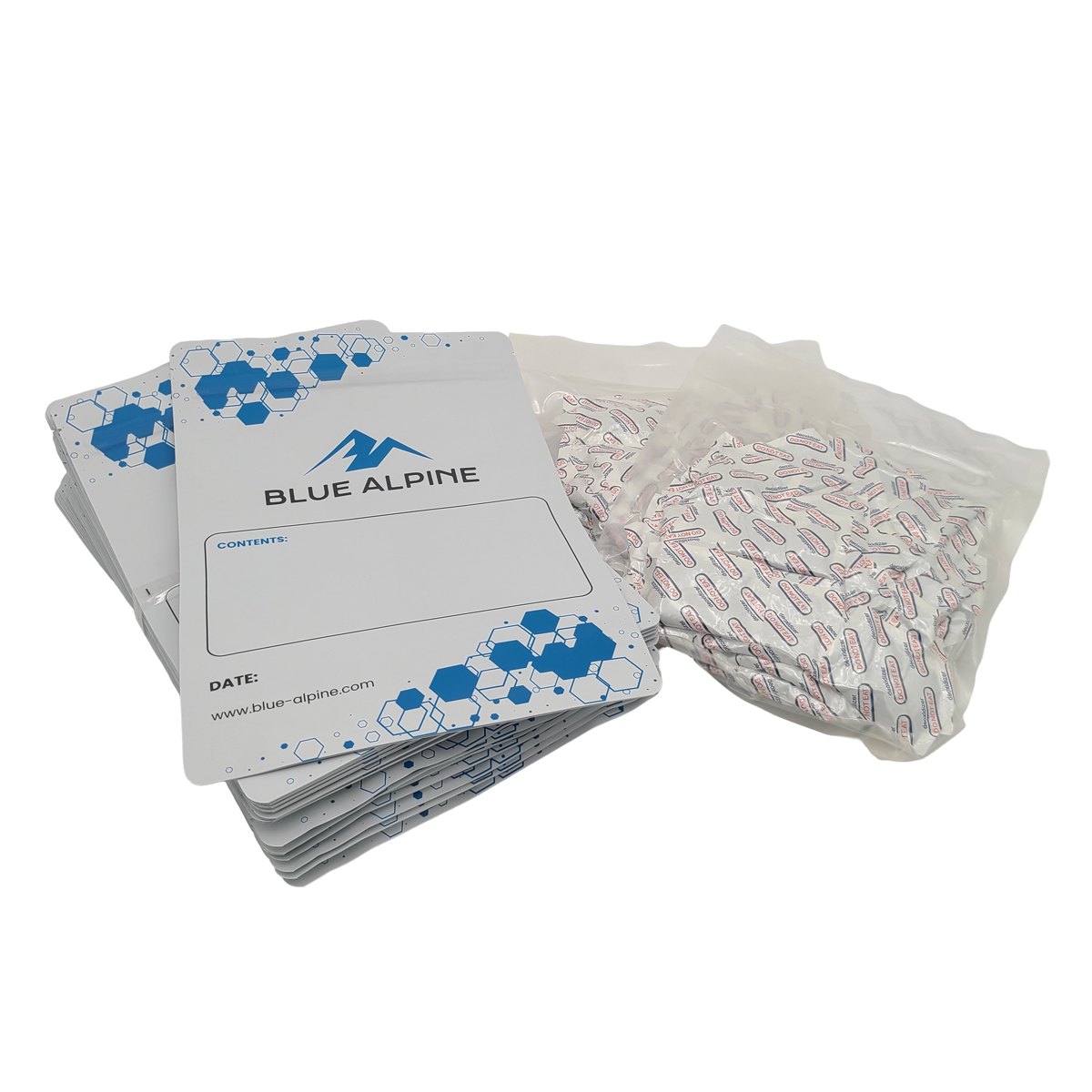
Blue Alpine Mylar Bags with Oxygen Absorbers
The maker's own Mylar bags with absorbers - the long-term package a finished soup batch is sealed into.
Check the priceBefore You Start
Soup safety is decided before the freeze dryer ever turns on, and FSIS sets the figures. Bacteria grow rapidly between 40°F and 140°F — the range FSIS calls the “Danger Zone.” Within 2 hours of cooking, leftovers must be refrigerated (throw away perishable food left at room temperature for more than 2 hours, or 1 hour if the temperature is over 90°F). Cool the pot rapidly: divide large amounts into shallow containers so the soup reaches the refrigerator-storage temperature of 40°F or below as fast as possible, and keep the refrigerator at 40°F or below. Refrigerated leftovers keep 3 to 4 days — the freeze dryer run belongs inside that window, not after it. And the rule that closes the loop later: freeze-drying does not kill bacteria, per Utah State Extension, so the soup that goes in must be food you would serve today.
How to Freeze-Dry Soup and Stew, Step by Step
- Cool it fast and refrigerate it. Divide the pot into shallow containers, refrigerate within 2 hours of cooking, and hold at 40°F or below, per FSIS.
- Skim the fat. Chill makes this easy: lift the solid fat off the surface. Harvest Right’s instruction for meat dishes is to remove as much grease as possible before freeze drying, and extension guidance explains why — fat does not freeze like water, slows the process, and raises the rancidity risk in storage.
- Cut the solids small. Bite-size pieces, and keep the layer in the extension range: most foods between 1/4 and 1/2 inch thick, meat pieces no thicker than about 3/4 inch, so everything freezes and dries evenly.
- Load the trays the liquid way. Harvest Right’s guidance for liquids is direct: set an empty tray in the machine, pull it out a few inches, and pour the soup in — or pour the trays on the counter and pre-freeze them before loading. Pre-freezing is the steadier route for soup: a frozen tray cannot slosh, and extension guidance recommends pre-freezing foods before they go in.
- Run a full cycle. The machine freezes the food to −40°F or colder and dries it under vacuum, sensing moisture and finishing when the load is dry. Thick foods can take more than 2 days to fully dry, per extension guidance — soup with big solids is a candidate for extra dry time, not a shorter cycle.
- Check for dryness the extension way. The food should feel crisp, dry, or brittle, with no cold or soft spots. Break the largest piece of meat or potato and check its center; cold means moisture, and moisture means more dry time.
- Package immediately. Fill thick Mylar bags, add an oxygen absorber to each, and seal at once — finished food left sitting out begins to rehydrate from moisture in the air.
- Label with contents and date. Soup all looks alike dry. The label is the recipe card: what it is, when it was made, and that it reheats to a rolling boil.
The Numbers: Safety Figures and Machine Settings
The food-safety figures are FSIS’s, exactly. The machine figures are the makers’ and extension’s published defaults — freeze-dryer makers do not publish per-food tested times, and the machine decides dryness by sensor.
| Checkpoint | The figure | Source |
|---|---|---|
| Danger Zone | 40°F to 140°F | USDA FSIS |
| Refrigerate leftovers within | 2 hours (1 hour if over 90°F) | USDA FSIS |
| Refrigerator temperature | 40°F or below | USDA FSIS |
| Refrigerated leftover life | 3 to 4 days | USDA FSIS |
| Reheat leftovers to | 165°F; soups, sauces, and gravies to a rolling boil | USDA FSIS |
| Layer thickness | Most foods 1/4 to 1/2 inch; meat no thicker than about 3/4 inch | Utah State Extension |
| Machine freezing stage | −40°F or colder | Harvest Right |
| Dryness test | Crisp, dry, or brittle — no cold or soft spots | Utah State Extension |
| Packaging | Mylar 5–7 mil, no windows, plus oxygen absorber | Utah State Extension |
| Stability, properly packaged | 10–15 years, sometimes up to 25 | Utah State Extension |
| Recommended use window, home freeze-dried | 5–10 years for quality | Utah State Extension |
On rehydration, Harvest Right’s direction for full meals is to slowly add hot or warm water until the meal reaches the proper consistency, then warm it further — and FSIS sets the finish line: reheat to 165°F, and bring soups to a rolling boil. No maker publishes a fixed water ratio for soup, so add water gradually rather than trusting a ratio from the internet.
The share of a big pot that does not go in the freeze dryer still needs a home. Vacuum-sealed portions in the freezer are the other half of the soup habit, and these are the two sealers that side of the job runs on.

FoodSaver Elite Vacuum Sealer
For the share of the pot that gets frozen instead of freeze-dried - vacuum sealing keeps frozen soup portions from drying out.
$218.56 from Amazon
Nesco VS-12 Vacuum Sealer
A countertop vacuum sealer for portioning cooked soup and stew into freezer bags inside the FSIS 3-to-4-month frozen window.
$108.18 from AmazonCommon Mistakes
Freeze-drying soup that sat out. The 2-hour rule has no freeze-dryer exception. Food left at room temperature beyond it is thrown away, per FSIS — the machine preserves what is in the food, including bacteria, per extension guidance.
Cooling the whole pot in the refrigerator. FSIS warns that a big pot of soup takes a long time to cool, inviting bacteria to multiply. Shallow containers first, then the refrigerator.
Leaving the fat in. Fat does not freeze like water, slows drying, and goes rancid in storage. Skim the chilled surface and remove as much grease as possible, as the maker directs for meat dishes.
Pouring deep trays. A deep layer of stew is a thick food, and thick foods can take more than 2 days and still hide a damp center. Shallow layers and small pieces dry evenly.
Reheating to “hot enough.” Leftovers reheat to 165°F as measured with a food thermometer, and soups come to a rolling boil. Warm is not the standard; the number is.
Storage and Shelf Life
Utah State Extension states that freeze-dried foods can remain safe and stable for 10 to 15 years — sometimes up to 25 — in airtight, moisture-proof packaging kept cool, dark, and dry, and recommends consuming home freeze-dried products within 5 to 10 years for quality. Harvest Right adds the handling rule: once a container has been opened, the oxygen absorber no longer works and should be replaced before resealing. Soups with meat and fat sit at the shorter end of the quality window — plan to rotate them first. Date every bag.
Viewers also searched for these items.

Blue Alpine Medium Select
The Blue Alpine medium machine whose maker's published guidance this series draws on, sized for family dessert batches.
Check the price
ePackageSupply 5-Gallon Buckets, 3-Pack
Food-grade buckets with gamma lids give sealed soup bags a rigid, pest-proof outer home.
$73.99 from Amazon
Sukerle 5-Gallon Mylar Bags with Absorbers
Bucket-scale 5-gallon Mylar liners for storing many meal bags together in one rigid container.
$42.99 from AmazonFrequently Asked Questions
Can I freeze-dry soup with cream or cheese in it?
Extension guidance covers pasteurized dairy as suitable and warns that emulsions like homemade sauces and gravies may separate during drying. A cream soup can be dried, but expect the texture on rehydration to differ from the original, and skim what fat you can first.
How do I rehydrate freeze-dried soup?
Add hot or warm water slowly until it reaches the proper consistency, per Harvest Right’s meal guidance, then bring it to a rolling boil — FSIS’s reheating standard for soups, sauces, and gravies, with leftovers reheated to 165°F.
My soup has been in the refrigerator for five days. Can the freeze dryer save it?
No. FSIS gives refrigerated leftovers 3 to 4 days. Beyond that window the food is discarded, not preserved — freeze-drying does not kill bacteria or reset the clock.
How long does a soup batch take in the machine?
No tested per-food time is published; the machine senses dryness and ends the cycle. Extension guidance notes thick foods such as casseroles can take more than 2 days to fully dry, so plan for a long run and let the dryness check decide.
Leftover-safety figures: USDA Food Safety and Inspection Service, “Leftovers and Food Safety,” via USDA FSIS; procedure: Harvest Right, “Guide to Freeze Drying” (Easy-Cook Soup), and Utah State University Extension, “Can I Freeze-Dry That? A Practical Guide to Safe and Effective Freeze-Drying.”
Prices shown on this page were last checked November 26, 2026 — prices change; check before you buy.
Talk it over with other readers
The Truly Preserved Community on Facebook is where readers compare notes on food storage, water, and backup power — and where your questions help decide what we research next.