
Truly Preserved is reader-supported. If you buy through a link on this page we may earn a commission at no extra cost to you. Nobody pays for placement or scores.
THE SHORT ANSWER
Freeze drying milk: start with pasteurized milk — Utah State University Extension is explicit that raw milk is a high-risk no — pour it into trays (or pre-freeze the trays first), run a normal cycle, and check the result the extension way: the dried milk should feel crisp, dry, or brittle, with no cold or soft spots. Break it up, seal it immediately in thick Mylar (5 to 7 mil, no clear windows) with an oxygen absorber, and store it cool, dark, and dry. Extension guidance puts properly packaged freeze-dried food at 10 to 15 years of stability, while recommending home freeze-dried food be used within 5 to 10 years for quality.
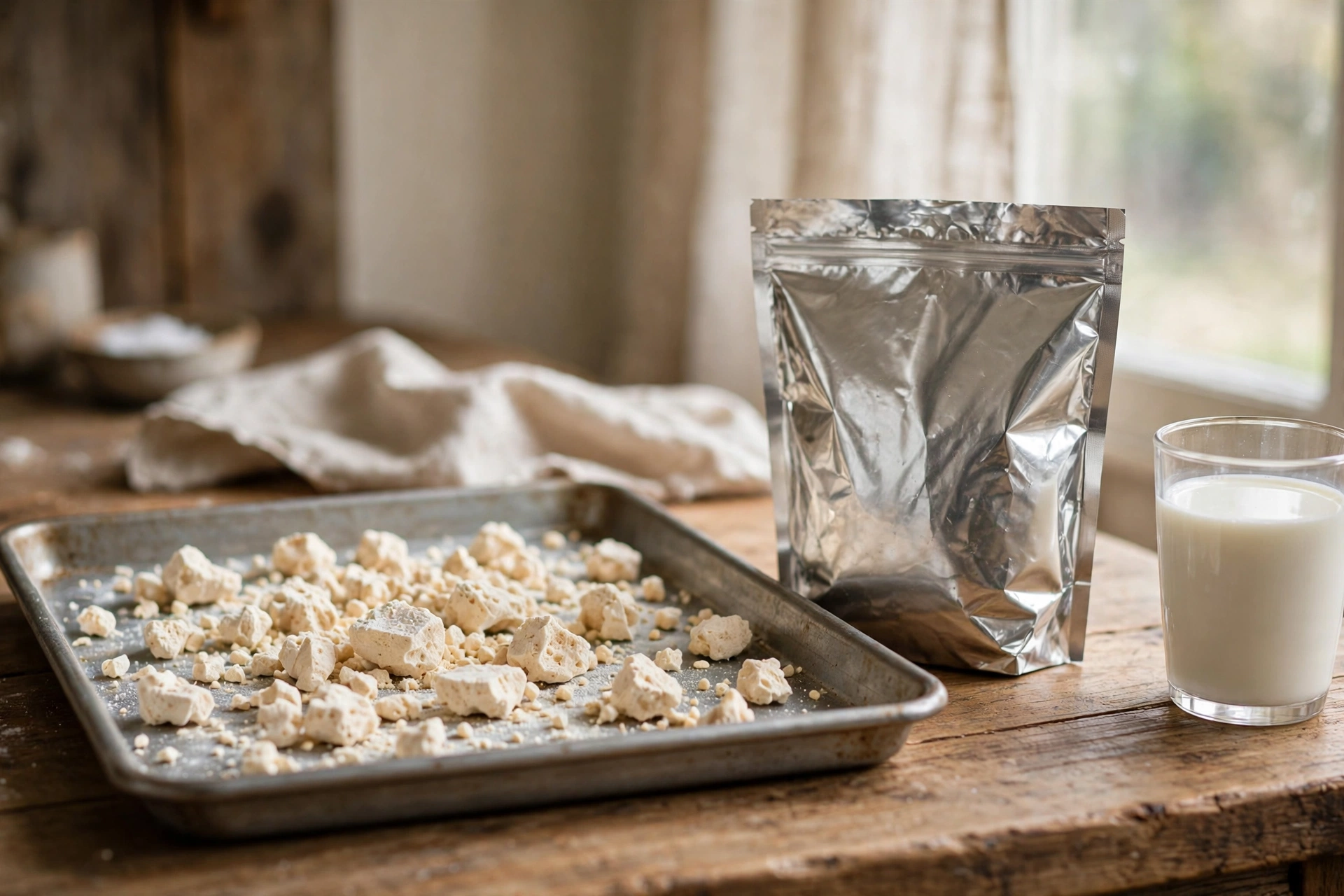
Milk is the pantry gap that powdered grocery-store milk never quite fills, and it is the freeze-drying question prepper households ask first: can the machine turn a gallon of fresh milk into a shelf-stable staple that still tastes like milk? Yes — with two disciplines. The first is the source: pasteurized milk only. Utah State’s freeze-drying guide lists pasteurized milk and dairy as suitable and raw milk as high-risk, because unpasteurized dairy can carry Listeria, Salmonella, or E. coli, and high fat content raises the rancidity risk in storage. The second is the packaging: freeze-dried milk starts pulling moisture back out of the air the moment the cycle ends.
New to the machine itself? Start with the best freeze dryer for beginners and the Harvest Right sizes compared before your first liquid load.
What You Need
Pasteurized milk — whole milk freeze dries and reconstitutes with the fullest flavor; the fat is also why the packaging discipline below matters. Trays that fit your machine, a freezer with room to pre-freeze them if you go that route, thick Mylar bags (5 to 7 mil, without clear plastic windows, per Utah State’s packaging guidance), oxygen absorbers, and a way to seal the bags. That is the whole list; milk needs no pretreatment, no additives, and no cooking.
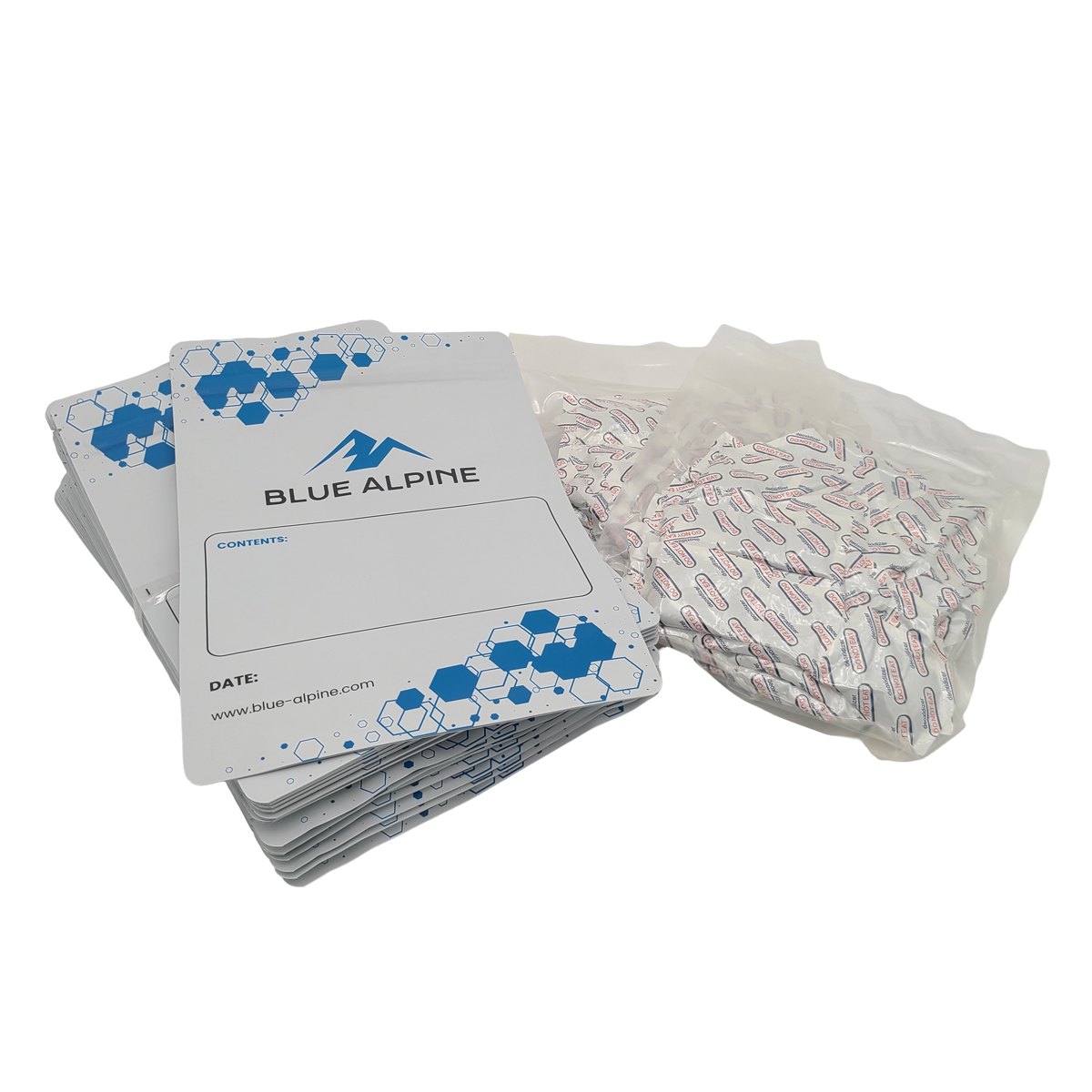
Blue Alpine Mylar Bags with Oxygen Absorbers
From the freeze dryer maker's own store: the bags and absorbers sized for freeze-dried food, sold as one kit. Use code TRULYPRESERVED at checkout for 10% off.
$32.39 from Blue Alpine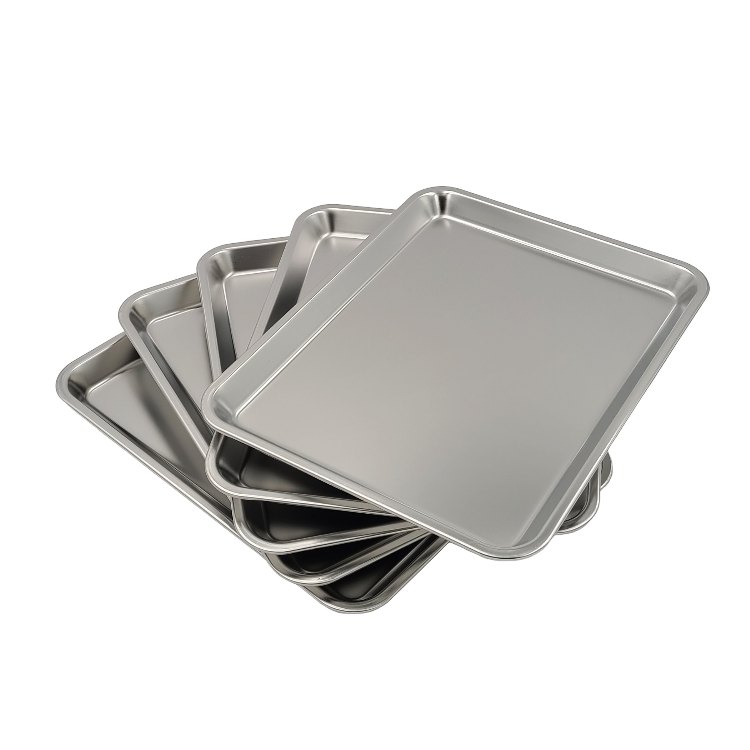
Blue Alpine Freeze Dryer Trays, Medium
A second set of trays means the next load of milk is pre-freezing while this one runs. Use code TRULYPRESERVED at checkout for 10% off.
$66.71 from Blue Alpine
PackFreshUSA 500cc Oxygen Absorbers
The absorber is what makes a sealed bag a long-term package — sized for gallon-scale bags of dried food.
Check AvailabilityBefore You Start
Two decisions before the machine runs. First, pre-freeze or not: extension guidance is to pre-freeze foods in your freezer before loading the freeze dryer, and Harvest Right notes that setting pre-frozen trays into an already-cold machine (given a half hour to chill) can trim total cycle time. Liquids are the strongest case for pre-freezing — a tray of frozen milk cannot slosh. Second, plan the packaging before the cycle ends, not after: bags, absorbers, and sealer laid out and ready, because finished food left sitting out begins to rehydrate from moisture in the air.
How to Freeze Dry Milk, Step by Step
- Pour the trays. Harvest Right’s guidance for liquids is direct: set an empty tray in the machine, pull it out a few inches, and pour the milk in — or pour the trays on the counter and pre-freeze them before loading. Keep the layer even; extension guidance keeps most foods between 1/4 and 1/2 inch thick.
- Pre-freeze if you can. Freeze the trays solid in your household freezer first. It steadies liquids and can shorten the machine’s own freezing stage, where the machine takes food to −40°F or colder.
- Run a normal cycle. Let the machine run its full freeze and dry cycle. Liquids are dense; if the machine offers extra dry time at the end, milk is a food that earns it.
- Check for dryness the extension way. Utah State’s test: the food should feel crisp, dry, or brittle, with no cold or soft spots. Break a larger piece in half and check the middle — Harvest Right suggests touching the broken center to your tongue; if it feels cold, moisture remains and the load needs more dry time.
- Break it down. Lift the dried milk off the trays and break or crumble it into pieces or powder — powder reconstitutes fastest and packs tightest.
- Package immediately. Fill thick Mylar bags, add an oxygen absorber to each, and seal at once. Utah State is specific: thick Mylar (5 to 7 mil) without clear windows, paired with oxygen absorbers, gives the best long-term protection. Once a bag is opened later, its absorber no longer works and should be replaced before resealing.
- Store cool, dark, and dry, with the date on every bag.
The Numbers That Matter
| Checkpoint | The figure | Source |
|---|---|---|
| Milk eligibility | Pasteurized: yes. Raw: no — high-risk | Utah State Extension |
| Layer thickness | Most foods 1/4 to 1/2 inch | Utah State Extension |
| Machine freezing stage | −40°F or colder | Harvest Right |
| Dryness test | Crisp, dry, or brittle — no cold or soft spots | Utah State Extension |
| Packaging | Mylar 5–7 mil, no windows, plus oxygen absorber | Utah State Extension |
| Stability, properly packaged | 10–15 years, sometimes up to 25 | Utah State Extension |
| Recommended use window, home freeze-dried | 5–10 years for quality | Utah State Extension |
On reconstitution, the honest answer: neither extension nor the manufacturer publishes a fixed powder-to-water ratio for milk. Harvest Right’s direction for powdered dairy is to add water gradually and stir until it returns to its original state — thin it to drinking consistency a splash at a time rather than trusting a ratio from the internet.
Finished bags need a rigid home. One-gallon pouches hold the partial runs, and food-grade buckets keep the sealed bags safe from pests and crushing:

Wallaby 1-Gallon Mylar Bags, 10-Pack
One-gallon 9.5-mil pouches — the size a single bag of flour or a partial freeze-dryer run actually fills.
Check Availability
ePackageSupply 5-Gallon Buckets, 3-Pack
Food-grade buckets with gamma lids — the rigid outer layer that keeps bags and bulk storage safe from pests and crushing.
$73.99 from AmazonCommon Mistakes
Freeze drying raw milk. Extension guidance names it high-risk outright. Pasteurized milk is the starting point, every time.
Trusting the timer instead of the dryness check. A load that feels dry on top can hide a cold, damp center. Break a piece and check the middle before anything gets bagged.
Leaving finished milk on the counter. Freeze-dried food rehydrates from room air. The gap between “cycle done” and “sealed in Mylar” should be minutes, not hours.
Thin bags and clear windows. Utah State’s packaging guidance is specific for a reason — light and oxygen are what age freeze-dried food, and thin or windowed bags let both in.
Storage and Shelf Life
Utah State Extension states that freeze-dried foods can remain safe and stable for 10 to 15 years — sometimes up to 25 — in airtight, moisture-proof packaging kept cool, dark, and dry, and in the same breath recommends consuming home freeze-dried products within 5 to 10 years, because home production loses nutrients and quality faster than commercial. Both numbers are on this page because both are the source’s. Date every bag and rotate.
Viewers also searched for these items.
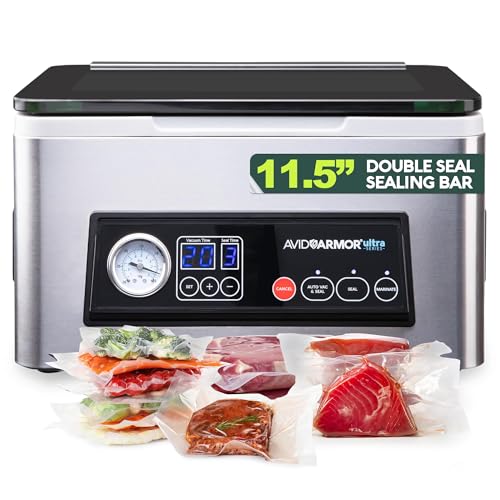
Avid Armor USV20 Chamber Vacuum Sealer
The high-volume chamber machine for households packaging whole runs at once.
$349.00 from Amazon
Nesco VS-12 Vacuum Sealer
For the opened-bag problem: reseal partial bags of dried milk for the working pantry.
$108.18 from Amazon
Sukerle 5-Gallon Mylar Bags with Absorbers
Bucket-scale Mylar for the overflow storage a productive machine creates.
$42.99 from AmazonFrequently Asked Questions
Can I freeze dry raw milk?
No. Utah State Extension classifies raw milk and unpasteurized dairy as high-risk for freeze drying. Use pasteurized milk.
How do I know the milk is fully dry?
Use the extension dryness check: it should feel crisp, dry, or brittle with no cold or soft spots. Break the thickest piece and check its center — cold means moisture, and moisture means more dry time.
How much water do I add back?
No authoritative ratio is published. Add water gradually and stir, per Harvest Right’s direction for powdered dairy, until it reaches the consistency of fresh milk.
How long does freeze-dried milk keep?
Utah State puts properly packaged freeze-dried food at 10 to 15 years of stability and recommends using home freeze-dried food within 5 to 10 years for best quality.
Guidance: Utah State University Extension, “Can I Freeze-Dry That? A Practical Guide to Safe and Effective Freeze-Drying” (extension.usu.edu), and Harvest Right’s Guide to Freeze Drying.
Prices shown on this page were last checked November 26, 2026 — prices change; check before you buy.
Talk it over with other readers
The Truly Preserved Community on Facebook is where readers compare notes on food storage, water, and backup power — and where your questions help decide what we research next.