
Truly Preserved is reader-supported. If you buy through a link on this page we may earn a commission at no extra cost to you. Nobody pays for placement or scores.
THE SHORT ANSWER
Garlic and onions freeze-dry the same way as the other vegetables — peel, slice or mince, single layer on the trays, full cycle, dryness check — with one rule the maker publishes specifically for them: run them in their own batch. Harvest Right’s garden guidance states that onions, like strong peppers, are an exception to mixing foods in one batch, because their strong aroma can travel through the venting process during freeze drying and transfer flavor and aroma to other foods. After a strong-smelling batch, the maker directs a thorough wipe-down of the chamber before the next batch, and points to its cleaning recommendations for the chamber and vacuum pump oil. The food itself follows the standard figures: pieces in the extension range of 1/4 to 1/2 inch, crisp and brittle with no cold or soft spots when done, sealed at once in thick Mylar (5 to 7 mil, no clear windows) with an oxygen absorber. Every figure on this page comes from the maker and extension guidance credited at the bottom.
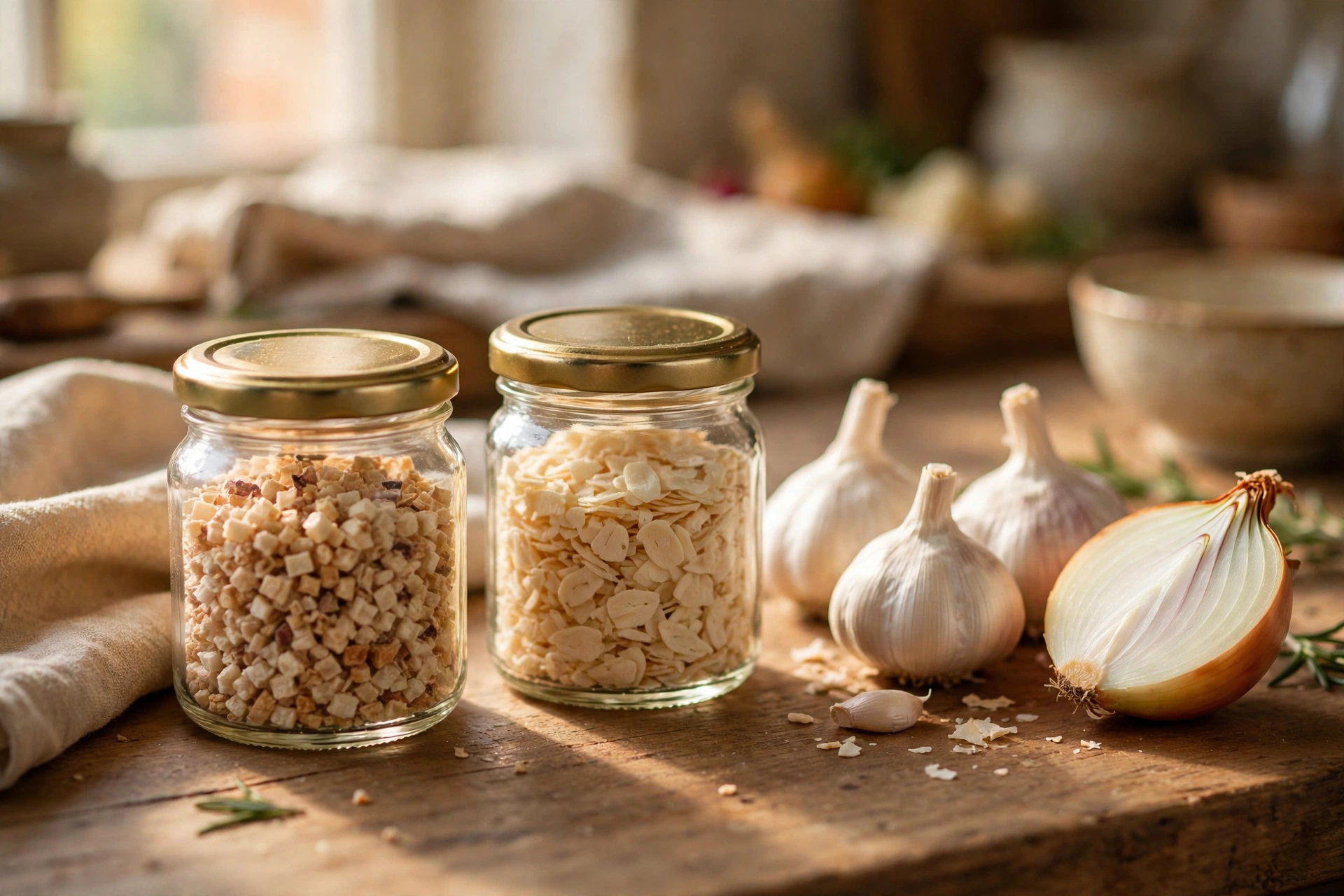
Garlic and onions are the seasoning base half of cooking stands on, and they are the garden’s most awkward keepers — garlic dries out in the pantry braid, onions sprout or soften in the bin. Freeze-dried, they become a shelf-stable mince and powder that measure by the spoonful and rehydrate in the pan. The method is the standard vegetable method; the personality is the smell, and the makers are unusually direct about it.
This guide follows Harvest Right’s published garden and freeze-drying guidance and Utah State University Extension’s freeze-drying guide, and it is part of our preservation guides. The gentler version of the same single-layer method is how to freeze-dry herbs, and the machine background is in how a freeze dryer works and the home freeze dryer roundup.
What You Need
Fresh garlic bulbs and onions, sound and firm. A knife or food processor for slicing and mincing — uniform pieces dry uniformly, and extension guidance keeps most foods between 1/4 and 1/2 inch thick. Trays that fit your machine; a dedicated spare set is worth having for this batch, because the aroma rule below means garlic and onions run alone, and a second tray set keeps the machine’s schedule moving. Thick Mylar bags (5 to 7 mil, without clear plastic windows, per Utah State), oxygen absorbers, a way to seal the bags, and fresh vacuum pump oil on hand for after the batch — the maker’s cleaning guidance covers the pump oil after strong-smelling foods.
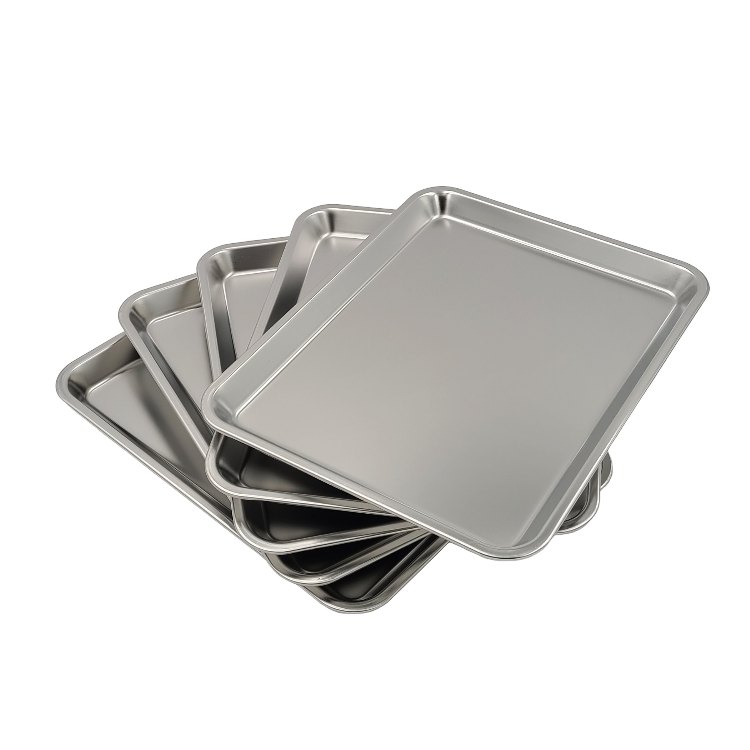
Blue Alpine Freeze Dryer Trays, Medium
A dedicated spare tray set for strong-smelling batches keeps garlic and onion runs separate from fruit and dessert trays.
Check the price
JB Black Gold Pump Oil
Fresh vacuum pump oil on hand for after an aromatic batch - the maker's cleaning guidance covers pump oil after strong-smelling foods.
$54.50 from Amazon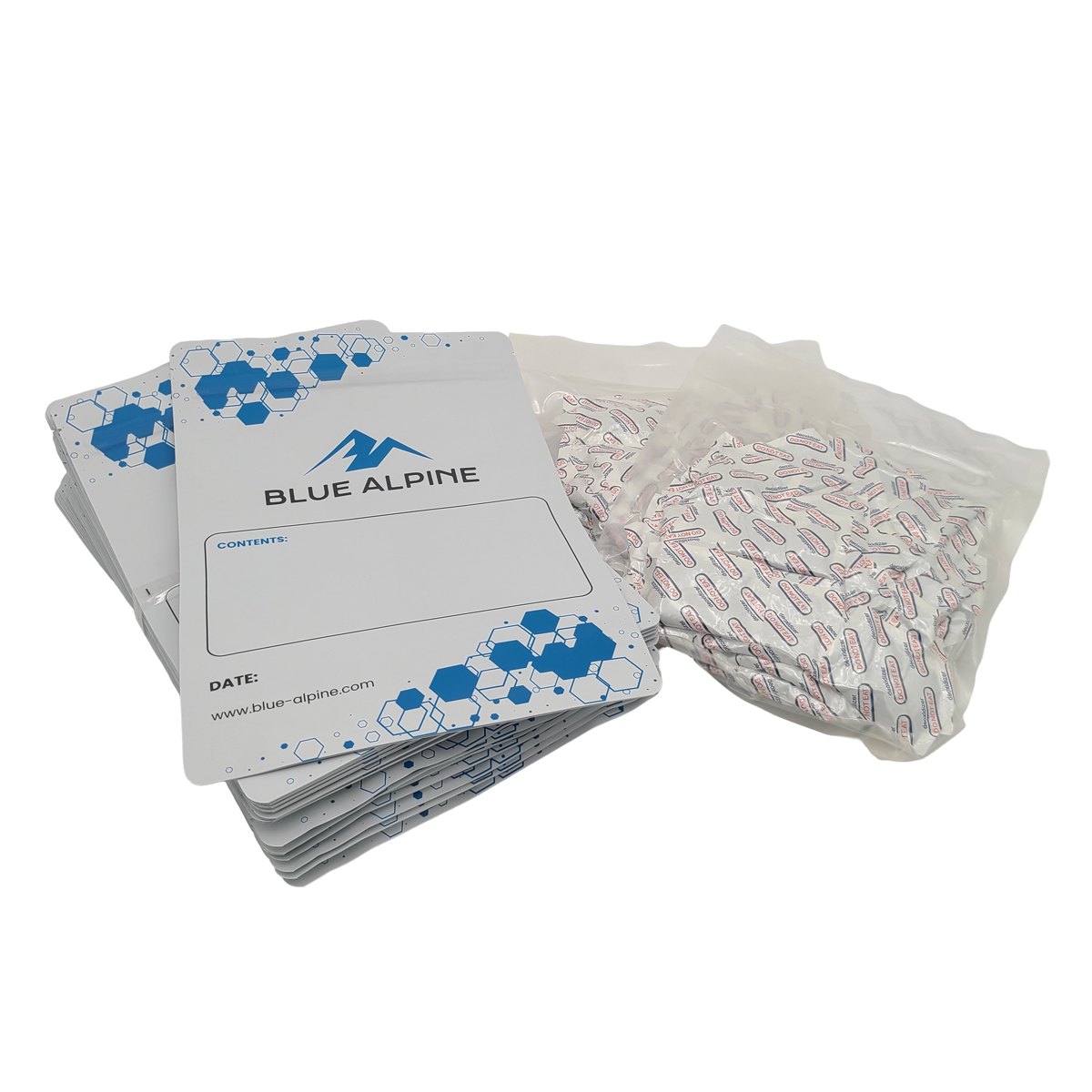
Blue Alpine Mylar Bags with Oxygen Absorbers
The maker's Mylar bags with absorbers seal the aroma in with the product, in thick film with no windows.
Check the priceBefore You Start
The one planning decision is the batch itself: garlic and onions run alone. Harvest Right’s garden guidance is plain — most foods can be freeze dried together without exchanging flavors, but strong peppers and onions are notable exceptions, because their strong aromas can travel through the venting process and transfer to other foods; they are best processed in their own batch rather than with fruits or other mild foods. Garlic carries the same strong-aroma character and gets the same treatment on this page. Plan the run when the machine can be wiped down afterward, and know the second extension rule before you start: freeze-drying does not kill bacteria, so washed produce, clean trays, and clean work surfaces are the safety step.
How to Freeze-Dry Garlic and Onions, Step by Step
- Peel and wash. Peel the garlic cloves and onions, wash everything, and discard any soft or damaged pieces.
- Slice or mince. Slice onions into rings or dice, and slice or mince the garlic. Keep pieces uniform and within the extension range — most foods between 1/4 and 1/2 inch thick — so the batch dries evenly. Minced garlic and onion can go straight to powder after drying; slices keep their form.
- Load the trays in a single layer. Extension guidance: lay foods in a single layer on trays with space between pieces to allow for uniform drying. Nothing else goes in this batch — no mild foods alongside, per the maker’s aroma guidance.
- Pre-freeze if you can. Extension guidance recommends pre-freezing foods in your freezer before loading, for faster, more even drying and better texture.
- Run a full cycle. The machine freezes the food to −40°F or colder and dries it under vacuum, sensing moisture and finishing when the load is dry. The makers publish no per-food tested time for garlic or onions; the dryness check decides.
- Check for dryness the extension way. Crisp, dry, or brittle, with no cold or soft spots. Onion slices that bend and garlic that feels leathery hold moisture and go back for more dry time.
- Package immediately. Fill thick Mylar bags, add an oxygen absorber to each, and seal at once — dried aromatics pull moisture from the air quickly, and their aroma goes with it. For the working supply, a jar in a dark, cool place is the maker’s listed alternative.
- Wipe down the machine. After a strong-smelling batch, Harvest Right directs a thorough wipe-down of the freeze dryer chamber before the next batch, and its cleaning recommendations cover the chamber and vacuum pump oil after processing strong-smelling foods. Do this step while the smell is fresh in your mind — the next batch of fruit will thank you.
The Numbers: Machine Settings and Storage
Freeze-dryer makers do not publish per-food tested times for garlic and onions. What the sources publish are the loading, aroma, and storage figures in this table.
| Checkpoint | The figure | Source |
|---|---|---|
| Batch composition | Strong-smelling foods in their own batch — onions named | Harvest Right |
| Piece thickness | Most foods 1/4 to 1/2 inch | Utah State Extension |
| Tray loading | Single layer, space between pieces | Utah State Extension |
| Machine freezing stage | −40°F or colder | Harvest Right |
| Dryness test | Crisp, dry, or brittle — no cold or soft spots | Utah State Extension |
| After the batch | Thorough chamber wipe-down; cleaning guidance covers pump oil | Harvest Right |
| Packaging | Mylar 5–7 mil, no windows, plus oxygen absorber | Utah State Extension |
| Stability, properly packaged | 10–15 years, sometimes up to 25 | Utah State Extension |
| Recommended use window, home freeze-dried | 5–10 years for quality | Utah State Extension |
On timing, the honest statement: no maker publishes a tested hour count for these two foods, and the machine ends the cycle when its sensors read the load as dry. Thin slices and mince are light loads by weight of water; let the sensor finish and the brittleness check confirm.
Garlic and onions dry a second way in a preserving kitchen. The share that does not go in the freeze dryer dehydrates into flakes and powder, and these are the two dehydrators that side of the job runs on.

Blue Alpine Medium Select
The Blue Alpine medium machine whose maker's published guidance this series draws on, sized for family dessert batches.
Check the price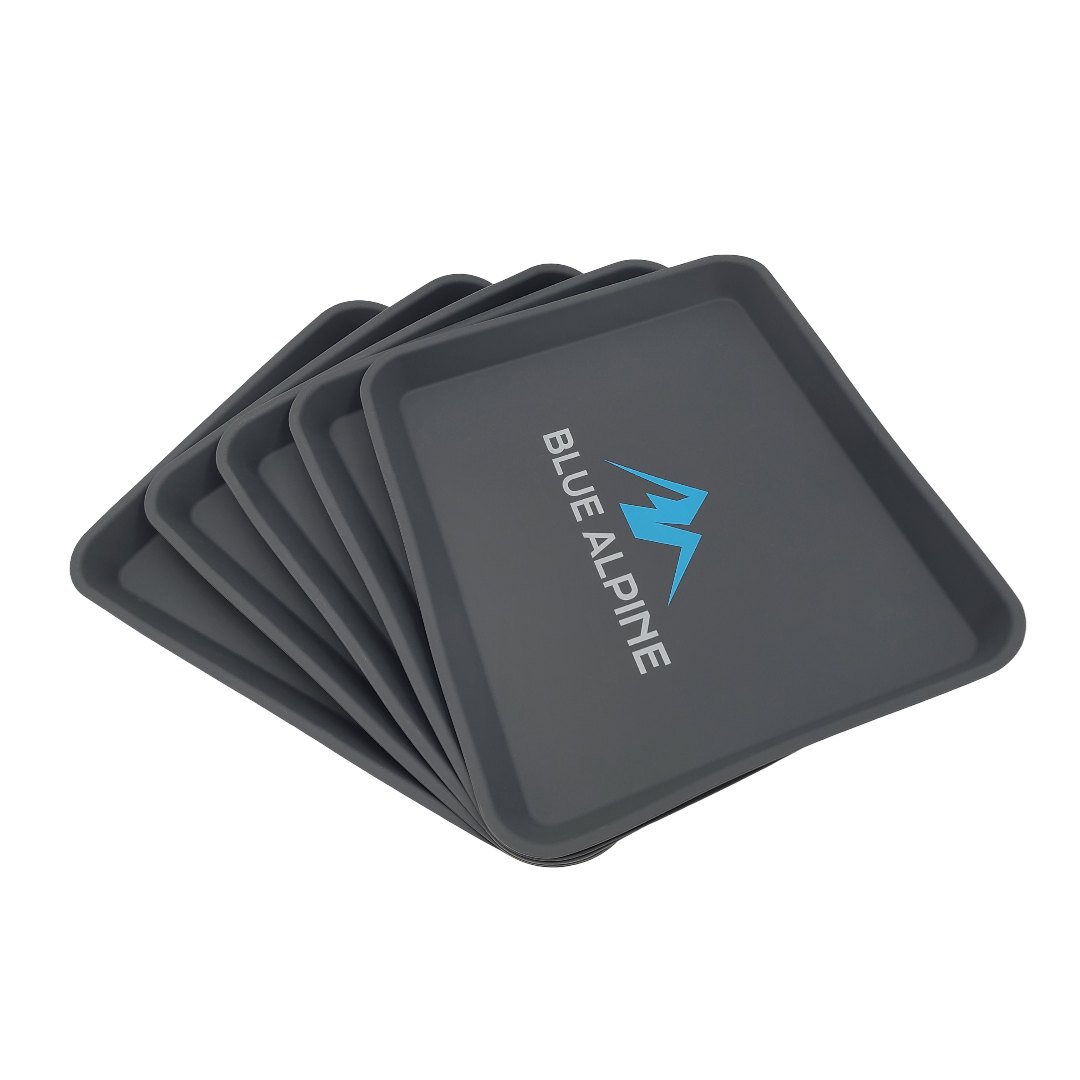
Blue Alpine Silicone Mats, Medium
Silicone mats keep scrambled egg and ground-meat crumbles from welding to the tray, and they wash clean between raw and cooked runs.
$29.08 from Blue AlpineCommon Mistakes
Running onions with fruit. This is the maker’s named exception, not folklore: onion aroma travels through the venting process and transfers to other foods. A batch of onion-flavored banana chips is a permanent lesson. Strong foods run alone.
Skipping the wipe-down. The aroma that transfers during a batch lingers after it. Harvest Right directs a thorough chamber wipe-down after a strong-smelling batch, before the next batch — not eventually.
Ignoring the pump oil. The maker’s cleaning recommendations after strong-smelling foods cover the vacuum pump oil as well as the chamber. Check the oil as the manual directs; aromatic batches are the ones that load it.
Drying uneven pieces. Thick onion chunks beside thin garlic slices finish at different times, and the batch is done only when the thickest piece passes the check. Uniform cutting is the fix.
Bagging slowly. Dried mince is mostly surface area; it pulls moisture from room air fast and cakes. Seal while it is still crisp and free-flowing.
Storage and Shelf Life
Utah State Extension states that freeze-dried foods can remain safe and stable for 10 to 15 years — sometimes up to 25 — in airtight, moisture-proof packaging kept cool, dark, and dry, and recommends consuming home freeze-dried products within 5 to 10 years for quality. Aromatics are flavor goods: their value is potency, and potency is what the cool, dark, sealed conditions protect. Once a bag is opened, its oxygen absorber no longer works and should be replaced before resealing, per Harvest Right. Keep the working jar away from the stove’s steam, date every bag, and rotate.
Viewers also searched for these items.

Metronic 8-Inch Impulse Sealer
The heat sealer that closes the mylar bags this batch is portioned into — one press of the bar and the powder is sealed away from the air.
$39.99 from Amazon
IRIS USA Airtight Container, 30 lb, with Wheels
An airtight counter container for the working supply of garlic and onion powder — the one you open daily, refilled from the sealed bags.
$23.99 from AmazonFrequently Asked Questions
Can I freeze-dry garlic and onions together?
Yes — they are both strong-smelling foods, and the maker’s rule is about keeping strong foods away from mild ones, not away from each other. One combined aromatic batch, run alone, follows the guidance and saves a second wipe-down.
Will the smell ruin my freeze dryer?
The maker treats it as a cleaning matter, not damage: wipe the chamber down thoroughly after a strong-smelling batch, and follow its cleaning recommendations for the chamber and vacuum pump oil after processing strong-smelling foods.
Should I dry slices or mince?
Both work. Mince and small dice dry evenly and go straight to powder or spoon-measured seasoning; slices keep their shape for soups and stews, where dried vegetables can be thrown in dry and rehydrate in the cooking, per Harvest Right’s rehydration guidance.
Do garlic and onions need blanching first?
Extension guidance recommends blanching or steaming vegetables to inactivate enzymes and preserve color, flavor, and nutrients. For aromatics headed for seasoning use, most home batches follow the makers’ vegetable method without it; the guidance is stated here so the choice is yours, informed.
Aroma and cleaning guidance: Harvest Right, “Freeze Drying Your Garden Harvest,” via Harvest Right, and Harvest Right, “Guide to Freeze Drying”; loading, packaging, and shelf-life figures: Utah State University Extension, “Can I Freeze-Dry That? A Practical Guide to Safe and Effective Freeze-Drying,” via Utah State University Extension.
Prices shown on this page were last checked November 26, 2026 — prices change; check before you buy.
Talk it over with other readers
The Truly Preserved Community on Facebook is where readers compare notes on food storage, water, and backup power — and where your questions help decide what we research next.