
Truly Preserved is reader-supported. If you buy through a link on this page we may earn a commission at no extra cost to you. Nobody pays for placement or scores.
THE SHORT ANSWER
Sugar and salt are the two foods in this category that skip the oxygen absorber entirely. Utah State University Extension’s guidance is that absorbers are not required and not recommended for sugar and honey, and the same rule covers salt: both foods keep indefinitely when they are kept dry, and an absorber does them no good — with sugar it works against you, because absorbers draw on moisture as they work and very dry sugar hardens into a solid block. The whole method is a container: opaque, airtight, and moisture- and odor-proof, in Utah State’s words, with the retail paper bag replaced by a polyethylene bag, a Mylar-type bag, a food-grade bucket, a glass canning jar, or a #10 can. USDA FoodKeeper agrees on the clock: granulated sugar and table salt keep indefinitely in the pantry. Every figure on this page comes from the credited sources at the bottom.
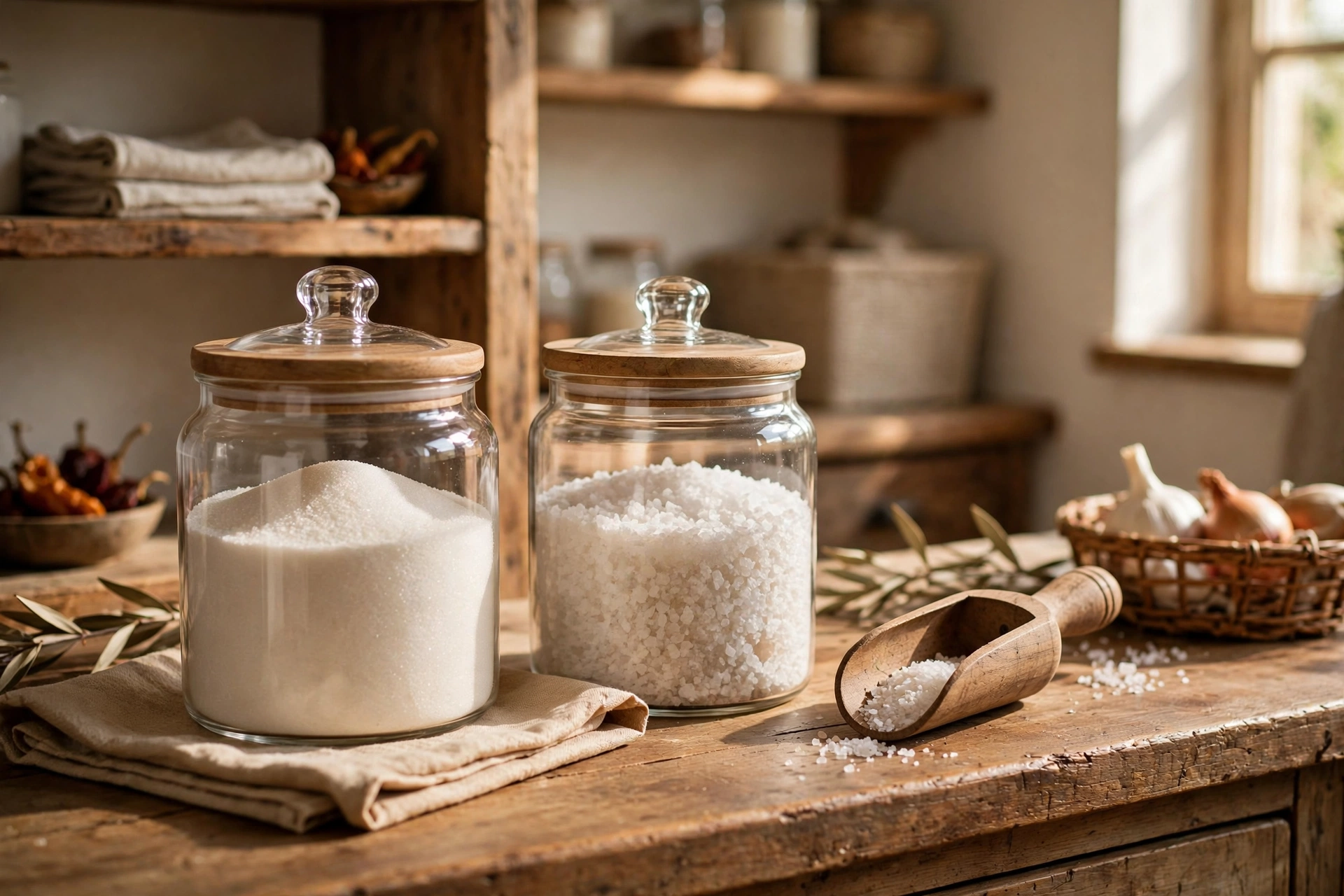
Every other guide in this category is a fight against oxygen. This one is not, and getting it wrong in the other direction — treating sugar and salt like beans — is the one real mistake available here. Sugar does not oxidize, salt does not go rancid, and neither feeds anything. They have exactly one enemy, moisture, and one secondary nuisance, odors, and both are stopped by a lid, not by chemistry. That is why the extension guidance carves them out by name: the absorber packet that every other staple gets is, for these two, unnecessary at best and a hardening problem at worst.
This guide follows Utah State’s packaging guidance and the USDA FoodKeeper chart exactly. It is the deliberate exception inside the same category as our flagship, how to store flour long-term — flour gets the full sealed treatment a few shelves away, and comparing the two shows why the absorber rule is food-by-food, not pantry-wide. This guide is part of our preservation guides for the whole dry shelf.
What You Need
Granulated sugar and table or canning salt, and containers — that is the entire list, and the container spec is Utah State’s: storage containers should be opaque, airtight, and moisture- and odor-proof. The same guidance names the suitable set for dry sugar: polyethylene bags, Mylar-type bags, food-grade plastic buckets, glass canning jars, and #10 cans. It also names what does not qualify: the typical retail paper package for crystal sugars is not suitable for long-term storage. No absorbers, no sealer required — a bag used here is a moisture barrier with a plain seal, not a low-oxygen package.

ePackageSupply 5-Gallon Buckets, 3-Pack
Food-grade buckets with tight lids are the reserve container Utah State names for dry sugar, holding a full bag's worth sealed against moisture and odors.
$73.99 from Amazon
IRIS USA Airtight Container, 30 lb, with Wheels
A 30-pound airtight container is the working-reserve size for sugar, opened at baking time and sealed the rest, keeping humidity out between uses.
$23.99 from Amazon
Vittles Vault 35 lb Airtight Container
A 35-pound airtight vault suits the household that buys sugar and salt in bulk sacks and wants one sealed home for each, off the floor and lidded.
Check AvailabilityBefore You Start
Say the rule once, plainly, because every instinct from the other guides points the wrong way: do not put an oxygen absorber in sugar or salt. Utah State lists absorbers as not required and not recommended for sugar and honey, and extension guidance gives the mechanism for sugar — absorbers use water in their chemical reaction, drawing moisture as they work, and very dry sugars are the most prone to hardening. A brick of sugar is still safe sugar, but it is a needless chore you sealed in yourself. Salt’s version of the same point is simpler: it keeps indefinitely when dry and gains nothing from an absorber. The one preparation step is dryness — sugar or salt that has already taken on moisture or odors should be used from the working pantry, not sealed into the reserve.
How to Store Sugar and Salt, Step by Step
- Start dry and clean. Sugar and salt that are dry, free-flowing, and odor-free as they come from the store. Anything already damp or perfumed by the pantry stays in the working supply.
- Leave the absorber out. No packet goes into these containers — not required, not recommended, in the extension guidance’s own terms.
- Choose an opaque, airtight container. A food-grade bucket, a glass canning jar, a #10 can, or a bag of polyethylene or Mylar-type film used as a plain moisture barrier.
- Get the food out of the paper bag. The retail paper package is the one container Utah State names as not suitable for long-term storage. Transfer it.
- Fill and close tight. Fill the container, close it airtight, and wipe the rim first — a line of sugar crystals in a lid’s seal is a moisture path.
- Label and store dry. Date every container and keep the set somewhere cool, dark, and dry, off the floor, away from anything strongly scented — the containers are specified odor-proof because both foods pick up smells.
- Rotate lightly. Indefinite does not mean forgotten: oldest containers come forward when new ones go in, so the reserve turns over across the years instead of fossilizing.
The Numbers: Storage Method and Storage Life
The shortest table in this category, because these two foods have the longest clock and the fewest conditions.
| Food and method | Expected storage life |
|---|---|
| Granulated sugar, pantry, unopened (USDA FoodKeeper) | Indefinitely |
| Granulated sugar, pantry, opened (USDA FoodKeeper) | 18 to 24 months for best quality |
| Brown sugar, pantry, unopened (USDA FoodKeeper) | Indefinitely |
| Brown sugar, pantry, opened (USDA FoodKeeper) | 18 to 24 months for best quality |
| Table salt, pantry (USDA FoodKeeper) | Indefinitely |
| Sugar and salt, kept dry in a suitable container (Utah State Extension) | Keep indefinitely |
| Oxygen absorbers for sugar and salt | Not required and not recommended |
Read the opened rows as quality windows, not safety deadlines: sugar and salt do not spoil, but an opened container in a humid kitchen slowly takes on the moisture the whole method exists to exclude.
The reserve containers are bulk-sized. The working pantry wants the same foods in smaller, pourable form, and these are the containers that side of the shelf runs on.

Wallaby 1-Gallon Mylar Bags, 10-Pack
One-gallon bags hold a single bag's worth of sugar or salt as a sealed moisture barrier, the right refill size between the bucket and the kitchen jar.
Check Availability
Ball Half-Pint Mason Jars, 12-Pack
Half-pint jars are the working size for salt at the stove and sugar at the coffee station, each one lidded tight against kitchen steam.
Check AvailabilityCommon Mistakes
Adding an oxygen absorber out of habit. The signature mistake of this category. For sugar it risks a hardened block; for salt it does nothing at all. Utah State’s carve-out exists precisely because the absorber routine is otherwise universal on the dry shelf.
Storing sugar in its paper bag. Utah State names the typical retail paper package for crystal sugars as not suitable for long-term storage. Paper breathes, tears, and lets in exactly the moisture and odors the container spec excludes.
Using a clear container on a bright counter. The container spec starts with the word opaque. Light is a minor enemy for these two compared to moisture, but the spec is the spec, and a dark cupboard costs nothing.
Storing next to strong odors. The containers are specified moisture- and odor-proof because sugar and salt absorb smells from what sits beside them. The spice shelf and the cleaning shelf are both bad neighbors.
Throwing out hardened sugar. Lumps and even a solid block are a moisture event, not spoilage — the food is still sugar. Break it up, use it, and store the next container drier. What does get discarded, on Utah State’s guidance for sugars, is sugar that has acquired a metallic flavor during very long storage in metal.
Storage and Shelf Life
Keep the containers sealed, dry, dated, and in the dark, and these two foods will outlast everything else in this category — that is the plain meaning of the indefinite figures in the table. The practical shelf is two-tiered: a sealed reserve that is opened rarely, and a working container in the kitchen that is refilled from the reserve, so the big container’s lid comes off a few times a year instead of a few times a week. Salt cakes in humidity and sugar hardens when it dries unevenly; both are texture events with the same cure — a drier container in a drier spot — and neither shortens the indefinite clock.
Viewers also searched for these items.

Morton Canning and Pickling Salt, 4 lb
Canning and pickling salt is the plain, additive-free salt that stores cleanest for the long term, with nothing in it to yellow or fade.
$2.68 from Amazon
Sukerle 5-Gallon Mylar Bags with Absorbers
Used without the absorber packets, a five-gallon Mylar bag is a strong moisture barrier for a bulk sugar reserve stored inside a bucket.
$42.99 from Amazon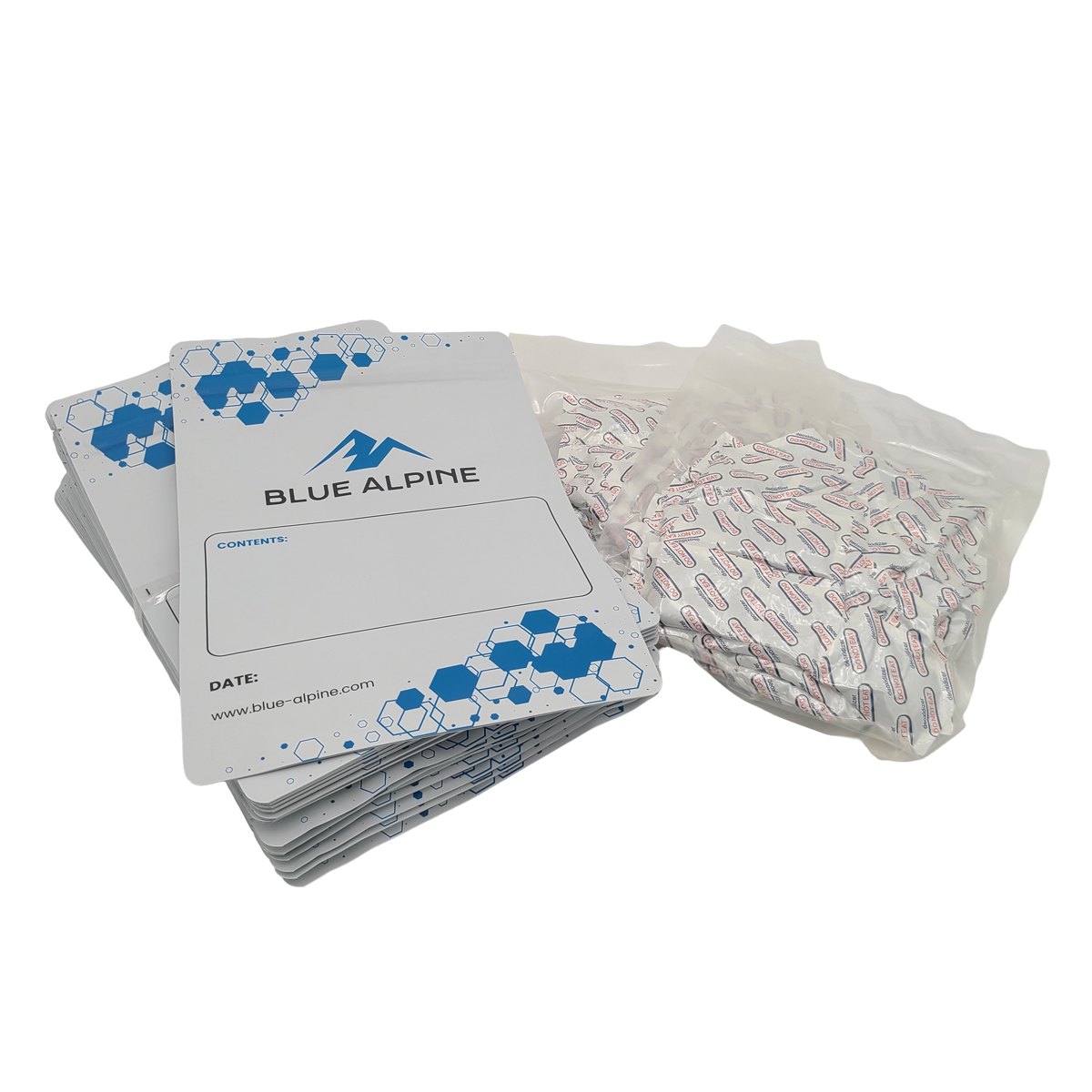
Blue Alpine Mylar Bags with Oxygen Absorbers
Foil pouches used as plain sealed moisture barriers — absorber left out, per the extension rule — portion sugar and salt into one-bucket units.
Check the priceFrequently Asked Questions
Why no oxygen absorber, when everything else gets one?
Because there is nothing for it to do. Absorbers protect foods whose oils oxidize and whose quality fades in air; sugar and salt do neither. Utah State lists absorbers as not required and not recommended for sugar and honey, and for sugar an absorber can actively harden the contents by drawing on moisture as it works.
Does sugar ever expire?
USDA FoodKeeper lists granulated sugar as keeping indefinitely in the pantry unopened, with an 18 to 24 month best-quality window once opened. Kept dry, sugar does not spoil; it only clumps, hardens, or picks up odors, all of which are container failures, not food failures.
Can I store sugar and salt in Mylar bags?
Yes — Utah State lists Mylar-type bags among the suitable containers for dry sugar. The bag here is a moisture barrier with a plain seal. What makes it different from the bean and flour method is what is not inside it: no absorber.
Does iodized salt store differently?
FoodKeeper lists table or iodized salt as keeping indefinitely. Over very long storage the iodine can fade and plain salt can yellow slightly, which are quality notes, not safety ones; for a reserve measured in decades, plain canning or pickling salt is the simplest choice.
Packaging guidance: Utah State University Extension, “Packaging Foods” and USU food storage guidance (oxygen absorbers not required and not recommended for sugar and honey); pantry times: USDA Food Safety and Inspection Service, FoodKeeper storage chart, via Utah State University Extension.
Prices shown on this page were last checked November 26, 2026 — prices change; check before you buy.
Talk it over with other readers
The Truly Preserved Community on Facebook is where readers compare notes on food storage, water, and backup power — and where your questions help decide what we research next.