
Affiliate Disclosure: Truly Preserved is reader-supported. When you buy through links on this page, we may earn a commission at no extra cost to you. As an Amazon Associate, Truly Preserved earns from qualifying purchases. Read our full affiliate disclosure.
Last updated: November 1, 2026
THE SHORT ANSWER
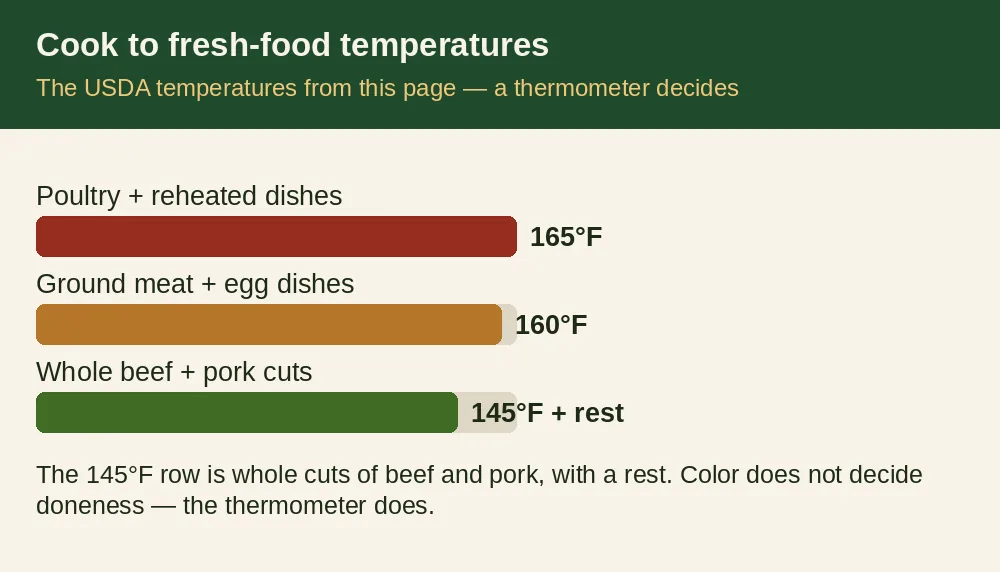
Yes — with one rule that has no exceptions: freeze drying does not kill bacteria. It pauses them. Raw meat and eggs come out of the machine carrying whatever went in, and the moment you add water back, those bacteria wake up exactly where they left off. So cook the food first, or cook it after rehydrating, to the same temperatures you would use for fresh food — 165°F for poultry and reheated dishes, 160°F for ground meat and egg dishes, 145°F with a rest for whole cuts of beef and pork.
This is the misunderstanding that makes freeze drying sound safer than it is. The machine feels clinical — vacuum, deep cold, a day and a half of humming — so it is easy to assume the food comes out sterile. It does not. Freeze drying is a preservation method the food industry values partly because it keeps living cultures alive: it is how laboratories store bacterial strains for years. That is the point of the technology. It suspends life; it does not end it.
What the machine does and does not do
| Step | What it does | What it does not do |
|---|---|---|
| Freezing | Halts bacterial growth | Does not kill Salmonella or E. coli |
| Vacuum drying | Removes water so nothing can grow | Does not sterilize the food |
| Sealed storage | Keeps dormant organisms dormant | Does not reduce the count over time |
| Rehydrating | Restores the food | Also restores the bacteria — cooking is the kill step |
USDA guidance on home freeze drying says the same thing in plainer terms: handle freeze-dried raw meat exactly as you would fresh raw meat, because once it is wet again, it is. Cross-contamination rules apply at both ends — sanitize trays after raw runs, keep raw batches away from ready-to-eat food, and wash hands like it is raw chicken. It is raw chicken.
The cook-first rules that make it simple
- Cook meat before drying whenever the dish allows it. Cooked ground beef, chicken, and sausage crumbles dry well, and a cooked batch removes the guesswork at the far end. Rinse cooked ground beef in hot water to strip fat — fat is also the shelf-life problem in our list of foods that can’t freeze dry.
- Eggs: scramble them first. Raw eggs can be dried and cooked after, and plenty of people do it — but scrambled-then-dried is the route with no raw-egg handling at serving time, and the texture survives fine.
- If you dried it raw, label it RAW in ink on the bag. Six months later, nobody remembers which chicken was cooked. The label is the safety system.
- Rehydrate raw product in the fridge, cook it the same day, and cook it through. The USDA temperatures at the top of this page are the finish line — a food thermometer, not color, decides.
- Raw pet food rules apply to pet batches too — same trays, same sanitation, same labels.
Questions people also ask
Does the deep freeze inside the machine kill parasites or bacteria?
No. Home freeze dryer temperatures pause microbes; they are not a validated kill step for the organisms that make people sick. Freezing has narrow, specific uses against certain parasites in fish under commercial conditions — that is not what a home machine is doing to a tray of ground beef.
Can I freeze dry raw eggs and use them for baking later?
Yes, if the baked dish reaches a safe temperature throughout — which ordinary baking does. The dishes to avoid with rehydrated raw egg are the no-cook ones: homemade mayonnaise, eggnog, runny sauces.
How long do freeze-dried raw meats keep?
Sealed in mylar with an absorber and kept cool, the storage physics are the same as cooked — but the honest planning figures and the missing long-term data are covered in Is home freeze-dried food really good for 25 years? Shorter is smarter for raw product.
Can I freeze dry raw pet food, or should I cook it first?
The dormant-microbe rule on this page applies to pet food exactly as it applies to people food: freeze drying does not sterilize anything, so raw pet food comes out of the machine raw, carrying the same Salmonella and other bacteria it went in with. The bowl it lands in does not change the biology. One line making the rounds in owner groups — freeze dry it raw if you normally feed raw, cook it first if you normally cook — describes what some owners do. It is not a safety rule, and it skips the half of the risk that lands on the household.
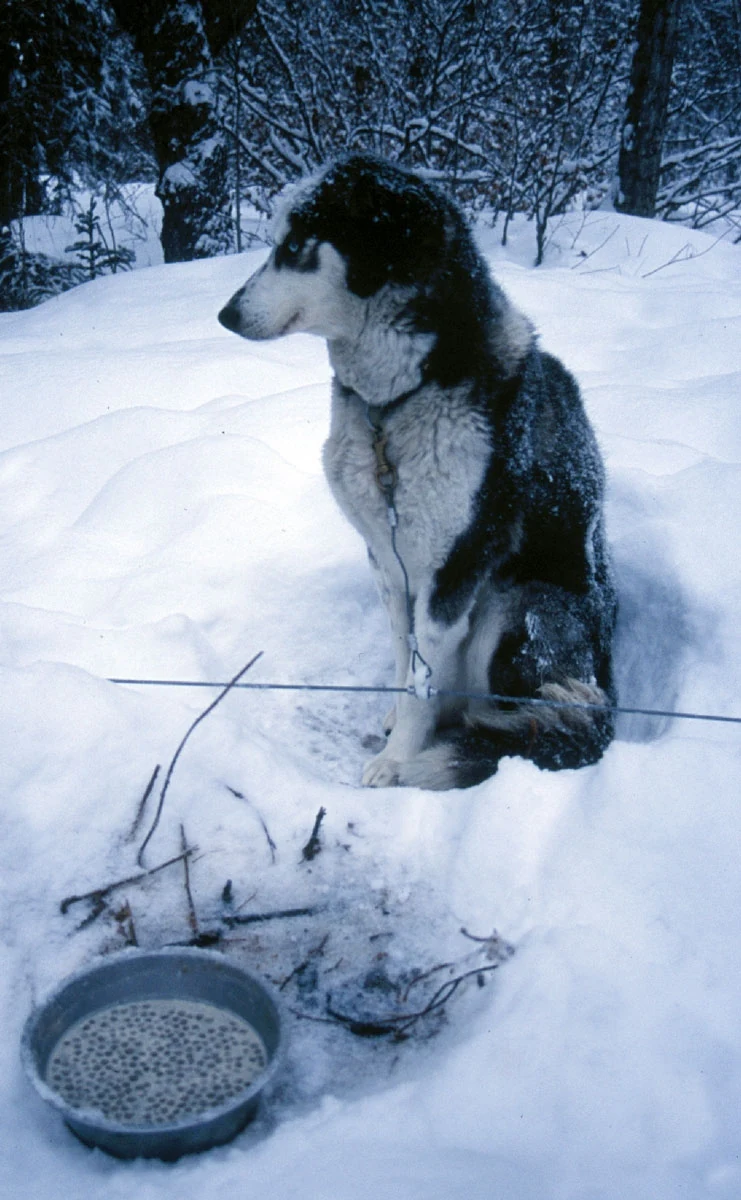
That second half is the part worth stating plainly. A pet that eats raw food can shed the bacteria in it afterward, and the person prepping the bowl, wiping the counter, and washing up handles the same organisms the pet ate. Health agencies flag raw pet food as a Salmonella and Listeria risk to the people handling it, not only to the animal eating it. Freeze drying concentrates that handling into new places — trays, counters, storage bags, the scoop that lives in the bag — months after the batch was made.
So the defensible default on this desk is the same cook-first rule as the rest of this page: cook pet food before freeze drying it, to the temperatures in the short answer above, and the finished product is an ordinary cooked food. That matters most for any batch that leaves your house — food you hand to a sitter, a family member, or anyone who did not sign up for raw handling. Raw feeding itself is a decision some owners make on purpose, and this page is not here to relitigate it. If that is your practice, treat a freeze-dried raw batch with the same discipline as raw meat in the fridge, because that is what it is:
- Label it like it matters: RAW PET FOOD — COOK BEFORE SERVING if there is any chance of cooking it, plus the date, on every bag. Freeze-dried raw food looks like people food and stores next to it.
- Keep it separate: its own trays or a tray liner, its own scoop, and a wash of every surface it touched — the same sanitation as the raw batches above.
- Rehydrate in the pet’s bowl, not the kitchen prep area, use only what will be eaten at that meal, and refrigerate leftovers the way you would raw meat — because once water goes back in, the clock from the short answer is running again.
- Wash hands, bowl, and utensils in hot soapy water after every serving, and keep the rehydrated food away from counters where people food is made.
- Rotate it sooner, not later. The shorter-is-smarter guidance for raw product in the questions above goes double for pet batches: plan months of storage, not years.
Related questions
- What foods can’t you freeze dry?
- Is home freeze-dried food really good for 25 years?
- How do I tell if stored food has gone bad?
If You’re Still Choosing the Machine
The cook-first rules above are the same on every home freeze dryer — no brand’s machine sterilizes, whatever the brochure implies. If you have not bought one yet, the reader’s next step is the comparison itself: our home freeze dryer comparison puts the machines side by side, and the Harvest Right sizes compared works through which tray size a household actually fills. One machine from that comparison, the Blue Alpine Medium Select, has its own page with the current program details: Blue Alpine Medium Select.
This question sits in What People Are Asking About Freeze-Dried Food — the full list of freeze-dried questions from real forums, each with a short answer.
Talk it over with other readers
The Truly Preserved Community on Facebook is where readers compare notes on food storage, water, and backup power — and where your questions help decide what we research next.