
Affiliate Disclosure: Truly Preserved is reader-supported. When you buy through links on this page, we may earn a commission at no extra cost to you. As an Amazon Associate, Truly Preserved earns from qualifying purchases. Learn more.
THE SHORT ANSWER
Judge the container first and the calendar last. A can that bulges, leaks, or spurts when opened gets thrown away unopened and untasted — USDA’s rule, no exceptions, because the botulism toxin has no smell or taste to warn you with. For sealed dry goods, the checks are a failed seal, any mold, or a rancid, paint-like smell. And the standing rule for everything in between is USDA’s own: when in doubt, throw it out.
Every food-storage shelf eventually produces the moment: a can two years past its date, a mylar bag that isn’t drawn down anymore, a bucket of rice that smells a little off. The forums fill up with photos and the same question — is this still good? The honest answer is that “good” is two questions wearing one coat. Safe is about containers and contamination. Worth eating is about quality. They have different rules, and mixing them up cuts both ways: people throw out sound food over a date stamp, and taste-test food they should never have opened.
The Rule That Outranks All the Others
Never taste food to check whether it’s safe. USDA’s Food Safety and Inspection Service says it in exactly those words, and the reason is botulism: the toxin produced by Clostridium botulinum is colorless and odorless, and a lethal dose is far below anything a taste could judge. Your senses can grade quality. They cannot clear safety. Everything below follows from that.
Cans: The Hard-Discard List
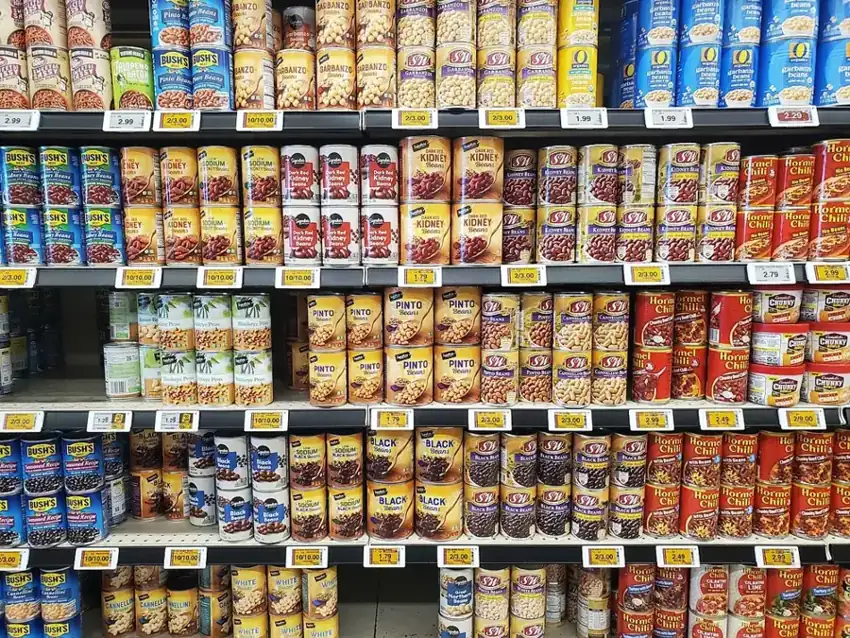
A commercially canned food in a sound can stays safe far past its printed date — safety rides on the seal, not the stamp. But any of these signs ends the discussion, and the can goes out unopened:
- Bulging ends or a lid that flexes and pops — gas from microbial growth is pushing out. This is the botulism warning sign above all others.
- Leaking, or sticky residue on the outside — the seal has failed, whatever the contents look like.
- A deep dent on a seam or rim — especially one sharp enough to catch a fingernail. Smooth side dents are fine; seam dents are not.
- Liquid that spurts out on opening, or milky liquid around vegetables that should be clear.
- A foul odor when opened. Open it only if none of the signs above are present — a suspect can is discarded unopened, double-bagged, and put in an outside trash bin where no animal or child can get at it.
Home-canned food plays by stricter rules: plan on a year, and treat any mold, cloudiness, or off smell as an automatic discard. Quality ranges for sound commercial cans, for the rotation plan: 2–5 years at best quality for low-acid foods, 12–18 months for acidic ones like tomatoes — our Shelf-Life Lookup carries the food-by-food figures.
For the failures that happen before the jar ever reaches the shelf — liquid lost in the canner, a lid that never sealed, headspace that came out wrong — the USDA keep-or-discard calls live on did I ruin it? Is my canning still safe?, and the whole canning cluster is gathered in what people are asking about canning.
Dry Goods: Seals, Smells, and Mold
| What you find | Verdict |
|---|---|
| Mylar bag puffy or no longer drawn down | Seal or absorber failed — open, inspect, use soon or repack |
| Rancid, paint-like or cardboard smell (brown rice, whole wheat, nuts) | Quality loss, not danger — eat soon or toss by taste |
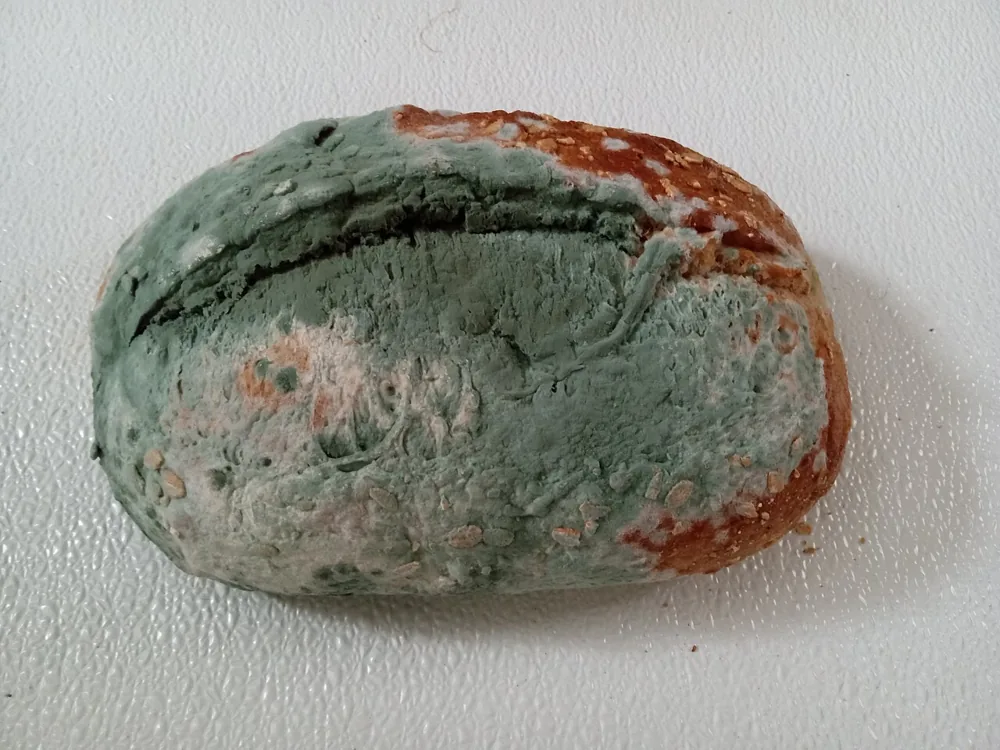
| Mold anywhere in a bag of dry food | The whole bag goes — mold threads through porous food invisibly |
| Live bugs or webbing | Freezer decision — see the weevil page |
| Faded color or flat flavor, seal sound | Fine — rotate it to the front and eat it first |
The rancid row deserves a sentence of its own, because it’s where most stored food actually dies. Fats oxidize: brown rice, whole-wheat flour, nuts, and jarred peanut butter go rancid in months-to-a-couple-of-years no matter how well they’re sealed, and rancid fat tastes like old paint smells. That’s a quality failure, not a safety emergency — but it means the food failed at its one job, which is being worth eating. It’s also why heat matters so much: rancidity is one of the reactions the garage-temperature rule is counting.
Freeze-Dried and Dehydrated
For sealed freeze-dried food, the discard signs are a swollen pouch or can (gas, again — out it goes), a broken seal, or a product that feels soft or spongy when it should be bone dry, which means moisture got in and the clock sped up. Texture is the tell for home-dehydrated food too: leathery is fine, pliable-and-damp is not, and mold on one piece condemns the batch it dried with.
Why does freeze-dried food smell like metal or bad oil after a year in the bag?
That exact case came in from a reader: carrot sticks, blanched and salted, sealed in Harvest Right mylar bags, opened a year later. The sticks were still crisp and dry — but they smelled like metal, or bad oil. If the food had gone soft, moisture would be the suspect and the answer would be simple. Crisp food with an off smell is a different failure, and it has a name: oxidation. Given enough oxygen and time, the trace fats and the orange pigments in a carrot break down into the same family of compounds that makes old cooking oil smell rancid — sharp, metallic, paint-like. No mold, no moisture, nothing to see. Just chemistry that ran slowly for a year.
Ranked by what the evidence in that bag supports:
- Oxygen left in the bag — the most likely cause. An absorber that was too small for the bag, one that had already spent itself in the air before sealing, or a seal with a tiny channel in it all leave enough oxygen behind to oxidize a batch over months. The food stays crisp the whole time, which is why this failure surprises people.
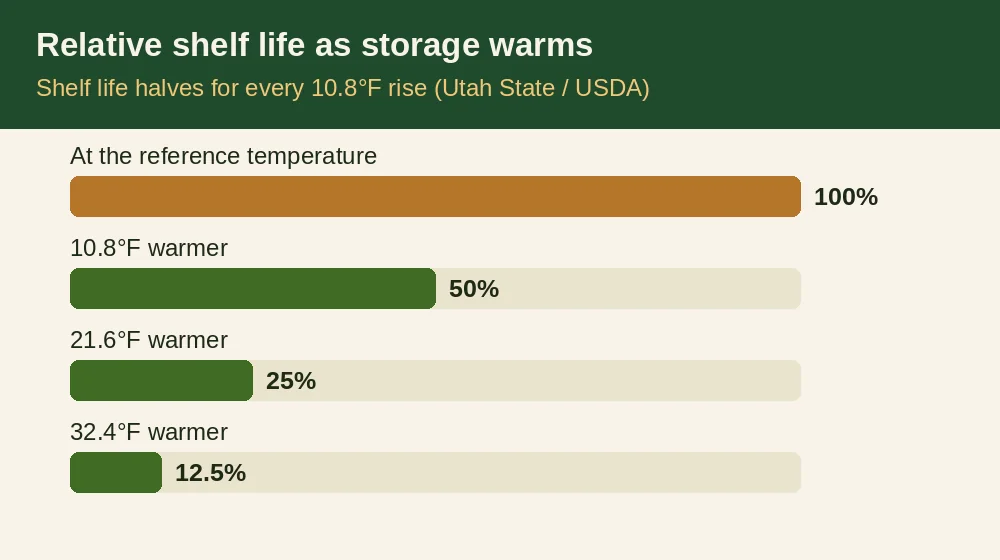
- Heat where the bags were stored. Oxidation speeds up as temperature climbs, on the same curve as every other storage reaction: Utah State Extension, citing the USDA, puts it at shelf life cut in half for every 10.8°F rise. A year in a warm closet or garage can spend several years of flavor life. Our hot garage math runs the numbers.
- Under-blanched vegetables. Blanching is not just about color. Extension guidance treats it as the step that switches off enzymes, and one of those enzymes keeps working on fats and pigments in storage if it survives. Carrots blanched too briefly can develop off flavors in a sealed bag even when they dried perfectly.
- Odor picked up from the bag itself. Some bags carry a manufacturing smell that transfers to food over a long store. It happens, but it is a diagnosis you reach by testing, not by guessing — see the checks below.
- The salt — mostly innocent. Salt does not turn food rancid on its own. Next to trace metals and fats it can nudge oxidation along, but in a batch like this one it is a bit player, not the cause.
- Thick centers that never fully dried. Worth ruling out, less likely here. A center that kept its moisture usually shows it — a stick that bends or feels cool and dense. Snap the thickest sticks in the bag: a clean snap all the way through points away from this one.
Three checks separate the causes. Smell an unopened bag from the same batch: if it smells the same way, the cause traveled with the batch or its packaging, not with one storage spot. Smell a new, empty bag from the same pack of bags: if the empty bag carries the same smell, that is film odor, and it tells you the food absorbed it rather than made it. And smell a different food stored in the same place for the same year: if only the carrots are off, the problem was in that batch — its blanch, its absorber, or its seal.
The verdict on eating it: don’t. An off, rancid smell is a discard sign under the standing rule on this page, and re-drying or resealing cannot undo it — oxidation is a chemical change, not moisture you can pull back out. Rancid fat will not be made safe by another trip through the machine. Throw the batch out, and let it teach the next one.
For the next batch of carrot sticks: blanch for the full recommended time for the thickness, dry until the thickest stick snaps clean, size the oxygen absorber to the bag rather than to habit, squeeze the seal flat and check it the next day, and store the bags somewhere that stays cool and dark. Vegetables with strong pigments and any trace fat are the batches to rotate first, not the ones to test at year three.
Follow-Up Questions
Are dented cans always bad?
No. Small, smooth dents from handling are cosmetic. The dangerous dent is deep, sharp, or sitting on a seam or the rim, where it can open a channel too small to see. When you can’t tell which kind you’re holding, the USDA rule settles it.
What about food past its date in a sealed #10 can?
Judge the can, not the date. A sealed, sound #10 can of freeze-dried food past its best-by has lost some flavor and nutrition on a curve — it has not become unsafe. Swelling, rust-through, or a failed seam flips that answer instantly.
Can freezing rescue food I’m unsure about?
No. Freezing pauses microbes; it does not remove toxins already produced or reverse spoilage. Questionable canned food stays questionable in the freezer, only colder.
Frequently Asked Questions
My honey crystallized. Is it bad?
No — crystallization is what honey does. It keeps indefinitely, and a warm water bath brings it back to liquid. The Shelf-Life Lookup covers honey and the other near-forever staples.
The food smells fine. Doesn’t that clear it?
It clears the quality question for most dry goods. It never clears a bulging or leaking can — the one toxin that can kill you in a stored-food context arrives without a smell. Container first, nose second.
How often should I be doing these checks?
Twice a year, on the same pass as your rotation — seals, dates, one bag opened from each batch, cans turned in the light for dents and bulges. Our food storage questions page pairs this with the rotation rhythm most readers use.
Last updated: October 27, 2026. Discard rules per USDA FSIS shelf-stable food safety guidance and FDA damaged-container guidance.
This question came from our harvest of what readers ask in the forums. See the rest of the list: What People Are Asking About Food Storage.
Talk it over with other readers
The Truly Preserved Community on Facebook is where readers compare notes on food storage, water, and backup power — and where your questions help decide what we research next.