
Affiliate Disclosure: Truly Preserved is reader-supported. When you buy through links on this page, we may earn a commission at no extra cost to you. As an Amazon Associate, Truly Preserved earns from qualifying purchases. Read our full affiliate disclosure.
Last updated: November 1, 2026
THE SHORT ANSWER
Yogurt is too wet to go on a tray as dollops — portion it into silicone molds, freeze it solid first, then freeze dry the frozen pucks. Bites that come out chewy, cold in the middle, or soft an hour later were under-dried, almost always because they were too thick or too sugary. Small, thin, fully frozen portions of plain or Greek yogurt are the reliable batch.
Two threads landed in The Freeze Drying Community on the same day, and together they are the whole yogurt story. In one, an owner portioned bulk yogurt into silicone cupcake pans, froze it solid, and popped the frozen pucks onto trays. In the other, someone’s yogurt bites simply did not come out — and by the time they posted, they no longer had the batch to show anyone. If your bites failed, this page is the diagnosis. If you have not run yogurt yet, it is the method that works, in the order that works.
The method that works
- Choose the yogurt first (the next section explains why this step decides the batch).
- Portion into silicone molds. Cupcake pans and small silicone molds are the community standard: about a tablespoon per cavity, spread no thicker than your little finger. Silicone flexes, which matters at release time.
- Freeze solid in your regular freezer — overnight is the honest timing, not “a few hours.” The pucks should be hard all the way through before they move.
- Pop the frozen pucks onto pre-chilled trays with a little space between them, and run a full cycle. Do not shorten the dry time because the pieces look small.
- Test before you call it done (below), then package warm-room-fast — yogurt bites pull moisture from the air quickly.
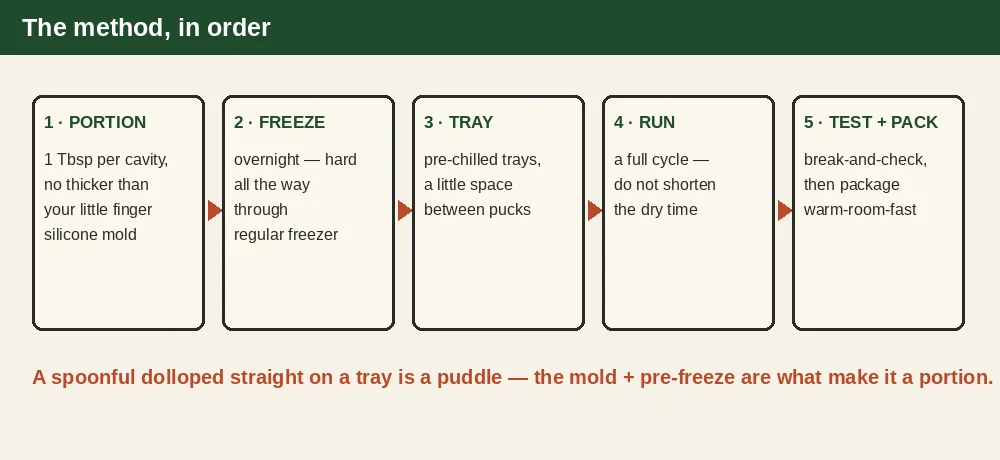
Why the mold step is not optional: a spoonful of yogurt dolloped straight on a tray is a puddle — mostly water, with nothing holding its shape. Under vacuum it can bubble, spread, and dry unevenly, thick in the middle where it matters most. The pre-freeze is what turns a puddle into a portion. Dairy is a good freeze-drying candidate in general — our candidacy page covers where it sits — but yogurt only behaves when it goes in frozen and portioned.
Greek vs regular, sweetened vs plain
| Yogurt | What is in it | How it dries |
|---|---|---|
| Plain Greek | High protein, low sugar | Driest, crispiest bites |
| Plain regular | More water, low sugar | Good; longer cycle |
| Sweetened / flavored | Added sugar | Softer, slower, stickier |
| Fruit-on-bottom | Sugar syrup layer | Least reliable — see below |
The pattern is sugar and water, the two things that fight a freeze dryer. Greek yogurt starts with less water and more protein, so its bites dry crisp and hold a snap. Every spoonful of added sugar holds onto moisture and keeps the finished bite softer — a sweetened cup can need noticeably more dry time than a plain one on the tray beside it, which is why mixing types in one batch is a common setup for a confusing result.
The dryness test
Do not judge by the clock or by how the surface feels. Break the thickest bite in the batch in half and check the center:
- Done: snaps cleanly, center looks matte and feels room-temperature and dry.
- Not done: bends instead of snapping, or the center feels cold — cold means ice is still in there, sublimating. Back in for more dry time.
- Weighing works too: weigh a tray, add dry time, weigh again. When the weight stops changing, the water is out.
Why bites fail — the diagnosis
| What you got | Likely cause | Fix next batch |
|---|---|---|
| Chewy, cold centers | Under-dried; pieces too thick | Thinner portions, more dry time |
| Crisp, then soft in the jar | Pulled early; took moisture back | Dryness test; package right away |
| Sticky, gummy bites | High sugar content | Plain or Greek yogurt; stir fruit cups fully |
| Pucks stuck in the mold | Not frozen solid before release | Freeze overnight; flex the silicone |
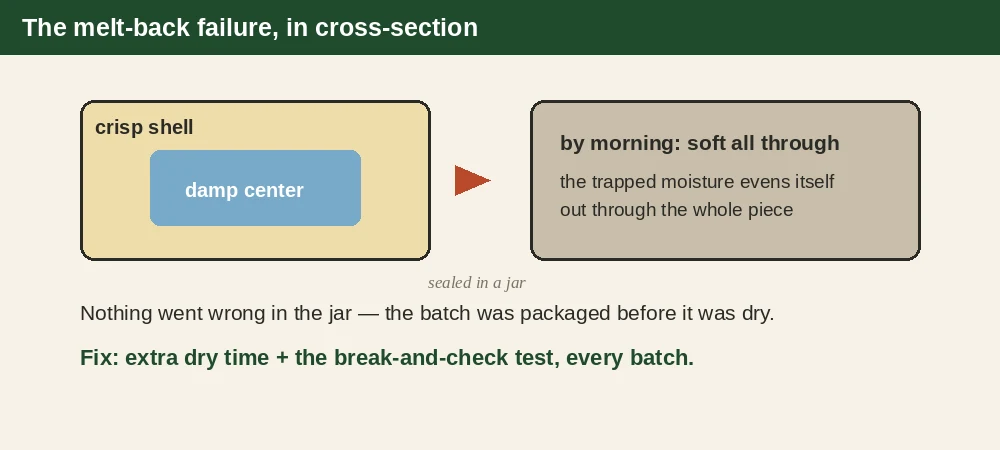
The melt-back failure deserves its own paragraph, because it is the one that looks like a mystery. Bites come off the tray crisp, go into a jar, and are soft by morning. Nothing went wrong in the jar — the water was still in the bites. A crisp surface can hide a damp center, and once sealed, that moisture evens itself out through the whole piece. The batch was not ruined by storage; it was packaged before it was dry. Extra dry time plus the break-and-check test is the entire fix.
Fruit-on-bottom cups fail their own way. The fruit layer is a sugar syrup, and sugar-rich layers dry slower than the yogurt above them, so the bottom stays gummy while the top tests done. Stirring the cup completely before portioning spreads the sugar through the batch instead of concentrating it in one layer — owners who stir report far fewer gummy bottoms.
Mold release is the simplest problem on the list: if a puck will not pop, it was not frozen solid. Silicone releases frozen yogurt cleanly when the puck is hard; a half-frozen one tears and smears. Give it the overnight freeze and flex the mold from underneath rather than prying.
Eating them, and storing them
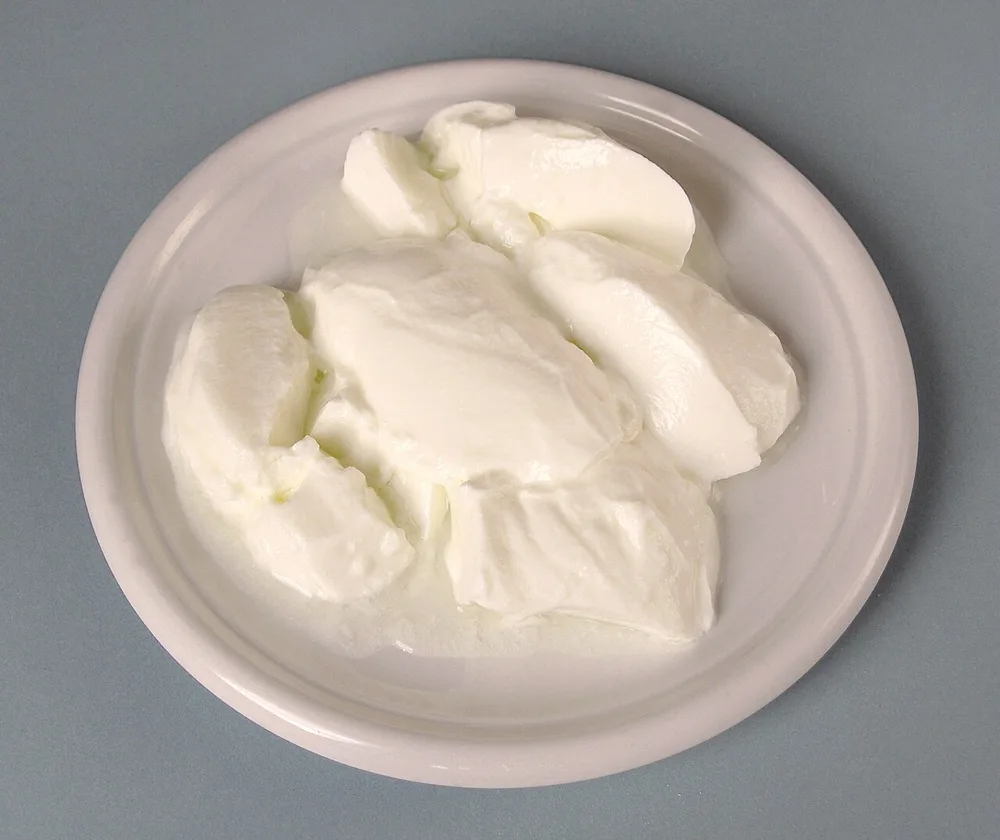
Be straight about the main use: yogurt bites are a snack. They are eaten dry, by the handful — a lunchbox and road-trip food, crisp and tangy in a way fresh yogurt never is. Reconstituting them back into yogurt is rare, and owners who try it report a thin, uneven result; if you want yogurt at the end, keep the fresh tub. A crumble of bites over fresh fruit or cereal is the middle path people actually repeat.
For storage, follow the same finishing steps as any home freeze-dried food in our mylar bags guide: mylar with an oxygen absorber for anything beyond a few weeks, airtight jars for the batch you are eating now, cool and dark either way. Yogurt carries milk fat, so plan on months of good quality rather than years — and a bite that has gone soft in storage is telling you moisture got in, not that it has become unsafe on its own; dry texture is the quality signal here.
Questions people also ask
Do you have to pre-freeze yogurt before freeze drying?
Effectively, yes. Yogurt portioned into silicone molds and frozen solid holds its shape and dries evenly; yogurt dolloped wet onto a tray spreads, bubbles, and dries unevenly. The pre-freeze is the step that separates the technique thread from the failure thread.
Why are my yogurt bites chewy instead of crisp?
Chewiness means water is still inside — the bites were too thick, too sugary, or pulled before the center finished. Break the thickest bite: a cold or bendy center needs more dry time. Thinner portions of plain Greek yogurt crisp most reliably.
How long does yogurt take to freeze dry?
Times vary with thickness and sugar, but small pre-frozen portions typically need a full standard cycle plus extra dry time — owners commonly add several hours beyond the machine’s first “done.” The break-and-check test, not the clock, decides when a batch is finished.
Can you rehydrate freeze-dried yogurt bites?
You can stir the powder or crumbles into a little water, but the result is thin and uneven, and most owners do not bother. Yogurt bites are made to be eaten dry as a snack — that is the use the community makes of them.
Related questions
- What foods can’t you freeze dry?
- How do you use freeze-dried cheese after drying?
- Can you freeze dry coffee creamer?
- What freeze-dried treats can I make at home for family and gifts?
- Best mylar bags for long-term food storage
This question sits in What People Are Asking About Freeze-Dried Food — the full list of freeze-dried questions from real forums, each with a short answer.
Talk it over with other readers
The Truly Preserved Community on Facebook is where readers compare notes on food storage, water, and backup power — and where your questions help decide what we research next.