
Affiliate Disclosure: Truly Preserved is reader-supported. When you buy through links on this page, we may earn a commission at no extra cost to you. As an Amazon Associate, Truly Preserved earns from qualifying purchases. Read our full affiliate disclosure.
Last updated: November 1, 2026
THE SHORT ANSWER
The treats home users actually make are the ones that puff, snap, or dry sweet: Skittles- and taffy-class candies in candy mode (about 2 hours a batch, per Harvest Right), strawberries, banana, and mango, yogurt bites, ice cream, pumpkin pie bites, and savory surprises like pickles and garden chives. Pack them small — little mylar pouches or jars with an oxygen absorber — and fully dry home treats keep for months of gifting. Chocolate, peanut butter on its own, and jam never really dry, and anything fatty keeps for weeks, not months.
Most of our candy coverage on this site is about selling — licensing, startup costs, margins. That is not what most home owners are doing. In The Freeze Drying Community, the treat threads are a tray of freeze-dried chives someone calls a “great gift idea,” peanut-butter banana treats packed for a road trip, and pumpkin pie bites headed to a son on base. Home batches, given away. This page is for that kitchen: what to run, how long it really takes, and how to package it so it still snaps when it reaches the person it was made for.
The treats that work, class by class
- Candies that puff. Skittles, taffy, and their chewy, sugary cousins are the candy-mode stars. Iowa State University Extension’s AnswerLine notes that sugar causes foods to expand in the dryer — that expansion is the puff, and it turns a chewy candy into a crisp, malted-ball-style bite. Hard candies and gummies in the same low-fat, high-sugar family behave the same way.
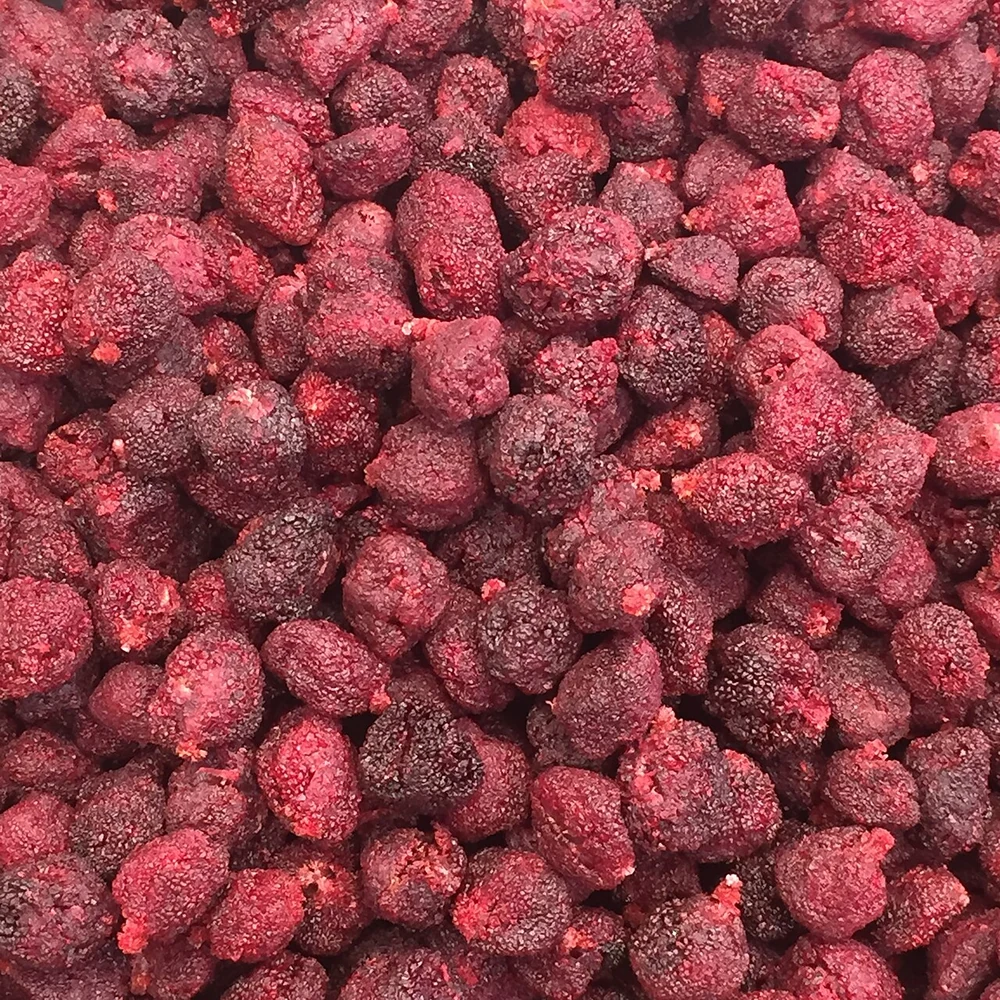
- Fruit. Strawberries are the home treat people hand out first: sweet without any help, bright, and gone in a day. Banana slices, apple, mango, and pineapple all work; pineapple and watermelon sit at the long end of the drying times, per Harvest Right’s own FAQ, so give wet fruit the hours it asks for.
- Peanut-butter banana treats. The road-trip version from the group thread works because the banana does the drying. Keep the peanut butter thin — it is fat, it never dries itself, and it sets this treat’s clock. These are eat-first treats: make them close to the trip or the gift day, in small batches.
- Yogurt bites. Small dollops of yogurt, frozen onto the tray, dry into tangy little crisps kids treat like candy. They are one of the fussier home batches — portion size and full dry time decide whether they come out crisp or leathery, and our yogurt bites page covers the technique and the usual failure in detail.
- Ice cream and pie bites. Ice cream sandwiches dry into the crunchy novelty everyone has seen in a video, and small bites of pumpkin pie carry the flavor of the whole pie in a two-bite piece — the same pie bites that anchor the care packages in our care package page. Enjoy both as treats, not storage food: sugar and fat set a shorter clock.
- The savory shelf. Pickle chips dry into a salty, snapping snack that surprises everyone who tries one, and garden herbs like chives dry bright and potent — a small jar of home-grown freeze-dried chives is exactly the kind of gift that thread was celebrating. Herbs are also the fastest way to use a half-empty tray.
The fat caveat, because it decides half the list
One rule sorts the treat shelf, and it is the same rule as our what-can’t-you-freeze-dry page: the machine removes water, and fat is not water. Pure chocolate never sets into a dry solid — the cocoa butter blooms and melts. Peanut butter on its own comes out of a long run as warm peanut butter. Honey and jam stay syrup. Iowa State’s AnswerLine puts foods high in fat and foods high in sugar (beyond the candy classes above, which puff rather than preserve) on the avoid list for the same reason. Fat that rides along in a treat — the peanut butter on a banana slice, the cream in an ice cream bite — does not stop the treat from working. It just shortens how long it keeps, which is why fatty treats are small-batch, eat-first treats.
Batch timing: candy is an afternoon, fruit is a day
| Treat batch | Typical run | Why |
|---|---|---|
| Candy in candy mode | About 2 hours | Harvest Right’s figure for a candy batch |
| Fruit slices and bites | Inside 13–35 hours | Wet fruit sits at the long end |
| Yogurt bites, ice cream | Inside 13–35 hours | Real water to remove, like other foods |
| Herbs and chives | Inside 13–35 hours | Thin and light, usually the quick end |
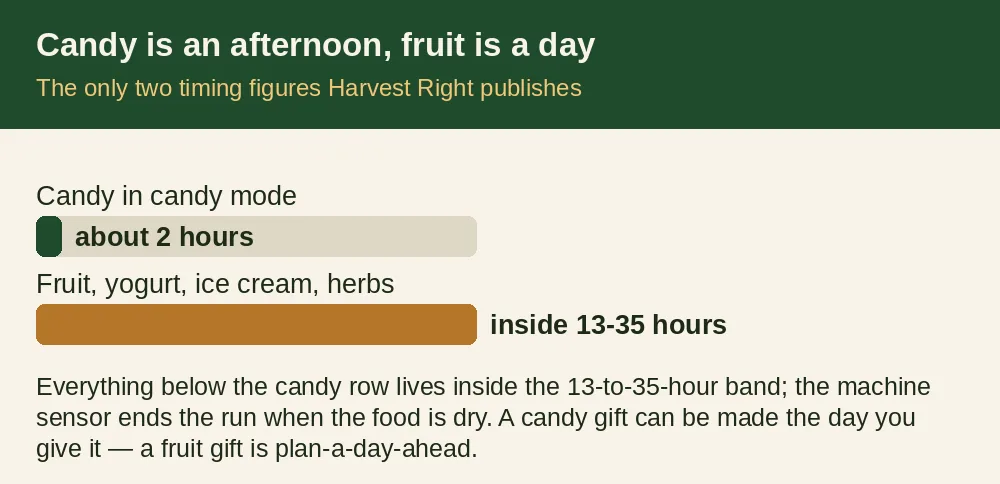
Harvest Right publishes exactly two timing figures: a candy batch typically takes about two hours, and most other foods — fruits, vegetables, meats, meals, dairy — take between 13 and 35 hours. Everything in the lower rows lives inside that second band; your machine’s sensor ends the run when the food is dry, so treat the band as planning, not a promise. The practical lesson for gift planning is the gap between the rows: a candy gift can be made the same afternoon you give it, while a fruit or yogurt gift is a plan-a-day-ahead project.
How long home treats keep, and packaging them as gifts
Fully dry and sealed away from air, home treats keep their snap for months — long enough for holiday gifting, a road trip, or a box in the mail. What ends them is almost never age. It is air. Freeze-dried food takes moisture back from the room quickly, and a treat that sat open on the counter goes soft and then sticky. Iowa State’s guidance is to package freeze-dried food immediately when it comes out of the dryer, in a container that shuts out oxygen, light, and moisture, with an oxygen absorber — not a desiccant — inside, and to store it cool and dark.
For gifts, small is the whole trick:
- Portion into gift-size pouches or small jars — a handful or two per gift, so one opening finishes the treat while it is still crisp.
- One absorber per pouch, sized to the bag. Our Oxygen Absorber Calculator does the sizing math; our mylar bags comparison covers which bags and sealers hold up, and the Wallaby 1-Gallon Mylar Bags from that comparison portion down fine for treat batches, closed with the METRONIC 8-Inch Impulse Sealer.
- Write the treat and the date on the pouch. “PB banana — made Oct 29, eat first” is honest labeling, and the fatty gifts should always carry the eat-first note.
- Keep gifts cool and dark until they are given. A treat made in October for December giving lives in a closet, not on a sunny counter. For how any food keeps on the shelf, our Food Shelf-Life Lookup has the storage figures.
Food-safety plain talk for gifting
Gifting is not selling, and the rules of thumb are kitchen rules, not commercial ones — but they are still rules. Start with clean trays and clean hands. Dry everything all the way: extension guidance is that freeze-dried food must be completely dried, crisp, before it is packaged, and a yogurt bite or fruit slice that still bends in the middle is not finished, however good it tastes warm off the tray. Anything made from raw meat or eggs follows the safety rules on our raw meat and eggs page — treats are an easy class precisely because candy, fruit, and herbs carry none of that. And if a gift pouch puffs, smells off, or the food inside has gone soft and dark in storage, it gets thrown out, not handed over with an apology. A gift should never need a disclaimer.
When the gifts turn into a business
It happens the same way in thread after thread: you hand out bags, and then people start offering to pay you. That step changes the job. Selling freeze-dried candy from home runs into cottage-food licensing that varies by state, and the machine-and-packaging costs are their own math. Our Freeze-Dried Candy Margin Calculator runs the per-bag numbers honestly, and the full candy-business question list — licensing included — lives on the hub: What People Are Asking About Freeze-Dried Food. Until that day, keep it gifts. Gifts are the good part.
Questions people also ask
Do freeze-dried Skittles need an oxygen absorber?
For a gift eaten this week, no — a sealed pouch or jar is enough. For treats made weeks or months ahead, yes: the absorber is what keeps them crisp instead of slowly taking moisture and air back. Size it to the pouch with the calculator linked above.
How long do homemade treats stay crisp once opened?
Think days, not weeks. An opened pouch on the counter softens as the food pulls moisture from the air, and fatty treats go stale fastest. Reseal what is left right away, or portion gifts small enough that opening one finishes it.
Can I freeze dry chocolate as a gift?
Not in any way that works — chocolate’s cocoa butter is fat, and it blooms and melts instead of drying, which is why it sits on our can’t-freeze-dry list. Cocoa powder dries and stores well; a chocolate-flavored gift is better built on dried fruit, candy, or ice cream bites eaten fresh.
Related questions
- What foods can’t you freeze dry?
- What freeze-dried food should I send in a care package?
- Is home freeze-dried food really good for 25 years?
This question sits in What People Are Asking About Freeze-Dried Food — the full list of freeze-dried questions from real forums, each with a short answer.
Talk it over with other readers
The Truly Preserved Community on Facebook is where readers compare notes on food storage, water, and backup power — and where your questions help decide what we research next.