
Truly Preserved is reader-supported. If you buy through a link on this page we may earn a commission at no extra cost to you. Nobody pays for placement or scores.
THE SHORT ANSWER
Blue Alpine’s Medium Select (8/10) takes it on speed and service — up to 15 lb per batch in an average of 12–20 hours, on standard quarter-sheet trays. The Stay Fresh 7-Shelf (7/10) answers with the most tray space made — 1,120 square inches across seven trays — for bulky, shallow loads, at the cost of a heavier oil routine and a younger company behind it.
Photo: Blue Alpine.
- Fastest cycles in the class — the deciding edge during a harvest glut
- Service reputation is the strongest praise pattern in owner feedback for any challenger brand
- Standard quarter-sheet trays you can replace at any kitchen store
- Complete starter kit in the box; free shipping in the lower 48
Cons
- $5.12 per square inch — nearly double Stay Fresh’s rate for tray space
- Oil changes every 5–10 batches
- Loud at ~60 dB; a young brand with a thin secondhand market
Buy it if food arrives in waves and your bottleneck is hours. Skip it if your bottleneck is tray space for bulky, light loads.
Stay Fresh 7-Shelf
Our score: 7/10. Stay Fresh answers a different problem: loads that fill trays before they tax a scale. Seven 8×20-inch trays in one 20×26×31-inch cabinet give you 1,120 square inches — lay out herbs, greens, sliced fruit, or yogurt drops and this machine swallows a garden bed at a time.
The limits are printed by the maker itself, to its credit. The batch ceiling is 18 lb of fresh food, the ice capacity is 12 lb, and Stay Fresh warns that wet, dense loads can outrun that ice capacity. The shelf spacing is 1.2 inches — fine for slices and leaves, tight for anything tall. Owners who have inspected the hardware praise the build in strong, specific terms: heavy stainless throughout, a door over an inch thick, bolted (not spot-welded) shelf units. The Premier pump version is $3,099; the Commercial pump version, which stretches the oil interval, is $3,734.
Pros
- Nearly double the Blue Alpine’s tray space at nearly the same price
- Build quality owners describe in unusually strong terms
- Standard 15-amp circuit; patented drying algorithm with shelf temperature sensors
Cons
- 18 lb ceiling and a maker-printed caution on wet, dense loads
- Premier pump oil changes about every 5 batches; ~62 dB while it runs
- Founded in 2022 — the shortest track record and smallest owner community here
Buy it if your loads are measured in trays, not pounds. Skip it if you mostly freeze dry meals, meats, and sauces — the ice capacity, not the trays, becomes your wall.

Nesco VS-12
A full-featured countertop sealer for bagging batches before they go into storage.
$108.18 from Amazon
COSORI Dehydrator
The foods that cannot freeze-dry — fatty meats, butter, avocado — are dehydrator work; this is the dehydrator our reviews put first.
$135.99 from Amazon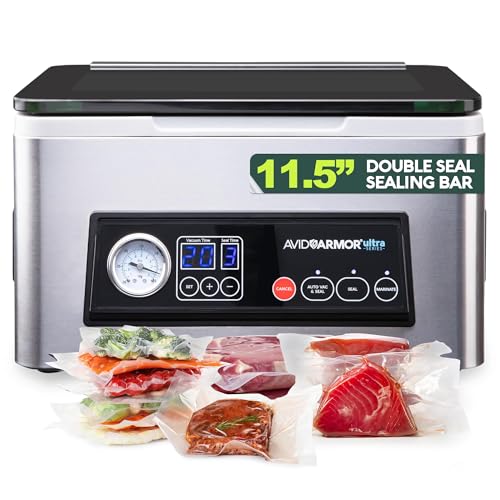
Avid Armor USV20
The chamber machine: soups, marinades and smooth cheap pouches — if it fits in an 11 x 10 pouch.
$349.00 from AmazonWhich machine holds more per batch?
Stay Fresh holds more by both rulers at this price — 1,120 square inches against 585, and up to 18 lb against 15 — but the rulers measure different work. Blue Alpine’s 15 lb goes through in 12–20 hours; Stay Fresh’s own example timing is 16–30 hours for an 8 lb load. Per day of running, the Blue Alpine can move more food than its tray count suggests. Per single load of garden greens, nothing at this price touches the 7-Shelf.
What does each cost per square inch — and per pound?
Per square inch, Stay Fresh wins outright: $2.77 against Blue Alpine’s $5.12. Per fresh pound, the machine-cost model in our freeze-drying cost study — price spread over 500 lifetime batches — puts Blue Alpine at about $0.52 per pound and Stay Fresh at about $0.27, though that Stay Fresh figure was modeled on larger batch claims than the current 18 lb rating; at 18 lb it lands nearer $0.34. Either way, the Stay Fresh is the cheaper machine to own per pound if your loads suit it. A machine that idles because the food doesn’t fit its shape is the most expensive one of all — which is why this comparison keeps coming back to load shape.
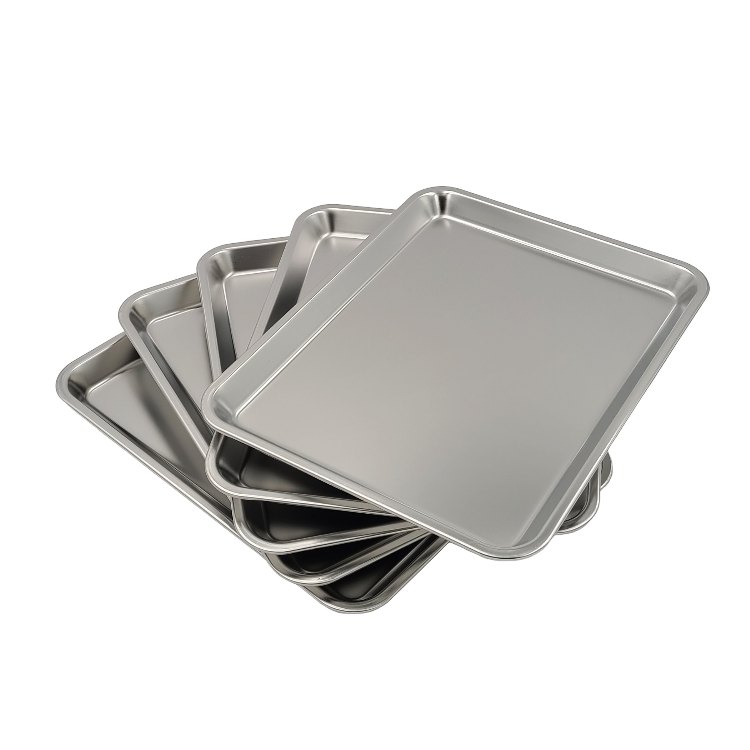
Blue Alpine Freeze Dryer Trays, Medium
Blue Alpine's own freeze dryer trays, so a second batch can be loaded while the first is still running — check the size against your machine before ordering. Use code TRULYPRESERVED at checkout for 10% off.
$66.71 from Blue Alpine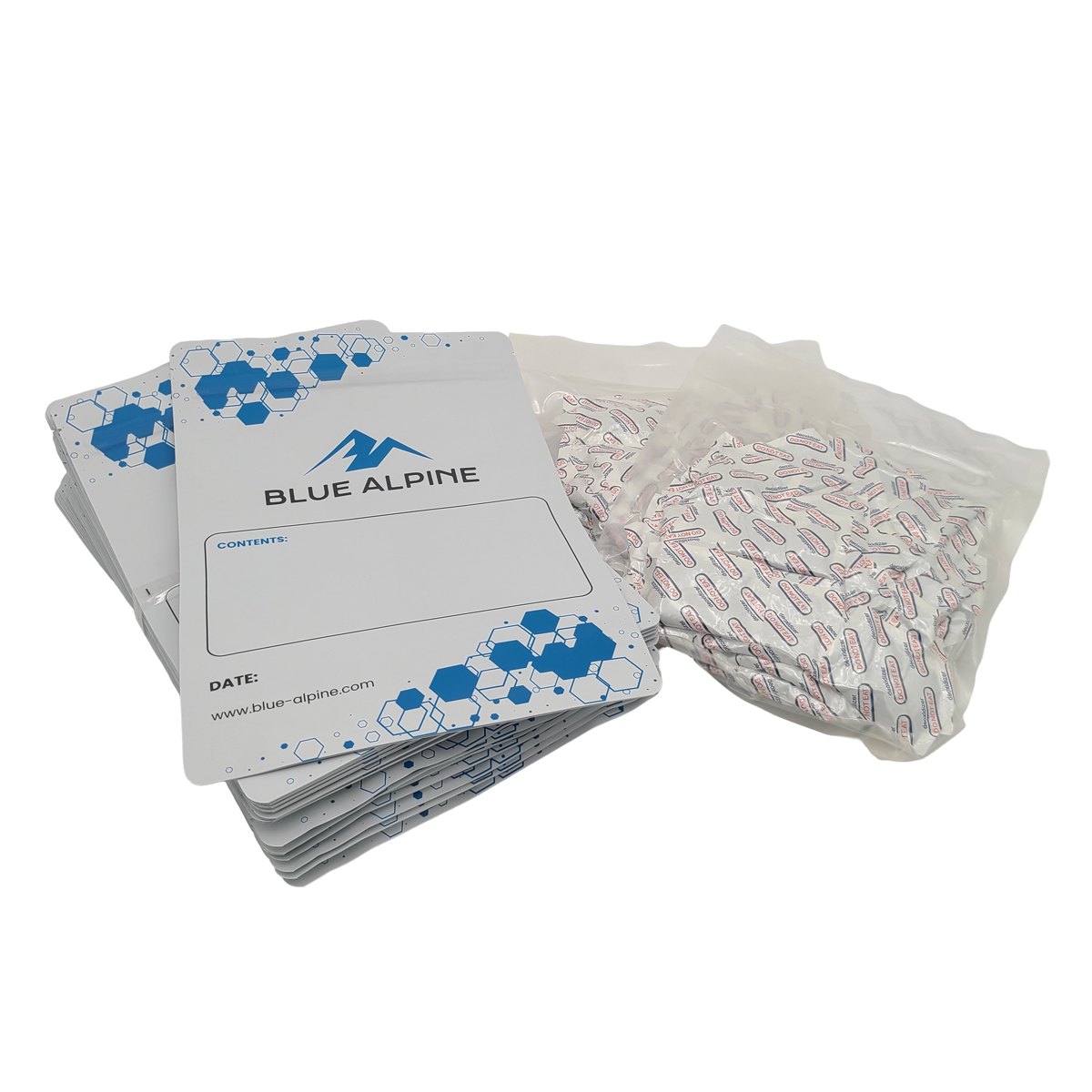
Blue Alpine Mylar Bags with Oxygen Absorbers
The starter kit's 50 bags go faster than any beginner expects. A standing spare pack of bags with absorbers is the difference between a finished batch and a tray of food waiting on a delivery. Use code TRULYPRESERVED at checkout for 10% off.
$32.39 from Blue Alpine
How much pump and oil work does each one ask for?
About the same, and it is the shared tax of the challenger brands: Blue Alpine asks for an oil change every 5–10 batches, Stay Fresh’s Premier pump about every 5. Neither matches the 20–30-batch interval of Harvest Right’s Premier pump. Stay Fresh’s $3,734 Commercial pump version is its escape hatch; Blue Alpine’s is a $1,583 commercial pump upgrade at checkout. Budget the chore, or budget the upgrade — one of the two is real.
Do you need a special circuit for either machine?
Not for these two. The Blue Alpine Medium Select runs on a standard 120V, 15-amp outlet (up to 1,560W draw), and the Stay Fresh 7-Shelf on a standard 110V, 15-amp circuit. The wiring conversation starts if you step up to Blue Alpine’s Large Select, which wants a dedicated 20-amp NEMA 5-20 circuit.
What warranty do you actually get?
The printed terms match: one year full, three years limited to the refrigeration system. What you are really choosing is the company behind the paper — Blue Alpine, founded by three brothers in Idaho in 2018, with a service reputation owners volunteer unprompted; or Stay Fresh, founded in 2022, whose owners praise the hardware and whose support operation is younger and more centralized. Both are bets on small companies; Blue Alpine’s bet has more seasons behind it.


Katadyn BeFree AC
The trail favorite: a soft bottle with the filter in the cap — fill, squeeze, drink. The backpacking world's default for fast water.
$49.95 from Amazon
COOQUI 12-Inch Tortilla Warmer
An insulated fabric warmer sized for full-size flour tortillas. Thirty to forty-five seconds in the microwave and it holds the stack warm and soft for up to an hour at the table.
$19.99 from AmazonHow loud are they, really?
Both are louder than the category default: about 60 dB for the Blue Alpine, about 62 dB for the Stay Fresh — conversation-level noise sustained for the length of a batch. Plan a garage, basement, or laundry room for either, and plan on the room warming up while a batch runs. Our Preserve the Harvest page collects the placement and maintenance questions owners ask next.

Thrive Life: Freeze-Dried Blueberries - Pantry Can Size
Freeze-dried food by the can, no machine: the same long-life ingredients the kits are built from, bought a can at a time.
$60.00 from Amazon
FoodSaver Elite Liquid Plus
It senses bags and moisture for you — at the highest price per inch of seal bar here.
$218.56 from Amazon
Survival Garden Seeds Home Garden Collection, 30 Pack
Best germination paperwork: every lot germination-tested with a packed-for date on the packet, and the straightest shelf-life answer in the business: 3 to 5 years, not forever.
$29.97 from AmazonWhat does it cost to own one for five years?
The running model from our cost-per-pound study puts a medium batch at about $7.56 all-in — electricity on roughly 20 metered kWh, about a dollar of oil amortized, and $2.93 of mylar and absorbers to pack the food away. Faster Blue Alpine cycles trim the electricity line a little; Stay Fresh’s oil routine adds a little. Over five years the honest difference is not the utility bill — it is throughput: the household that runs 150 batches a year gets its money back years before the household that runs 30, whichever badge is on the door. Sizing help lives in our freeze dryer sizing work — the questions transfer across brands.
Honest caveats
Both of these companies are young, and that is the real caveat under everything above: neither has a ten-year parts-and-service record, because neither has existed that long in this market. Stay Fresh’s batch figures have also moved over time — older materials implied larger loads than the current 18 lb rating, and we have scored and priced against the current rating only. And Blue Alpine’s headline cycle times are the maker’s averages; dense, wet food takes longer in every machine ever built.
Viewers also searched for these items.


Sour Patch Kids (5 lb)
The bulk bag is the economical way to run candy mode: sour gummies sit squarely in the low-fat, high-sugar family that puffs into crisp bites in the dryer, and five pounds fills a lot of trays.
$20.99 from AmazonQuestions buyers ask
Which is faster, Blue Alpine or Stay Fresh?
Blue Alpine, clearly. Its maker puts average cycles at 12–20 hours and owners back the claim; Stay Fresh’s own example is 16–30 hours for an 8 lb load. If you run back-to-back batches at harvest time, Blue Alpine’s clock is its strongest argument.
Which holds more, Blue Alpine or Stay Fresh?
The Stay Fresh 7-Shelf: 1,120 square inches and up to 18 lb, against 585 square inches and up to 15 lb for the Blue Alpine Medium Select. Blue Alpine’s answer is its Large Select — 1,170 square inches and up to 25 lb — at $3,995 and a 20-amp circuit.
Are Blue Alpine and Stay Fresh good companies to buy from?
Both are real, US-based companies selling real machines with published specs and reachable support — a low bar that parts of this market fail. Blue Alpine’s service gets the warmest owner feedback of any brand we track; Stay Fresh’s hardware gets the strongest build praise. Both are young, and we say so wherever we score them.
Which one is better for candy?
Blue Alpine owners running candy businesses favor its fast cycles and candy mode — a 2–4 hour run for most candies per the maker. The Stay Fresh’s tray space suits big, flat batches of low-moisture candy. Volume per hour favors Blue Alpine; volume per load favors Stay Fresh.
Should I just buy a Harvest Right instead?
Maybe — it is the default for a reason, and our three-brand comparison scores it highest overall. Buy one of these two when its specific strength — Blue Alpine’s speed and service, or Stay Fresh’s tray space — matches the work you actually do.
Sources & freshness: Blue Alpine’s own store and product pages (bluealpinefreezedryers.com), Stay Fresh’s own store and model pages (stayfreshfreezedry.com), and aggregated owner feedback from retailer listings, owner forums, and independent comparisons, all consulted November 11, 2026. Prices last checked: November 11, 2026.
Talk it over with other readers. The Truly Preserved Community on Facebook is where readers compare notes on food storage, water, and backup power — and where your questions help decide what we research next. Join the group →
Prices shown on this page were last checked November 26, 2026 — prices change; check before you buy.