
Truly Preserved is reader-supported. If you buy through a link on this page we may earn a commission at no extra cost to you. Nobody pays for placement or scores.
THE SHORT ANSWER
A wet-cured ham, the extension brine method: for each 100 pounds of trimmed, weighed meat, dissolve 12 pounds of salt, 3 pounds of sugar, and 2 ounces of saltpeter in 6 gallons of water, boil the brine to sterilize it, and cool it thoroughly — ideally, both meat and brine at 38°F — before the meat goes in. Pack the chilled ham snugly in the cold brine, and overhaul and re-pack it in the same brine after 5 or 10 days. Mississippi State University Extension’s smoking schedule then runs in three stages — about 125°F to dry, about 135°F with smoke for about 8 hours, then about 180°F until the internal temperature reaches 142°F — and hams sold as fully cooked have reached at least 148°F. Every figure comes from the extension publications credited at the bottom.
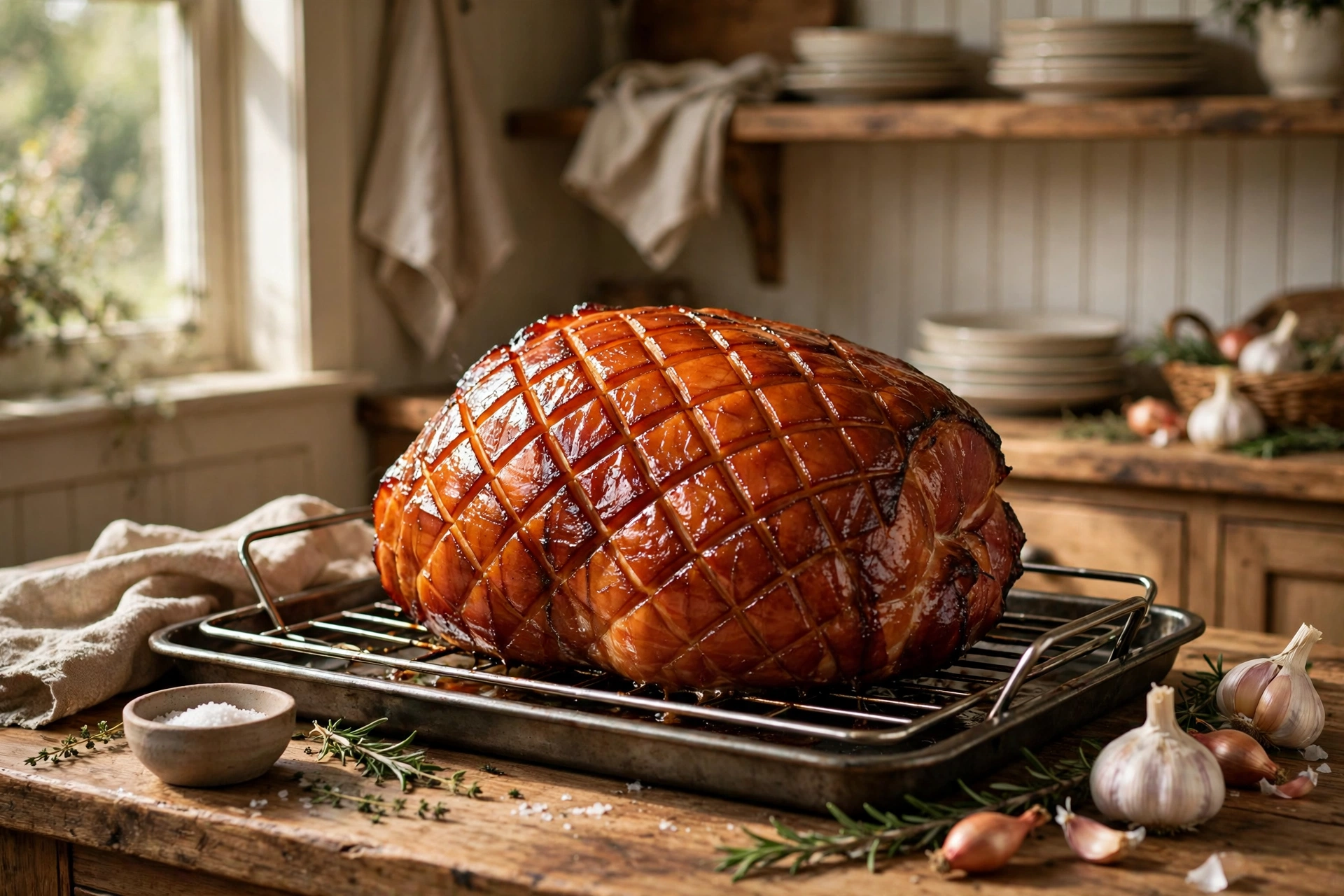
A home-cured ham is the biggest project in this section — a whole leg, weeks of brine, and a day of smoke — and it is also the one where the old extension bulletins are at their most detailed, because farm families cured hams as a winter staple, not a hobby. The method below is the brine (sweet pickle) cure those bulletins teach, with the smoking schedule from Mississippi State University Extension’s current curing publication.
Read the figures the way the sources print them: the brine is written per 100 pounds of meat, because that is the scale the bulletins served. Do not scale the saltpeter by eye for a smaller ham — for a single ham, a modern prepackaged cure used exactly to its package directions is the safer instrument, a point North Dakota State University Extension makes in its own curing publication. This guide is part of our preservation guides; read how to use curing salt safely before handling any curing ingredient, and see how to make salt pork for the dry-cure side of the same tradition.
What You Need
A fresh, uncured ham — trimmed and weighed, because the brine is built per 100 pounds of meat. For each 100 pounds: salt 12 pounds (or 21 cups), sugar 3 pounds (or 6 cups, or 3 pints of syrup), saltpeter 2 ounces (or 4 tablespoons), and water 6 gallons. You also need a clean barrel, tub, or crock that is not metal the brine will attack, a way to boil 6 gallons of brine, refrigerator or cold-room space that holds the cure cold, and a smokehouse or smoker for the finishing stages.

Etekcity Digital Kitchen Scale
The brine is built per 100 pounds of trimmed, weighed meat — the ham is weighed before the brine is mixed, not guessed at.
$9.99 from Amazon
ThermoPro Instant-Read Thermometer
The smoking schedule ends at thermometer readings — 142°F in the smokehouse, at least 148°F for fully cooked — and only a probe can call them.
$8.99 from Amazon
Morton Canning and Pickling Salt, 4 lb
The brine's base is plain salt by the pound; this is the additive-free salt the curing shelf runs on.
$2.68 from AmazonBefore You Start
The bulletins’ first rule is temperature: under ideal conditions both the meat and the brine are cooled to 38°F before they meet, and Mississippi State puts the best curing temperature at 32 to 40°F. The second rule is cleanliness of the vessel — scald the container before use. The third is the overhaul: the ham does not simply sit. It is taken out and re-packed in the same brine on the schedule below, so no part of the leg cures in a dead pocket of brine.
How to Cure a Ham at Home, Step by Step
- Make the brine. For each 100 pounds of trimmed, weighed meat, dissolve 12 pounds of salt, 3 pounds of sugar, and 2 ounces of saltpeter in 6 gallons of water.
- Boil and cool it. Boil the mixture to sterilize it, then let the brine thoroughly cool — ideally to 38°F, with the meat chilled to the same temperature.
- Pack the ham. Pack the chilled ham snugly, skin down, in the clean crock or tub, fitting it closely, and pour in the cold brine until the meat begins to shift or float, showing the brine has contacted all parts.
- Keep it cold and covered. Hold the cure at curing temperature — Mississippi State’s best range is 32 to 40°F — with the meat under the brine.
- Overhaul it. Take the ham out and re-pack it in the same brine after it has been in cure 5 or 10 days, and handle it the same way at any later check the cure requires.
- Wash before smoking. When the cure is done, rinse or soak the ham in cold water before smoking — Mississippi State notes this removes excess surface salt and prevents salt streaks.
- Smoke in three stages. Dry at approximately 125°F with dampers open and no smoke, until the surface is slightly moist and tacky. Then smoke at approximately 135°F for about 8 hours with dampers partially closed. Finally, close the dampers, raise the house to approximately 180°F, and hold it until the internal temperature reaches 142°F.
- Cook before eating. A ham smoked to 142°F must be cooked further at home until fully tender and safe to eat; hams sold as “fully cooked” have been cooked to an internal temperature of at least 148°F.
The Numbers: Brine per 100 Pounds, and the Smoking Stages
| Item | Amount or figure | Source |
|---|---|---|
| Salt, per 100 lb of meat | 12 pounds or 21 cups | University of Florida extension bulletin |
| Sugar, per 100 lb of meat | 3 pounds or 6 cups, or 3 pints syrup | University of Florida extension bulletin |
| Saltpeter, per 100 lb of meat | 2 ounces or 4 tablespoons | University of Florida extension bulletin |
| Water, per 100 lb of meat | 6 gallons | University of Florida extension bulletin |
| Meat and brine temperature at packing | 38°F, under ideal conditions | University of Florida extension bulletin |
| Overhaul and re-pack | After 5 or 10 days in cure | University of Florida extension bulletin |
| Best curing temperature | 32 to 40°F | Mississippi State Extension |
| Smoking, drying stage | Approximately 125°F, dampers open, no smoke | Mississippi State Extension |
| Smoking, smoke stage | Approximately 135°F, about 8 hours | Mississippi State Extension |
| Smoking, finishing stage | Approximately 180°F until internal temperature reaches 142°F | Mississippi State Extension |
| “Fully cooked” ham benchmark | Internal temperature of at least 148°F | Mississippi State Extension |
| Total hot-smoking time for a ham | About 24 hours | Mississippi State Extension |
A cured ham is portioned at slicing, and the surplus freezes in sealed packs. Two sealers sized for ham-day volume:
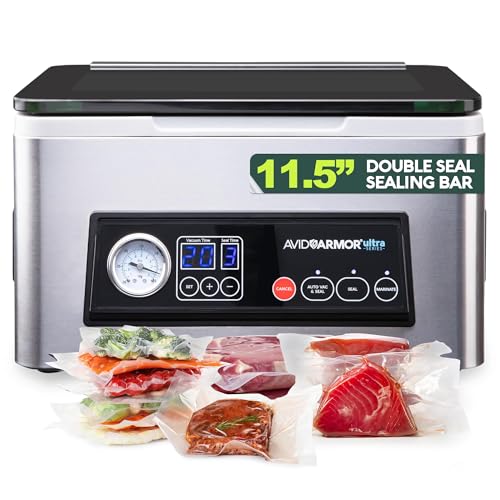
Avid Armor USV20 Chamber Vacuum Sealer
Chamber sealing for ham portions — a whole leg becomes freezer packs without crushing the slices.
$349.00 from Amazon
VacMaster VP215 Chamber Vacuum Sealer
The heavy-duty chamber machine for the household that cures a ham and portions the whole thing in one day.
Check AvailabilityCommon Mistakes
Scaling saltpeter by eye. The bulletin figure is 2 ounces per 100 pounds of meat. Curing ingredients are never scaled by guesswork — for a single ham, use a prepackaged cure exactly as its package directs.
Packing warm. Brine or meat above the cold range at packing starts the cure in the temperature zone every source warns against. Cool both first — 38°F is the bulletins’ ideal.
Skipping the overhaul. The re-pack at 5 or 10 days is part of the cure. A ham left untouched can cure unevenly where brine contact was poor.
Eating the 142°F ham as-is. Mississippi State is explicit: hams smoked to an internal 142°F must be cooked further at home. “Fully cooked” means at least 148°F.
Smoking a wet surface. The drying stage comes first for a reason — a surface that is too wet streaks, and one that is too dry takes a pale smoke color.
Storage and Shelf Life
Mississippi State’s storage guidance for the shorter cures is the safe default for a home wet-cured ham: products cured for a shorter period should be refrigerated at 40°F during the curing cycle and frozen immediately after smoking, slicing, and packaging. The bulletins’ long room-temperature aging belongs to fully dry-cured products — and Mississippi State states it does not promote aging dry-cured meats at home. Refrigerate or freeze your ham.
Viewers also searched for these items.

ePackageSupply 5-Gallon Buckets, 3-Pack
Food-grade buckets for brine-day work — mixing, chilling, and holding cure ingredients in sealed, stackable containers.
$73.99 from Amazon
Mrs. Wages Pickling and Canning Salt
A second additive-free pickling salt in a resealable pouch, for the next brine on the shelf.
$19.32 from Amazon
Hoosier Hill Farm Prague Powder No. 1
Prague Powder #1 for the modern Cure #1 recipes in this section, such as bacon — used only in recipes written for it, never as a saltpeter substitute here.
$18.99 from AmazonFrequently Asked Questions
Is a ham smoked to 142°F ready to eat?
No. Mississippi State Extension states that hams smoked to an internal temperature of 142°F must be cooked further in the home; hams sold as fully cooked have reached at least 148°F.
Why is the brine written per 100 pounds?
Because the extension bulletins were written for farm-scale curing. The ratio is the tested part — for one ham, a prepackaged cure used to its package directions is the practical, safer route.
What temperature should the cure be held at?
Mississippi State gives the best temperature for curing meat as 32 to 40°F, and the brine bulletin cools meat and brine to 38°F before packing.
How long does hot-smoking a ham take?
About 24 hours in Mississippi State’s three-stage schedule — drying at about 125°F, smoking at about 135°F for about 8 hours, then finishing at about 180°F to the target internal temperature.
Brine: University of Florida extension bulletin, “Butchering and Curing Pork on the Farm” (brine or sweet pickle cure). Smoking schedule, curing temperature, and storage: Mississippi State University Extension, “Curing Pork Products at Home,” Publication 2648, via via the Mississippi State University Extension.
Prices shown on this page were last checked November 26, 2026 — prices change; check before you buy.
Talk it over with other readers
The Truly Preserved Community on Facebook is where readers compare notes on food storage, water, and backup power — and where your questions help decide what we research next.