
Truly Preserved is reader-supported. If you buy through a link on this page we may earn a commission at no extra cost to you. Nobody pays for placement or scores.
THE SHORT ANSWER
Dry peeled tomatoes at 140°F until they are crisp. Steam or dip them in boiling water to loosen the skins, chill and peel, then slice them 1/2 inch thick or cut them into 3/4-inch sections and dip them for 10 minutes in a solution of 1 teaspoon of citric acid per quart of water. Colorado State University Extension gives 6 to 24 hours — times are ranges, and the crisp test, not the clock, decides when a batch is done. Every figure on this page comes from the credited extension source at the bottom.
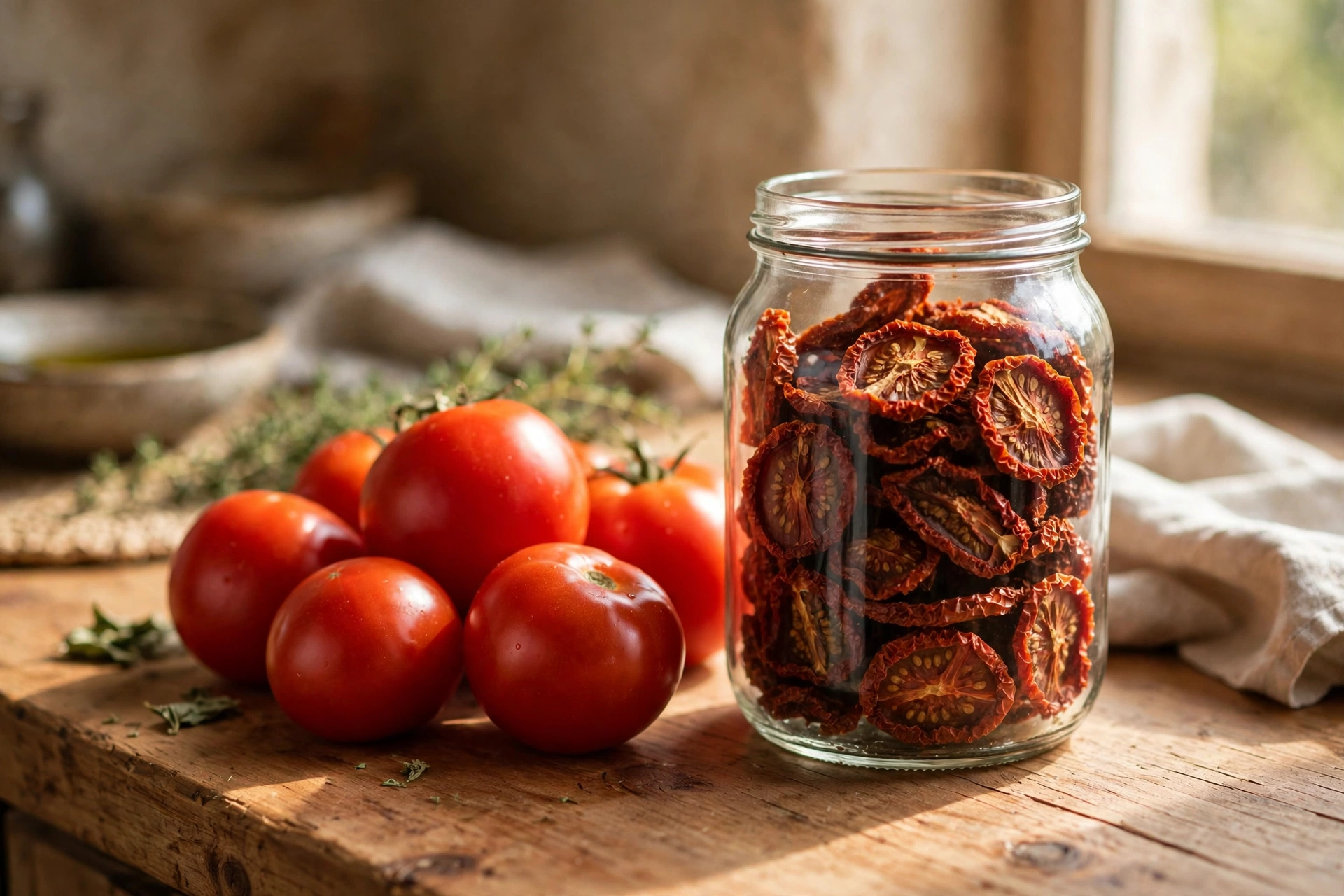
A garden tomato glut lasts about a week, and dried tomatoes are how that week keeps paying out all winter. Drying concentrates everything people grow tomatoes for — the sweetness, the acidity, the deep cooked flavor — into pieces that weigh almost nothing, take up a fraction of the shelf, and drop straight into soups, sauces and stews. Colorado State puts the shrinkage plainly in its yield table: 14 pounds of fresh tomatoes dry down to about 1/2 pound of dried product.
This guide follows Colorado State University Extension’s tested drying procedure exactly: its preparation, its citric acid dip, its temperature and its dryness test. This guide is part of our preservation guides, and it sits beside the category’s starting point, how to dehydrate apples. If you are still choosing the machine itself, best dehydrator for beginners covers the models worth starting with, and the best dehydrators for food storage covers the larger end.
What You Need
Start with tomatoes at peak flavor and eating quality — Colorado State is clear that drying does not improve a tomato, it only concentrates what is already there. Wash the produce thoroughly, and sort out anything with decay, bruises or mold, because one bad piece can affect the whole batch. For the yield: 14 pounds of fresh tomatoes make about 1/2 pound dried, or 2 1/2 to 3 pints. You also need a dehydrator that holds 140°F, trays that let air move, citric acid for the dip, and containers for storage.
Think about tray space before you start cutting. Dried food shrinks, but wet food does not start out small, and tomatoes are among the wettest vegetables in the garden. Colorado State’s general rule for vegetables is single or thin layers so warm air can reach every surface — crowding a tray to save a run costs more time than it saves, because thick layers trap the very moisture the machine is trying to carry away. If the harvest is bigger than the dehydrator, dry it in successive batches and hold the peeled, dipped pieces for the next load rather than piling them deep. A second practical point: rotate trays during a long run if your machine dries faster near the heat source, as Colorado State notes many do, so the top and bottom trays finish together instead of hours apart.

Cosori Food Dehydrator, 6 Stainless Trays
A thermostat-controlled dehydrator that holds a steady 140°F is the machine this whole tomato procedure runs on, tray after tray.
$135.99 from Amazon
ThermoPro Instant-Read Thermometer
A quick read on tray temperature confirms the dehydrator is actually holding 140°F instead of running hot and cooking the slices.
$8.99 from Amazon
Etekcity Digital Kitchen Scale
Weighing the fresh load against the dried result shows how close a tomato batch came to the 14-pounds-to-half-a-pound yield.
$9.99 from AmazonBefore You Start
Three points before the first tray goes in. First, tomatoes are not blanched for this method — the extension table lists no blanching time for them; instead they get the citric acid dip in the steps below, which the source recommends to enhance quality and safety. Second, prepare produce immediately after gathering and begin processing at once, because picking starts enzyme changes that cost color, flavor and nutrients. Third, dry indoors in a dehydrator or oven under controlled conditions rather than out in the yard — the National Center for Home Food Preservation does not recommend outdoor drying for vegetables.
One more piece of housekeeping: wash the trays before the batch goes on. Colorado State directs that trays be washed in hot, sudsy water with a stiff brush, rinsed in clear water and air-dried thoroughly before and after each use — tomato juice is acidic and sugary, and a tray that goes back on the shelf sticky carries the last batch into the next one. If you are building your own trays rather than using the dehydrator’s, the same source warns against galvanized screening, whose zinc and cadmium can react with acid foods, and against bare aluminum, which can discolor and corrode; line any such surface so the food never touches the metal.
How to Dehydrate Tomatoes, Step by Step
- Loosen the skins. Steam the tomatoes or dip them in boiling water to loosen the skins, then chill them in cold water and peel.
- Cut the tomatoes. Slice them 1/2 inch thick, or cut them into 3/4-inch sections.
- Dip in citric acid. Dip the pieces for 10 minutes in a solution of 1 teaspoon of citric acid per quart of water, then drain them.
- Load the trays. Arrange the pieces in single or thin layers, 1/2 inch deep or less, so air can move around every piece.
- Dry at 140°F. Hold the dehydrator at 140°F. Colorado State gives 6 to 24 hours for tomatoes — a wide range, because thickness and juiciness decide it.
- Test for crispness. Cool a few pieces and test them. The batch is done when the tomatoes are crisp — not soft, not bendy, not cool and damp in the middle.
- Condition and pack. Let the cooled pieces sit loosely in containers for the conditioning period described under Storage below, checking daily, then pack them tight and sealed.
The Numbers: Temperature, Time and the Crisp Test
One food, one temperature, one test. The hours are the source’s range — treat them as a window to start checking in, not a finish line.
| Food | Preparation | Drying temperature | Drying time | Done when |
|---|---|---|---|---|
| Tomatoes | Peeled, sliced 1/2 inch thick or cut in 3/4-inch sections; 10-minute citric acid dip; no blanching | 140°F | 6 to 24 hours | Crisp |
Times are ranges and the dryness test decides. A thin slice of a firm tomato can finish near the short end of that range while thick, juicy pieces run far longer, and a batch judged by the clock alone is how moist centers end up sealed in a jar.
Not every tomato has to be dried. The overflow freezes well for sauces, vacuum-sealed or bagged, and a frozen tomato harvest and a dried one cover different meals — these are the two tools that side of the job runs on.

FoodSaver Elite Vacuum Sealer
Overflow tomatoes headed for sauce freeze better vacuum-sealed, with the air out so they keep their flavor until cooking day.
$218.56 from Amazon
Ziploc Freezer Quart Bags
Sturdy quart freezer bags handle the tomatoes that get frozen in smaller, meal-sized portions instead of dried.
$26.48 from AmazonCommon Mistakes
Skipping the peel. The procedure starts by loosening the skins and peeling. Drying tomatoes in their skins is a different product from the one this tested method describes, and it dries unevenly.
Skipping the citric acid dip. The 10-minute dip is part of the preparation, not a garnish. Colorado State recommends pretreating vegetables in a citric acid solution to enhance both quality and safety.
Calling them done while they still bend. The test for tomatoes in this table is crisp. Pieces that still flex hold moisture in the center, and that moisture is what molds in storage.
Trusting the clock over the test. Six to 24 hours is too wide a range to cook by. Start testing inside the window and let crispness, cooled and checked by hand, end the batch.
Packing warm tomatoes. Pack cooled food. Packaging warm food causes sweating inside the container, and that added moisture can be enough for mold to grow.
Storage and Shelf Life
Cool the tomatoes completely before packing. Colorado State describes conditioning for dried vegetables: place the cooled pieces loosely in large plastic or glass containers about two-thirds full, cover lightly, and store in a warm, dry, well-ventilated place for four to 10 days, stirring or shaking daily to separate the pieces; if beads of moisture form inside, return the food to the dehydrator for further drying and repeat the conditioning. Then pack in small amounts in dry, scalded glass jars or moisture- and vapor-proof containers, sealed against insects and moisture, labeled with the name and date, and stored in a cool, dry, dark place. Properly stored, dried vegetables keep well for six to 12 months; discard anything with off smells or signs of mold.
In the kitchen, dried tomatoes earn their shelf space in cooked dishes. Drop pieces straight into soups, stews and sauces, where the cooking liquid brings them back, or simmer them in hot water first when a recipe needs them tender before they go in. Ground fine, they become a seasoning in their own right. However you use them, work through the oldest jars first and keep the rotation honest — dried vegetables are at their best inside the storage window above, not discovered years later at the back of the pantry.
Viewers also searched for these items.

IRIS USA Airtight Container, 30 lb, with Wheels
A 30-pound airtight container keeps bulk dried produce sealed against the pantry air between jars.
$23.99 from Amazon
Nesco Snackmaster Pro Dehydrator
A stacking dehydrator with expandable trays is a smaller-footprint way to run the same 140°F tomato procedure.
$64.39 from AmazonFrequently Asked Questions
Do I have to peel tomatoes before dehydrating?
For this method, yes. The Colorado State procedure loosens the skins with steam or boiling water, chills the tomatoes, and peels them before slicing.
Why the citric acid dip?
Colorado State recommends pretreating vegetables by blanching or with a citric acid solution to enhance quality and safety; for tomatoes the table specifies the dip — 1 teaspoon of citric acid per quart of water, for 10 minutes — instead of blanching.
How do I use dried tomatoes later?
Colorado State counts tomatoes among the leafy or tender vegetables for rehydration: cover with hot water and simmer to the tenderness you want, or add them straight to soups and stews.
How many fresh tomatoes make a jar of dried?
By the extension yield table, 14 pounds of fresh tomatoes dry to about 1/2 pound, or 2 1/2 to 3 pints.
Procedure, temperature, times and dryness test: Colorado State University Extension, “Drying Vegetables,” via Colorado State University Extension.
Prices shown on this page were last checked November 26, 2026 — prices change; check before you buy.
Talk it over with other readers
The Truly Preserved Community on Facebook is where readers compare notes on food storage, water, and backup power — and where your questions help decide what we research next.