
Truly Preserved is reader-supported. If you buy through a link on this page we may earn a commission at no extra cost to you. Nobody pays for placement or scores.
THE SHORT ANSWER
Freeze-dry pasteurized cheese — and start with shredded hard cheese. Utah State University Extension’s table is explicit on both halves: pasteurized milk, cheese, and other dairy products are a yes, while raw milk, cheese, and other unpasteurized dairy are high-risk and a no. Harvest Right’s method is to slice the cheese or grate it before it goes on the trays; Blue Alpine lists shredded cheese among the dairy foods its machines handle. Shred it, spread it in a single layer, run a full cycle, check that it is crisp and dry with no cold or soft spots, and seal at once in thick Mylar (5 to 7 mil, no clear windows) with an oxygen absorber. For high-fat cheeses, extension guidance adds a step: melt or blend and spread thinly before freeze-drying, to reduce rancidity and ensure even drying. Every figure on this page comes from the maker and extension guidance credited at the bottom.
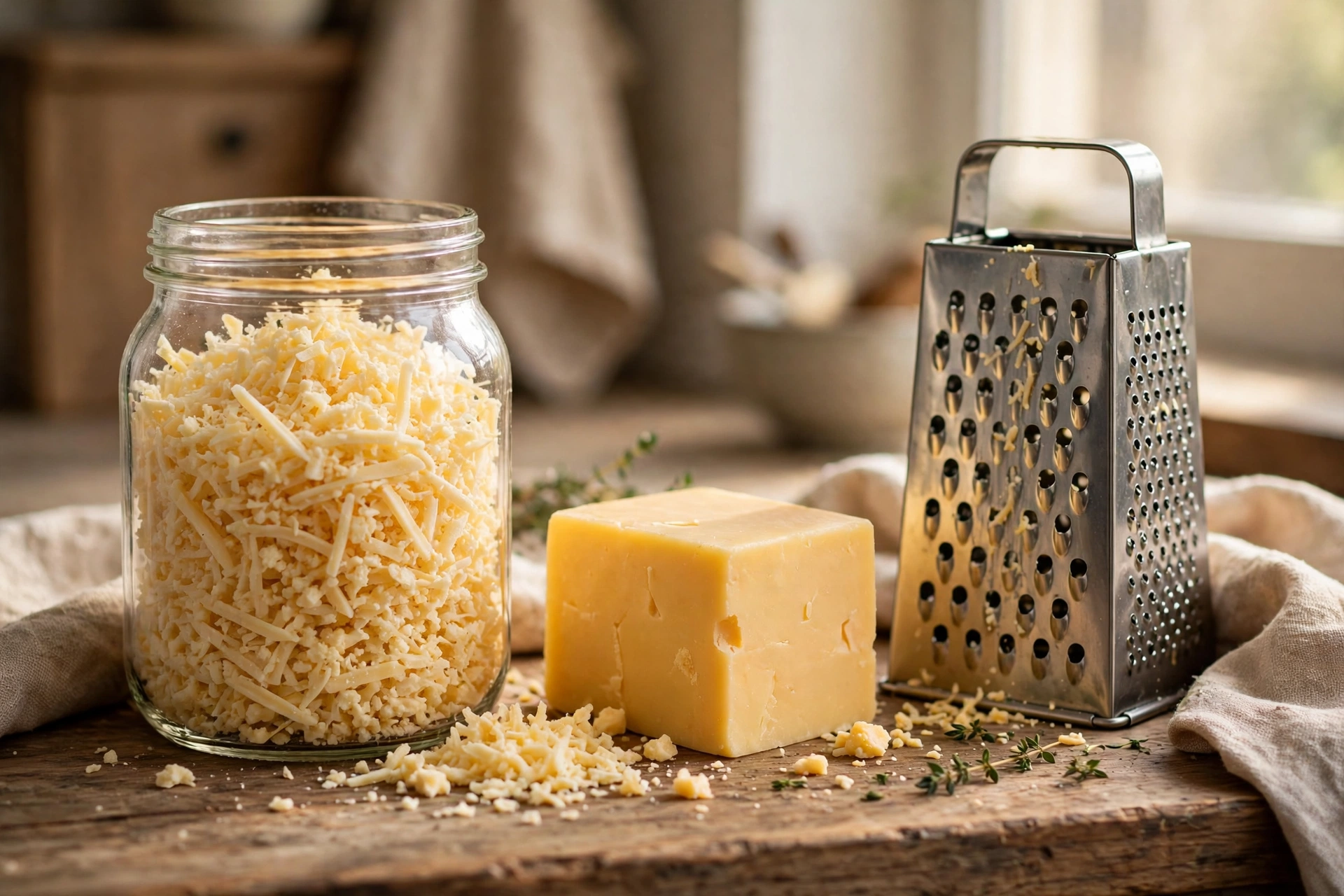
Freeze-dried cheese is two foods in one bag: a crunchy snack eaten straight, and a cooking ingredient that folds back into pastas, casseroles, and baked goods. It is also the dairy question with a real boundary running through it — which cheeses, and in what form — and that boundary is why this page sits next to our dairy questions page, can you freeze-dry dairy products like cheese and yogurt, which works through the wider dairy case.
This guide follows Utah State University Extension’s freeze-drying table for what is safe to dry, and the makers’ published guidance for form and handling. It is part of our preservation guides. The dairy flagship is how to freeze-dry milk, and the machines behind the guidance are compared in Blue Alpine vs. Harvest Right.
What You Need
Pasteurized cheese — shredded hard cheese is the form both makers name: Blue Alpine lists shredded cheese under dairy and eggs, and Harvest Right directs you to slice or grate cheese before the trays. Trays that fit your machine, silicone mats or parchment (cheese oils as it warms in the cycle, and a mat keeps the tray clean), thick Mylar bags (5 to 7 mil, without clear plastic windows, per Utah State), oxygen absorbers, and a way to seal the bags. A grater or food processor earns its place: uniform shreds dry uniformly.
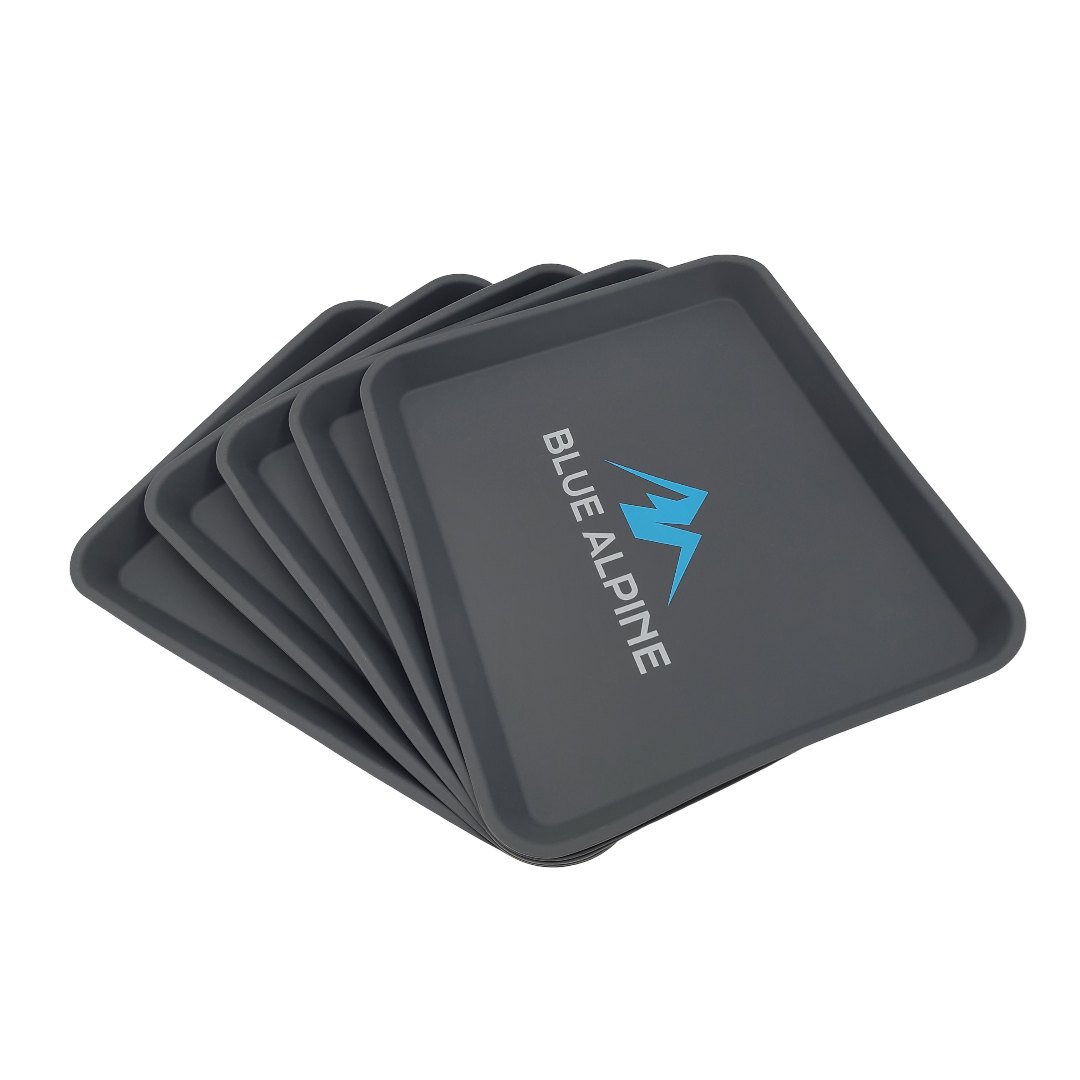
Blue Alpine Silicone Mats, Medium
Cheese oils as it warms in the cycle; silicone mats keep trays clean and stop shreds from sticking.
Check the price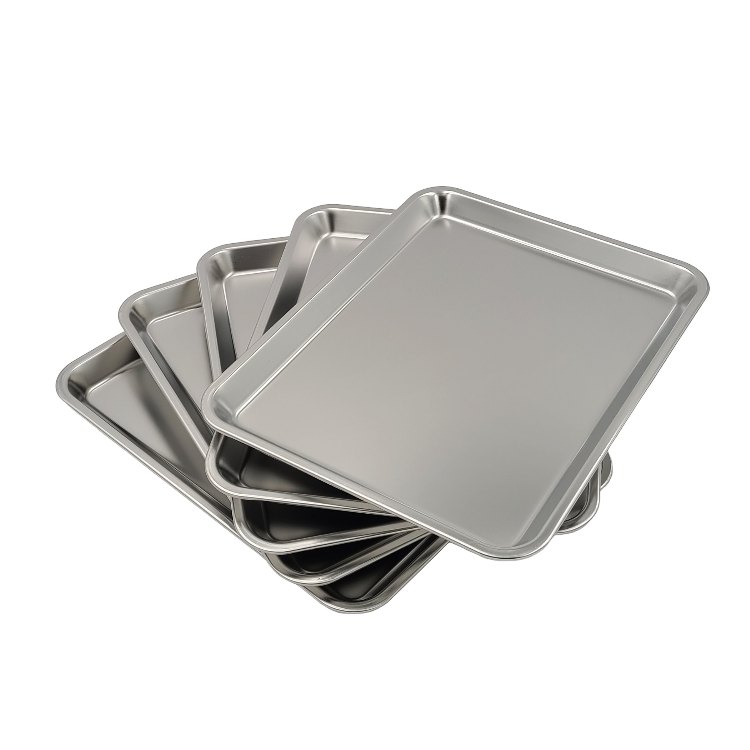
Blue Alpine Freeze Dryer Trays, Medium
A second tray set lets shredded cheese pre-freeze in a flat, even layer while another batch runs.
Check the price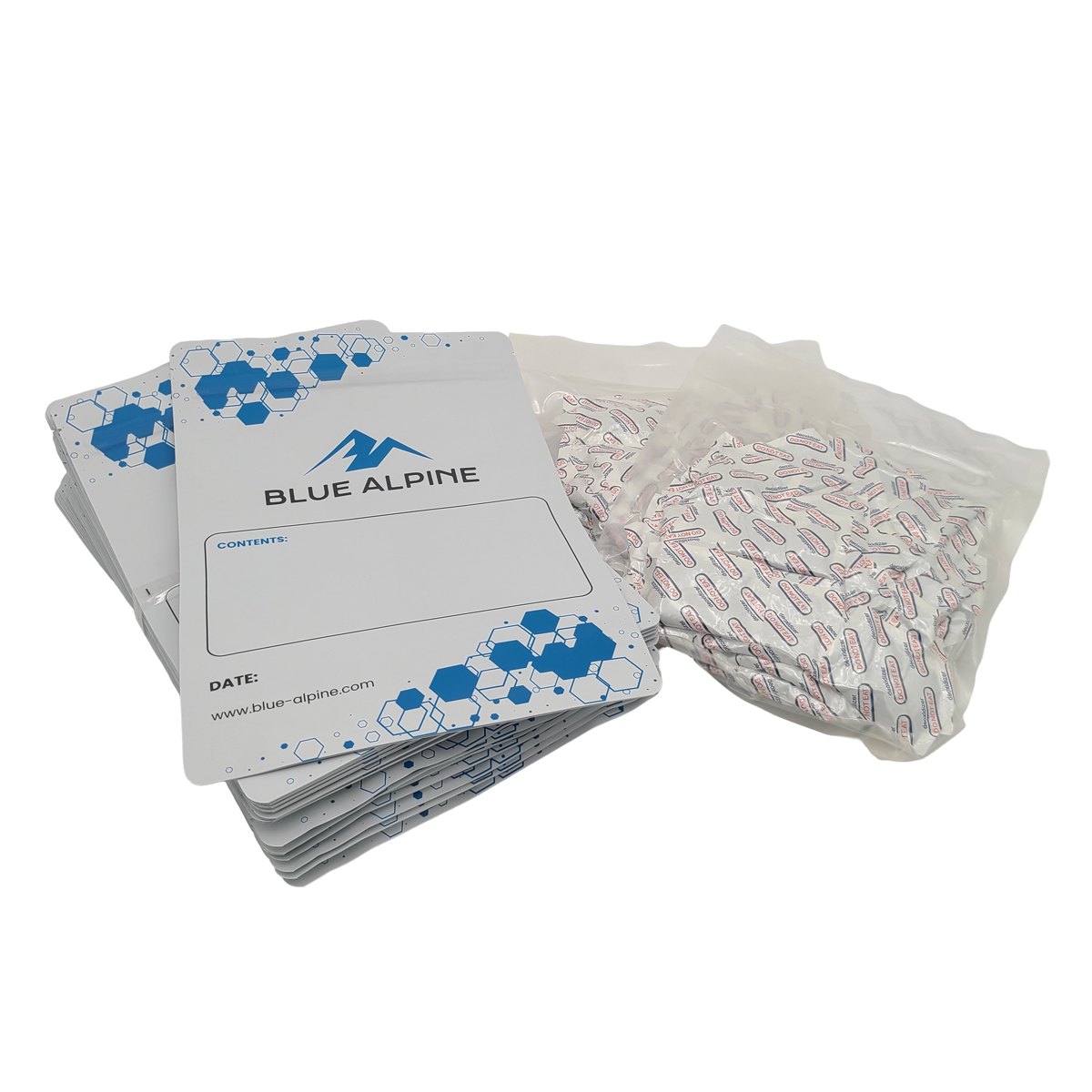
Blue Alpine Mylar Bags with Oxygen Absorbers
The maker's Mylar bags with absorbers - oxygen control matters twice over for a fatty food like cheese.
Check the priceBefore You Start
The safety line is the extension table, and it is not a suggestion. Raw milk, cheese, and other dairy products are classified high-risk: unpasteurized dairy can harbor Listeria, Salmonella, or E. coli, and freeze-drying does not kill bacteria — it preserves them. Pasteurized cheese is the yes. The second consideration is fat. Extension guidance warns that high-fat content increases the risk of rancidity during storage, and that fat does not freeze like water, which slows the process. That is why the working form is shredded hard cheese rather than a soft, fatty wheel — and why, for high-fat cheeses, the extension’s own instruction is to melt or blend and spread thinly before freeze-drying.
How to Freeze-Dry Cheese, Step by Step
- Start with pasteurized cheese. Hard and semi-hard cheeses, bought pasteurized. Unpasteurized cheese does not go in the machine — that is the extension table’s line, not a preference.
- Shred or slice it. Harvest Right’s method: cheese can be freeze dried — just slice it or grate it before you place the cheese on the trays. Shreds dry faster and more evenly than slices, and they are the form Blue Alpine lists.
- Spread a single layer. Lay the shreds in a single layer with space between, per extension guidance, on a mat or parchment. Keep the layer inside the extension range for most foods — between 1/4 and 1/2 inch thick.
- For a high-fat cheese, spread it thin instead. Extension guidance for high-fat cheeses: melt or blend and spread thinly before freeze-drying, to reduce rancidity and ensure even drying.
- Pre-freeze if you can. Extension guidance recommends pre-freezing foods before loading; a frozen tray of shreds also loads without scattering.
- Run a full cycle. The machine freezes the food to −40°F or colder and dries it under vacuum, sensing moisture and finishing when the load is dry. The makers publish no tested per-food time for cheese; fatty loads run long, and the dryness check decides.
- Check for dryness the extension way. Crisp, dry, or brittle, with no cold or soft spots. Cheese that bends or feels greasy-cool in the middle holds moisture and goes back for more dry time.
- Package immediately. Fill thick Mylar bags, add an oxygen absorber to each, and seal at once. Oxygen is the enemy twice over with cheese — it ages the food and feeds the rancidity the fat makes possible.
- Store cool, dark, and dry, with the cheese and date on every bag.
The Numbers: What the Guidance States
Freeze-dryer makers do not publish per-food tested times for cheese. What the sources publish are the eligibility line, the form, and the packaging and storage figures in this table.
| Checkpoint | The figure | Source |
|---|---|---|
| Pasteurized cheese | Yes — suitable for freeze-drying | Utah State Extension |
| Raw / unpasteurized cheese | No — high-risk | Utah State Extension |
| Form | Slice it or grate it before the trays; shredded cheese | Harvest Right; Blue Alpine |
| High-fat cheeses | Melt or blend and spread thinly before freeze-drying | Utah State Extension |
| Layer thickness | Most foods 1/4 to 1/2 inch | Utah State Extension |
| Machine freezing stage | −40°F or colder | Harvest Right |
| Dryness test | Crisp, dry, or brittle — no cold or soft spots | Utah State Extension |
| Packaging | Mylar 5–7 mil, no windows, plus oxygen absorber | Utah State Extension |
| Stability, properly packaged | 10–15 years, sometimes up to 25 | Utah State Extension |
| Recommended use window, home freeze-dried | 5–10 years for quality | Utah State Extension |
On timing, the honest statement: neither maker publishes a tested hour count for cheese, and Blue Alpine describes raw meat and dairy among the longer typical loads, at 30 to 40 hours for a full cycle — typical run behavior, not a tested figure. Let the sensor finish and the center check confirm.
Cheese that never reaches the freeze dryer still needs keeping. The block in the refrigerator holds longest vacuum-sealed, and these are the two sealers that side of the job runs on.

FoodSaver Elite Vacuum Sealer
For cheese that stays fresh instead of dried - chamber vacuum sealing keeps a cut block from drying out in the refrigerator.
$218.56 from Amazon
Nesco VS-12 Vacuum Sealer
A countertop vacuum sealer for portioning fresh cheese for the freezer, the other keeping method for a big block.
$108.18 from AmazonCommon Mistakes
Freeze-drying unpasteurized cheese. The extension table classifies raw dairy as high-risk outright. Freeze-drying preserves bacteria rather than killing them; pasteurized is the starting point, every time.
Drying thick slices. A thick slice dries at the rind and stays damp in the middle. Grate it — the maker’s own form — and the whole batch dries evenly.
Ignoring the fat. High-fat cheese dried in lumps is the rancidity case the extension warns about. Melt or blend and spread thinly, as the guidance states, or choose a harder, leaner cheese.
Bagging warm, greasy shreds without a check. Greasy-cool is moisture talking. The extension test — crisp, dry, brittle, no cold spots — applies to the thickest clump in the tray, not the average shred.
Planning on the outer shelf-life figure. Fat shortens quality life. The 5-to-10-year home window is the planning number, and fatty cheeses belong at its front end, rotated first.
Storage and Shelf Life
Utah State Extension states that freeze-dried foods can remain safe and stable for 10 to 15 years — sometimes up to 25 — in airtight, moisture-proof packaging kept cool, dark, and dry, and recommends consuming home freeze-dried products within 5 to 10 years for quality. Cheese carries the extension’s fat warning into storage: high-fat content increases the risk of rancidity, so cheese bags get the coolest, darkest spot and the earliest rotation. Once a bag is opened, its oxygen absorber no longer works and should be replaced before resealing, per Harvest Right. Date every bag. To use it, Harvest Right’s dairy guidance: snack on it dry, fold grated cheese directly into baked goods, pastas, or casseroles, or wrap a slice in a moist paper towel to rehydrate it toward its original state.
Viewers also searched for these items.

Metronic 8-Inch Impulse Sealer
An impulse sealer gives cheese bags a clean, repeatable Mylar seal without an iron.
$39.99 from Amazon
Etekcity Digital Kitchen Scale
A kitchen scale portions shreds evenly across trays so the layer stays in the extension thickness range.
$9.99 from AmazonFrequently Asked Questions
Which cheeses freeze-dry best?
The form the makers name is shredded cheese, and the extension’s fat guidance points the same way: hard, pasteurized cheeses shred thin, dry evenly, and carry less rancidity risk than soft, high-fat cheeses. High-fat cheeses get the extension’s melt-or-blend-and-spread-thinly treatment.
Can I freeze-dry cheese from raw milk?
No. Utah State Extension classifies raw milk, cheese, and other unpasteurized dairy as high-risk for freeze-drying, because it can harbor Listeria, Salmonella, or E. coli, and freeze-drying does not kill them.
How do I rehydrate freeze-dried cheese?
Often you do not: grated freeze-dried cheese folds directly into baked goods, pastas, and casseroles, per Harvest Right. For a slice, the maker’s method is to wrap it in a moist paper towel to bring it back toward its original state.
Why does my freeze-dried cheese taste off after storage?
Fat is the usual suspect — extension guidance warns that high-fat content raises the rancidity risk in storage. Shred hard cheese, spread high-fat cheese thin, package with an absorber, store cool and dark, and rotate cheese ahead of leaner foods.
Eligibility, fat, packaging, and shelf-life figures: Utah State University Extension, “Can I Freeze-Dry That? A Practical Guide to Safe and Effective Freeze-Drying,” via Utah State University Extension; form and use: Harvest Right, “Guide to Freeze Drying” (dairy), and Blue Alpine’s published freeze-drying guidance.
Prices shown on this page were last checked November 26, 2026 — prices change; check before you buy.
Talk it over with other readers
The Truly Preserved Community on Facebook is where readers compare notes on food storage, water, and backup power — and where your questions help decide what we research next.