
Truly Preserved is reader-supported. If you buy through a link on this page we may earn a commission at no extra cost to you. Nobody pays for placement or scores.
THE SHORT ANSWER
Select well-ripened peaches, sort, wash, and peel them. Freeze them in a 40 percent syrup pack with 1/2 teaspoon (1500 mg) ascorbic acid per quart of syrup, or in a sugar pack with 2/3 cup sugar per quart (1 1/3 pounds) of fruit and 1/4 teaspoon (750 mg) ascorbic acid dissolved in 3 tablespoons cold water per quart. Leave headspace, seal, and freeze at 0°F or below. Every figure on this page comes from the tested source credited at the bottom.
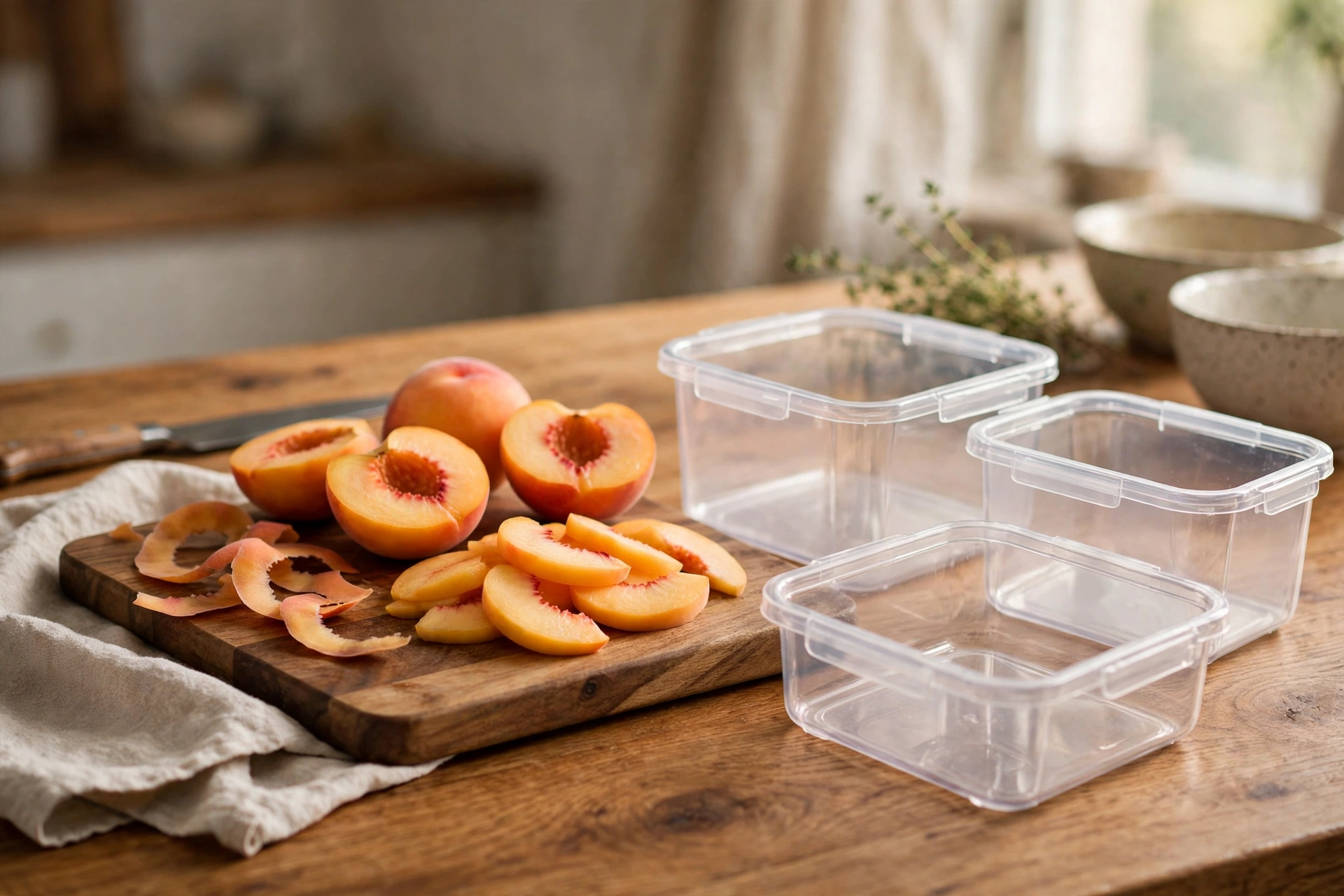
A ripe peach in season is the argument for freezing all by itself — and the disappointment of a badly frozen one is just as memorable: brown, soft, and nothing like the fruit that went in. Peaches darken fast once they are cut, which is why this procedure is built around two things the other fruit guides are not: a pack that keeps the fruit covered, and ascorbic acid in exact amounts to slow the darkening. Get those two right and frozen peaches come out of the freezer tasting like the orchard, ready for pies, smoothies, and eating over the sink in February.
This guide follows the National Center for Home Food Preservation’s tested procedure for freezing peaches exactly — its pack types, its syrup strength, and its ascorbic acid amounts, none of them rounded. It is part of our preservation guides. Berries take a lighter touch — see how to freeze berries for the tray method — and the summer glut as a whole starts with how to freeze sweet corn.
What You Need
Select well-ripened fruit and handle it carefully to avoid bruising — a bruise freezes in. For a syrup pack you need sugar and water for a 40 percent syrup, starting with 1/2 cup of cold syrup in each pint container. For a sugar pack, the measure is 2/3 cup sugar to each quart (1 1/3 pounds) of prepared fruit. Either pack needs ascorbic acid — powdered, from where food preservation supplies are sold — in the amounts in the table below, plus freezer containers with room for headspace and a small piece of crumpled water-resistant paper per container for the syrup pack, to hold the fruit down under the syrup.

Ball Half-Pint Mason Jars, 12-Pack
Half-pint jars portion peaches for smoothies and small desserts — one jar, one use, and the small size thaws fast.
Check Availability
Ziploc Freezer Quart Bags
Quart freezer bags portion the finished peaches flat, so packages freeze fast, stack tight, and thaw one meal at a time instead of in one solid block.
$26.48 from AmazonBefore You Start
Darkening is the enemy here, and it starts the moment a peach is peeled. Work in small batches, have the cold syrup made and the ascorbic acid measured before the first peach is cut, and get each container filled, covered, and sealed without a long rest on the counter. The ascorbic acid amounts differ by pack — 1/2 teaspoon (1500 mg) per quart of syrup for the syrup pack, 1/4 teaspoon (750 mg) in 3 tablespoons cold water per quart of fruit for the sugar pack — and mixing them up is easy, so measure for the pack you are actually making. Sugar in this procedure is not a preservative; the source is explicit that fruit can be frozen safely without sugar, and the sugar and syrup are there for flavor, color, and texture.
How to Freeze Peaches, Step by Step
- Select, sort, wash, and peel. Choose well-ripened peaches, handle them carefully to avoid bruising, and sort, wash, and peel them. Halve and pit them, and slice if you like — slices pack and thaw more evenly than halves.
- Choose your pack before you cut. Syrup pack, sugar pack, or crushed or purée — the ascorbic acid amount and the sweetening both change with the pack, so decide first and measure for that pack from the table below.
- Syrup pack. Use 40 percent syrup. Add 1/2 teaspoon (1500 mg) ascorbic acid per quart of syrup for a better quality product. Put the peaches directly into cold syrup in the container, starting with 1/2 cup syrup to a pint container, press the fruit down, and add syrup to cover, leaving headspace. Set a small piece of crumpled water-resistant paper on top to hold the fruit down.
- Sugar pack. To each quart (1 1/3 pounds) of prepared fruit, add 2/3 cup sugar and mix well. Stir gently until the sugar is dissolved, or let the fruit stand for 15 minutes. Before adding the sugar, sprinkle over the peaches the ascorbic acid dissolved in water — 1/4 teaspoon (750 mg) ascorbic acid in 3 tablespoons cold water to each quart of fruit — to slow darkening. Pack into containers, leaving headspace.
- Crushed or purée (optional form). Coarsely crush peeled and pitted peaches, or press them through a sieve or purée them in a blender or food processor. Heating pitted peaches for 4 minutes in just enough water to prevent scorching makes them easier to purée. For better quality, add 1/8 teaspoon (375 mg) ascorbic acid to each quart of fruit. Pack into containers, leaving headspace.
- Seal and freeze. Seal every container, label it with the pack type and the date, and freeze at 0°F or below.
The Numbers: Pack Amounts and Ascorbic Acid
Every amount below is per the source, by pack. The ascorbic acid figures are the ones that protect the color, and they are different in each pack — this table is the page to keep open while you work.
| Pack | Sweetening | Ascorbic acid | Notes |
|---|---|---|---|
| Syrup pack | 40 percent syrup; start with 1/2 cup syrup per pint container | 1/2 teaspoon (1500 mg) per quart of syrup | Cover fruit with syrup; crumpled water-resistant paper on top to hold fruit down |
| Sugar pack | 2/3 cup sugar per quart (1 1/3 pounds) of prepared fruit | 1/4 teaspoon (750 mg) in 3 tablespoons cold water per quart of fruit | Mix until sugar dissolves, or let stand 15 minutes |
| Crushed or purée | None stated | 1/8 teaspoon (375 mg) per quart of fruit | Heating pitted peaches 4 minutes makes them easier to purée |
| Type of pack | Wide-top pint | Wide-top quart | Narrow-top pint | Narrow-top quart |
|---|---|---|---|---|
| Liquid pack | 1/2 inch | 1 inch | 3/4 inch | 1 1/2 inches |
Headspace matters more with peaches than with dry-packed vegetables because the syrup and the fruit juices expand as they freeze. Use the liquid-pack row for syrup, sugar, and crushed packs alike, and match it to the container opening you actually have.
Peaches in syrup want rigid containers that hold the liquid and the headspace honestly. The two products below are the container side of that job — one for portioning a pie’s worth at a time, one for sealing fruit flat when containers will not fit.

FoodSaver Elite Vacuum Sealer
A vacuum sealer pulls the air that causes freezer burn off every package, which is how this batch keeps its quality through the full storage window this page gives.
$218.56 from Amazon
Etekcity Digital Kitchen Scale
A kitchen scale turns a garden pile into known pounds, which is what the per-pound ratios and yield figures in this guide are planned from.
$9.99 from AmazonCommon Mistakes
Skipping the ascorbic acid. Peaches darken during preparation and darken very rapidly when thawed unless treated. The amounts are small — a quarter to a half teaspoon — and they are the difference between golden fruit and brown fruit.
Using the wrong pack’s ascorbic acid amount. The syrup pack takes 1/2 teaspoon (1500 mg) per quart of syrup; the sugar pack takes 1/4 teaspoon (750 mg) per quart of fruit. The table exists because the two are easy to swap from memory.
Letting the fruit sit above the syrup. Fruit exposed to air in the container darkens first. Press the fruit down, cover it with syrup, and use the crumpled water-resistant paper on top to hold it down, as the procedure directs.
Bruising the fruit on the way in. The preparation line starts with handling carefully to avoid bruising, and a bruise does not freeze out — it freezes in, soft and dark. Sort out damaged fruit for eating fresh or for purée.
Packing with no headspace. Syrup and juice expand in the freezer. A container filled to the brim pushes its lid or splits. Leave the liquid-pack headspace for your container size.
Storage and Shelf Life
Keep the freezer at 0°F or below the whole time. The National Center lists fruits and vegetables at 8 to 12 months of approximate storage at 0°F when the food has been prepared and packaged correctly, and those times are about quality — properly frozen food held at 0°F does not become unsafe at the end of them, it simply tastes less like the day it was picked. Label every package with the contents and the date, keep a simple list of what went in, and arrange the freezer so the oldest packages get used first. A package that warms up, loses its seal, or comes back from a long power cut with ice crystals melted away should move to the front of the meal plan rather than back into long storage — and if the power question is the one you are planning around, how to keep food safe if the power goes out covers what stays safe and for how long. Unsweetened fruit loses quality faster than fruit packed in sugar or syrup, so if you freeze a plain pack, plan to use it at the earlier end of that window.
Viewers also searched for these items.

ThermoPro Instant-Read Thermometer
An instant-read thermometer confirms the cooling and reheating temperatures this procedure depends on, instead of guessing from steam and habit.
$8.99 from Amazon
Nesco VS-12 Vacuum Sealer
A second vacuum sealer sized for steady harvest-day work — sealing package after package without a cool-down pause while the produce is at its freshest.
$108.18 from Amazon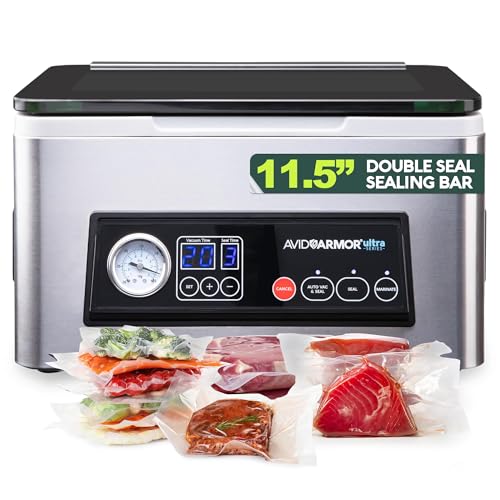
Avid Armor USV20 Chamber Vacuum Sealer
A chamber sealer handles liquid-heavy packages that a standard suction sealer struggles with, sealing them flat without drawing liquid into the seal.
$349.00 from AmazonFrequently Asked Questions
Can peaches be frozen without sugar?
Yes. The source states that sugar is not used as a preservative but only to maintain flavor, color and texture, and that it is safe to freeze fruits without sugar.
How much ascorbic acid goes in a syrup pack?
1/2 teaspoon (1500 mg) per quart of syrup, for a better quality product.
How much sugar goes in a sugar pack?
2/3 cup sugar to each quart (1 1/3 pounds) of prepared fruit, mixed until dissolved or left to stand for 15 minutes.
Why did my frozen peaches turn brown?
Darkening is what the ascorbic acid treatment prevents. Peaches treated at the amounts in the table — and kept under the syrup in a syrup pack — hold their color; untreated fruit darkens during preparation and very rapidly when thawed.
Procedure, pack amounts, and ascorbic acid amounts: National Center for Home Food Preservation, “Freezing Peaches or Nectarines,” from So Easy to Preserve, 6th ed., University of Georgia Cooperative Extension, via the: National Center for Home Food Preservation.
Prices shown on this page were last checked November 26, 2026 — prices change; check before you buy.
Talk it over with other readers
The Truly Preserved Community on Facebook is where readers compare notes on food storage, water, and backup power — and where your questions help decide what we research next.