
Truly Preserved is reader-supported. If you buy through a link on this page we may earn a commission at no extra cost to you. Nobody pays for placement or scores.
THE SHORT ANSWER
A food storage calculator’s arithmetic is exact and its answer is still an estimate — because the error is never in the multiplication, it is in the three numbers fed into it. The biggest error is counting servings instead of calories: in the kits we have priced out, one printed “serving” runs from 182 calories to more than 417, so two pantries that both hold “1,000 servings” can differ by more than two to one in real food. The second error is the flat 2,000-calorie day, which is a food-label reference, not your household. Used in calories, checked against the labels of the food you actually own, a calculator gets you close enough to plan on. Used in servings, off a kit’s front panel, it can leave a family of four weeks short while the spreadsheet says a month.
Every calculator on the internet will give you a clean number: this many meals, this many pounds, this many buckets. The number feels finished, so people shop to it and stop. We run a planner ourselves, so this page is not an argument against calculators — it is the honest label ours should carry, and the one we wish the others did. Here is where the error actually lives, how big each piece of it is, and the five-minute check that turns a calculator’s estimate into a number you can stand behind.
Where does the error come in — the math, or the inputs?
The error comes in through the inputs, not the math. People times days times calories per day is arithmetic a child can check, and every calculator we have looked at does it correctly. What differs between calculators — and what decides whether the answer feeds anybody — is what each one counts as a unit of food, what daily calorie figure it assumes, and whether it counts the water and the losses that sit between a shelf and a plate. A calculator is a multiplier. Feed it servings and it multiplies a serving. Feed it calories and it multiplies food.
Why is counting servings the biggest mistake a calculator can make?
Counting servings is the biggest mistake because a serving is whatever size the maker says it is, and makers do not agree. In our own cost-per-serving dataset — built from the makers’ published totals, not their marketing — the spread looks like this:
| Kit (from our dataset) | Printed servings | Total calories | Calories per serving |
|---|---|---|---|
| ReadyWise 72 Hour Kit | 30 | 5,460 | 182 |
| Augason Farms Variety Pail | 92 | 21,170 | 230 |
| Peak Refuel Basecamp Bucket 3.0 | 24 | 10,180 or more | 417 or more |
Read that last column as the whole argument. At three servings a day, the ReadyWise kit’s serving size gives a person about 546 calories — roughly a quarter of a working day’s food. The Peak serving gives about 1,250. A calculator that asks “how many servings do you have?” and answers in days is quietly assuming your servings are meals, and on the small-serving end of this market they are not close. Our cost-per-serving study exists for exactly this reason: the day a household switches its counting unit from servings to total calories, most “we have a month of food” estimates shrink — and the shrunken number is the true one.
Serving counts also move after you buy. The Augason Farms pail in that table was sold for years as 113 servings; the current build is 92 servings and 21,170 calories — a 19% cut in servings, with the bucket and the shelf slot looking exactly the same. No calculator knows your bucket is the old build or the new one. Your label knows. That is why the check at the end of this page starts with the containers in your own pantry, not with a website’s defaults.

Blue Alpine Medium Select
Faster cycles — 12 to 20 hours on Blue Alpine's figures — quarter-sheet trays, and silicone mats in the box. More machine than a first month needs; the one to read about before you buy twice. Use code TRULYPRESERVED at checkout.
Check the price
Thrive Life: Freeze-Dried Blueberries - Pantry Can Size
Freeze-dried food by the can, no machine: the same long-life ingredients the kits are built from, bought a can at a time.
$60.00 from Amazon
ThermoPro TP49 Hygrometer
The ten-year verdict depends on the temperature the food actually lived at — a min/max hygrometer in the storage room replaces guessing with the number.
$8.54 from AmazonIs 2,000 calories a day the right number for your household?
Two thousand calories a day is a planning baseline, not a measurement of anyone in your house. It is the figure the FDA prints on food labels as a general reference, and planners — ours included — use it because a shared baseline lets households compare plans. Real needs spread widely around it: smaller and older people eat less, teenagers and anyone doing physical work in a cold house eat more, and stress and broken sleep push appetites up, not down. Our Food & Water Planner states its own version of this plainly: three meals and roughly 2,000 calories per person per day, small children counted at about half portions — 9 meals and about 6,000 calories per person for 3 days, 42 meals and about 28,000 for two weeks, 90 meals and about 60,000 for a month.
The practical size of this error: plan a two-week supply for four people at a flat 2,000 and you get 112,000 calories. If your household’s real average is closer to 2,400 — two adults working hard outdoors and two teenagers — the same shelf lasts about eleven and a half days, not fourteen. If it is closer to 1,700, the shelf stretches past sixteen days and you overbought by a week. Neither direction is the calculator lying. Both are a single average being asked to describe four different people, which is why we tell readers to treat the planner’s output as the floor and round up, the same wording the planner itself uses.
What do most calculators leave out entirely?
Most calculators leave out the water the food needs, the food nobody will eat, and the losses along the way. Freeze-dried meals, rice, beans, and pasta are not food until water is added — roughly a cup per freeze-dried serving — and that water belongs in the same plan as the drinking gallon, a point our planner makes by counting food and water together. A kit can clear a calorie target and still fail in a dry week because the preparation water was never stored.
The second omission is appetite and preference, and it is not soft-hearted, it is arithmetic: food your family will not eat is inventory that will be skipped, traded, or thrown out, and every skipped meal is a hole the calculator counted as filled. The third is loss — a bucket that went stale in a hot garage, a bag that tore, the last portion in every container that never makes it to a plate. No default in any calculator we have seen carries a line for any of the three. Add them yourself: plan the water with the food, stock what your household already cooks with, and hold a margin above the calculator’s number instead of shopping to the last digit.
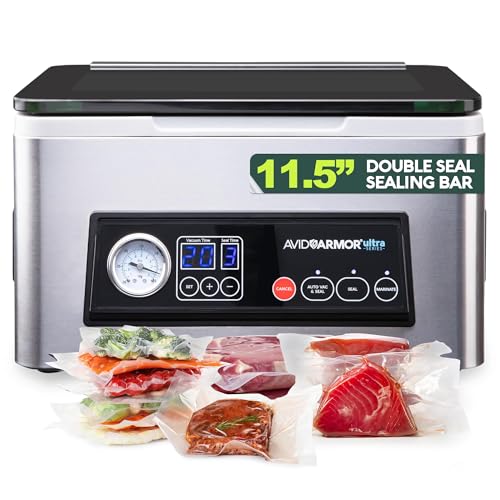
Avid Armor USV20
The chamber machine: soups, marinades and smooth cheap pouches — if it fits in an 11 x 10 pouch.
$349.00 from Amazon
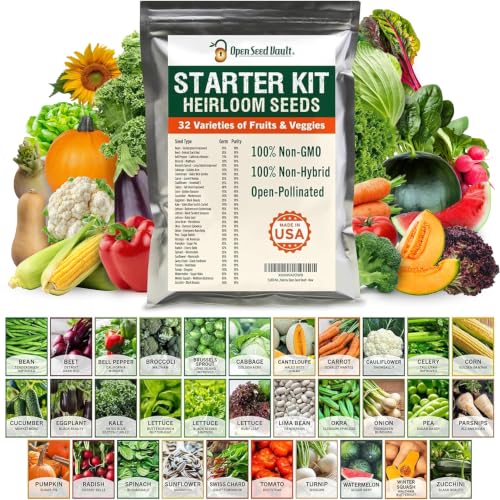
Vegetable & Fruit Seeds
4.6 stars across roughly 14,600 Amazon ratings — the deepest owner record here — but the calorie crops are thin: 15 to 25 seeds of beans, peas, and pumpkin.
$28.99 from AmazonHow do you check a calculator’s answer against your own shelves?
You check it by counting your shelves in calories, once, by hand. Take each container you own, find its total calories — servings times calories per serving, both printed on the label — and add the totals. Divide that sum by 2,000 and you have person-days: how many days one person eats from your whole shelf. Divide again by the number of people and you have the honest length of your supply. Our days-of-food page runs that exact division on the big kits: a “72-hour” kit holding 5,460 calories is 2.7 days for one person and about 0.7 of a day for a family of four, whatever the front panel calls it.
Then compare that figure with what your calculator told you. If the two are within about ten percent, your calculator was fed good inputs and you can plan on its number. If the hand count is far below it, the gap is almost always one of the three causes above — servings counted as meals, a kit whose build changed, or food counted that needs water you have not stored. Fix the input, not the calculator. Our Emergency Food Cost Index keeps the calorie totals we have verified for the major kits in one place, so a label that has gone missing can be checked against the maker’s published figures.
Questions people also ask
Should I count meals, servings, or calories?
Count calories, and use meals only to plan the day’s rhythm. A meal is an occasion; a serving is a maker’s portion; a calorie is the only one of the three that means the same thing on every label in the pantry. Total calories divided by 2,000 is the person-day figure every honest estimate on this site is built from.
Do calculators for bulk staples work differently?
Yes — weight-based calculators for rice, beans, and wheat are steadier, because a pound of rice carries roughly the same calories whoever sells it. Our bulk staples comparison prices those foods per 1,000 calories for that reason. The error there is smaller and mostly appetite: the same 2,000-calorie question, without the serving-size trap.
How much extra should I store beyond the calculator’s number?
Store a margin, and treat the calculator’s output as a floor — that is the planner’s own instruction, and it is ours. The margin covers the three omissions above: preparation water is planned alongside, food your household will actually eat replaces food it will not, and ordinary loss is assumed instead of being treated as a surprise. A household that rounds up and rotates what it stores will land closer than one that hits a precise number once and never recounts.


Gardeners Basics Seed Vault
Exact per-variety counts printed on the listing, a resealable mylar outer bag, plant markers included — and a storage guide honest enough to argue with its own Amazon page.
$23.95 from Amazon
Survival Garden Seeds, 30 Varieties
Every lot germination-tested with a packed-for date, and the only maker here that tells you plainly most seed lasts 3 to 5 years — not forever.
$29.97 from AmazonFAQ
How accurate are food storage calculators?
The multiplication is exact; the answer is an estimate whose accuracy is set by its inputs. Fed total calories and a realistic daily figure, a calculator lands close enough to plan on. Fed printed servings, it can overstate a supply by more than two to one, because a serving runs from 182 to more than 417 calories across the kits in our dataset.
Why did my calculator say a month when the kits say less?
Because the two are counting in different units. Kit names quote days for one person at the maker’s serving size. Divide the kit’s real calorie total by 2,000, then by your household size, and the durations reconcile — the smaller figure is the one to plan on.
Does the Truly Preserved planner count water too?
Yes. The Food & Water Planner counts one gallon per person per day alongside the food — drinking, cooking, and basic hygiene in mild weather — because freeze-dried meals, rice, and pasta need water to become food. In very hot weather the need can double, and pets need their own water on top.
How often should I recount my stored food?
Recount when the shelf changes: a kit eaten in rotation, a new bucket added, or a build change like the Augason pail’s move from 113 to 92 servings. A yearly hand count in calories, against the labels actually in the pantry, keeps a calculator’s estimate honest.
Viewers also searched for these items.



COSORI Dehydrator
A fruit roll sheet in the box, temperature set to the degree, and a 48-hour timer that ends the batch before it over-dries.
$135.99 from AmazonRelated questions
- How much food does a family need for 3 days, a week, and 2 weeks?
- How do you keep track of what’s stored and when it expires?
- Could you live on rice and beans alone?
Sources: Truly Preserved, Food & Water Planner (three meals and roughly 2,000 calories per person per day; 9/42/90 meals and about 6,000/28,000/60,000 calories per person for 3 days / 2 weeks / a month; one gallon of water per person per day; children at about half portions; meal count stated as a floor); Truly Preserved, “What a Serving Really Costs” dataset (ReadyWise 72 Hour Kit 30 servings / 5,460 calories; Augason Farms Variety Pail current build 92 servings / 21,170 calories, previously 113 servings; Peak Refuel Basecamp Bucket 3.0 24 servings / 10,180 or more calories); FDA, 2,000 calories as the general Nutrition Facts label reference. No product prices are printed on this page.
This question sits under the food-storage questions readers ask us most — the full set is gathered here: What People Are Asking About Food Storage. The planner this page audits lives here: Food & Water Planner.
Talk it over with other readers. The Truly Preserved Community on Facebook is where readers compare notes on food storage, water, and backup power — and where your questions help decide what we research next. Join the group →
Prices shown on this page were last checked November 26, 2026 — prices change; check before you buy.