
Truly Preserved is reader-supported. If you buy through a link on this page we may earn a commission at no extra cost to you. Nobody pays for placement or scores.
THE SHORT ANSWER
Yes — for anything you plan to store rather than eat this week. Conditioning is the step where dried food rests in a sealed jar for about a week, shaken daily, so moisture equalizes between the driest and dampest pieces. Iowa State University’s AnswerLine puts the minimum at 2–4 days of daily shaking; the fuller guidance runs 7–10 days. Skip it, and the one under-dried piece in the batch quietly molds — and takes its neighbors with it. If condensation appears in the jar, the food goes back in the dehydrator. If mold appears, the batch is discarded.
Dehydrating feels finished when the trays come out. The pieces snap or bend the way the chart says, the machine gets wiped down, and the food goes into bags. Conditioning is the step most people have never heard of — Iowa State’s AnswerLine calls it the “forgotten step in dehydrating” — and it’s the step that decides whether the batch is still good in six months.
The problem it solves is invisible at packing time. No dehydrator dries perfectly evenly: pieces at the tray’s edge give up more water than pieces in the center, thick pieces lag thin ones, and the difference between “dry enough” and “mold in a month” can hide inside a single damp piece you never noticed.
How Conditioning Works
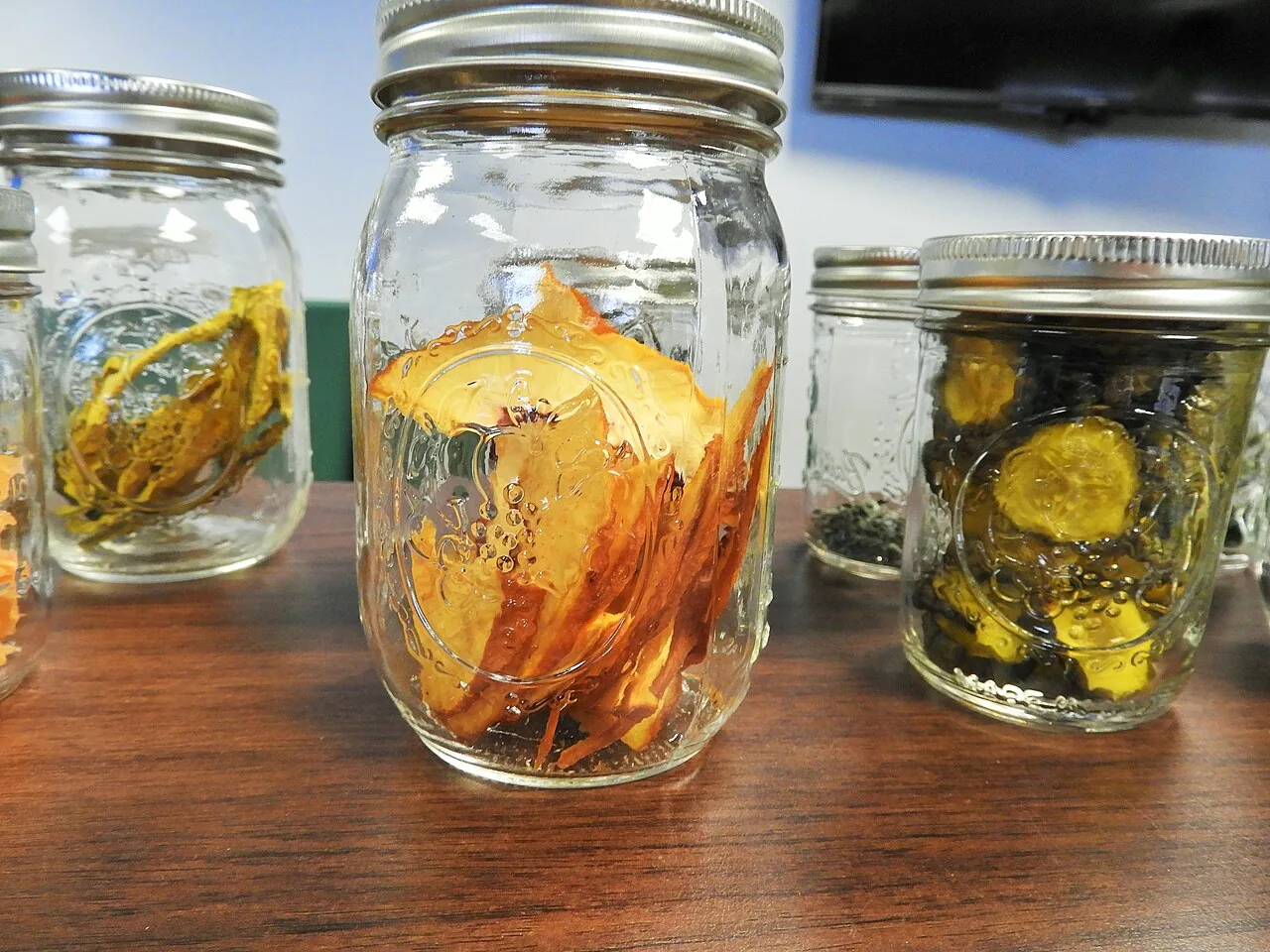
Cool the food completely, then pack it loosely — about two-thirds full — in a clean glass jar or other non-porous container and seal it. Once a day, shake or stir it. Over the conditioning period, the drier pieces pull moisture out of the damper ones until the whole batch settles at one even moisture level. Home-dried fruit should come out of the dehydrator at about 20 percent moisture or less; conditioning is how a mixed batch actually arrives there uniformly, instead of averaging there on paper.
Glass is the right vessel for a reason: you can see what’s happening. Fogging or droplets on the inside of the jar mean moisture is still moving — the batch goes back into the dehydrator for more drying, then conditioning starts again. Pieces clumping or sticking together say the same thing. Mold, at any point, ends it: the batch is discarded, not picked through, because mold in a sealed jar has had the whole jar to work in.

Excalibur 3926TB Dehydrator
Nine trays and a thermostat that holds an even temperature across all of them — the most even drying you can give a batch before conditioning evens out the rest.
Check Availability
PackFreshUSA 500cc Oxygen Absorbers
Once conditioning proves the batch dry, 500cc absorbers are the size our guides match to gallon-scale bags of dried food for long-term storage.
Check AvailabilityWhat Needs Conditioning — and What Doesn’t
| Food | Condition? | Why |
|---|---|---|
| Dried fruit and tomatoes | Yes — the priority | Highest, most uneven moisture |
| Fruit leathers | Yes | Thick and thin spots dry unevenly |
| Vegetables | Recommended | Lower moisture, still uneven |
| Herbs | Optional | Very low moisture to begin with |
| Anything eaten within days | No | Refrigerate instead; eat in 3–4 days |
After a clean conditioning run — no condensation, no clumping, no mold — the food moves to its real storage: airtight containers, or mylar with an oxygen absorber for the long term, packed the way our mylar bags guide lays out. Conditioning is also the same habit that makes jerky safer to store — the storage clocks in our jerky heating answer assume the meat was dried and rested properly first. And the machine doing the drying matters less than the steps around it; our dehydrator comparison covers the models, but every one of them hands you the same conditioning job at the end.
Follow-Up Questions
Can I condition food that’s already sealed in mylar?
Not usefully — you can’t see condensation through most mylar, and you can’t shake moisture even through a sealed bag the way you can in a jar. Condition first in glass, then pack. If a bag is already sealed, the watch-for-it signs are a bag that never drew down tight or pieces visibly clumping through the film.
How long exactly — 4 days or 10?
Iowa State’s AnswerLine gives 2–4 days of daily shaking as the conditioning period; the fuller extension guidance runs 7–10 days for fruit headed into long storage. Use the short end for vegetables eaten within months, the long end for fruit you expect to keep a year.
Does conditioning apply to freeze-dried food too?
The same principle, a different check: freeze-dried food comes out far drier, so the jar week isn’t standard — the break-and-weigh checks in our freeze-dried dryness answer do the equivalent job before packing.
Viewers also searched for these items.


Sour Patch Kids (5 lb)
The bulk bag is the economical way to run candy mode: sour gummies sit squarely in the low-fat, high-sugar family that puffs into crisp bites in the dryer, and five pounds fills a lot of trays.
$20.99 from AmazonFrequently Asked Questions
What if I see condensation on day six?
Back into the dehydrator, then restart conditioning from day one. Late condensation is still information — the batch had more moisture in it than the first days revealed.
Can I add a fresh batch to a jar that’s already conditioning?
Iowa State allows it within the first five days, with the clock extended to cover the new food. Past that, start the new batch in its own jar.
Is conditioning the same as “curing” jerky?
No. Curing is a salt-and-nitrite treatment before drying. Conditioning is the rest-and-equalize step after drying, and it applies to jerky as well as fruit.
Conditioning method and timing per Iowa State University Extension AnswerLine, “Conditioning Dried Foods”, and the National Center for Home Food Preservation.
This question came from our harvest of what readers ask in the forums. See the rest of the list: What People Are Asking About Food Storage.
Prices shown on this page were last checked November 26, 2026 — prices change; check before you buy.
Talk it over with other readers
The Truly Preserved Community on Facebook is where readers compare notes on food storage, water, and backup power — and where your questions help decide what we research next.