
Truly Preserved is reader-supported. If you buy through a link on this page we may earn a commission at no extra cost to you. Nobody pays for placement or scores.
THE SHORT ANSWER
Store the food your kids already eat, in the forms they already accept — and treat “emergency food” as a rotation of the normal pantry, not a separate shelf of strange meals. The pattern from every parent thread is the same: in a crisis, children refuse unfamiliar food exactly when refusal is most dangerous, and the families who do best stocked comfort food, familiar snacks, shelf-stable milk, and the specific brands their picky eater trusts. Novelty is the enemy. Boredom is survivable; a hunger strike is not.
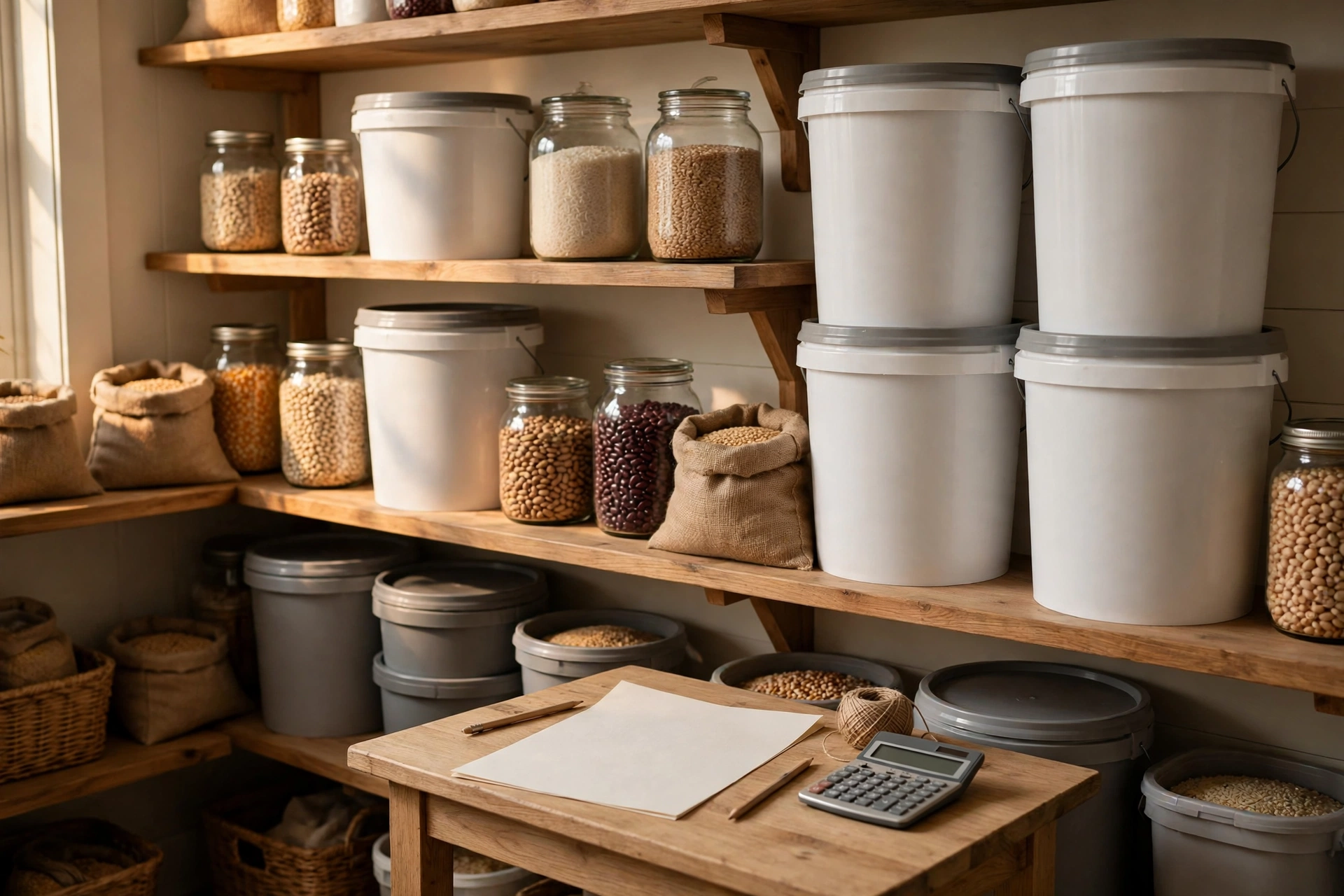
Adults romanticize emergency food. Kids don’t. A stressed, displaced, lights-out child who won’t eat at home on a normal Tuesday will not start eating a strange freeze-dried stew because the power is out — and young children can’t be reasoned into calories. They also dehydrate and run through energy faster than adults, so a two-day food refusal that an adult shrugs off becomes a medical problem in a four-year-old.
The fix costs nothing extra. It just changes what you buy: the deepest layer of a child’s emergency supply should look exactly like the pantry they already eat from, because it is the pantry they already eat from — stocked deeper and rotated on purpose.
Build It From the Foods They Already Eat
Start with a list of what your child reliably eats on an ordinary week, and mark everything on it that’s shelf-stable or has a shelf-stable twin. Most families find more than they expect: mac and cheese, pasta and jarred sauce, oatmeal packets, peanut butter (or the seed butter the school allows), crackers, granola bars, fruit cups, applesauce pouches, raisins, shelf-stable milk boxes, the cereal they inhale dry by the handful. That list — not a catalog — is the kid layer of your storage. The amounts follow the same calorie math as the rest of the household: our family food-needs answer counts 2,000-calorie days per person and adjusts down for small children, who eat less but refuse more.

Mountain House Essential Bucket
The meals owners praise most, under a 30-Year Taste Guarantee — familiar flavors like mac and cheese and beef stroganoff that read as dinner, not rations. About 5,420 derived calories: a layer, not a month.
$129.99 from Amazon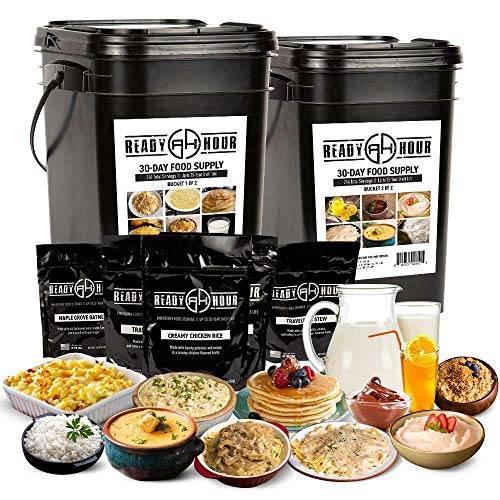
Ready Hour 4-Week Food Supply
56,460 calories — a real 28 days for one person at $9.85 per 2,000-calorie day in our cost study — with the breakfasts and puddings kids tend to accept first.
Check AvailabilityThe Picky-Eater Rules
Brands matter. A picky eater who eats one brand of mac and cheese often means that brand, literally. Store the exact products, not equivalents.
Texture is the battleground. Freeze-dried meals rehydrate soft, and soft is where many kids bail. Crunchy and dry foods — crackers, bars, dry cereal, freeze-dried fruit eaten as a snack rather than rehydrated — carry a picky eater further than entrees do. Where a medical or sensory diet narrows things further, the same build-from-their-list logic applies; our gluten-free emergency food comparison covers the certified options for the families who need them.
Drinks are food. Shelf-stable milk, juice boxes, and electrolyte drink mix solve calories and hydration in the form kids accept without argument — and in any emergency involving water, they buy time. Keep them in the same count as the household’s water plan, not as an afterthought.
Practice is the whole trick. A “power-outage picnic” twice a year — eating the stored food by lantern light, on purpose, when nothing is wrong — converts strange food into a game the child already knows how to win. Families in the forums credit this more than any product.
Store What You Eat, Eat What You Store
The principle underneath this page is the oldest one in food storage, and it applies to the whole household, not just the kids: a supply built from food nobody normally eats is a supply that expires uneaten and fails unfamiliar. Rotate the kid layer through the normal pantry — the oldest mac and cheese becomes Tuesday’s dinner, replaced on the next shop — and the emergency shelf never becomes a museum of good intentions. It’s the same discipline as our household build slowly, rotate often guide, pointed at the smallest eaters in the house.


COSORI Dehydrator
A fruit roll sheet in the box, temperature set to the degree, and a 48-hour timer that ends the batch before it over-dries.
$135.99 from Amazon
Blue Alpine Medium Select
Faster cycles — 12 to 20 hours on Blue Alpine's figures — quarter-sheet trays, and silicone mats in the box. More machine than a first month needs; the one to read about before you buy twice. Use code TRULYPRESERVED at checkout.
Check the priceFollow-Up Questions
What about babies and toddlers?
Formula first — store the brand the baby already takes, rotated tightly, because a formula switch mid-crisis is its own problem. Add shelf-stable toddler staples: pouches, oat cereal, teething crackers. Their layer is small, cheap, and the most time-sensitive in the house.
How do I handle a child with food allergies?
The same list method, with labels read like contracts: store the certified-safe brands the child already eats, keep them physically separate from the general supply, and treat our diabetic emergency food answer as the model — a medical diet is planned food by food, never improvised from a bucket.
Should kids’ food be stored separately?
One clearly marked bin or shelf section, yes — in a chaotic week, “the kids’ food” being findable in the dark is worth more than any organizational elegance. Inside that bin, it’s the normal rotation rules.
Viewers also searched for these items.


Ball Regular Mouth Lids (96)
Lids are single-use by the safety rules — a box of fresh Ball lids is the consumable no canner should be reusing around.
$36.99 from AmazonFrequently Asked Questions
How many calories does a child need per day in an emergency?
Roughly 1,000–1,400 for a small child and 1,600–2,000 for an older one — less than an adult, but with far less tolerance for missed days. Plan the child’s full share; never plan on them eating “some of ours.”
Are ration bars a good kid strategy?
As a car-kit backup, fine. As a plan, no — they’re the single most refused food in the parent threads, dense and strange-flavored. A box of the granola bars they already love outperforms them on the only metric that matters: eaten.
What single food do parents in the threads swear by most?
Peanut butter, where allergies allow it — calorie-dense, no cooking, no water, eaten by the spoonful by kids who reject everything else on the worst day. Powdered peanut butter is its long-storage twin.
Built from the parent-thread consensus in our forum harvest and Truly Preserved’s kit calorie datasets.
This question came from our harvest of what readers ask in the forums. See the rest of the list: What People Are Asking About Food Storage.
Prices shown on this page were last checked November 26, 2026 — prices change; check before you buy.
Talk it over with other readers
The Truly Preserved Community on Facebook is where readers compare notes on food storage, water, and backup power — and where your questions help decide what we research next.