
Truly Preserved is reader-supported. If you buy through a link on this page we may earn a commission at no extra cost to you. Nobody pays for placement or scores.
Most emergency food is built out of pasta, rice, and sugar, and nobody prints that problem on the bucket lid. If you are stocking emergency food for diabetics, the bucket’s serving count tells you almost nothing. The label panel tells you everything: carbohydrate per serving, sugar per serving, and how many servings it would take to reach a full day of eating. This page is built from published specs, current prices, and the makers’ own nutrition panels. We don’t own these products and we are not medical professionals. We did the label homework, and we report the numbers exactly as the makers print them. What those numbers mean for any one person’s health is a conversation for that person and their own care team — nothing on this page is medical advice, and we have written it so it cannot be read as any.
THE SHORT ANSWER
On the labels we could read in full, the lowest-carbohydrate emergency foods are single-ingredient protein products, not entrees. Nutrient Survival’s powdered eggs print 1 gram of carbohydrate and under 1 gram of sugar per serving. A typical bucket entree prints far more: ReadyWise’s Savory Stroganoff label reads 39 grams of carbohydrate per 220-calorie serving, and its multi-grain breakfast cereal reads 53 grams of carbohydrate and 16 grams of sugar per 250-calorie serving. Stretched to a 2,000-calorie day, that cereal alone would carry about 424 grams of carbohydrate and about 128 grams of sugar. The entree is not “good” or “bad” — the label is simply the plan, and most buckets are planned around starch.
How we chose what to read: we pulled the full nutrition panel for every product named below from the maker’s own store or a retailer listing of the maker’s label, and we only print a figure we could read on a panel. Where a panel was incomplete in the sources open to us, we say so instead of filling the gap. Read our full methodology. For the wider pantry this page sits in, see Preserve the Pantry.


Gardeners Basics Seed Vault
The only vault that prints an exact count for every variety — exact per-variety counts on the listing, a resealable mylar outer bag, and plant markers included.
$23.95 from AmazonWhat does a diabetic-readable label actually show?
A diabetic-readable label shows three numbers per serving — total carbohydrate, total sugars, and calories — and the serving size in grams beside them. The serving size is where buckets hide the story. ReadyWise counts a serving at 182 to 220 calories across much of its range (our serving-cost dataset counted 182 calories per serving in the 72 Hour kit), so a panel that looks modest per serving multiplies four or five times before it becomes a meal, and nine or ten times before it becomes a day. The honest way to compare two labels is to stretch both to the same day of eating. We use 2,000 calories because that is the reference day printed on every US nutrition panel.
| Product (label as published) | Per serving | Carbohydrate | Sugars |
|---|---|---|---|
| Nutrient Survival Powdered Vitamin Milk | 70 cal | 11 g | 11 g |
| Nutrient Survival Powdered Vitamin Eggs | Per maker’s panel | 1 g | Under 1 g |
| ReadyWise Savory Stroganoff | 220 cal | 39 g | 5 g |
| ReadyWise Brown Sugar Multi-Grain Cereal | 250 cal | 53 g | 16 g |
| Survival Tabs (maker’s daily serving, 12 tabs) | 240 cal | See its section | 12 g |
The milk and the eggs sit at opposite ends of the same brand’s shelf, which is the whole lesson in one pair. Nutrient Survival’s powdered milk is milk: 11 grams of carbohydrate in a 70-calorie serving, and all 11 grams are sugars, because lactose is a sugar and the panel says so plainly (0 grams added). Its powdered eggs print 1 gram of carbohydrate and under 1 gram of sugar, with 140 milligrams of sodium. Same maker, same #10 can format, completely different label. “Brand X is low-carb” is never true. A product is.


Nutrient Survival Powdered Vitamin Eggs — the cleanest panel we read
The eggs carry the cleanest panel we read, and it is not close. Per the maker’s published panel: 1 gram of total carbohydrate, under 1 gram of total sugars, 140 milligrams of sodium per serving, built on whole eggs and egg whites. There is no sauce, no starch filler, and no sweetener to account for, because the product is one ingredient group dried and canned. The maker’s store listed the #10 can at $64.99 when we checked on November 11, 2026. Owners of Nutrient Survival’s milk — the closest rated sibling on the maker’s own store — rate it 4.78 out of 5 across 365 reviews there; the eggs themselves carry a thinner review record, and we are not going to dress that up.
- Pros: 1 g carbohydrate and under 1 g sugar per serving on the maker’s panel; single-ingredient logic a reader can verify at a glance; sealed for up to 25 years per the maker.
- Cons: it is an ingredient, not a meal — a day of eating has to be built around it; the can is priced like a specialty product at $64.99; contains eggs and milk per the maker’s allergen line.
Buy it if your shelf plan starts from plain protein and adds carbohydrates deliberately, in amounts you choose. Skip it if you need ready entrees — this can asks you to cook a meal around it.

Saratoga Farms 5-Gallon Stackable
For water you rotate and carry, stackable 5-gallon containers split a two-week reserve into pieces one person can move, refill and replace a single jug at a time.
$318.79 from Amazon

Survival Garden Seeds, 30 Varieties
Every lot germination-tested with a packed-for date, and the only maker here that tells you plainly most seed lasts 3 to 5 years — not forever.
$29.97 from AmazonNutrient Survival Powdered Vitamin Milk — honest sugar, printed plainly
The milk’s panel is honest in a way bucket labels often are not. Seventy calories, 11 grams of carbohydrate, 11 grams of total sugars, 0 grams added sugars, 115 milligrams of sodium, 7 grams of protein per 2-tablespoon serving — the maker prints the lactose right there instead of hiding behind a “low sugar” badge, even though its own page also carries a “Low Sugar” tag. Stretched to 2,000 calories of milk alone, the math runs to roughly 314 grams of carbohydrate, which is exactly why nobody should plan a day around one ingredient. As a measured part of a day — a cup here, cereal there — the panel lets a reader count it precisely. The can holds 50 servings, is sealed for up to 25 years, and was $29.99 at the maker’s store on November 11, 2026, rated 4.78 out of 5 across 365 reviews there.
- Pros: full panel published on the product page, including added sugars at 0 g; 7 g protein per serving; up to 25-year sealed life.
- Cons: 11 g of sugar per small serving adds up fast across a day; contains milk; the maker’s “Low Sugar” tag and its own panel tell two different stories, and the panel is the one to believe.
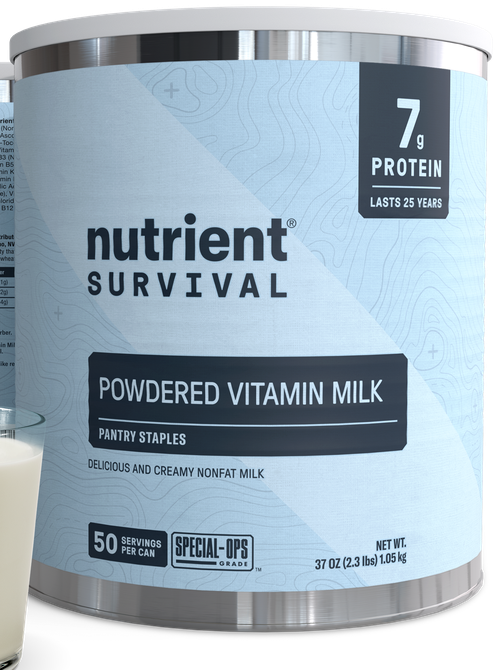
Photo: Nutrient Survival.

- Weight1 oz (28 g)
- Size (L × W × H)6.5 × 6.5 × 7 in
Buy it if you want a shelf-stable milk you can count cup by cup. Skip it if your plan needs every gram of sugar accounted elsewhere — this one spends them quickly.


Thrive Life: Freeze-Dried Blueberries - Pantry Can Size
Freeze-dried food by the can, no machine: the same long-life ingredients the kits are built from, bought a can at a time.
$60.00 from AmazonReadyWise entrees and cereal — the bucket math, stretched to a day
ReadyWise publishes its panels, and the panels describe a starch-first bucket. The Savory Stroganoff label (read on a retailer listing of the maker’s panel) reads 220 calories, 39 grams of carbohydrate, 5 grams of sugars, and 750 milligrams of sodium per serving. The Brown Sugar Multi-Grain Cereal reads 250 calories, 53 grams of carbohydrate, 16 grams of sugars, and 170 milligrams of sodium. Stretch both to a 2,000-calorie day and the stroganoff pattern carries about 355 grams of carbohydrate; the cereal pattern carries about 424 grams of carbohydrate and about 128 grams of sugar. That is not a judgment on any reader’s plan — it is what the bucket is made of, and a reader counting carbohydrates deserves to see it before the bucket is in the pantry, not after. The 120 Serving bucket was $329.99 at the maker’s store on November 11, 2026, the same price we verified on October 31 for our ReadyWise vs Augason Farms comparison; across roughly 10,553 ratings on its long-running Amazon listing it holds 4.5 stars, with owner complaints clustering on portion size and sweetness.
- Pros: panels are published and countable; wide retail availability; the fruit and vegetable buckets in the same range carry far simpler panels.
- Cons: entree and cereal panels are carbohydrate-heavy per calorie; small servings (182–250 cal) mean the day math multiplies quickly; $26.90 per 2,000-calorie day at the maker’s price is premium money for starch.
Buy it if the bucket is the household’s shared shelf and the diabetic reader’s own layer is stocked separately, on purpose. Skip it if this bucket is meant to be that reader’s own food — its panels were not built for that job.


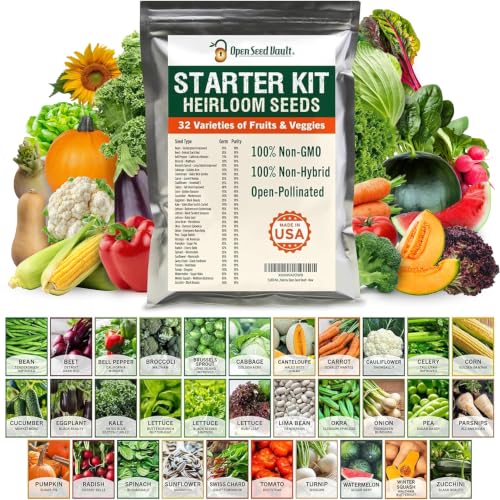
Vegetable & Fruit Seeds
4.6 stars across roughly 14,600 Amazon ratings — the deepest owner record here — but the calorie crops are thin: 15 to 25 seeds of beans, peas, and pumpkin.
$28.99 from AmazonAre Survival Tabs a sensible backup for a diabetic reader?
Survival Tabs are a vitamin tablet with calories, and their own numbers make the point. We covered this brand in full in our Survival Tabs gluten-free investigation; the short version of that page is that the chewable tablets from The Survival Tabs (Lohas Farms) are labeled gluten-free by the maker with no certification behind the claim, the first ingredient is non-fat dry milk solids, and a different wheat-flour ration bar is also sold on Amazon under the “Survival Tabs” name — check the brand and the ingredient list, never just the name. The carbohydrate story is just as plain: one tab is 20 calories, the maker’s own daily serving is 12 tabs, and that serving carries 240 calories, 4 grams of protein, and 12 grams of sugar. Twelve percent of a 2,000-calorie day, with sugar as a tenth of the intake, is a micronutrient bridge for a bad afternoon. It is not a meal plan, and the maker’s newer writing concedes the tabs are “not meant to replace food entirely.” For a reader whose emergency plan depends on predictable carbohydrate counts, a product whose day serving is mostly a sugar-and-milk tablet is a poor foundation and a reasonable pocket extra. Those are different shelves.

COSORI Dehydrator
Stainless trays, a 48-hour timer, digital controls to the degree, and the quietest run of the three at under 48 dB.
$135.99 from Amazon
Blue Alpine Medium Select
Higher cooling capacity shortens batch times, and owners praise the customer service. Up to 15 lbs per batch — the fastest route from harvest to a shelf that lasts decades. Use code TRULYPRESERVED at checkout for 3% off.
Check the price
What about the big plain staples — rice, oats, lentils?
The big plain staples are where a counting reader has the most control, because the food is one ingredient and the portion is whatever gets measured into the pot. Our Food Shelf-Life Lookup puts white rice at up to 25–30 years in mylar with oxygen absorbers, rolled oats at up to 20–25 years, and lentils at up to 20–25 years — all single-ingredient foods whose labels a reader can weigh and count exactly, priced in our bulk staples guide at a fraction of bucket money per 1,000 calories. The trade runs the other way on effort: staples need cooking fuel, water, and measuring, where a pouch needs hot water and ten minutes. A shelf built for careful counting usually ends up layered — measured staples and plain proteins underneath, a few countable entrees on top — rather than one bucket asked to do a job its panel says it cannot.
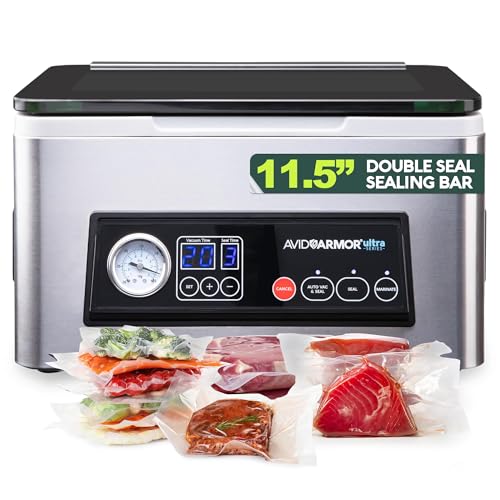
Avid Armor USV20
The chamber machine: soups, marinades and smooth cheap pouches — if it fits in an 11 x 10 pouch.
$349.00 from Amazon
LifeStraw Home
Certified for lead, mercury, chlorine, and PFAS/PFOA/PFOS — in a glass pitcher.
$51.99 from Amazon
ProOne Big+
ProOne’s Big Plus handles hard water at the gravity end — the other route our water coverage scores for hard city water and wells.
$160.97 from AmazonHonest caveats
Three caveats belong on this page in plain sight. First, ours is research, not medical advice: we report labels and arithmetic, and nothing here weighs any individual’s medication, condition, or plan. Second, panels change. Makers reformulate without announcement, and the panel on the pouch in your hand outranks every figure on this page — read it when the food arrives. Third, several panels in this category could not be read in full from the sources open to us this run, including the per-serving carbohydrate line for Mountain House’s Adobo Rice & Chicken (the REI listing we read gives 280 calories and 490 milligrams of sodium per serving but not the carbohydrate line), so we have printed nothing for it rather than guess. A missing number is a finding, too.
Viewers also searched for these items.
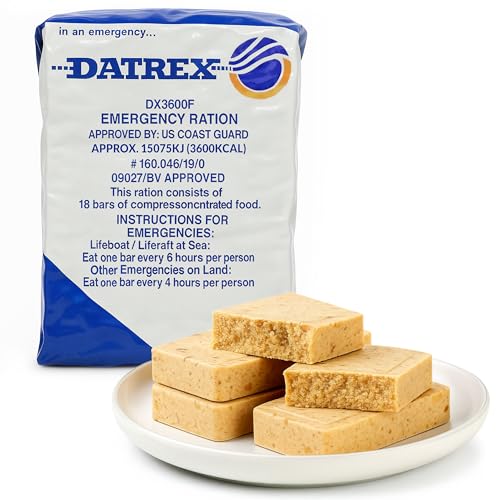
Datrex 3600
Eighteen individually wrapped 200-calorie bars and a six-ingredient label — the pack that stays fresh after you open it.
$24.99 from Amazon
Millennium Energy Bars (SOS Food Lab)
Nine real flavors and the only bar here people call genuinely good. Single 400-calorie bars made for go-bags and school kits.
$19.99 from Amazon
Grayl GeoPress
The only portable here that handles viruses — built for travel, not daily home use.
$99.95 from AmazonFAQ
Is there emergency food made specifically for diabetics?
None of the major bucket brands sell a bucket labelled or built as a diabetic product that we could find this run. What exists is a spectrum of panels: single-ingredient proteins and produce at the low-carbohydrate end, starch-first entrees and sweetened cereals at the other. The product has to be chosen panel by panel.
How many carbohydrates are in a typical freeze-dried entree serving?
On the panels we read in full, ReadyWise’s Savory Stroganoff carries 39 grams per 220-calorie serving and its multi-grain cereal 53 grams per 250-calorie serving. Servings in this category are small, so a meal is usually two servings and a day is nine or ten.
Are emergency ration bars a good diabetic backup?
Ration bars are built to deliver fast calories in a small bar, and the category’s panels lean on sugar and flour to do it. Our ration bar comparison prices them per 1,000 calories; for a counting reader they read as an emergency bridge, not a stocked meal.
Do Survival Tabs work as diabetic emergency food?
The maker’s daily serving is 12 tabs: 240 calories and 12 grams of sugar, with 100% of the daily value for most of the 15 vitamins and minerals on the panel. That is a supplement profile, not a meal profile, and the maker now says the tabs are not meant to replace food entirely.
What should a diabetic reader check first on an emergency food label?
Serving size in grams and calories, then total carbohydrate and total sugars per serving — then do the day math: multiply by however many servings make 2,000 calories. A panel that looks gentle at 190 calories can be a very different food at a full day.
For the household shelf around this page, our 30-day kit comparison counts the big buckets by total calories, and the Emergency Food Cost Index keeps the per-day prices in one citable table.
Sources & freshness: Nutrient Survival’s own product pages and panels (milk, eggs), ReadyWise panels as listed by Costco and Woot and the maker’s 120 Serving product page, REI’s Mountain House listings, our Survival Tabs investigation (post 1704) and serving-cost dataset (post 438), all consulted November 11, 2026. Prices last checked: November 11, 2026.
Talk it over with other readers. The Truly Preserved Community on Facebook is where readers compare notes on food storage, water, and backup power — and where your questions help decide what we research next. Join the group →
Prices shown on this page were last checked November 26, 2026 — prices change; check before you buy.