
Truly Preserved is reader-supported. If you buy through a link on this page we may earn a commission at no extra cost to you. Nobody pays for placement or scores.
THE SHORT ANSWER
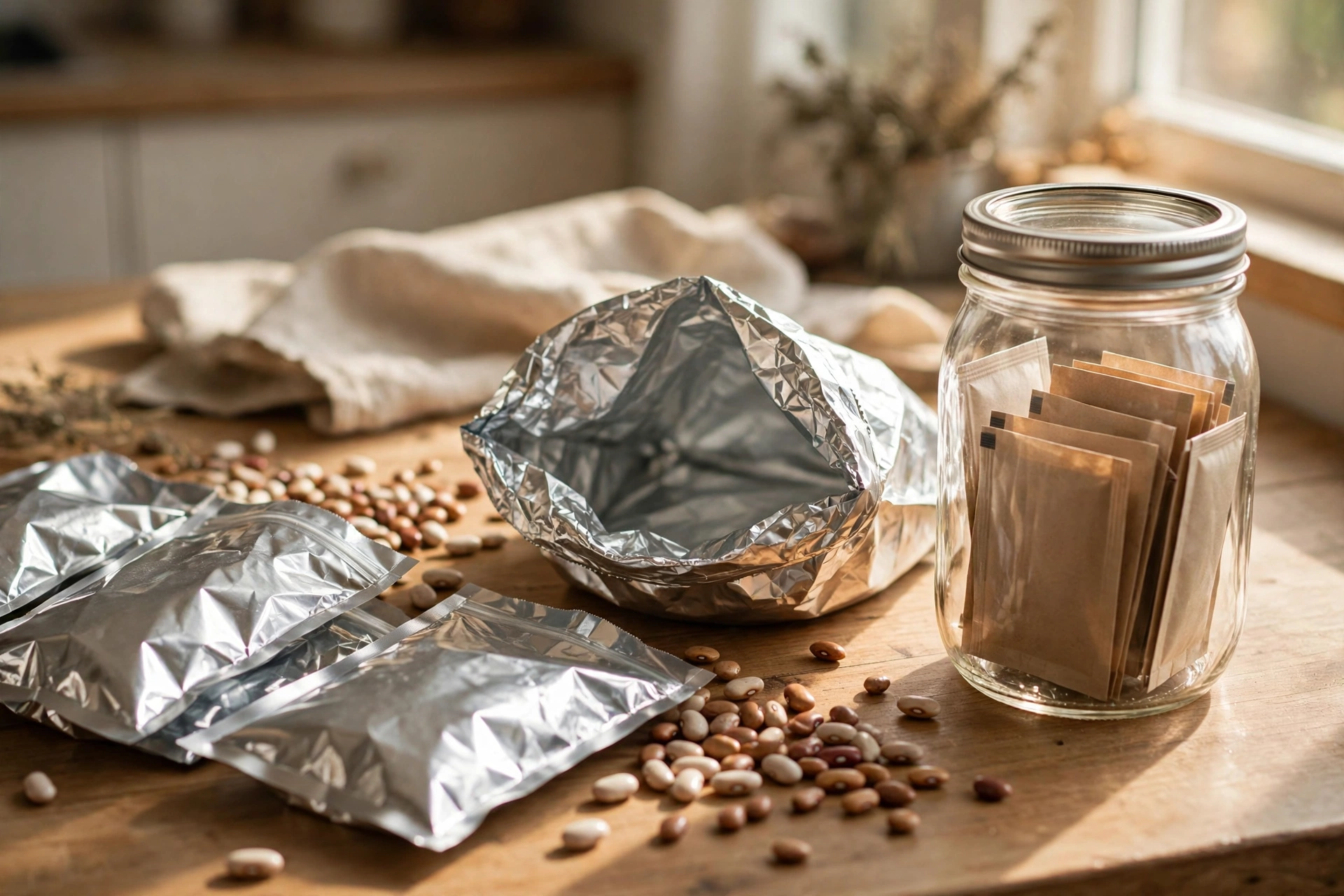
It’s a myth — a well-traveled one. The University of Minnesota Extension’s verdict on bay leaves (and spearmint gum, the other pantry folk remedy) is one sentence: there is no evidence that placing them in a cupboard will prevent or get rid of stored-food insect pests. Bay leaves don’t kill eggs already inside your grain, don’t seal anything, and don’t stop a single weevil. What works is unglamorous: freeze new grain before storage, pack it in mylar with oxygen absorbers, and keep it in airtight containers pests can’t enter.
The bay leaf trick survives because it feels like it should work. Bay leaves are pungent; insects dislike strong smells in the lab; grandmother did it and her flour was fine. But grandmother’s flour was also fine in the years she forgot — and the reason is the part of the story nobody tells: most grain never arrives infested heavily enough to notice, so almost any ritual performed over it gets credited with the save.
The extension services have actually checked. Minnesota’s stored-food pest guidance groups bay leaves with spearmint gum under remedies with no evidence behind them, and points instead at the three controls that demonstrably work: inspection, exclusion, and temperature. A leaf in the bucket does none of the three.
Why the Myth Feels True
There is a kernel of laboratory fact inside it. A 1986 study found compounds in bay leaves that repelled adult flour beetles in flour, in a lab dish. But repelling some adult beetles in a dish is not protecting a bucket: the same research line found another bay compound that attracted beetles, and no cupboard-scale test has ever shown leaves preventing an infestation. Meanwhile the actual threat isn’t adult beetles wandering your shelves — it’s eggs and larvae already sealed inside the grain kernels when you bought them, where no smell reaches and no leaf matters. That’s the whole logic of our freeze-before-sealing answer: the kill step has to reach inside the kernel, and only temperature does.

PackFreshUSA 500cc Oxygen Absorbers
Sized for gallon and bucket-scale bags of grain — the absorber drops oxygen below insect-survivable levels inside a sealed bag, which is the mechanism bay leaves were always pretending to be.
Check Availability
Sukerle 5-Gallon Mylar Bags
The bag that lines the bucket — foil laminate that blocks oxygen and light, riding inside the hard container that handles everything with teeth.
$42.99 from AmazonWhat Actually Keeps Bugs Out
Freeze first. New grain headed for long storage gets 0°F for three to four days — the extension cold treatment that kills every life stage, eggs included.
Seal the oxygen out. Mylar with a properly sized oxygen absorber drops the oxygen inside below what insects can survive, and the foil laminate keeps new ones from chewing in. Our mylar bags guide covers sizing and sealing.
Store it airtight and inspect on a rhythm. Glass, metal, or heavy gasketed plastic for the working supply; infested packages discarded, not sifted-and-saved, when webbing or live insects show. And for the larger animals working the same pantry, barriers are the answer there too — our rodent answer builds the container-and-room system that scent tricks pretend to be.
Follow-Up Questions
Will bay leaves at least keep bugs out of an open flour bin?
There’s no evidence they do — and an open bin is the problem, not the solution. Flour in active use belongs in an airtight container; the lid is the pest control.
What about diatomaceous earth in the bucket?
Food-grade diatomaceous earth is a real desiccant-insecticide for stored grain in agricultural use, and some storers use it. It’s a different claim from the bay leaf — it has a mechanism and evidence — but for household buckets, freezing plus absorbers achieves the same end without adding dust to food.
If I already have bay leaves in my buckets, should I pull them out?
They’re harmless as a garnish. Leave them or lift them out next rotation — just don’t count them as a layer of protection when you decide what else the bucket needs.
Viewers also searched for these items.


COSORI Dehydrator
A fruit roll sheet in the box, temperature set to the degree, and a 48-hour timer that ends the batch before it over-dries.
$135.99 from Amazon
Sour Patch Kids (5 lb)
The bulk bag is the economical way to feed a freeze dryer — one bag fills several tray loads, and the pieces are the standard size every candy-mode timing is written for.
$20.99 from AmazonFrequently Asked Questions
Do bay leaves kill weevils?
No. Nothing in the extension literature credits bay leaves with killing any life stage of any stored-food pest. Freezing kills; oxygen removal kills; a leaf does neither.
Why do so many experienced storers swear by them?
Because most grain was never going to hatch a visible infestation anyway. A ritual performed over food that stays fine gets believed — the same survivorship that kept the myth alive for fifty years.
What do I do if I find bugs in a bucket today?
Discard infested packages, vacuum the storage area’s cracks and corners, and rehouse the rest in airtight containers — the extension sequence. Don’t spray insecticide where food lives.
Verdict per the University of Minnesota Extension, “Pantry pests: Insects found in stored food”.
This question came from our harvest of what readers ask in the forums. See the rest of the list: What People Are Asking About Food Storage.
Prices shown on this page were last checked November 26, 2026 — prices change; check before you buy.
Talk it over with other readers
The Truly Preserved Community on Facebook is where readers compare notes on food storage, water, and backup power — and where your questions help decide what we research next.