
Truly Preserved is reader-supported. If you buy through a link on this page we may earn a commission at no extra cost to you. Nobody pays for placement or scores.
THE SHORT ANSWER
Yes — set the oven to its lowest setting, about 170°F, spread the herbs in a single layer on a lined baking sheet, and leave the door cracked open with a wooden spoon so moisture can escape. Most herbs dry in 1 to 4 hours; tender herbs like basil and mint are usually done in 1 to 2. They are finished when the leaves crumble between your fingers and the stems snap instead of bending. Check every 30 minutes — herbs go from dry to scorched faster than you would expect.
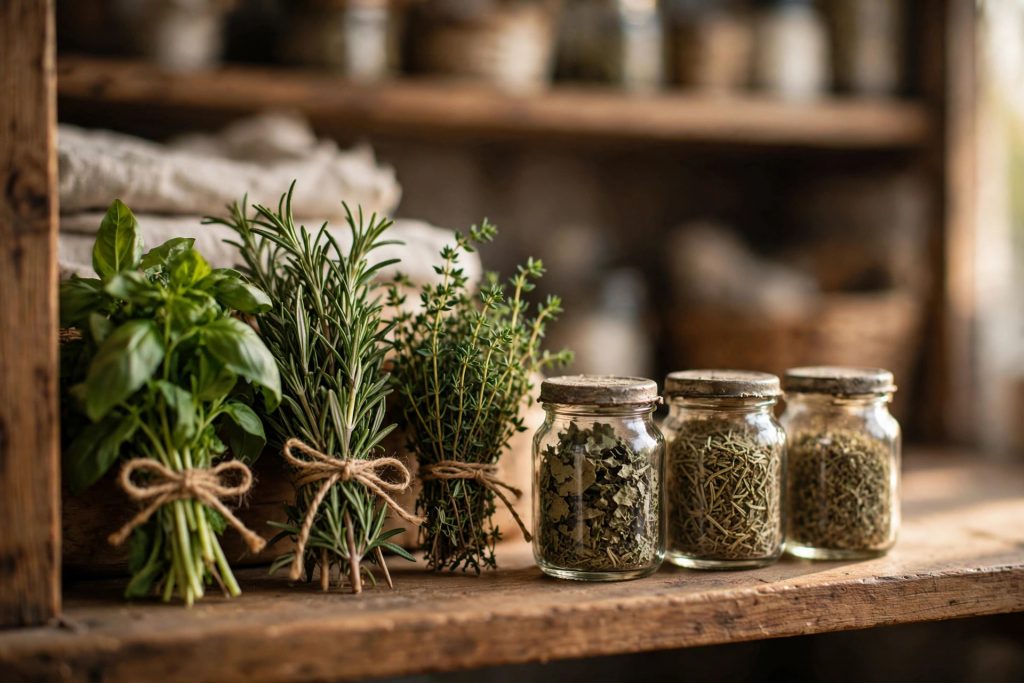
The oven is the dryer most people already own, and for a garden’s worth of herbs it does the job fine. Its weakness is heat: even the lowest setting on many ovens runs hotter than a dehydrator, and herbs are delicate — too much heat cooks off the volatile oils that carry the flavor. That is why the door stays cracked and the checks come often. You are not baking the herbs. You are giving warm air a way to carry moisture out of them.
The National Center for Home Food Preservation’s herbs page sorts herbs the same way this page does — tender, high-moisture leaves apart from the sturdy ones — and its doneness test is the one used below. If herbs are a regular harvest at your house, the dedicated route is covered in our best dehydrator for herbs roundup.
If you dry herbs often, a dehydrator earns its shelf space
Which Herbs Suit the Oven
High-moisture, tender herbs benefit most from the oven’s controlled heat because they mold if they dry too slowly in open air: basil, mint, lemon balm, tarragon, and cilantro. Low-moisture herbs — thyme, rosemary, oregano, sage, dill, and summer savory — are forgiving either way; they air-dry beautifully in bundles, but the oven does them faster and just as well. The one caution for every herb on the list: dry each type separately. A tray of thyme is done long before a tray of basil, and mixed trays finish unevenly.

COSORI Food Dehydrator
Digital temperature control that goes low enough for herbs, a timer, and quiet operation. The sensible first dehydrator for garden-scale batches.
$135.99 from Amazon
Excalibur 3926TB 9-Tray Dehydrator
The big-batch option: nine trays and a rear fan that dries evenly without rotating trays. Built for harvest weekends, not single bunches.
Check AvailabilityPrep: Wash, Dry, Strip
Harvest in the morning after the dew dries, when the oils are strongest. Rinse the herbs gently and then get them truly dry before they go in the oven — pat them with towels or spin them in a salad spinner. Surface water steams the leaves instead of drying them and adds real time. Strip the leaves from thick stems for even drying; small stems on thyme and oregano can stay, since the leaves fall off them once dry anyway. Discard anything yellowed or spotted now — drying preserves whatever quality you start with, good or bad.
The Oven Method, Step by Step
Heat the oven to its lowest setting — 170°F on most ovens, 180–200°F on some. If your oven will not go below 200°F, the cracked door matters even more. Line baking sheets with parchment and spread the herbs in a single layer with a little air between pieces; overlapping leaves trap moisture. Prop the door open a few inches with the handle of a wooden spoon. That gap is the whole trick: it lets the damp air out and keeps the temperature at herb level instead of cookie level.
Check every 30 minutes, turning the herbs or rotating the tray as needed — most ovens have hot spots, and the back corners run hotter. Tender herbs finish in about 1 to 2 hours; most others take 1 to 4 hours depending on how much moisture they started with. Pull the tray the moment the test below passes. Residual heat in the tray finishes the job.
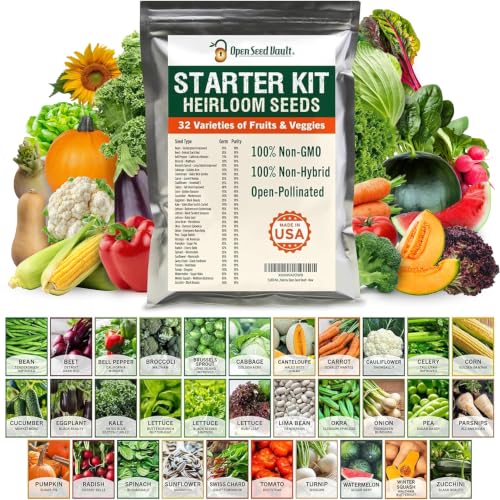
Vegetable & Fruit Seeds
4.6 stars across roughly 14,600 Amazon ratings — the deepest owner record here — but the calorie crops are thin: 15 to 25 seeds of beans, peas, and pumpkin.
$28.99 from Amazon


FoodSaver Elite Liquid Plus
It senses bags and moisture for you — at the highest price per inch of seal bar here.
$218.56 from Amazon
Thrive Life: Freeze-Dried Blueberries - Pantry Can Size
Freeze-dried food by the can, no machine: the same long-life ingredients the kits are built from, bought a can at a time.
$60.00 from Amazon
How to Tell They Are Done
Two tests, and an herb has to pass both. The leaves should crumble cleanly when you rub them between your fingers — no softness, no cool damp feel. And the stems should snap when bent, not fold. Any bend means moisture is still inside, and moisture sealed in a jar means mold later. If part of a tray is done and part is not, take the finished herbs out and give the rest another 15–20 minutes. When in doubt, give them more time: over-dried herbs lose a little flavor, but under-dried herbs lose the whole jar.

Sour Patch Kids (5 lb)
The bulk bag is the economical way to feed a freeze dryer — one bag fills several tray loads, and the pieces are the standard size every candy-mode timing is written for.
$20.99 from Amazon
Robinair 13203 Vacuum Pump Oil
A pump that runs quiet and pulls nothing is very often an oil problem — this is the replacement our maintenance guide names.
$16.79 from Amazon
JB Black Gold Pump Oil
The second oil owners keep for the same change — either beats the waterlogged oil already in the pump.
$54.50 from AmazonStoring Them So the Flavor Stays
Let the herbs cool completely, then store them as whole as you can — whole leaves in airtight glass jars, in a dark cupboard. Crushing releases the oils, so crumble leaves as you cook with them, not before. Properly dried herbs keep their best flavor for about 6 months to a year; they remain usable longer, just weaker, so you use a little more. The cook’s conversion: dried herbs are roughly three times as strong as fresh, so 1 teaspoon of dried replaces 1 tablespoon of fresh. Label every jar with the herb and the date — dried parsley and dried oregano look remarkably alike in February.
Oven or Dehydrator? An Honest Word
The oven wins on cost — you already own it — and loses on everything else. It ties up the oven for hours, heats the kitchen, runs hotter than herbs prefer, and needs you nearby for the checks. A dehydrator holds 95–115°F, the gentle range herbs like best, circulates its own air, and can be left alone with a timer. For a few trays a year, stay with the oven. For a garden that produces armloads, the comparison in best food dehydrators for long-term food storage shows what the step up buys.
Follow-Up Questions
Can I dry herbs in the microwave instead?
For a small handful, yes — herbs sandwiched between paper towels, microwaved in short bursts. It is fast and works for a recipe’s worth. For anything more, the batches are so small that the oven or a dehydrator is less work overall.
Why did my basil turn black?
Heat and moisture, usually together. Basil is the most delicate common herb: if it goes in wet or the oven runs hot, it darkens before it dries. Dry the leaves thoroughly after washing, keep the oven at its floor, and check basil at the 45-minute mark.
Should I dry herbs on the stem or strip them first?
Strip thick-stemmed herbs like basil and mint — the stems hold moisture and slow everything down. Fine-stemmed herbs like thyme can dry on the stem; the leaves shake off easily once crisp.
Do dried herbs expire?
They fade rather than spoil. Stored airtight and dark, they are safe well past a year, but the flavor thins out — the jar from two summers ago will season food, it will just take more of it. Mold is the only true discard sign, and it only appears if the herbs went into the jar damp.
Viewers also searched for these items.


COOQUI 12-Inch Tortilla Warmer
An insulated fabric warmer sized for full-size flour tortillas. Thirty to forty-five seconds in the microwave and it holds the stack warm and soft for up to an hour at the table.
$19.99 from Amazon
Millennium Energy Bars (SOS Food Lab)
Nine real flavors and the only bar here people call genuinely good. Single 400-calorie bars made for go-bags and school kits.
$19.99 from AmazonFrequently Asked Questions
What temperature is best for drying herbs in the oven?
The lowest your oven offers, ideally 170°F, with the door propped open. The goal is warm moving air, not heat — most of the flavor in herbs lives in oils that cook off at higher temperatures.
How long do oven-dried herbs take?
Plan on 1 to 2 hours for tender herbs like basil and mint and 1 to 4 hours for most others, checking every 30 minutes. Leaf size, starting moisture, and your oven’s hot spots move the number more than the herb itself does.
Is oven drying or air drying better?
For low-moisture herbs like thyme and rosemary, air drying in bundles is just as good and uses no energy — it simply takes one to two weeks and a dry room. For tender, high-moisture herbs, the oven’s gentle heat is safer, because they can mold before open air dries them.
Temperatures and times are checked against National Center for Home Food Preservation drying guidance each time this page is revised.
This question came from readers with more garden herbs than counter space. See the rest of the list: What People Are Asking About Food Storage.
Prices shown on this page were last checked November 26, 2026 — prices change; check before you buy.
Talk it over with other readers
The Truly Preserved Community on Facebook is where readers compare notes on food storage, water, and backup power — and where your questions help decide what we research next.