
Truly Preserved is reader-supported. If you buy through a link on this page we may earn a commission at no extra cost to you. Nobody pays for placement or scores.
THE SHORT ANSWER
White rice stores for years — 25 to 30 years by Utah State University Extension’s figures — when it is sealed in mylar bags with oxygen absorbers and kept in a sealed bucket somewhere cool and dark. Brown rice is the exception: the oils in its bran layer go rancid, and even sealed it is a 6-month food. The method below is the whole job: dry rice, the right absorber for the bag size, a good seal, and a cool shelf. Storage figures are from Utah State University Extension and USDA guidance.
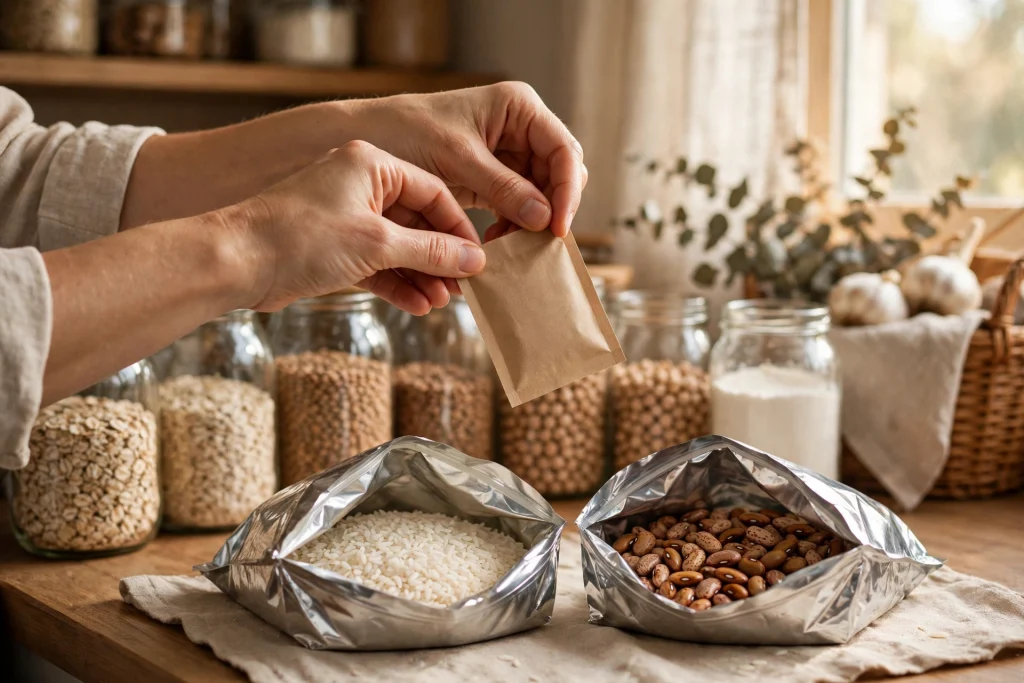
Rice is the backbone of most stored food for a reason: it is cheap, filling, cooks in plain water, and — stored right — it outlasts almost everything else in the pantry. The enemies are only three: oxygen, moisture, and heat. Oxygen feeds the bugs and stales the grain. Moisture invites mold. Heat speeds up every chemical reaction that makes stored food taste old; the extension rule of thumb is that every 10°F warmer roughly halves the storage life — which is why the same bucket lasts decades in a basement and years in a garage.
The mylar-and-bucket method defeats all three enemies at once, which is why it is the standard. This guide is part of our preservation guides collection; its closest sibling is the flour method, how to store flour long-term, which runs the same system on a shorter clock. If you are still choosing bags, our guide to the best mylar bags for long-term food storage compares thicknesses and sizes first.
What You Need
Dry white rice, mylar bags in 1-gallon and 5-gallon sizes, oxygen absorbers matched to the bags, food-grade buckets with tight lids, and a way to seal mylar — a flat iron or an impulse sealer. A gamma-seal lid for the working bucket turns it into one you can open without a pry tool.

Wallaby 1-Gallon Mylar Bags, 10-Pack
One-gallon bags are the practical unit for rice — a manageable weight, and one bag feeds the working container without opening a bucket.
Check Availability
PackFreshUSA 2000cc Oxygen Absorbers
2000cc absorbers, sized for 5-gallon bags and bucket liners — the dose the big bags in this method run on.
Check Availability
ePackageSupply 5-Gallon Buckets, 3-Pack
Food-grade 5-gallon buckets, three to a pack — the rodent-and-light armor the sealed bags live inside.
$73.99 from AmazonBefore You Start
Why white rice lasts and brown rice doesn’t comes down to milling. White rice has had its husk, bran, and germ milled away, leaving the starchy grain with almost no fat in it — and almost no fat means almost nothing to go rancid. Utah State University Extension puts properly stored white rice at 25 to 30 years, figures drawn from its food storage research and repeated in its fact sheets. Brown rice keeps the bran layer, and the bran carries oils. Those oils oxidize no matter how well you seal the bag, which is why brown rice is a rotate-it food: buy it, eat it within about six months, buy more.
Two checks before any rice goes in a bag. First, moisture: shelf-stable packing only works on food under 10% moisture, and rice as sold is well under that — do not wash it, and do not pack rice that has been sitting open in a humid kitchen for months. Second, the freezer decision: rice can carry insect eggs that hatch months later inside a sealed bag, and three to four days at 0°F kills insects at every life stage. Whether it’s necessary depends on your risk tolerance — should I freeze rice and flour before sealing? lays out both sides, and absorbers suffocate whatever hatches later.
How to Store Rice in Mylar and Buckets, Step by Step
- Start with dry rice. Unopened or recently bought, under 10% moisture as sold. If you froze it first, let it return to room temperature and dry fully before bagging — condensation is moisture, and moisture is the enemy.
- Fill the bags. One-gallon bags are the practical unit — a manageable weight, and one bag refills the working container without opening a whole bucket. Five-gallon liners are for bulk. Leave room above the fill line to seal.
- Add the absorber, sized to the bag. Absorber makers size their packets at about 300cc for a 1-gallon bag and 2,000–2,500cc for a 5-gallon bag or bucket liner. Have the rice in the bag and the sealer hot before you open the absorber packet — absorbers start working the moment they’re opened and exhaust themselves in open air. Reseal any unused absorbers in a jar immediately.
- Press out the air and seal. Push the excess air out by hand, then seal the mylar with a flat iron or impulse sealer. Within a day or two the bag should pull in tight around the rice like it was vacuum-packed. A bag that stays puffy had a weak seal or an undersized absorber — cut it open and redo it.
- Bucket it and label it. The sealed bags go into a food-grade bucket with a tight lid. The bucket is not what preserves the rice — it keeps mice, light, and bumps off the bags. Write the contents and the packing date on the bucket, not just the bag.
- Put the buckets somewhere cool. A basement shelf or interior closet in the 50–70°F range is where the 25-to-30-year numbers come from. Off the bare concrete, dark, and dry.
The Numbers: Absorber Sizes and Storage Life
| Bag | Oxygen absorber (makers’ sizing) |
|---|---|
| 1-gallon mylar bag | About 300cc |
| 5-gallon bag or bucket liner | 2,000–2,500cc |
| Food and method | Storage life |
|---|---|
| White rice, mylar + absorbers, 50–70°F | 25–30 years (Utah State Extension) |
| Brown rice, sealed the same way | About 6 months — the bran oils set the limit |
| White rice, vacuum-sealed bags | 1–2 years before seals and punctures tell |
If you are working out how much to put away in the first place, how much rice per person per year does the serving math, and the bulk staples storage budget page prices a sensible starting quantity.
Decades stock only works if the day-to-day stock turns over in front of it. The working bucket gets opened, cooked from, and refilled from the sealed bags — and the room it all sits in needs to stay the cool, dry place the numbers assume.

IRIS USA Airtight Container, 30 lb, with Wheels
The airtight working container for the bucket you're eating from — the decades stock stays sealed while this one opens daily.
$23.99 from Amazon
ThermoPro TP49 Hygrometer
A hygrometer for the storage shelf — the cool, dry half of the method is only real if the room actually is.
$8.54 from AmazonCommon Mistakes
Storing rice in the bag it came in. For a few months on a pantry shelf, fine. For years, no — the thin plastic breathes oxygen, tears easily, and offers nothing against insects. The transfer to mylar is the step that turns rice into a long-term food.
Skipping the absorber. A sealed bag of rice with the air still in it is just a bag of rice. The absorber is what removes the oxygen that feeds insects and stales the grain — it’s the active ingredient of the whole method.
Bags on a shelf without a bucket. Mylar punctures, and rodents chew straight through it. Bags alone are a season of storage; bags in a lidded bucket are decades. If buckets are scarce, a sealed plastic tote is a workable second choice.
Garage heat. Rice stored at 90°F is still good food — it just ages several times faster, so plan to rotate it in years, not decades. The 25-to-30-year figure belongs to the 50–70°F room.
No date on the bucket. Undated buckets are how a pantry loses track of its own stock. Contents and packing date, on the bucket, in marker.
Storage and Shelf Life
Properly sealed white rice does not really expire; it slowly loses a little flavor and cooks up a touch firmer over the years. Rinse it, cook it, and judge it by smell and taste like any other food. The discard signs are different: a bag that lost its seal and smells musty, visible mold, or live insects throughout. A single weevil scare does not have to mean the whole bucket goes — I found weevils in my stored rice covers what is salvageable and what is not. Keeping the whole pantry turning over on schedule is its own system — our pantry rotation and inventory guide covers the tracking half.
Viewers also searched for these items.

Augason Farms Long Grain White Rice
Long grain white rice packed for storage by a food-storage house — the restock when the home-packed buckets run low.
$66.42 from Amazon
Palouse Hard Red Wheat Berries
The other bucket staple, milled fresh as needed — wheat berries store on the same decades clock as white rice.
$70.95 from Amazon
Nesco VS-12 Vacuum Sealer
A full-featured countertop sealer for bagging batches — the vacuum route the FAQ weighs against mylar for shorter storage.
$108.18 from AmazonFrequently Asked Questions
Does rice need to be frozen before sealing?
It is insurance, not a requirement. Freezing for 3–4 days kills any insects and eggs already in the grain; oxygen absorbers then suffocate anything that hatches later by removing the air itself. Many storers do both. What you cannot skip is the absorber.
Can I use vacuum sealing instead of mylar and absorbers?
Vacuum bags are thinner and more puncture-prone than mylar, and they slowly leak air at the seals over years. For a year or two of storage they are fine. For the decades rice is capable of, mylar plus absorbers is the proven combination.
What about parboiled, jasmine, and basmati rice?
All of them store like plain white rice — the same milling that makes them white removes the oils that spoil. Parboiled rice is sometimes rated a little shorter, but the method and the absorbers are identical.
How do I know the absorber worked?
The bag tells you. Within 24–48 hours it should be pulled in snug against the rice. A bag that is still loose and puffy after two days means the seal leaked or the absorber was too small or spent — open it, add a fresh absorber, and reseal.
Storage life figures: Utah State University Extension food storage research and fact sheets (shelf-life table as republished in UGA Cooperative Extension Circular 1310); moisture and insect guidance per USDA and extension dry-storage guidance, via Utah State University Extension. Absorber sizing is the packet makers’ standard sizing for the bag volumes shown.
Prices shown on this page were last checked November 26, 2026 — prices change; check before you buy.
Talk it over with other readers
The Truly Preserved Community on Facebook is where readers compare notes on food storage, water, and backup power — and where your questions help decide what we research next.