
Truly Preserved is reader-supported. If you buy through a link on this page we may earn a commission at no extra cost to you. Nobody pays for placement or scores.
THE SHORT ANSWER
Kombucha is sweetened tea fermented by a SCOBY: Colorado State University Extension’s recipe for 1 gallon uses 1 gallon of filtered water, 1/4 cup of green and/or black tea (or 4 to 8 tea bags), 1 cup of cane sugar, 1 to 2 cups of starter liquid, and 1 SCOBY. Steep the tea 10 minutes, dissolve the sugar, cool completely, add the SCOBY and starter, cover with cloth, and ferment at room temperature — ideally 64 to 79 degrees F — for 7 to 14 days. University of Minnesota Extension’s safety frame for fermented foods applies throughout: the finished ferment must reach a pH of 4.6 or below. Every figure on this page comes from the tested sources credited at the bottom.
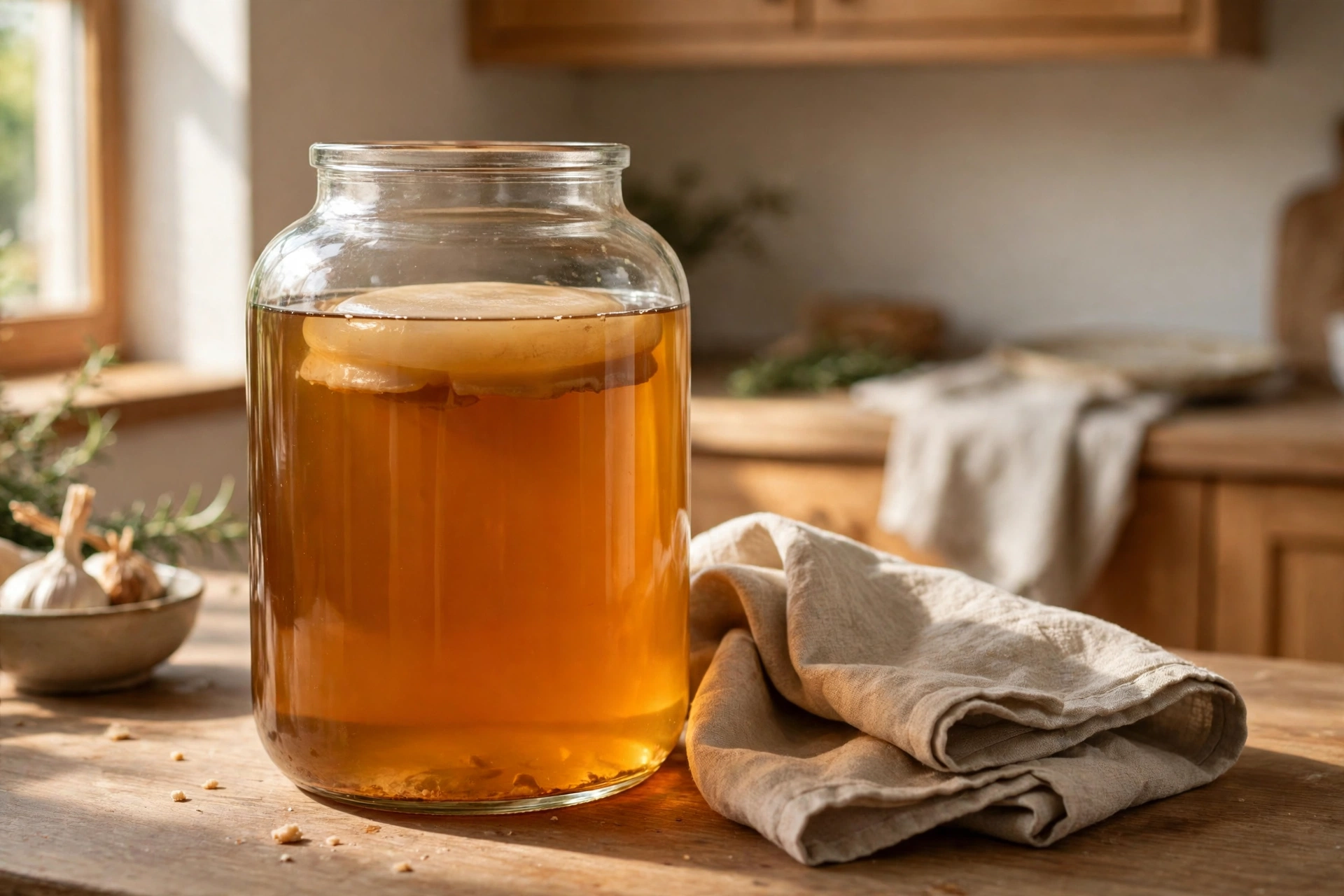
Kombucha is the odd one out in this category: not a vegetable in brine, but sweet tea turned cider-like by a culture of bacteria and yeast — the SCOBY, which Colorado State University Extension describes as a flat, jelly-like pancake, often called a mushroom or tea fungus though it is not a mushroom. Minnesota Extension classifies kombucha under acetic acid fermentation: after alcohol fermentation, bacteria convert ethanol and sugars into acetic acid, which is where the vinegar tang comes from. The recipe below is CSU Extension’s, printed with its own quantities, and the safety frame — hygiene, mold judgment, and the pH line — is stated in the sources’ own words.
This guide is part of our preservation guides. It is the beverage beside the category flagship, how to make sauerkraut, and it follows the same rule as every guide here: if a figure is not in the source, it does not appear on the page.
What You Need
For 1 gallon: 1/4 cup of green and/or black tea (in a mesh bag), or 4 to 8 tea bags; 1 gallon of filtered water; 1 cup of cane sugar; 1 to 2 cups of kombucha starter liquid (from a previous batch); and 1 SCOBY. For equipment, the source lists a tea kettle or pot for heating water; a brewing vessel safe for fermenting — a large glass jar, stainless steel, or food-grade plastic; a clean fine-weave cloth, towel, or coffee filter large enough to cover the vessel; a rubber band wide enough to fit around it; bottles or jars for the finished kombucha; and a funnel (optional). Obtain the SCOBY and starter liquid from a friend’s mature starter or purchased fresh, as the source directs.

Ball Half-Pint Mason Jars, 12-Pack
The recipe bottles finished kombucha into clean jars and ferments in a large glass jar; this half-pint case covers the bottled servings from a full gallon batch.
Check Availability
ThermoPro Instant-Read Thermometer
The tea must cool completely to room temperature before the SCOBY goes in, and a thermometer is how you prove the tea is actually there instead of guessing.
$8.99 from Amazon
Etekcity Digital Kitchen Scale
The recipe is written per gallon with sugar by the cup, and a kitchen scale keeps repeat batches consistent when you scale the vessel up or down.
$9.99 from AmazonBefore You Start
Hygiene is the first ingredient. The source directs safe and hygienic practices — following the proper steps and keeping a clean environment — to minimize the risk of contaminants such as molds or harmful bacteria which could cause illness, and it says to always wash hands well and rinse with kombucha or vinegar before handling the SCOBY. Two cautions from the source belong up front, not in a footnote. Start small with any new food or beverage: up to 4 ounces per day, with plenty of water, observing your own results. And under some conditions the alcohol level may exceed 0.5 percent alcohol by volume, which surpasses the limit for non-alcoholic beverages. The mold rule is absolute: if any signs of spoilage are noted, such as fuzzy blue, gray, green, brown, or black mold, discard the SCOBY and kombucha, and thoroughly wash the vessel.
How to Make Kombucha, Step by Step
- Make the tea. Heat the water. In the brewing vessel, make the tea and steep it for 10 minutes.
- Sweeten. Remove the tea leaves or bags. While the water is still hot, stir in the sugar and dissolve it completely.
- Cool completely. Allow the sweetened tea to cool completely to room temperature. To cool faster, the source’s alternative: heat only half the water to make a strong sweet tea, then add the remaining water as cold water.
- Add the culture. Once cooled to room temperature, with washed hands, add the SCOBY and the starter liquid to the sweetened tea. The starter liquid acidifies the tea to assure a safe pH level and minimize contamination, while the sugar feeds the bacteria and yeast.
- Cover. Cover with a clean cloth or coffee filter and secure it with a rubber band or bungee cord, to keep insects and contaminants out but allow air flow. Record the start date.
- Ferment. Allow the kombucha to ferment at room temperature, ideally 64 to 79 degrees F (18 to 26 degrees C), for 7 to 14 days. A new SCOBY develops on the surface, starting as a light haze that gradually turns whitish, then opaque and thicker. Check the flavor after a week, and stop fermenting when you like the flavor. The source’s general description allows typically 7 to 10 days, but possibly up to one month.
- Bottle. To stop fermenting, pour the kombucha into clean jars or bottles sanitized by rinsing with boiling water or vinegar, retaining the SCOBY and at least 1 to 2 cups for your next batch. Save more — at least 20 percent — if following the continuous brew technique.
- Flavor and carbonate (optional). Flavor the finished kombucha with 10 to 20 percent juice or clean fruit, and herbs and spices as you prefer. Cap tightly and leave at room temperature 1 to 3 days for potential carbonation, or refrigerate immediately — the source cautions that longer time capped at room temperature could result in carbon dioxide accumulation and even explosion of the contents.
The Numbers: Recipe, Temperature, and Time
| Figure | Tested value |
|---|---|
| Tea | 1/4 cup green and/or black tea, or 4 to 8 tea bags, per gallon |
| Water | 1 gallon filtered |
| Sugar | 1 cup cane sugar per gallon |
| Starter liquid | 1 to 2 cups per gallon (retain at least 1 to 2 cups for the next batch; at least 20 percent for continuous brew) |
| Tea steep | 10 minutes |
| Fermentation temperature | Room temperature, ideally 64 to 79 degrees F (18 to 26 degrees C) |
| Fermentation time | 7 to 14 days (typically 7 to 10 days, possibly up to one month) |
| Safety pH for fermented foods (UMN frame) | 4.6 or below |
| Flavoring | 10 to 20 percent juice or clean fruit |
| Second ferment, capped | 1 to 3 days at room temperature |
| First servings | Up to 4 ounces per day |
Kombucha carries about 30 calories and 2 to 3 grams of sugar per 8 ounces unflavored, per the source — and only limited scientific research is available on its claimed benefits, which the source says plainly and this page repeats without dressing it up.
A finished batch moves to bottles in the refrigerator, and the next batch starts in the same vessel — these are the two tools that side of the job runs on.

Mrs. Wages Pickling and Canning Salt
A second bag of pickling salt keeps the iodine-free salt the brine depends on in stock, so the next batch is not improvised with iodized table salt.
$19.32 from Amazon
Ziploc Freezer Quart Bags
Quart freezer bags are the simple backup for freezing starter portions and finished kombucha that need to move to cold storage quickly.
$26.48 from AmazonCommon Mistakes
Adding the SCOBY to hot tea. The procedure cools the sweetened tea completely to room temperature before the culture goes in. Heat is the fastest way to damage the culture the whole batch depends on.
Sealing the ferment airtight. The cover is cloth or a coffee filter, secured so air flows while insects and contaminants stay out. A sealed lid on an active ferment traps the gas the cloth is there to release.
Leaving capped bottles warm. The source’s caution is explicit: longer time capped at room temperature could result in carbon dioxide accumulation and even explosion. The carbonation window is 1 to 3 days, then the refrigerator.
Trying to save a moldy batch. Fuzzy blue, gray, green, brown, or black mold means discard the SCOBY and the kombucha and thoroughly wash the vessel. There is no trimming step. Our troubleshooting ferments guide covers the same discard criteria across the category.
Drinking a full glass on day one. The source says to start small — up to 4 ounces per day with plenty of water — and observe your own results with any new food or beverage.
Storage and Shelf Life
For safety, the source states that both homemade and commercially prepared kombucha should be stored refrigerated. Refrigeration is what stops the ferment from continuing to acidify in the bottle. The SCOBY between batches can be stored for several weeks in a similar cloth-covered vessel, covered by kombucha, per the source’s continuous-brew notes. Date every bottle; a brew that keeps fermenting warm is a brew heading for the explosion caution above.
Viewers also searched for these items.

ThermoPro TP49 Hygrometer
The ferment ideally holds between 64 and 79 degrees Fahrenheit, and a room unit with a temperature readout is how you know the brewing corner stays in that band.
$8.54 from Amazon
Ball Regular Mouth Canning Lids, 96 Count
Fresh lids cap the sanitized bottles the finished kombucha pours into, keeping the refrigerated storage the source directs sealed and dated.
$36.99 from Amazon
SOLIGT Glass Fermentation Weights, 4-Pack
Glass weights are the spare for the vegetable ferments this category runs beside the tea — the same shelf serves the crock when cabbage season arrives.
$11.99 from AmazonFrequently Asked Questions
How long does kombucha take to ferment?
The recipe ferments at room temperature for 7 to 14 days, checking the flavor after a week. The source’s general description says typically 7 to 10 days, but possibly up to one month.
How much starter do I keep for the next batch?
At least 1 to 2 cups, retained with the SCOBY when you bottle. For continuous brew, save more — at least 20 percent.
Is homemade kombucha alcoholic?
It carries trace amounts of alcohol, and the source cautions that under some conditions the level may exceed 0.5 percent alcohol by volume, the limit for non-alcoholic beverages.
What if I see mold on the SCOBY?
Discard the SCOBY and the kombucha, and thoroughly wash the vessel. The source names fuzzy blue, gray, green, brown, or black mold as the spoilage sign — the whole batch goes.
Recipe, quantities, fermentation temperature and times, and precautions: Colorado State University Extension, “Understanding and Making Kombucha,” via Colorado State University Extension; fermentation classification and pH safety frame: University of Minnesota Extension, “Preserving food at home: Fermentation.”
Prices shown on this page were last checked November 26, 2026 — prices change; check before you buy.
Talk it over with other readers
The Truly Preserved Community on Facebook is where readers compare notes on food storage, water, and backup power — and where your questions help decide what we research next.