
Truly Preserved is reader-supported. If you buy through a link on this page we may earn a commission at no extra cost to you. Nobody pays for placement or scores.
THE SHORT ANSWER
Corned beef, Oregon State University Extension’s deli-style recipe: rub a 4- to 6-pound beef brisket with 5 tablespoons of Morton Tender Quick mix, 2 tablespoons of brown sugar, and the recipe’s spices, seal it in a plastic bag, and refrigerate it to cure 5 days per inch of meat thickness. Then cover it with water in a Dutch oven and simmer until tender, about 3 to 4 hours. The USDA’s food safety service adds the finish line: cook raw corned beef to a minimum internal temperature of 145°F and let it rest at least 3 minutes. Every figure on this page comes from those credited sources.
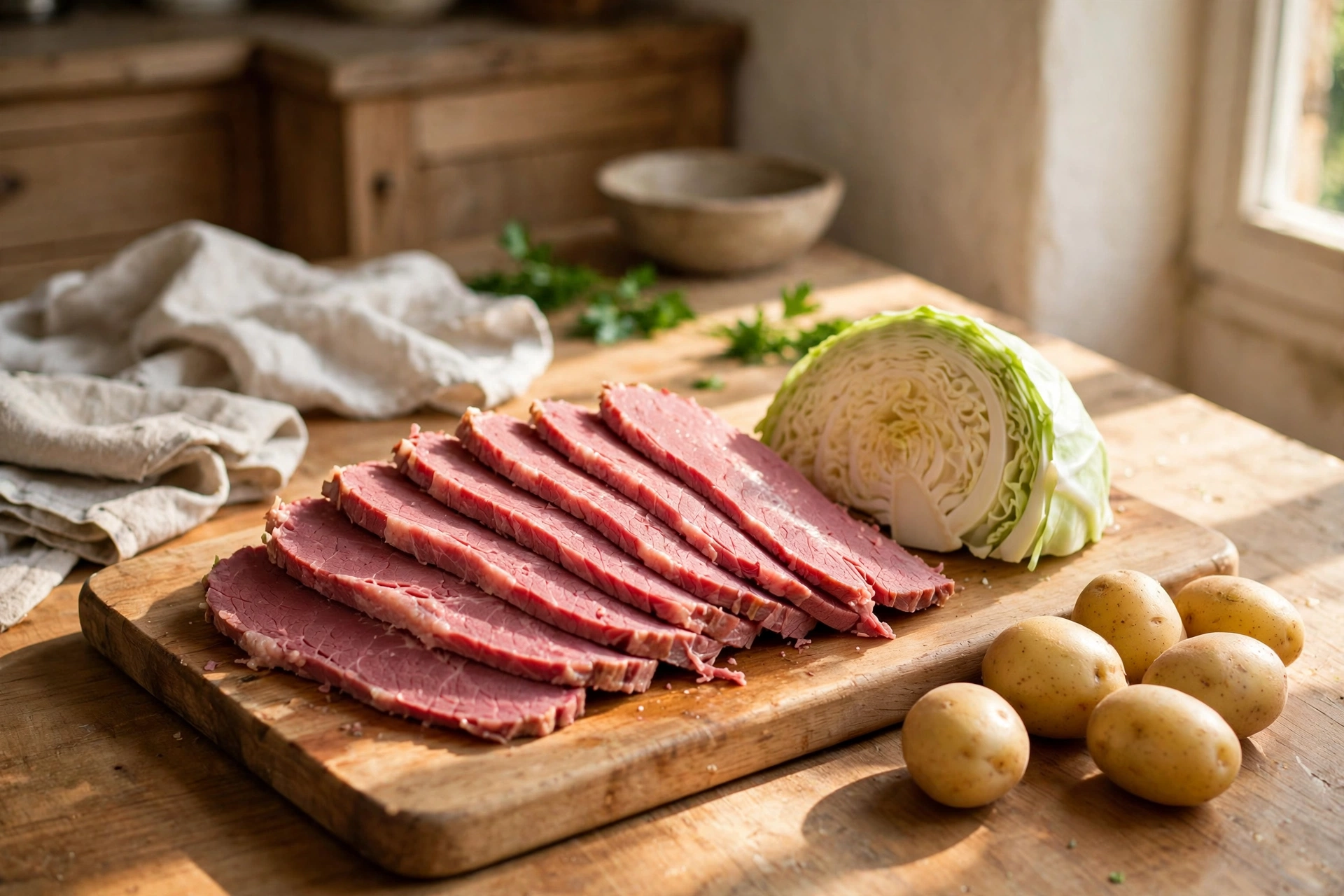
Corned beef starts as one of the tougher cuts on the animal — the brisket — and the cure is what turns it into the pink, sliceable, unmistakably seasoned meat people plan a meal around. The name has nothing to do with corn the vegetable: the “corns” were the coarse grains of salt once used to cure it. What the cure does, beyond flavor, is fix the color — cured beef stays pink even after long cooking, which is why doneness on this meat is judged with a thermometer and never by color.
This guide follows one tested recipe exactly: Oregon State University Extension’s deli-style corned beef, from its publication on summer sausage and deli-style meats. It is part of our preservation guides collection, alongside the category’s starting point, how to cure bacon at home. If the curing salt itself is new to you, read how to use curing salt safely before you begin — this recipe’s cure is a specific commercial mix, used in exactly the amount the recipe prints, and it is not interchangeable with other curing salts by guesswork.
What You Need
One beef brisket or tongue, 4 to 6 pounds. The cure and seasonings, exactly as Oregon State prints them: 5 tablespoons Morton Tender Quick mix, 2 tablespoons brown sugar, 1 tablespoon ground black pepper, 1 teaspoon ground paprika, 1 teaspoon ground bay leaves, 1 teaspoon ground allspice, and ½ teaspoon garlic powder. You also need a plastic bag large enough to hold the brisket, refrigerator space for the cure, and a Dutch oven big enough to cover the meat with water.

Etekcity Digital Kitchen Scale
The recipe is written for a 4- to 6-pound brisket and its cure time runs on thickness — weighing and measuring the cut starts the whole method.
$9.99 from Amazon
ThermoPro Instant-Read Thermometer
Corned beef stays pink when it is done, so the 145°F finish line can only be called with a thermometer in the thickest part.
$8.99 from Amazon
Ziploc Freezer Quart Bags
The cure happens sealed in a bag in the refrigerator, and the cooked meat freezes in the same quart-bag portions.
$26.48 from AmazonBefore You Start
Three rules. First, one recipe: the cure amount below belongs to Morton Tender Quick mix, a specific product with its own salt and cure balance. Do not substitute Prague Powder #1 or any other curing salt into this recipe at a guessed amount — the amounts are not interchangeable, and our curing salt guide explains why. Second, trim the surface fat from the brisket before the cure goes on, as the recipe directs. Third, the cure happens in the refrigerator for the full time — 5 days per inch of thickness — not on the counter and not shortened because the meat “looks pink.”
How to Make Corned Beef, Step by Step
- Trim the brisket. Trim the surface fat from the brisket (or tongue).
- Mix the cure. In a small bowl, mix the 5 tablespoons of Morton Tender Quick mix with the brown sugar, black pepper, paprika, ground bay leaves, allspice, and garlic powder.
- Rub it in. Rub the mixture into all sides of the brisket.
- Bag it. Place the brisket in a plastic bag and tie the end securely.
- Refrigerate and cure. Refrigerate and allow the meat to cure 5 days per inch of meat thickness.
- Cook in water. Place the brisket in a Dutch oven, add water to cover, bring it to a boil, then reduce the heat.
- Simmer until tender. Simmer until tender, about 3 to 4 hours.
- Check the temperature and rest. Confirm the thickest part has reached a minimum internal temperature of 145°F, then let the meat rest at least 3 minutes before slicing. Slice across the grain.
The Numbers: Cure, Time, and Temperature
| Item | Amount or figure |
|---|---|
| Beef brisket or tongue | 4 to 6 pounds |
| Morton Tender Quick mix | 5 tablespoons |
| Brown sugar | 2 tablespoons |
| Ground black pepper | 1 tablespoon |
| Ground paprika | 1 teaspoon |
| Ground bay leaves | 1 teaspoon |
| Ground allspice | 1 teaspoon |
| Garlic powder | ½ teaspoon |
| Curing time | 5 days per inch of meat thickness, refrigerated |
| Simmering time | About 3 to 4 hours, until tender |
| Finished internal temperature | 145°F minimum, with at least a 3-minute rest (USDA FSIS) |
Corned beef is also the starting point for pastrami — the same cured brisket, coated in spices and smoked instead of simmered. When you are ready for that step, see how to make pastrami. The two tools that side of the job runs on are a reliable thermometer and a way to seal the leftovers.

Nesco VS-12 Vacuum Sealer
For the pastrami step that builds on this cure — vacuum-sealed smoked brisket portions hold their smoke and moisture in the freezer.
$108.18 from Amazon
FoodSaver Elite Vacuum Sealer
The step-up sealer for slicing day, when a whole brisket becomes a week of sealed sandwich portions.
$218.56 from AmazonCommon Mistakes
Swapping the cure product. This recipe’s 5 tablespoons is an amount of Morton Tender Quick mix. The same spoon count of Prague Powder #1 would be a completely different — and unsafe — dose. Use the product the recipe names, in the amount it prints.
Curing by the calendar instead of the thickness. The recipe’s clock is 5 days per inch of meat thickness. A thick brisket pulled at a thin brisket’s date is under-cured in the center.
Judging doneness by color. Cured beef stays pink after cooking because of the cure. Pink is not raw, and brown is not the test either — 145°F on a thermometer is.
Skipping the rest. The food safety service’s figure is 145°F plus at least a 3-minute rest. Slicing the second it leaves the pot skips half the instruction.
Boiling hard the whole time. The recipe says bring to a boil, reduce the heat, and simmer. A rolling boil for 3 to 4 hours toughens the very cut the long cook is meant to tenderize.
Storage and Shelf Life
Refrigerate cooked corned beef promptly and treat it as cooked meat: keep it cold, keep it covered, and freeze what will not be eaten in the next few days. Sliced corned beef freezes well in sealed portions. The raw, bagged brisket belongs in the refrigerator for its curing days only — the cure time in the recipe is the schedule, not a storage extension.
Viewers also searched for these items.

Morton Canning and Pickling Salt, 4 lb
The pure canning and pickling salt for the wider curing shelf — no additives, for the recipes that call for plain salt by weight.
$2.68 from Amazon
Mrs. Wages Pickling and Canning Salt
A second additive-free pickling salt in a resealable pouch, for the brines and cures that follow this one.
$19.32 from Amazon
IRIS USA Airtight Container, 30 lb, with Wheels
Airtight storage for the dry cure ingredients and spices this recipe measures out, kept dry and sealed between batches.
$23.99 from AmazonFrequently Asked Questions
Why is my corned beef still pink after hours of cooking?
That is the cure doing its job. The curing ingredients fix the meat’s pigment, so corned beef stays pink even when fully cooked. Judge it by temperature — 145°F with a 3-minute rest — not by color.
Can I use Prague Powder #1 instead of Morton Tender Quick?
Not in this recipe, and not at the same amount. The two products are different mixtures, and this recipe’s amount was tested for Tender Quick. Our curing salt guide covers what each product is.
How long does the cure take for a 2-inch-thick brisket?
The recipe’s rate is 5 days per inch of thickness, so a 2-inch brisket cures about 10 days in the refrigerator.
What cut should I buy?
The recipe is written for a beef brisket or tongue of 4 to 6 pounds, with the surface fat trimmed before the cure goes on.
Recipe and method: Oregon State University Extension, “Summer Sausage & Deli Style Meats,” SP 50-735 (revised March 2020). Finished temperature and rest: USDA Food Safety and Inspection Service, corned beef guidance, via via the Oregon State University Extension (SP 50-735, PDF).
Prices shown on this page were last checked November 26, 2026 — prices change; check before you buy.
Talk it over with other readers
The Truly Preserved Community on Facebook is where readers compare notes on food storage, water, and backup power — and where your questions help decide what we research next.