
Affiliate Disclosure: Truly Preserved is reader-supported. When you buy through links on this page, we may earn a commission at no extra cost to you. As an Amazon Associate, Truly Preserved earns from qualifying purchases. Read our full affiliate disclosure.
Last updated: October 31, 2026
THE SHORT ANSWER
For weeks, yes — people have. For months, not on rice and beans alone. The pairing is famous because it works: beans supply the amino acid rice is short on (lysine) and rice supplies the one beans are short on (methionine), so together they make complete protein. What the pair does not supply is vitamin B12, vitamin C, vitamin D, or enough fat — and those gaps, not protein, are what end the experiment. Three cheap additions fix most of it: a fat, a source of vitamin C, and any animal food or B12 source, even a small one.
Rice and beans is the cheapest complete-protein trick in the storage world, and it is why the pair anchors so many shelves — including ours: in our bulk staples comparison, white rice came in at about $1.70 per 1,000 calories, the cheapest calories we have priced. A person can eat for very little money this way. The question is what runs out first — and it is not energy, and it is not protein.
What rice and beans cover, and what they miss
| Nutrient | Rice + beans | The gap |
|---|---|---|
| Calories | Plenty, cheaply | None — this is their strength |
| Protein | Complete together | Must eat both across the day |
| Fat | Very low | Some fat is required to absorb vitamins |
| Vitamin B12 | None | Only animal foods and supplements carry it |
| Vitamin C | Nearly none | Scurvy is the classic long-shortage disease |
| Vitamin D | None | Sunlight or a supplement |
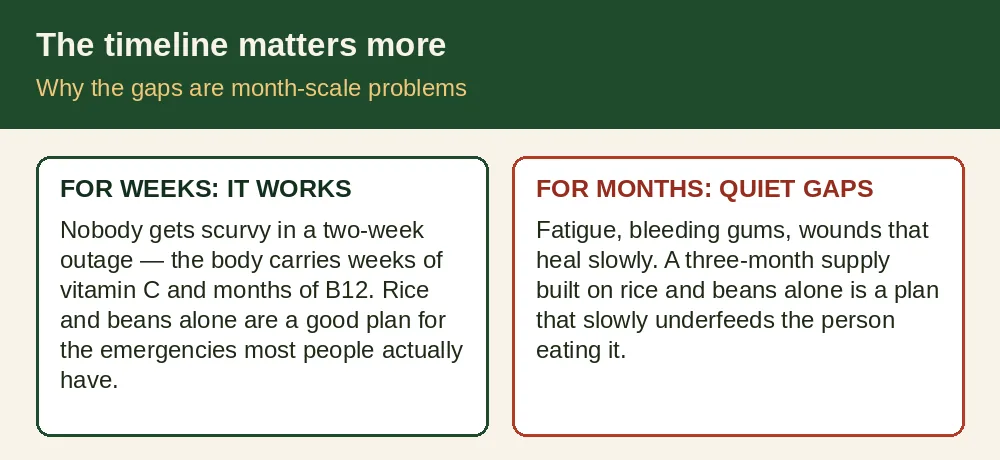
The timeline matters more than the list. Nobody gets scurvy in a two-week outage — the body carries weeks of vitamin C and months of B12. That is why rice and beans alone are a perfectly good plan for the emergencies most people actually have. The deficiencies in the table are month-scale problems, and they arrive quietly: fatigue, bleeding gums, wounds that heal slowly. A three-month supply built on rice and beans alone is a plan that slowly underfeeds the person eating it.
The three cheap additions that close the gaps
- A fat: a bottle of cooking oil, peanut butter, or canned coconut milk. Fat carries the fat-soluble vitamins and adds calories without adding bulk — and peanut butter is already a storage staple on most shelves.
- A vitamin C source: canned tomatoes, dried peppers, or a jar of lemon juice — or simply a basic multivitamin, the cheapest insurance in the whole pantry.
- Any animal food, even a little: canned tuna, sardines, powdered eggs, or shelf-stable milk. It does not take much — B12 needs are measured in micrograms — and a small weekly serving closes the gap the plants cannot.
Costed against our staples math, those additions raise the price of a rice-and-beans day only modestly, and they are the difference between a diet that sustains and a diet that merely fills. The full calorie-per-dollar picture across rice, beans, wheat, and oats is in the staples comparison, and what a serving really costs runs the same test on the commercial kits.
Questions people also ask
Do rice and beans have to be eaten in the same meal?
No. That was the old belief; nutrition science settled it years ago — the amino acids pool across the day. Rice at lunch and beans at dinner complete each other just fine.
What about brown rice instead of white?
Brown rice carries more fiber and micronutrients, but its bran oil goes rancid in storage — which is why everyone says not to store it long-term, a rule we cover in the staples comparison. For a long shelf, white rice plus the additions above beats brown rice alone.
How much rice and beans is a day, in dry weight?
Roughly a pound of dry staples a day lands near 1,600–1,800 calories depending on the split — most people plan about ¾ pound of rice and ¼ pound of beans daily and make up the rest with the fat. Appetite fatigue is real, too: seasonings are a storage item, not a luxury.
Related questions
- Best bulk staples for long-term storage
- Should I freeze rice and flour before sealing to kill bugs?
- How do you keep track of what’s stored and when it expires?
This question sits in What People Are Asking About Food Storage — the full list of food-storage questions from real forums, each with a short answer.
Talk it over with other readers
The Truly Preserved Community on Facebook is where readers compare notes on food storage, water, and backup power — and where your questions help decide what we research next.