
Truly Preserved is reader-supported. If you buy through a link on this page we may earn a commission at no extra cost to you. Nobody pays for placement or scores.
The best emergency food for seniors is not a different kind of food. It is the same buckets, read through three filters the lids never mention: how much salt a full day of it delivers, whether it can be chewed without a fight, and whether the portions match a smaller appetite instead of a hiker’s. This guide is built from published specs, the makers’ own nutrition panels, and aggregated owner feedback, with prices checked November 16, 2026. We don’t own these products, and nothing here is medical advice — we report label numbers exactly as the makers print them, and what those numbers mean for one person’s health is between that person and their own care team. This page completes the special-diet shelf on the Preserve the Pantry page, beside our diabetic, gluten-free, and low-sodium pages.
The Short Version

Score out of 10
Peak Refuel Basecamp Bucket 3.0
Real-meal servings at about 424 calories, soft when rehydrated, and the gentlest salt rate in a true bucket — about 2,350mg per 2,000-calorie day.
Check Availability
Score out of 10
Mountain House Essential Bucket
Steep-in-the-pouch meals with nothing to lift or drain, and a 30-Year Taste Guarantee — but about 6,100mg of sodium per 2,000-calorie day. Buy it for storage, pair it for salt.
$129.99 from Amazon
Score out of 10
ReadyWise 120 Serving Bucket
Servings near 205 calories suit grazing and smaller appetites, and the pastas rehydrate soft — stretched to a full day, the salt runs 4,500 to 6,800mg.
Check Availability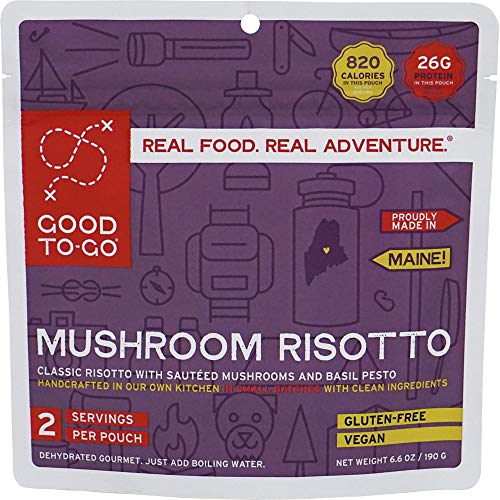
Score out of 10
Good To-Go Mushroom Risotto
420mg of sodium in a full 410-calorie serving — the lowest day-math we found — in a soft risotto. Rotation food, not a decade bucket: a two-year shelf floor.
Check AvailabilityHow we chose: We stretched every maker’s nutrition panel to the same day of eating, then re-ran the day at 1,600 calories — the smaller planning day many older adults actually eat — and judged texture by how the food eats rehydrated, not how it photographs dry. Scores weigh the salt rate first, then chewability, portion fit, and shelf life. Read our full methodology.
Head-to-Head Specs
| Product | Sodium per 2,000-cal day | Portion | Best for |
|---|---|---|---|
| Good To-Go Mushroom Risotto | ~2,049 mg | 410 cal | Lowest-salt meals |
| Peak Refuel Basecamp Bucket 3.0 | ~2,350 mg | ~424 cal | A bucket that eats daily |
| ReadyWise 120 Serving Bucket | ~4,500–6,800 mg | ~205 cal | Small, frequent portions |
| Mountain House Essential Bucket | ~6,100 mg | ~246 cal | 30-year storage layer |
Sodium rates are our own division of the makers’ published panels, built in our low-sodium comparison — per-serving figures multiplied honestly to a day, because nobody eats one 205-calorie serving and stops. At a 1,600-calorie day, multiply every rate here by 0.8: the risotto lands near 1,639mg, Peak near 1,880mg, and the Mountain House bucket still lands near 4,880mg. All four Amazon listings were out of stock on Keepa and camelcamelcamel on November 16, 2026; the links stay under our publish-anyway rule.
Peak Refuel Basecamp Bucket 3.0 — the bucket that fits the day
Peak’s bucket is the one we’d put on a senior’s shelf first: real portions, soft food, and a salt rate a third of its big rival’s. Our score: 7/10.
The bucket publishes 10,180 calories and 480 grams of protein across 24 servings — about 424 calories a serving, a meal rather than a snack — and its Beef Stroganoff panel reads 470mg of sodium per 400-calorie serving. Rehydrated, these are stews and pastas: soft, spoon food, no chewing contest. At a 1,600-calorie planning day, one bucket is about 6.4 days of food. Owners rate it 4.4 stars across ~200 ratings on Keepa’s current record — a thin record, and we say so every time — praising portion size and protein, complaining about price.
- Pros: Gentlest salt rate in a true bucket; servings that are actual meals; high protein per serving for food that eats soft.
- Cons: 10-year shelf claim against 25–30 for rivals; thin owner record at ~200 ratings; out of stock on Amazon at this check.
Buy it if the bucket will actually be eaten day after day. Skip it if the plan is measured in decades first.



Mountain House Essential Bucket — the storage layer, with a salt warning
Nothing here is easier to make — tear, pour, wait, eat from the pouch — and nothing here is saltier per day. Both facts stay in the open. Our score: 8/10.
Twelve pouches, 22 servings, about 5,420 calories derived from the maker’s own pouch labels (the maker publishes no bucket total). The prep is the senior-friendly part: no pot to lift, no can opener, no draining, and the rehydrated meals are soft. The salt is the catch, counted in our earlier head-to-head at about 3,050mg per 1,000 calories — about 6,100mg across a 2,000-calorie day, about 4,880mg even at 1,600. Owners rate it 4.7 stars across ~1,234 ratings, taste first among the praises. Our honest use for it is the one in our diabetic label guide as well: a long-life layer, eaten in rotation with lower-salt food, not a solo diet.
- Pros: 30-Year Taste Guarantee; easiest prep on this page; gluten-free assortment; deepest taste record.
- Cons: Highest salt rate here by a wide margin; only about 2.7 real days per bucket at 2,000 calories; out of stock on Amazon at this check.
Buy it if it rides on top of a lower-salt shelf. Skip it if it would be the only food in the house for a stretch.
ReadyWise 120 Serving Bucket — small portions, counted honestly
ReadyWise’s small servings are a flaw for a labourer and a fit for a grazer — as long as the day’s salt gets counted, because nine or ten servings is a day here. Our score: 7/10.
The bucket holds 120 servings and 24,540 published calories across 11 varieties — pastas, soups, and a teriyaki rice that all rehydrate soft and can be made in small amounts through the day. Its labels run 450 to 750mg of sodium per small serving, which is 4,500 to 6,800mg stretched to a 2,000-calorie day; at 1,600 calories it is still roughly 3,600 to 5,440mg. Owners rate the Amazon listing 4.5 stars across ~10,571 ratings — the deepest record here — with taste split down the middle and portion size the standing complaint, which for this reader is partly the point.
- Pros: Portions that match smaller appetites; soft, familiar foods; the deepest owner record on this page.
- Cons: Salt rate is high once servings multiply; a bucket is only about 12 days at 2,000 calories; out of stock on Amazon at this check.
Buy it if eating little and often is the household pattern. Skip it if salt is the first filter — start with the risotto and Peak instead.

COSORI Dehydrator
A fruit roll sheet in the box, temperature set to the degree, and a 48-hour timer that ends the batch before it over-dries.
$135.99 from Amazon
Blue Alpine Medium Select
Faster cycles — 12 to 20 hours on Blue Alpine's figures — quarter-sheet trays, and silicone mats in the box. More machine than a first month needs; the one to read about before you buy twice. Use code TRULYPRESERVED at checkout.
Check the price
Good To-Go Mushroom Risotto — the gentlest meal, on rotation
One pouch of this risotto does what no bucket here does: a full meal whose salt stays gentle without any portion games. Our score: 7/10.
The maker’s panel reads 410 calories and 420mg of sodium per serving — about 2,049mg across a 2,000-calorie day, about 1,639mg at 1,600. The food itself is arborio rice and mushrooms in a soft, spoonable risotto, gluten-free and vegan on the label, rated 4.7 out of 5 across 168 reviews on the maker’s store in our November check. The trade is time, twice over: a 20-minute soak, the longest prep here, and a minimum two-year shelf life — this is food you rotate through camping trips and easy dinners, not food you forget for a decade. It contains walnuts and sulfites, printed here because a senior shelf is exactly where allergen lines matter.
- Pros: Lowest sodium per day of any entree we have counted; a serving is a real, soft meal; short ingredient list.
- Cons: Two-year shelf floor; 20-minute rehydration; walnuts and sulfites; per-calorie cost is trail-meal money.
Buy it if salt is the deciding number and the shelf gets rotated anyway. Skip it if the purchase must sit untouched for ten years.
Is emergency food too salty for seniors?
Most bucket food is, on the makers’ own labels — that is the finding of our low-sodium comparison, and this page inherits it. Stretched to a day, big-bucket entrees run from about 2,350mg (Peak) to about 6,100mg (Mountain House). The fix that works on paper is layering: a lower-salt entree like the risotto in regular rotation, plain staples — rice, oats, beans cooked without the seasoning packet — carrying more of the day, and the salty buckets eaten as one meal among plainer ones. What any target number should be for a specific person is a question for their own care team; the labels are what we can hand you.
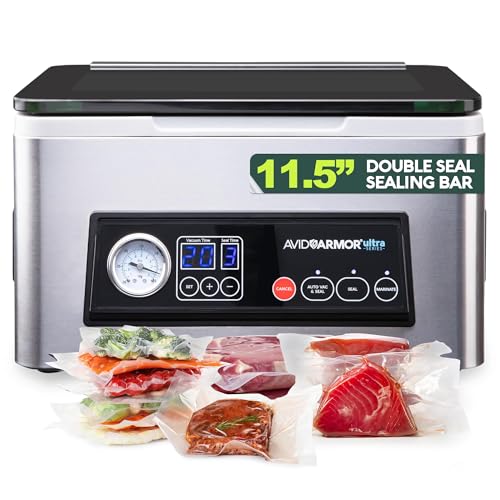
Avid Armor USV20 Chamber Vacuum Sealer
The chamber machine: soups, marinades and smooth cheap pouches — if it fits in an 11 x 10 pouch.
$349.00 from Amazon

Thrive Life Pantry Cans
Freeze-dried food by the can, no machine: the same long-life ingredients the kits are built from, bought a can at a time.
$60.00 from AmazonWhat emergency food is easiest to chew?
Rehydrated food wins this category by design: stews, pastas, risottos, oatmeal, and mashed sides all eat soft, because the water that makes them shelf-stable meals also makes them spoon food. The foods to keep off a senior’s main shelf are the hard ones — ration bars, which we counted in our ration bar comparison, are dense, dry, and built for a glove box, not for dentures. Anyone with swallowing trouble needs a professional assessment of what textures are safe; no list on a website, including this one, can make that call.
How much food should a senior store?
Plan the days first and the calories second: Ready.gov’s food guidance starts at several days of non-perishable food and its older-adult guidance adds the parts buckets forget — a manual can opener, familiar foods, and the household’s medication and supply needs planned alongside the food. At a 1,600-calorie planning day, the Peak bucket’s 10,180 calories last about 6.4 days and the ReadyWise bucket’s 24,540 last about 15 days — smaller appetites stretch a shelf further, which is the one piece of arithmetic that runs in a senior’s favour. Two weeks at home is the sensible first target, built a few items a week.

Survival Garden Seeds Home Garden Collection, 30 Pack
Every lot germination-tested with a packed-for date, and the only maker here that tells you plainly most seed lasts 3 to 5 years — not forever.
$29.97 from Amazon
Gardeners Basics Survival Seed Vault Kit, 35 Varieties
The only vault that prints an exact count for every variety — exact per-variety counts on the listing, a resealable mylar outer bag, and plant markers included.
$23.95 from Amazon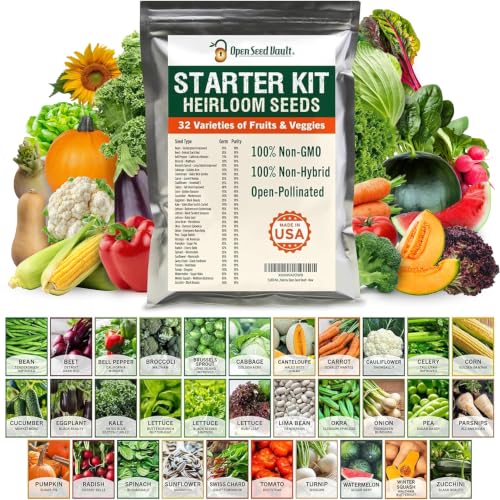
Open Seed Vault 15,000, 32 Variety Pack
4.6 stars across roughly 14,600 Amazon ratings — the deepest owner record here — but the calorie crops are thin: 15 to 25 seeds of beans, peas, and pumpkin.
$28.99 from AmazonWhat about opening, lifting, and cooking?
This is where senior shelves fail in practice, and the owner complaints back it up: #10 cans need an opener, a strong grip, and a plan for a big opened can; pouches tear open and cook in the pouch with a kettle’s worth of water. Every product scored here is pouch food for that reason. Keep the kettle light, the buckets small enough to lift — a full 4-gallon pail runs near 20 pounds — and a manual opener in the kit anyway, because the canned food already in the house will be eaten first in any real outage.
Honest caveats
Three, plainly. First, stock: all four Amazon listings here were out of stock on both price trackers on November 16, 2026, so this page prints no current prices — check the links, or the makers’ stores, on the day you buy. Second, labels move: sodium figures are from the makers’ panels as we read them in our November datasets, and a reformulated pouch will carry a different panel — read the pouch in your hand. Third, this page reports food data only. Sodium, potassium, fluid, and sugar limits tied to a condition or a medication belong to the reader’s own clinician or pharmacist, and Ready.gov says the same thing in its own way: special diets get particular attention, planned before the emergency, not during it.
Viewers also searched for these items.


ThermoPro TP49 Hygrometer
The ten-year verdict depends on the temperature the food actually lived at — a min/max hygrometer in the storage room replaces guessing with the number.
$8.54 from Amazon
Millennium Energy Bars (SOS Food Lab)
Nine real flavors and the only bar here people call genuinely good. Single 400-calorie bars made for go-bags and school kits.
$19.99 from AmazonFrequently asked questions
How many calories a day should a senior plan for in an emergency?
Many older adults eat nearer 1,600 calories a day than the 2,000 on the nutrition panel, which is why this page runs both days side by side. Planning at 1,600 stretches every bucket further — Peak’s bucket goes from about 5 days to about 6.4 — but appetite and activity vary, and anyone’s real number is theirs to set with their care team.
What is the lowest-sodium emergency food?
Of the entrees we have counted from full panels, Good To-Go’s Mushroom Risotto is lowest at about 2,049mg per 2,000-calorie day, and Peak’s bucket is the gentlest true bucket at about 2,350mg. Plain single-ingredient staples — oats, rice, plain beans — run lower still, which is why they carry so much of a senior shelf in our recommendation.
Are emergency ration bars a good choice for seniors?
As a main food, no. Ration bars are hard, dry, and built to be ignored in a vehicle kit for years; they ask the most of teeth and the least of preparation. Keep a pack for the car if you like, and stock the house shelf with food that rehydrates soft.
Can seniors eat freeze-dried food every day?
The food itself is ordinary food dried — the limits are the label numbers, mainly salt, and the sameness. Layered with plain staples and rotated, the buckets here can carry a two-week stretch. Eaten alone for months, any single bucket’s salt rate and menu would wear thin, which is a layering argument, not a safety ruling.
What else belongs in a senior’s emergency kit besides food?
Ready.gov’s older-adult guidance points at the unglamorous list: a manual can opener, stored water at a gallon a person a day, a way to keep medications on schedule, spare glasses and batteries for the devices the household depends on, and familiar foods — morale is a planning item, not a bonus.
Sources & freshness: The makers’ published nutrition panels and product totals as counted in our November 2026 low-sodium and kit datasets (Good To-Go, Peak Refuel, Mountain House, ReadyWise), Ready.gov’s food and older-adult preparedness guidance, and Keepa and camelcamelcamel records for all four Amazon listings, checked November 16, 2026 — all four out of stock, ratings as cited. Prices last checked: November 16, 2026 (no live Amazon prices found).
Talk it over with other readers. The Truly Preserved Community on Facebook is where readers compare notes on food storage, water, and backup power — and where your questions help decide what we research next. Join the group →
Prices shown on this page were last checked November 26, 2026 — prices change; check before you buy.
How we researched this guide. We re-ran the makers’ own nutrition panels from our November 2026 datasets at two planning days — 2,000 and 1,600 calories — instead of trusting per-serving figures, and checked all four Amazon listings live on Keepa and camelcamelcamel on November 16, 2026: every one was out of stock, so this page prints no current price and no price in its review data. No product photo was available under a grant or a brand program for Peak Refuel, Mountain House, ReadyWise, or Good To-Go — their permission asks are still outstanding — so this page carries no product photos rather than substitutes; the verdict cards and buy buttons carry the links. This page reports label data only and gives no medical advice. No product was bought or eaten — we work from research, not hands-on testing. How we research and score →