
Truly Preserved is reader-supported. If you buy through a link on this page we may earn a commission at no extra cost to you. Nobody pays for placement or scores.
The best power station for CPAP use is decided by one setting on your machine, not by the size of the box: run the heated humidifier and a night costs about 640 watt-hours out of the battery; turn it off and the same night costs about 320. This buying guide is built from published specs, prices checked November 11, 2026, and aggregated owner feedback, using the same 85%-usable method as our CPAP runtime page. We don’t own these stations; we did the homework. This is buying research, not medical advice — check your machine’s power label and talk to your equipment supplier about backup for therapy you depend on. Four stations, all pure sine wave, all with a 12V DC output worth using, and one clear first pick for most bedsides.
The Short Version
Score out of 10
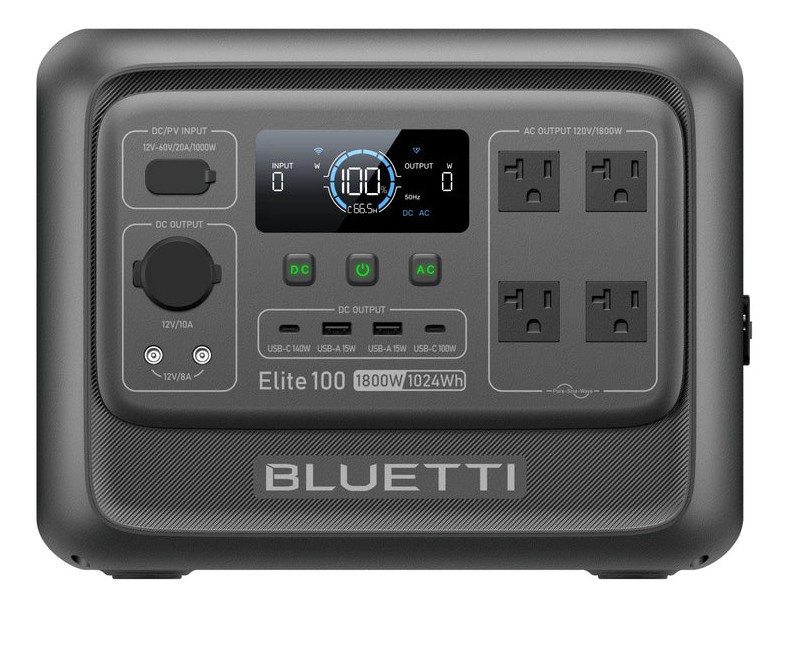
Bluetti Elite 100 V2
1,024Wh in a 25 lb box: about 22 hours with the humidifier off, about 11 with it on — the right size for most outage nights.
Check Availability
Score out of 10
Anker SOLIX C1000
1,056Wh at about 45¢ per watt-hour, expandable to 2,112Wh, with a sub-20ms UPS switchover for outages that start while you sleep.
Check the price
Score out of 10
Jackery Explorer 1000 v2
1,070Wh at 23.8 lb with 4,000-cycle cells — the one to carry between the bedroom and the campsite.
$559.00 from Amazon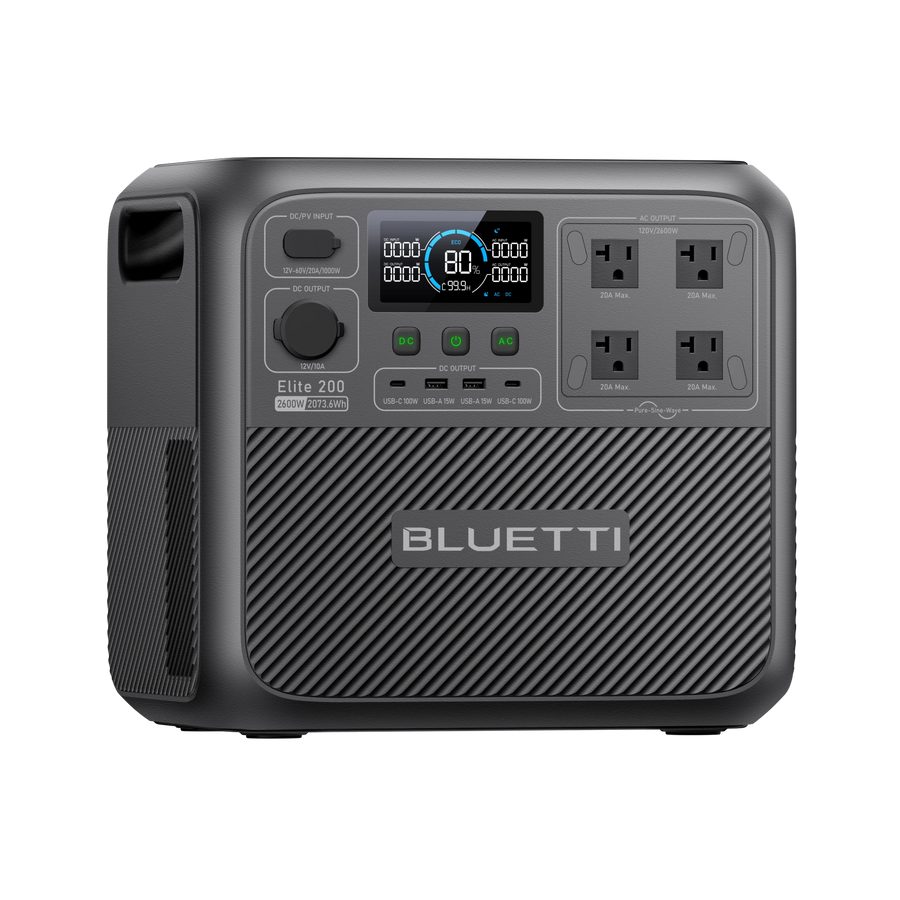
Score out of 10
Bluetti Elite 200 V2
2,073.6Wh: about 44 hours humidifier-off or 22 hours with it on — five-plus dry nights — in a 53.4 lb box that stays where you put it.
Check the priceHow we chose: Stations are judged on usable capacity against the CPAP draw figures from our runtime research (about 40W with the humidifier off, about 80W with it and a heated tube on, at 85% usable capacity), a 12V DC output for converter use, pure sine wave output, weight at the bedside, cost per watt-hour at this build’s verified prices, and owner feedback. Read our full methodology.
Cost per watt-hour
What one watt-hour of storage costs in each station, from the prices checked for this build. Lower is better.
The chart’s lesson is that the big box is the cheap storage and the small boxes are the cheap nights: you pay the Elite 200’s premium in pounds, not in cents per watt-hour. This page sits over our CPAP runtime pages — start with how long a station runs a CPAP if you want the runtime method by itself — and under the Preserve the Power page.
Prices checked November 11, 2026: the two Bluetti stations at Bluetti’s own store (both referral links run through our Bluetti direct program), the Anker at the maker’s store and Amazon reads from October 2026 that still agreed at $469.99 in this build’s checks, and the Jackery at Jackery’s own store as read November 2, 2026. Runtime figures throughout use 85% usable capacity: a CPAP at ~40W (humidifier off) or ~80W (humidifier and heated tube on), eight-hour nights.
Bluetti Elite 100 V2 — the right size for the nightstand
The Elite 100 V2 is the station we would put beside most beds: 1,024Wh is two to three dry nights or one long humidified night, in a box one person can carry room to room. Our score: 9/10.
The numbers: 1,024Wh of LiFePO4, 1,800W of pure sine wave output, up to 1,000W of solar input, about 70 minutes to refill from the wall, 25 lb. Usable energy is about 870Wh, which divides into ~22 hours at 40W and ~11 hours at 80W. It scored 9 in our 1kWh apartment comparison as well. The owner record on its standalone Amazon listing is still thin (~135 ratings at our October read, 4.7 stars) — the honest weak point — while the maker’s store price has held at $499 across our November checks. Best solar pairing: a 200W-class panel such as the Bluetti PV200 on a sunny outage day.
- Pros: Right-sized capacity for CPAP; 25 lb; fast wall refill (~70 min); 1,000W solar input; $499 held steady across our checks.
- Cons: Thin owner record so far (~135 ratings on the listing we track); not expandable; one humidified night plus margin, not two.
Buy it if your outages are a night or two and the humidifier stays off or low. Skip it if you will not sleep without heated humidity through a three-day outage — that is the Elite 200 below. Bluetti’s price was $499:
Anker SOLIX C1000 — the value pick that can grow
Score out of 10
- Weight441.4 oz (12515 g)
- Size (L × W × H)14.8 × 8.07 × 11.02 in
The C1000 matches the Elite 100’s capacity for $29 less, adds the fastest wall charge in this group, and is the only 1kWh station here that can double itself later. Our score: 8/10.
Anker publishes 1,056Wh of LiFePO4 rated for 3,000 cycles, 1,800W of pure sine wave output, 600W of solar input, a UPS switchover under 20ms, and expansion to 2,112Wh with its add-on battery. Usable energy is about 898Wh: ~22 hours humidifier-off, ~11 hours with it on. At $469.99 that is about 45¢ per watt-hour. Owner feedback across major listings praises the charge speed (0–80% in about 43 minutes) and the app; the recurring complaints are fan noise under load and the cost of the expansion battery, which prices the “grow later” plan honestly at near a second station. Best solar pairing: Anker’s own 100–200W panels, or any panel within its 11–60V input window.
- Pros: Cheapest entry price here; expandable to 2,112Wh; sub-20ms UPS switchover; very fast recharge.
- Cons: 28.44 lb, the heaviest 1kWh box here; expansion battery is pricey; fan noise is the standing owner complaint.
Buy it if you want one station now with a real path to two nights of humidified sleep later. Skip it if bedside quiet at any load is the whole point. The price was $469.99:
Jackery Explorer 1000 v2 — the light one
Score out of 10
- Weight373.9 oz (10600 g)
- Size (L × W × H)12.87 × 8.82 × 9.72 in
At 23.8 lb the Explorer 1000 v2 is the station that actually travels — bedroom in winter, tent in summer — with capacity a shade above its two 1kWh rivals. Our score: 8/10.
Jackery’s US spec table lists 1,070Wh (its headline elsewhere says 1,024Wh — the maker prints both, and we use the US table’s figure and say so), 1,500W of output, 4,000-cycle LiFePO4 cells, and a roughly one-hour full wall charge. Usable energy is about 910Wh: ~23 hours at 40W, ~11 hours at 80W. The owner record is the deepest of the 1kWh three (4.7 stars across ~3,713 ratings on the listing we track), with praise for weight and simple controls, and complaints that it cannot take an expansion battery and that Jackery’s headline capacity and spec table disagree. At $559 as read on Jackery’s store November 2, 2026, it is also the dearest watt-hour here at about 52¢. Best solar pairing: the Jackery SolarSaga 200.
- Pros: Lightest here (23.8 lb); deepest owner record (~3,713 ratings); 4,000-cycle cells; one-hour refill.
- Cons: Highest cost per watt-hour (~52¢); not expandable; maker’s capacity figures disagree between headline and spec table.
Buy it if the station has to earn its keep camping as well as at the bedside. Skip it if it will never leave the bedroom — the Bluetti does the same nights for less. Jackery’s price was $559:
Bluetti Elite 200 V2 — the multi-night answer
Score out of 10
- Weight712 oz (20185 g)
- Size (L × W × H)13.78 × 9.84 × 12.74 in
The Elite 200 V2 is overkill for a single night and exactly right for a bad week: 2,073.6Wh is about five dry nights or nearly three humidified ones. Our score: 8/10.
The box carries 2,600W of output, takes up to 1,000W of solar, and costs about 43¢ per watt-hour at Bluetti’s $899 — the cheapest storage here, paid for at 53.4 lb. Usable energy is about 1,763Wh: ~44 hours at 40W, ~22 hours at 80W. It holds the same score it earned in our home-backup comparisons, and its owner record (~955 ratings at our October read) praises capacity per dollar while knocking the weight and the carry. It will also run the fridge between CPAP nights — about 36 hours of an average fridge (430 kWh a year) on the same usable energy — which no 1kWh station can promise alongside your sleep. Best solar pairing: the Bluetti PV200 or PV350, or an ALLPOWERS foldable panel within its input window for a budget refill.
- Pros: Most nights per charge (about 5 dry, about 3 humidified); cheapest per watt-hour (~43¢); can share with a fridge; 2,600W output covers the rest of the outage list.
- Cons: 53.4 lb — a place-it-and-leave-it box; $899 is real money to spend on one load; wasted capacity if your outages are overnight-only.
Buy it if multi-day outages are your reality and heated humidity is non-negotiable. Skip it if you need to carry the station anywhere often. Bluetti’s price was $899:
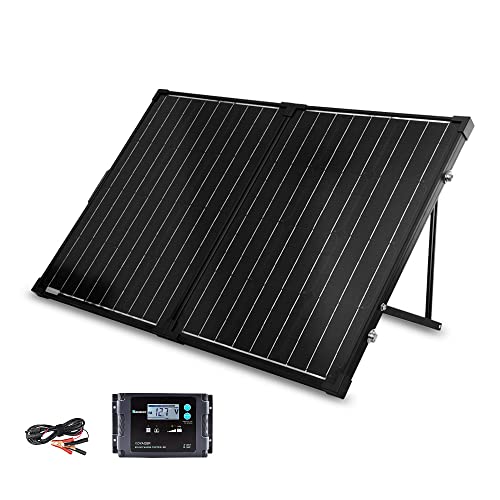
Renogy 100W Solar Suitcase
A folding suitcase panel from Renogy for the same job — easy to store with the station and quick to set out when the power goes.
$154.98 from Amazon
Anker SOLIX PS100
6.2 lb of bifacial panel with a 5-year warranty — the one that lives in the car and actually gets used.
Check the price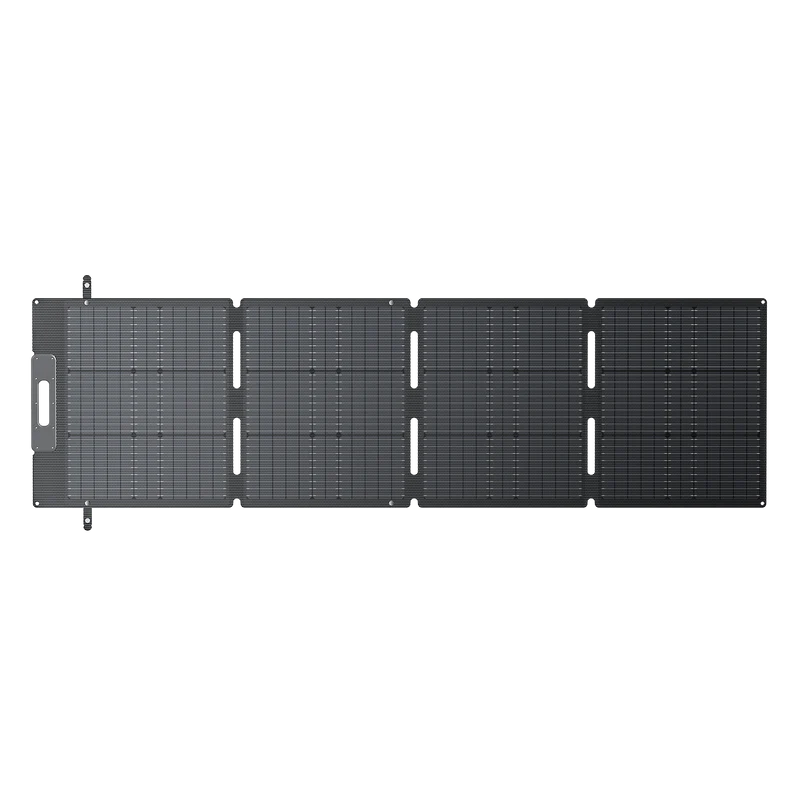
Bluetti PV200
A power station is a one-day answer on its own; a 200W folding panel matched to Bluetti stations is what turns stored power into a supply that renews itself each sunny day.
$329.99 from BluettiHead-to-Head by Criterion
How many nights will each station actually run a CPAP?
The Elite 200 V2 runs a CPAP the most nights: about five 8-hour nights with the humidifier off (~44 hours) and nearly three with it on (~22 hours). The three 1kWh stations cluster together — about 22–23 hours dry (two full nights plus margin) and about 11 hours humidified (one night plus margin) — so among them, nights are not the deciding factor; weight, noise and price are. The full method is in our CPAP runtime page.

Champion 4250W Dual Fuel Inverter
The mid-size pick: runs on gasoline or propane — and propane is the fuel that never goes stale.
$695.00 from Amazon
Honda EU2200i
The small-inverter benchmark: sips fuel at light loads, and the quietest name in the class.
$1,199.00 from Amazon
Westinghouse iGen4500
The remote-start favorite: 4,500 starting watts with a key-fob start, one of the best-selling inverters in this class for RV and home backup alike.
$849.00 from AmazonShould you run a CPAP on DC or AC from a battery?
Run it on DC if your machine’s maker sells a 12V converter for it: skipping the inverter buys back roughly 10–20% of the night, which on a 1kWh station can be the difference between waking at 6 a.m. to a beep and waking at 8 to an alarm. All four stations here have a 12V car-style output for that converter. Our DC vs AC page walks through the matching.

Generac GP3300i
The big-name alternative: 3,300 watts from the brand most people already know from whole-house standby units.
$719.00 from Amazon
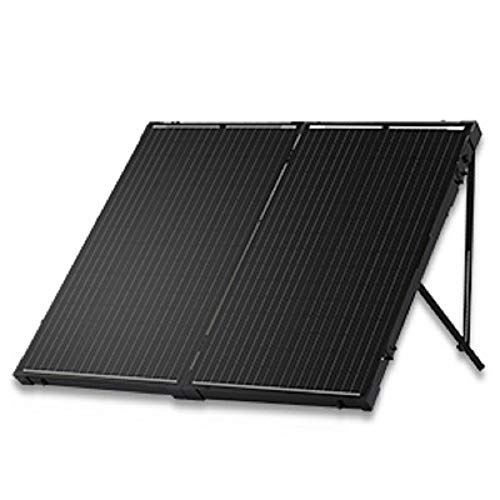
Renogy 200W Monocrystalline Panel
The rigid 200W (RSP200D) — same pairing rules, roof-mount money.
$271.99 from AmazonDoes a CPAP need a pure sine wave inverter?
A CPAP should be run on pure sine wave power: all four stations here provide it, so the question matters most when a cheaper station tempts you — modified sine wave bricks can run hot and hum, and one bad night is the wrong place to save $50. We lay out the reasoning in does a CPAP need pure sine wave.
Which station is quietest at the bedside?
None of these stations is silent under load, and at CPAP draws the fans mostly idle — the C1000 draws the most owner complaints about fan noise under heavier loads, while the Elite 100 V2’s small load overnight is the gentlest duty here. Put any of them on the floor, not the nightstand, and let the hose do the travelling.

Honda EU3200i
The EU2200i's bigger brother: 3,200 watts of the same Honda quiet, for loads a step beyond a fridge and freezer — at Honda money.
$2,799.00 from Amazon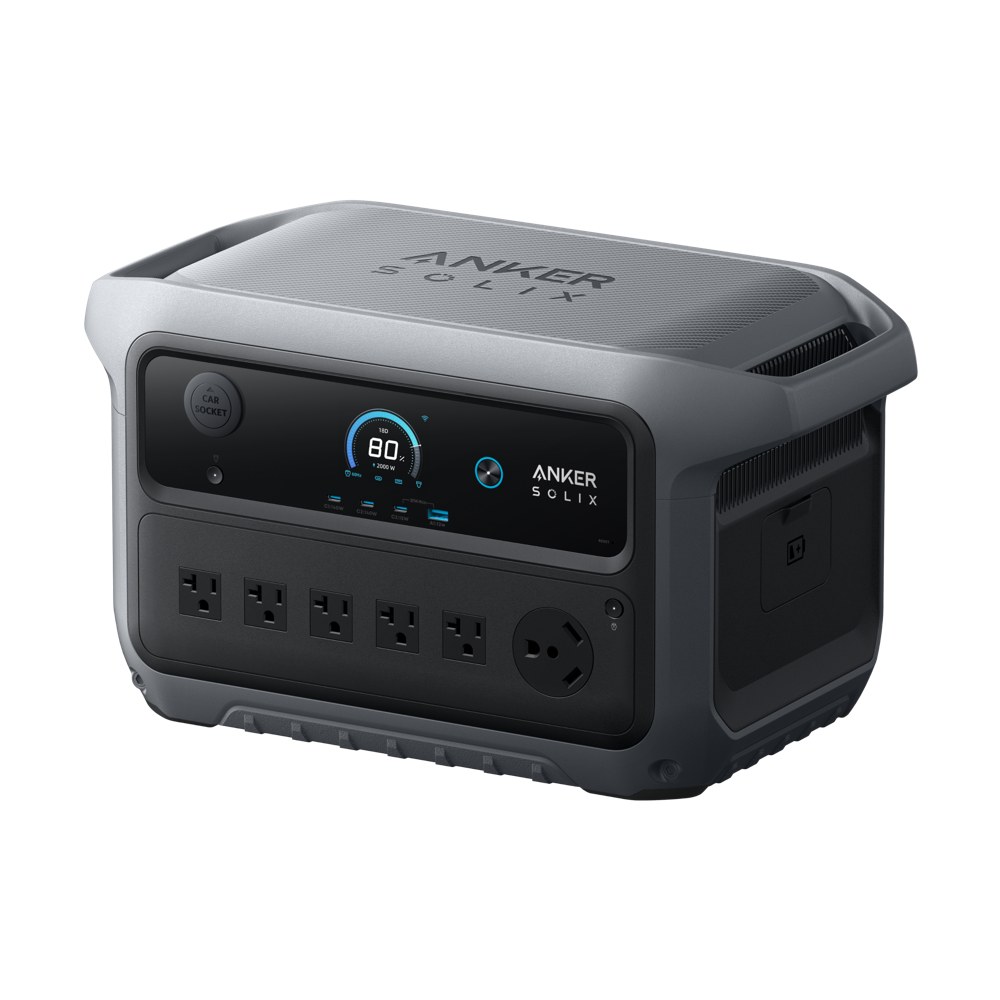
Anker SOLIX F2000
A 2,048Wh station in the same runtime class as the three picks above, with a pull-handle design that makes moving it to the freezer less of a deadlift — worth a look before you settle on a box.
$849.99 from Anker
What does each station cost to own?
Cost per watt-hour runs from about 43¢ (Elite 200 V2) to about 52¢ (Jackery), with the C1000 at ~45¢ and the Elite 100 at ~49¢. Priced per humidified night of capacity, the Elite 200 costs about $327 per night it can cover ($899 ÷ 2.75 nights) against roughly $455–$508 for the 1kWh stations — the big box is the cheaper insurance per night, and the heavier one. Add the DC converter your machine needs (maker-specific, usually the cost of a nice dinner out) and, if outages run long, a 200W panel; our home-backup station comparison prices the wider field.


Anker SOLIX PS200 Bifacial
The C1000 and F2000 default — 200W through the standard plug.
$499.99 from Amazon
Renogy 100W Rigid Panel
The rigid budget standard — the label figures are the RNG-100D's standard test numbers.
$76.49 from AmazonHonest caveats before you spend
Four, plainly. First, every runtime here is arithmetic at 85% usable capacity and two planning draws (40W and 80W) — your machine’s label watts and pressure settings will move your numbers, and a heated tube in a cold room pushes draw up. Second, these stations are not medical devices and none is a substitute for a backup plan your equipment supplier signs off on. Third, none of them can fly with you: airline rules cap lithium batteries at 100Wh in carry-on (up to 160Wh with approval), and the smallest station here holds 1,024Wh — our plane page covers the travel options that do work. Fourth, two makers’ numbers needed judgement calls in this build: Jackery prints both 1,024Wh and 1,070Wh for the same station (we used its US spec table), and Anker sells a C1000 Gen 2 that is a different, non-expandable 1,024Wh unit — the C1000 reviewed here is the expandable 1,056Wh original, so check the model name on the listing in your cart.
Viewers also searched for these items.

Medistrom Pilot 24 Lite
The CPAP battery that rides between the station and the machine.
$339.00 from Amazon
EcoFlow DELTA 2 Max
The highest-scored station in our home-backup comparison — and the CPAP pick when the fridge has to run too.
$977.00 from Amazon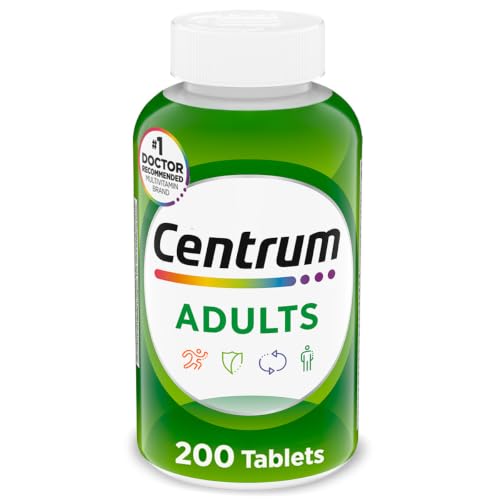
Centrum Adult Multivitamin
The boring, complete answer to the BYU numbers: one bottle covers a person for months, stores beside the food, and costs less than a single freeze-dried entree.
$12.00 from AmazonFrequently asked questions
What size power station do I need for one night of CPAP?
About 400Wh of nameplate capacity covers one night with the humidifier off (8 hours at ~40W, plus inverter losses), and about 800Wh–1,000Wh covers one night with heated humidity at ~80W. That is why the 1kWh class is the sensible starting point for most people.
How can I make a power station last more nights?
Turn the heated humidifier off and use the water tub in passover mode, run the machine from a 12V DC converter instead of the wall brick, and keep the heated tube off unless the room is cold. Together those roughly double to triple your nights.
Can a power station switch over automatically when the power fails?
The Anker SOLIX C1000 lists a UPS switchover under 20ms, fast enough that a sleeping machine carries through. On stations without a rated switchover, the honest setup is to sleep plugged into the station (pass-through) during storm nights, so there is nothing to switch.
Can one station run my CPAP and my fridge?
On the Elite 200 V2, yes: about 1,763 usable watt-hours covers a night of CPAP (~320Wh dry) and leaves roughly a day and a half of average-fridge running. On a 1kWh station, pick the load that matters most — most people should sleep.
Is a power station better than a CPAP battery pack?
For home outages, usually: a station costs less per watt-hour, recharges from solar or a car, and runs other loads between nights. A dedicated CPAP battery wins only on weight and travel, where stations cannot go at all.
Sources & freshness: Bluetti, Anker SOLIX and Jackery maker pages and spec tables, Anker’s published CPAP runtime guide (40W/80W planning loads), the Truly Preserved CPAP runtime page (85%-usable method), and aggregated owner feedback from major listings, consulted for this build November 11, 2026. Prices last checked: November 11, 2026.
Talk it over with other readers. The Truly Preserved Community on Facebook is where readers compare notes on food storage, water, and backup power — and where your questions help decide what we research next. Join the group →
Prices shown on this page were last checked November 26, 2026 — prices change; check before you buy.