
Truly Preserved is reader-supported. If you buy through a link on this page we may earn a commission at no extra cost to you. Nobody pays for placement or scores.
THE SHORT ANSWER
Run it on DC when your machine has a maker’s DC converter, and on AC when it doesn’t — or when the outage is one night and simple wins. ResMed says in plain words that “the converter is more efficient than an inverter,” and our CPAP runtime page puts the DC saving at roughly 10 to 20% of the night. The reason is plumbing: the AC path turns the battery’s DC into AC, then the machine’s power brick turns it back into DC, and both conversions take their cut. Over one night that cut is a rounding error; over a four-night outage it adds up to most of an extra night.
Our CPAP runtime page mentions this choice in a single bullet — a DC converter beats the wall brick, buying back roughly 10 to 20% — and readers kept asking the follow-up: how much is that really, what do I plug where, and is a converter another gadget to buy for a problem the AC outlet already solves? This page is that bullet with the numbers attached, drawn from ResMed’s own battery guide, which publishes the actual current draw of its machines on DC by pressure and humidifier setting.
Why does the DC path waste less power?
The DC path wastes less because it converts the power once instead of twice. A power station stores DC. Feed the CPAP through the station’s AC outlet and the station’s inverter first turns that DC into household AC; then the CPAP’s own power brick turns the AC back into the low-voltage DC the machine actually runs on — ResMed’s AirSense machines are 24-volt DC devices at the plug. Feed it through the station’s 12-volt outlet with the maker’s DC converter instead, and there is one conversion, 12 volts up to the machine’s 24, done by a converter built for that one machine.
ResMed lists the converter’s advantages itself, and efficiency is only the first: “the converter is more efficient than an inverter”; it provides electrical protection if the leads are connected to the battery incorrectly; it regulates the battery voltage as the battery runs down (a charged 12-volt battery sits near 13.5 volts and falls as it discharges); it shuts down automatically when the battery drops below 10.5 volts, protecting the battery from being drained flat; and it electrically isolates the device. An AC outlet gives you none of that list — it gives you a wall socket, which is a fine thing, but it is not a CPAP-specific path.
What does a CPAP actually draw on DC?
On DC, a ResMed AirSense 10 at a pressure of 10 draws 0.93 amps at 12 volts with no humidifier — about 11 watts — and the heated humidifier, not the pressure, is what multiplies it. ResMed’s battery guide tables the Air10 series running through its DC/DC converter (part 37297), and the pattern across every row is the same: pressure nudges the draw, humidity settings shove it.
| AirSense 10 setup (at pressure 10) | Draw at 12V | About | Per 8-hour night |
|---|---|---|---|
| SlimLine tube, no humidifier | 0.93A | ~11W | ~89Wh |
| SlimLine + humidifier set to 4 | 2.30A | ~28W | ~221Wh |
| SlimLine + humidifier set to 8 | 3.66A | ~44W | ~351Wh |
| ClimateLine tube + humidifier on Auto | 3.77A | ~45W | ~362Wh |
The watt figures are our arithmetic from ResMed’s amps (amps × 12 volts), and the nightly figures are that draw held for eight hours. Pressure matters less than people expect: the same no-humidifier setup draws 0.70 amps at a pressure of 6 and 1.66 at 20 — a real climb, but still under what the humidifier adds at its middle setting. One more honesty note from the same table: ResMed’s own battery-size column pads every figure with a 50% safety margin, so the guide calls that 89-watt-hour night a 12-amp-hour battery job. The maker’s numbers look pessimistic next to the raw math because the maker is sizing for a battery that must not run flat, not for a best case.

Robinair 13203 Vacuum Pump Oil
A pump that runs quiet and pulls nothing is very often an oil problem — this is the replacement our maintenance guide names.
$16.79 from Amazon
JB Black Gold Pump Oil
JB’s Black Gold is the other pump oil freeze dryer owners keep on the shelf for the same job.
$54.50 from Amazon
EcoFlow DELTA 2 Max
The bigger box in the same comparison, for households whose outage list runs past the basics and needs more stored energy before solar or a generator has to help.
$977.00 from AmazonHow much runtime does DC actually buy on the same station?
On the same station, DC buys back roughly 10 to 20% a night — the working figure from our runtime page, and the arithmetic below is ours, applying that range to ResMed’s DC draws. A no-humidifier night that takes about 89 watt-hours straight from the battery on DC takes roughly 98 to 107 watt-hours through the AC path: a saving of about 10 to 18 watt-hours, barely worth a cable. A humidified night at the middle setting is a different story: about 221 watt-hours on DC against roughly 243 to 265 through AC, a saving of about 22 to 44 watt-hours a night.
Stacked across an outage, that is the honest size of the prize. Four humidified nights on DC save roughly 90 to 175 watt-hours — most of an extra dry night, or a solid piece of a fifth humidified one. Four dry nights save only about 40 to 70 watt-hours, half a dry night at best. So the converter earns its keep exactly where the draw is biggest: humidifier running, outage measured in days, station sized tight. If your nights are dry and your station is a 2kWh box with capacity to spare, the AC outlet was never costing you a night in the first place.
When is AC the right choice anyway?
AC is the right choice for one night, for a machine with no maker’s converter, and any time the station is already awake running other loads. A single outage night on a mid-size station does not need the extra 10 to 20% — it needs the machine plugged in before bed, through the outlet that takes the brick already in your nightstand drawer. AC is also the shareable path: the same station can carry the fridge through the day and the CPAP at night on its outlets, which is the setup our fridge runtime page assumes.
Two cautions belong here. First, the converter is model-specific, not generic: the Air10 converter in ResMed’s guide is part 37297, made for the Air10 series’ 24-volt input, and a different machine generation takes a different converter — a cable that physically fits is not a converter that regulates correctly, and a bare 12-volt plug cannot feed a 24-volt machine on its own. Second, waveform still applies on the AC side: if you do run through the outlet, the station’s AC should be pure sine wave for a humidifier setup, for the reasons in does a CPAP need a pure sine wave inverter? DC sidesteps that question entirely, which is one more quiet point in its column.

Anker SOLIX C1000
The C1000’s DC output is why it anchors our CPAP runtime table — fewer conversion losses across the night.
Check the price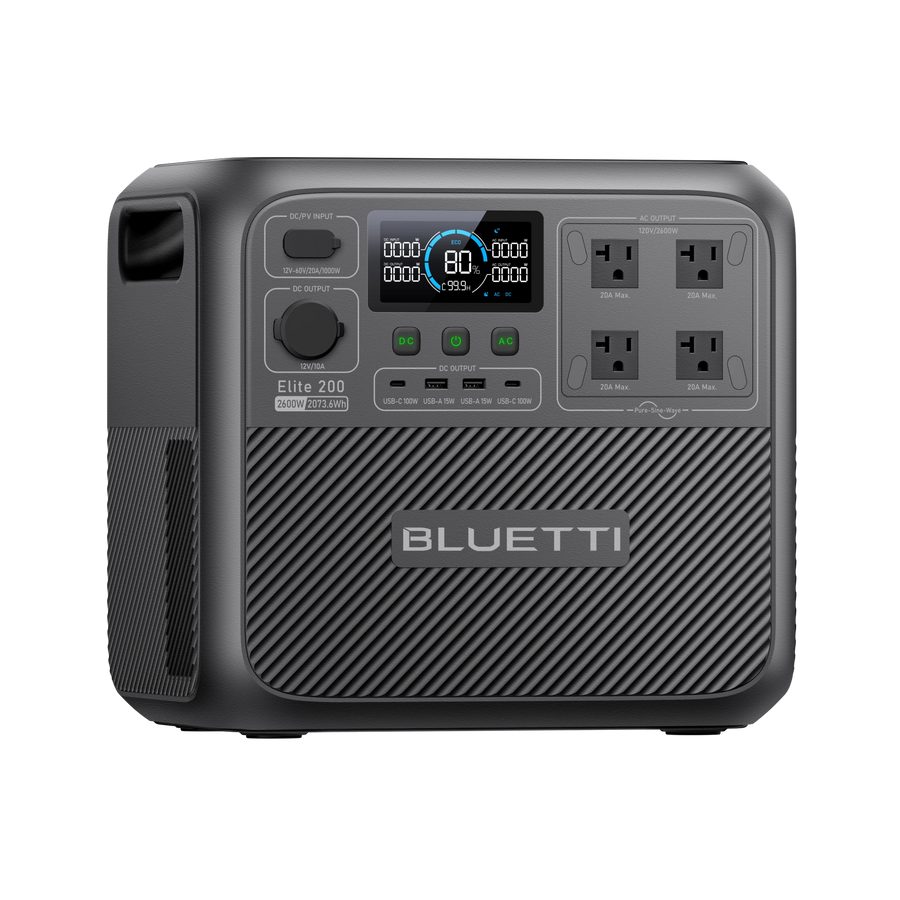
Score out of 10
Bluetti Elite 200 V2
The bigger station from the same runtime table — for the nights the fridge joins the CPAP.
Check the priceQuestions people also ask
Can I plug a CPAP straight into a 12-volt outlet without a converter?
Not a ResMed — its AirSense machines run on 24 volts, so the 12-volt outlet needs the maker’s DC/DC converter between it and the machine to step the voltage up and hold it steady as the battery fades. That regulation is the job, not the plug shape. Other brands differ — some machines are native 12-volt devices with a simpler maker cable — so the label on your machine’s power input, and its maker’s battery guide, decide. A generic adapter that matches the connector is not the same as the converter your maker specifies.
Does running on DC change the therapy?
No. The machine does not know or care which path fed its 24-volt input — pressure, ramp, and humidity settings behave the same, because the converter’s output is the power the machine was designed to take. What changes is only how much of the battery’s charge got spent making that power. If anything about your therapy settings should change for outage nights — the humidifier above all — that is a conversation with your supplier, and our runtime page flags it the same way.
Which matters more — DC versus AC, or the humidifier?
The humidifier, and it is not close. ResMed’s own table puts an AirSense 10 at about 11 watts with no humidifier and about 44 with the humidifier at its top setting — a fourfold jump from one setting. The DC-versus-AC choice moves the same night by 10 to 20%. Turn the heat off and run passover humidity and you have saved more than any cable can; the converter then stretches a smaller number a little further, which still counts on a long outage, but it counts second.
FAQ
Should you run a CPAP on DC or AC from a battery?
On DC, through the maker’s converter, when one exists for your machine and the backup has to last — ResMed states the converter is more efficient than an inverter, and the saving works out to roughly 10 to 20% of each night. On AC for a single night, for a machine with no converter, or when simple matters more than the last slice of runtime: the station’s outlet and the machine’s own brick are a maker-approved path too, provided the AC is pure sine wave where the humidifier rules call for it.
How much more efficient is DC, really?
ResMed’s guide claims the direction, not a percentage — the converter “is more efficient than an inverter.” The percentage we publish, roughly 10 to 20% of the night, is our working figure from the CPAP runtime page, and the worked examples above apply it to ResMed’s published DC draws: about 10 to 18 watt-hours saved on a dry night, about 22 to 44 on a humidified one. Treat any page promising a single exact percentage for every machine as selling something.
Do all CPAPs need a 24-volt converter?
No — the converter matches the machine. ResMed’s AirSense line is 24-volt, so its converter steps a 12-volt source up to 24 and regulates it; other makers build 12-volt machines that take a different, simpler maker cable. The rule that survives every brand is the same one: use the converter or cable your maker specifies for your exact model, from the station’s DC outlet — never a look-alike adapter chosen by its plug.
Viewers also searched for these items.

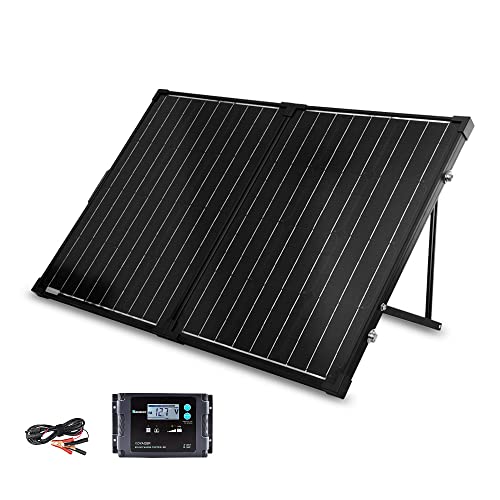
Renogy 100W Solar Suitcase
A folding suitcase panel from Renogy for the same job — easy to store with the station and quick to set out when the power goes.
$154.98 from Amazon
COOQUI 12-Inch Tortilla Warmer
An insulated fabric warmer sized for full-size flour tortillas. Thirty to forty-five seconds in the microwave and it holds the stack warm and soft for up to an hour at the table.
$19.99 from AmazonRelated questions
- How long will a power station run my CPAP?
- Does a CPAP need a pure sine wave inverter?
- Can I take a CPAP power station on a plane (TSA)?
- What is the difference between a solar generator and a portable power station?
Sources: ResMed, Battery Guide, document 198103/4 (2015-08) — the Converters section (“the converter is more efficient than an inverter,” plus electrical protection on reversed leads, voltage regulation as battery voltage falls, automatic shutdown below 10.5V on a 12-volt battery, and electrical isolation; the Air10 DC/DC converter, part 37297) and the Air10 series converter tables (current draw at 12V DC by pressure and setup: AirSense 10 with SlimLine tubing 0.93A at pressure 10 with no humidifier, 2.30A with the humidifier set to 4, 3.66A set to 8, 3.77A with ClimateLineAir tubing and the humidifier on Auto, 0.70A–1.66A across pressures 6–20 with no humidifier; battery sizes in the guide include a 50% safety margin); Truly Preserved CPAP runtime page (the roughly 10–20% DC saving and the 85%-usable method — the per-night AC figures above are our arithmetic applying that range to ResMed’s draws). No product prices are printed on this page.
This question sits under the backup-power questions readers ask us most — the full set is gathered here: What People Are Asking About Backup Power.
Talk it over with other readers. The Truly Preserved Community on Facebook is where readers compare notes on food storage, water, and backup power — and where your questions help decide what we research next. Join the group →
Prices shown on this page were last checked November 26, 2026 — prices change; check before you buy.