
Truly Preserved is reader-supported. If you buy through a link on this page we may earn a commission at no extra cost to you. Nobody pays for placement or scores.
THE SHORT ANSWER
Usually, the only difference is the solar panels in the box. A portable power station is the battery box itself — a battery, an inverter, and outlets that store power and hand it back. A solar generator is that same power station sold bundled with solar panels and the cables to connect them, so it can refill itself from sunlight. The station inside a solar generator bundle is not a different or stronger machine: Jackery, which sells both ways, states it directly — in terms of the power station unit itself, the two are functionally identical, and the difference is what comes in the box. Neither one is a gas generator: there is no engine, no fuel, and no fumes.
Shoppers hit this wall in the first five minutes. One listing says power station, the next says solar generator, the boxes in the photos look the same, and the prices do not match — so which one is the real thing, and what does the extra money buy? Both are real, and the extra money mostly buys panels. The word “generator” is the trap in the name: a fuel generator makes electricity by burning something, on the spot, for as long as the tank lasts. A solar generator makes nothing inside the box at all. The panels make the power, slowly, in daylight; the box stores it. Once you see which part does which job, every listing in this category reads clearly — including the ones trying not to.
What does each part actually do?
A portable power station stores electricity. Jackery’s own explainer puts the three pieces in one line: a portable power station is a large rechargeable battery that stores electricity and delivers it through AC, USB, and DC outputs, and it needs an outside source — a wall outlet, a car adapter, or solar panels — to recharge. A solar panel does the opposite job: it generates DC electricity from sunlight and hands it to a station for storage, and on its own it cannot run your appliances. A solar generator is the two bought together: the station plus panels, in one bundle, confirmed to fit each other.
| Term | What it is | How it refills |
|---|---|---|
| Portable power station | Battery + inverter + outlets in one box | Wall outlet or car; solar if you add panels |
| Solar generator | The same station, bundled with solar panels | Sunlight through its panels; also wall or car |
| Solar panel (alone) | Generates DC power from sunlight; stores nothing | It is the refill, not the tank |
| Fuel generator | An engine that burns gas or propane | More fuel; outdoors only, never indoors |
Read the last row as the safety line, because it is the one that hurts people. A fuel generator produces carbon monoxide and belongs outdoors, at least 20 feet from windows, doors, and vents, with the exhaust pointed away — that is the CDC’s rule, and it has no garage-door-open exception. A power station, with or without panels, makes no exhaust at all, which is why the battery box can sit in a living room during an outage while its panels sit outside in the sun. Our solar generators for outage backup comparison uses “solar generator” in its title for exactly the machines this page is defining — every one of them is a power station first.
Does the bundle cost more than buying the parts separately?
A solar generator bundle costs more than the same station alone, because panels are in the box — you are paying for the refill, not for a bigger battery. Whether the bundle beats buying a station now and panels later is a shopping question, not a technology one, and it turns on two checks. First, the panel wattage in the bundle: a bundle built around a small panel refills slowly no matter what the headline says. Second, compatibility: the honest advantage of a bundle, as Jackery states it, is that the station, panels, and cables are confirmed to work together from day one, while a separately bought panel has to match your station’s input voltage window and connector. Our 200W solar panels comparison works through that matching for the stations we have compared.
Do the refill math before you decide, in plain numbers. A 200-watt panel in five good hours of sun makes at most 1,000 watt-hours on paper — 200 times 5 — and real output lands below the label, because panels rarely sit at full rating outside midday. Against a roughly 2,000 watt-hour station, that is half a refill on a good day, before losses. That is still worth having in a long outage, where half a battery a day is the difference between a fridge that stays cold and one that does not — but it means “solar generator” on a box never means unlimited power. It means a slow, free refill while the sun is up. How long the stored half lasts is the runtime question our freezer runtime page answers by freezer type and station size.
Score out of 10
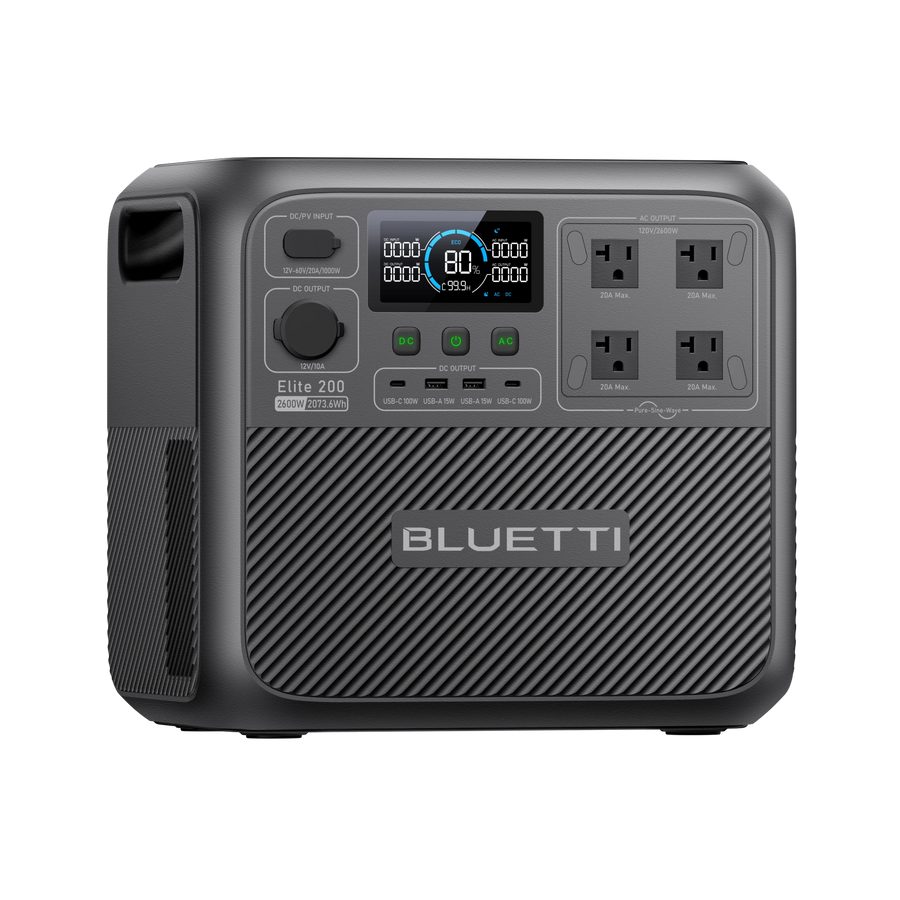
Bluetti Elite 200 V2
One of the two stations our home-backup comparison scores at the top — whichever half of this page’s name game you call it.
Check the priceWhich name should you shop under?
Shop by the specs, and let the name go. The two numbers that decide what a station can do are the same under either label: capacity in watt-hours, which says how much is in the tank, and output in watts, which says how hard it can push at once. A station sold as a solar generator with 500 watt-hours runs less than a plain power station with 2,000 — the panels do not change what is stored, only how it comes back. If you already own a station, you do not need to replace it to “get” a solar generator; you add panels that fit its input, and you own the same system the bundle sells. If you own nothing and your outages run long, the bundle saves the matching work. Our Power Station Size Calculator sizes the tank from the appliances you actually need to run, which is the decision both labels are trying to rush you past.

Jackery Explorer 1000 v2
The most capacity (1,070Wh) in the lightest box (23.8 lb), the longest fridge runtime here, and a 59-minute emergency fast-charge.
$559.00 from Amazon
EcoFlow DELTA 2 Max
Score out of 10
And the comparison’s highest score — the station the solar-generator name was invented for.
$977.00 from AmazonQuestions people also ask
Is a solar generator the same as a solar panel system on a roof?
No. A roof system is installed panels wired into a house, usually with a fixed battery, and it stays with the house. A solar generator is portable: folding panels and a battery box you can carry to a campsite, a different room, or a different house. The shared word is “solar”; the scale, the wiring, and the permanence are all different.
Can a solar generator run a whole house?
A solar generator runs selected loads, not a whole house, at the sizes sold to homeowners. The large stations in our comparisons run a fridge, lights, a router, and a CPAP through an outage; central air, an electric range, and a well pump together are fuel-generator or installed-battery territory. The limit is the same under both names — watt-hours stored and watts out — which is why the label never settles this question and the spec sheet does.
Do I need solar panels for a power station to be worth owning?
No. For the most common outage — a few hours — a power station charged from the wall before the storm is the whole answer, and panels add nothing until the outage outlasts the battery. Panels earn their cost on multi-day outages and off-grid stays, where the choice is a solar refill or no refill at all. Buy the station sized right first; panels can join it later, and at that point you own a solar generator in everything but the receipt.
Why do sellers call a battery a generator at all?
Because “generator” is the word shoppers already use for backup power, and the solar version of it is the product category that grew up to replace fuel generators for smaller loads. The name describes the job the bundle does — making and storing power where there is no outlet — not a mechanism inside the box. Knowing that, read any “generator” claim in this category as “station, possibly with panels,” and check the watt-hours before anything else.
FAQ
Can I use a solar generator indoors?
Yes — the battery box can. A solar generator has no engine and makes no carbon monoxide, so the station itself is safe indoors; only the panels need to be outside, in sunlight. That indoor safety is the sharpest real difference in this whole category, and it is against fuel generators, not against power stations, which share it.
What is the difference between watts and watt-hours here?
Watts say how hard a station can push right now — whether it can start and run your fridge at all. Watt-hours say how much it holds — how long it can keep that fridge running. A listing that shouts watts and whispers watt-hours is telling you about the push and hiding the tank; for outage planning the tank is usually the number that matters.
Viewers also searched for these items.


Anker SOLIX PS100
6.2 lb of bifacial panel with a 5-year warranty — the one that lives in the car and actually gets used.
Check the price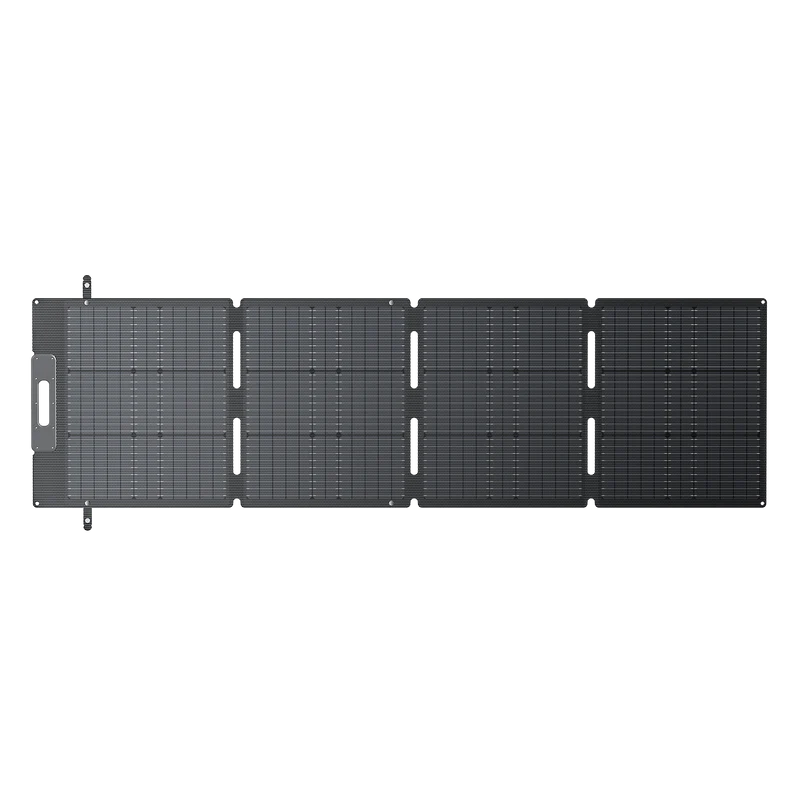
Bluetti PV200
A power station is a one-day answer on its own; a 200W folding panel matched to Bluetti stations is what turns stored power into a supply that renews itself each sunny day.
$329.99 from BluettiRelated questions
- Best solar generators for outage backup — the stations compared
- Best 200W solar panels for power stations
- How long will a power station run a freezer?
- Power Station Size Calculator
Sources: Jackery, “Solar Generator vs. Portable Power Station vs. Solar Panel: What is the Difference” (maker’s explainer: a power station stores electricity and needs an outside source to recharge; a solar panel generates and cannot power appliances alone; a solar generator is the two bundled, and “in terms of the power station unit itself, they are functionally identical”); CDC carbon monoxide guidance for fuel generators (outdoors, at least 20 feet from windows, doors and vents). The refill figure on this page is our own arithmetic from a panel’s rated watts times hours of sun, labelled as a best case before real-world losses. No prices are printed on this page — it defines terms, and current station prices live in the comparison linked above.
This question sits under every power comparison we publish — the sizing, runtime and panel questions readers ask next are gathered here: What People Are Asking About Backup Power.
Talk it over with other readers. The Truly Preserved Community on Facebook is where readers compare notes on food storage, water, and backup power — and where your questions help decide what we research next. Join the group →
Prices shown on this page were last checked November 26, 2026 — prices change; check before you buy.