
Affiliate Disclosure: Truly Preserved is reader-supported. When you buy through links on this page, we may earn a commission at no extra cost to you. As an Amazon Associate, Truly Preserved earns from qualifying purchases. Learn more.
How we researched this comparison. We scored 3 products head to head for this page. The work behind the scores: manufacturer specifications and certification records where they apply, prices checked when this review was written, and patterns across verified owner feedback — a praise or complaint point only counts here when it shows up again and again, not once. The products were chosen to cover the main designs and price points a buyer in this category actually cross-shops. We are a research desk: we do not buy or hands-on test the products, and commissions never change a score. How we research and score →
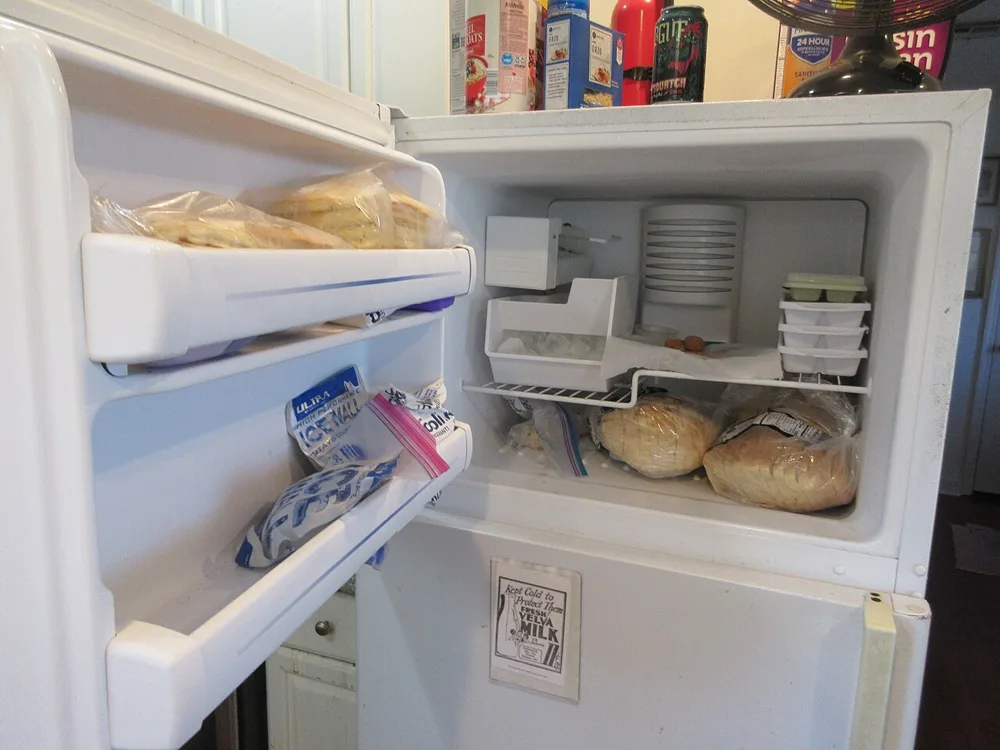
How long will a power station run a freezer? Longer than it runs almost anything else in the house. A typical ENERGY STAR chest freezer uses about 589 watt-hours a day, so a 2,000Wh-class station keeps it frozen for roughly three days on one charge — and a 1,000Wh station for about a day and a half. An upright freezer is a different story: at about 1,082 watt-hours a day, the same big station lasts closer to a day and a half. This page is built from published specs, current prices, ENERGY STAR’s yearly energy figures, USDA food-safety guidance, and aggregated owner feedback from retailer listings and owner forums. We don’t own these power stations; we did the homework so you can plan a winter outage with real numbers instead of the runtime printed on the box. If you want the same math for the fridge, start with how long a power station runs a refrigerator — the freezer numbers below use the identical method, and the rest of our outage homework lives on the Preserve the Power hub.
The Short Version
Best overall for freezer duty — EcoFlow DELTA 2 Max, 9/10, $1,049. About three days of chest freezer per charge, and the only pick here that can add batteries later and stretch that past a week.
Best value per watt-hour — Bluetti Elite 200 V2, 8/10, $899. The same roughly three days of chest freezer, the cheapest stored power here, and a battery rated for 6,000+ charges.
Easiest to carry to the garage — Jackery Explorer 2000 v2, 8/10, $999. The same freezer runtime at 39.5 lb — the one you can actually haul down the basement stairs at midnight.
How we chose: We compared the manufacturers’ published specs side by side, checked current street prices, built every runtime figure on this page from ENERGY STAR yearly energy use (the method is shown in full below), and read owner feedback across roughly 3,200 ratings and reviews for these three models, counting the praises and complaints that kept coming up. Scores weigh how well each box works in an outage, what it costs to own, build and warranty, and what owners say after months of use. Read our full methodology.
The Runtime Table: Hours by Freezer Type and Station Size
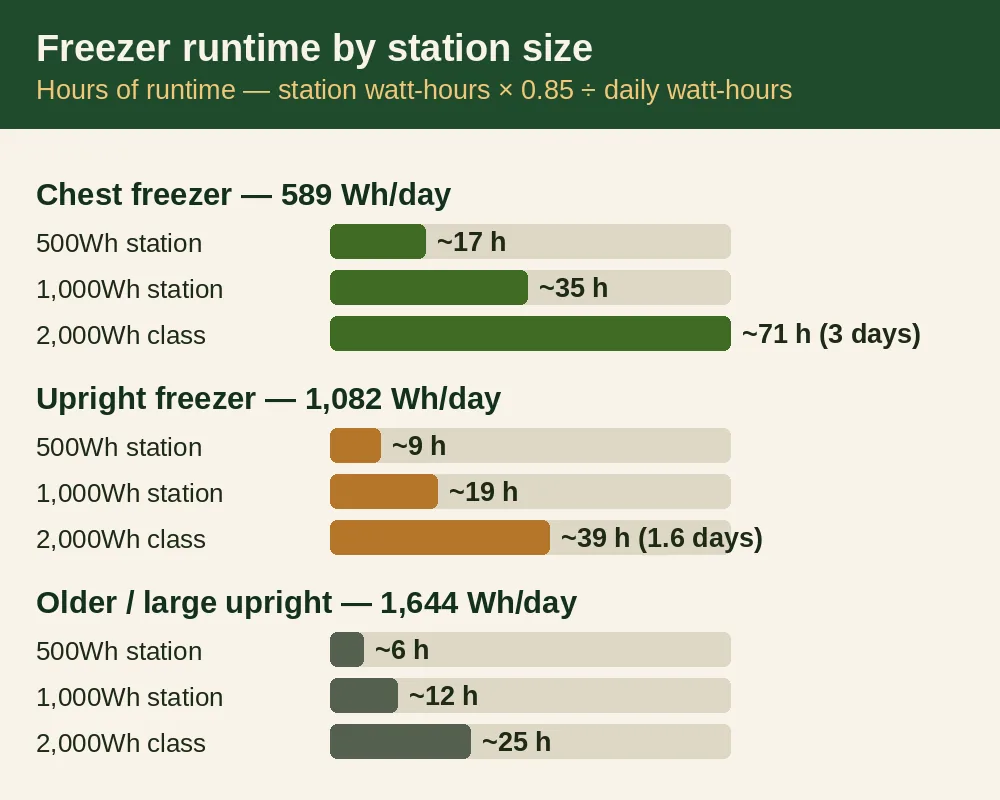
Every number in this table comes from the same math, so you can redo it for your own freezer in a minute. Find the yellow EnergyGuide label on your freezer (or look the model up) and take its estimated yearly kWh. Divide by 365 and you have its daily use. Then: runtime = station watt-hours × 0.85 ÷ daily watt-hours. The 0.85 is the share of the battery that actually reaches your freezer after inverter losses and the reserve the battery keeps for itself — the same efficiency figure EcoFlow uses in its own runtime examples. The three freezer profiles below are ENERGY STAR’s published averages for certified models, plus an older large upright at 600 kWh a year, which is where a lot of garage freezers actually live.
| Your freezer (yearly use, daily use) | 500Wh station | 1,000Wh station | 2,000Wh class station |
|---|---|---|---|
| Chest freezer, ENERGY STAR average (215 kWh/year, ~589Wh/day) | ~17 hours | ~35 hours | ~71 hours (about 3 days) |
| Upright freezer, ENERGY STAR average (395 kWh/year, ~1,082Wh/day) | ~9 hours | ~19 hours | ~39 hours (about 1.6 days) |
| Older or large upright (600 kWh/year, ~1,644Wh/day) | ~6 hours | ~12 hours | ~25 hours |
Read the table as a ceiling, not a promise. It assumes a freezer that starts cold, in a normal-temperature room, with the lid mostly shut. A hot garage, a half-empty box, or a freezer still pulling down after a grocery run will all pull the real number down — the sections below cover what eats runtime and how to stretch it. One maker is stricter than our 0.85: Bluetti’s own published formula multiplies capacity by 90% depth of discharge and then by 85% efficiency, which lands near 77% usable and would trim roughly half a day off the 2,000Wh chest figure. Plan on the lower number and be pleased if you beat it.
The three stations we recommend for this job all sit in the 2,000Wh row, which is why their chest-freezer runtimes land within an hour of each other. They are compared in full in our solar generator comparison for home backup; the specs that matter for freezer duty are below.
Head-to-Head Specs
| EcoFlow DELTA 2 Max Read the review ↓ |
Bluetti Elite 200 V2 Read the review ↓ |
Jackery Explorer 2000 v2 Read the review ↓ |
|
|---|---|---|---|
| Best for | Freezer plus room to grow | Lowest cost per watt-hour | Carrying it to the freezer |
| Price | $1,049 | $899 | $999 |
| Capacity | 2,048Wh | 2,073.6Wh | 2,042Wh |
| Runtime, chest freezer (589Wh/day) | ~3 days | ~3 days | ~3 days |
| Runtime, upright freezer (1,082Wh/day) | ~1.6 days | ~1.6 days | ~1.6 days |
| Cost per watt-hour | about 51 cents | about 43 cents | about 49 cents |
| Output (continuous) | 2,400W (4,800W surge) | 2,600W (3,900W Power Lifting) | 2,200W (4,400W surge) |
| Battery | LiFePO4, 3,000 cycles to 80% | LiFePO4, 6,000+ cycles to 80% | LiFePO4, 4,000 cycles to 70% |
| Solar input (max) | 1,000W | 1,000W | 400W |
| AC outlets | 6 | 4 | 3 |
| Weight | 50 lb | 53.4 lb | 39.5 lb |
| Grows later? | Yes, to 6,144Wh | No | No |
| Warranty | 5 years | 5 years | 5 years (3 + 2 with registration) |
Prices and specs from manufacturer and retailer listings, October 2026. Prices for these boxes swing a lot with sales — always confirm before buying. Solar panels are sold separately for all three.
EcoFlow DELTA 2 Max: The One That Can Grow Past Three Days
Our score: 9/10 — for freezer duty specifically, the DELTA 2 Max wins on the one thing the other two cannot do: when three days is not enough, you can plug in another battery instead of buying another station.
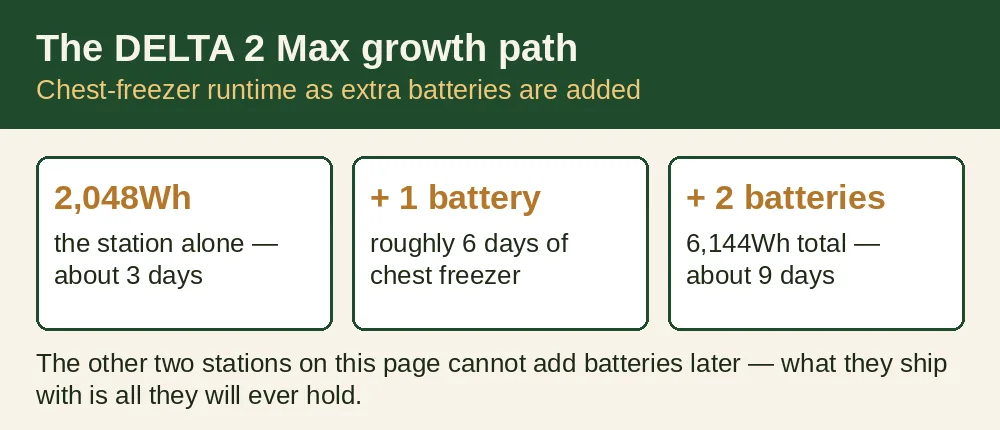
The DELTA 2 Max holds 2,048Wh and puts out 2,400W across six AC outlets, so the freezer, the fridge, the router, and lights can all run at once without a power strip. On a chest freezer alone, the table math gives it about 71 hours; add one of EcoFlow’s extra batteries and the same math gives roughly six days, and with two, about nine. It also refills fastest from the sun alongside the Bluetti, taking up to 1,000W of solar through two separate inputs. Best solar panel pairing: 400W to 1,000W of panels — two 200W panels is the practical minimum for putting back a chest freezer’s daily use, and the dual inputs let you split panels across two roof angles.
Pros:
- Only pick here that grows — up to 6,144Wh with extra batteries
- Six AC outlets, the most of the three
- Fast refill: about 80 minutes from a wall, up to 1,000W of solar
- 5-year warranty included
Cons:
- Fans get loud under heavy load and while fast-charging
- Extra batteries cost real money — the growth path is not cheap
- 50 lb is a firm two-hand carry
Across ~1,362 Amazon ratings (4.6 stars) plus owner forums, owners praise the fast charging, the app, and that it runs a fridge and freezer without drama. The complaints that keep coming up are fan noise when it works hard, the price of the extra batteries, and a smaller set of reports about trouble after a firmware update — if yours works, think twice before updating it the night before a storm.
Buy it if: your outages sometimes run past three days, or a fridge rides along with the freezer. Skip it if: it will live in a bedroom and fan noise during a recharge would keep you up.
The DELTA 2 Max is $1,049 at EcoFlow’s own store today — the standalone was showing sold out there this morning, with the panel and extra-battery bundles in stock — and Amazon runs its own sales on it. Check the current price on Amazon →
Bluetti Elite 200 V2: The Cheapest Watt-Hours, and the Longest-Lived Battery
Our score: 8/10 — the Elite 200 V2 runs a chest freezer the same roughly three days as the EcoFlow, for less money per watt-hour, and its battery is rated to outlast both rivals. What you give up is growth: the 2,073.6Wh it ships with is all it will ever hold.
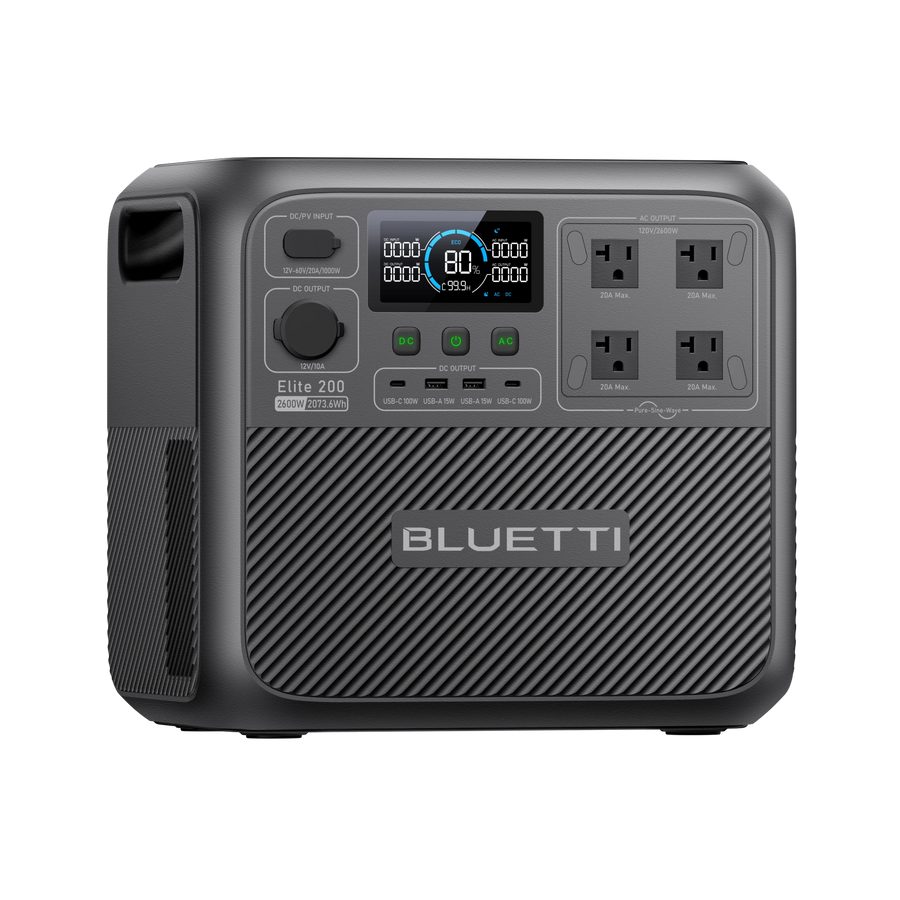
Photo: Bluetti.
The Elite 200 V2 holds 2,073.6Wh — a touch more than the other two — and puts out 2,600W, the strongest inverter here, through four AC outlets. That output shrugs off a freezer’s startup spike and still has room for a microwave at lunch. Its battery rating is the headline: 6,000 or more full charges to 80% capacity, roughly double the EcoFlow’s cycle rating, which matters if the box will cycle often instead of sitting in a closet. Bluetti also rates it at 16 dB under low load — a freezer’s gentle draw is exactly the load where that quiet shows. Best solar panel pairing: 400W to 1,000W of panels on its single 1,000W input; two 200W panels cover a chest freezer’s daily use in good sun, and it can take far more when you want a fast refill. We compared it head-to-head with the Jackery in Bluetti Elite 200 V2 vs Jackery Explorer 2000 v2.
Pros:
- Lowest cost per watt-hour of the three (about 43 cents)
- Battery rated 6,000+ cycles to 80% — the longest-lived here
- Strongest output (2,600W) and very quiet under a freezer’s light load
- 5-year warranty included
Cons:
- Cannot add extra batteries later
- Heaviest here at 53.4 lb
- The app feels basic next to the hardware
Across ~955 ratings on its main Amazon listing, owners praise how much power fits in a small box, the fast charging, and that it runs a fridge and freezer without drama. The complaints that repeat: the weight, an app that feels unfinished, and owners who bought expecting to add a battery later and learned there isn’t one.
Buy it if: three days of freezer backup is your target and you want the lowest price per watt-hour and the longest battery life. Skip it if: you can see yourself needing five or six days — buy the expandable box instead.
The Elite 200 V2 is $899 at Bluetti’s own store today, which is where our link takes you. Check the current price at Bluetti →
Jackery Explorer 2000 v2: The Lightest Way to Get the Same Three Days
Our score: 8/10 — the Explorer 2000 v2 runs a chest freezer the same roughly three days as the other two, but at 39.5 lb it is the only one most people can carry across the garage one-handed when the lights go out.
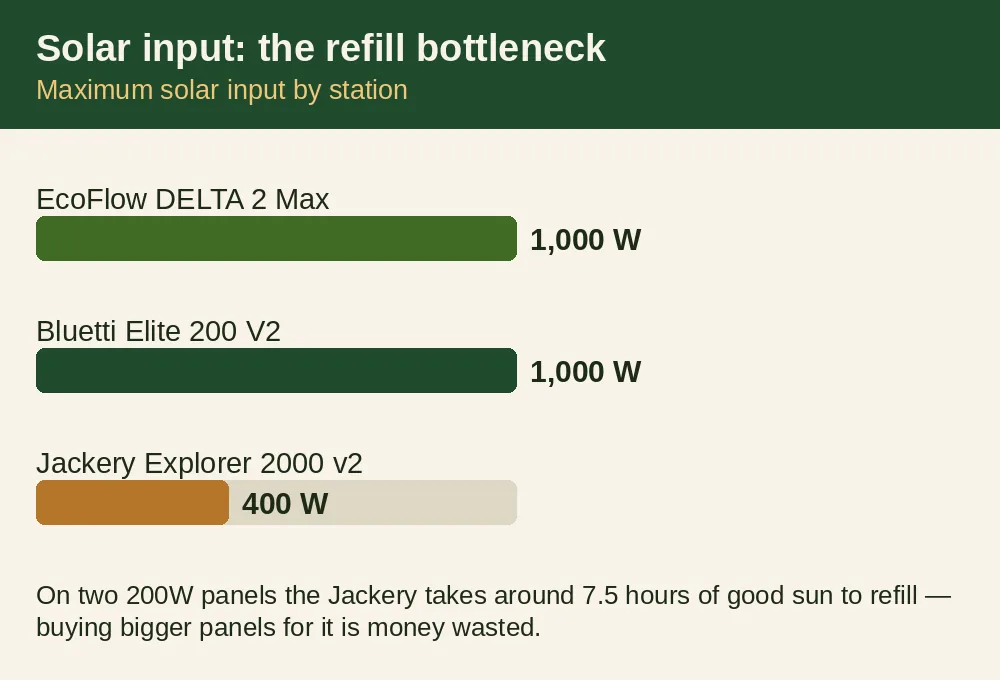
The Explorer 2000 v2 holds 2,042Wh and puts out 2,200W (4,400W surge) through three AC outlets — plenty for any freezer’s startup spike, with the fewest outlets of the three if the whole kitchen tries to move in. Its party trick is weight: about 14 lb lighter than the Bluetti, in a smaller box, with a silent charging mode under 30 dB for overnight refills. The honest weakness is solar: its input tops out at 400W, less than half what the other two accept, so a sunny day puts back less and a flat battery takes around 7.5 hours of good sun on two 200W panels to refill. Best solar panel pairing: two 200W panels — that maxes out its 400W input; buying bigger panels for this box is money wasted.
Pros:
- Lightest 2kWh box here by a wide margin (39.5 lb)
- Quiet, with a silent charging mode under 30 dB
- Fast wall charging — full in about 1.7 hours in emergency mode
- 5-year warranty (3 years, +2 with registration)
Cons:
- Solar input capped at 400W — slow refills from the sun
- Cannot add extra batteries later
- Only three AC outlets
Across ~896 Amazon ratings (4.4 stars), owners love the size, the quiet, and the fast wall charging — it is the one people describe as easy to grab when the lights flicker. The complaints that repeat: solar charging feels slow next to rivals, and the panels and carry case are sold separately, so the full setup costs more than the box price.
Buy it if: the station will move — between rooms, floors, or a car — and wall charging is your main refill. Skip it if: solar is your main refill plan; the 400W cap will frustrate you by day two.
The Explorer 2000 v2 is $999 at Jackery’s own store today, and Amazon runs its own sales on it. Check the current price on Amazon →
How many watts does a freezer actually use over a day?
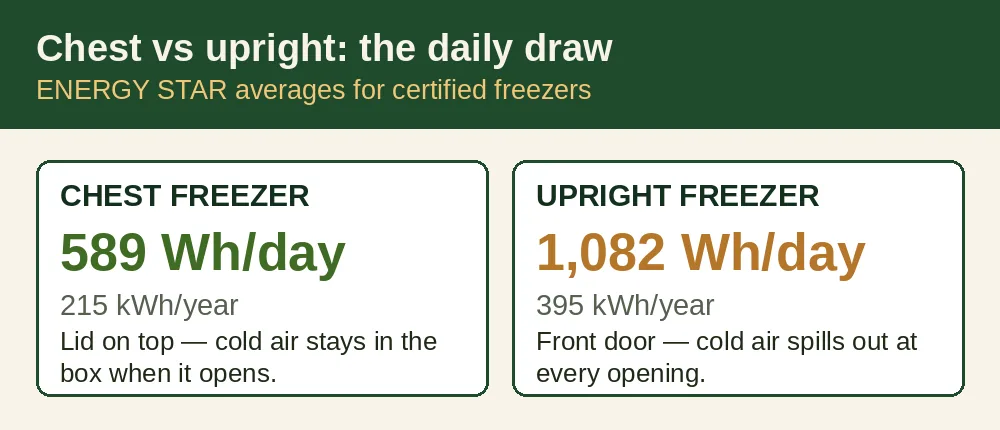
A chest freezer uses far less over a day than its nameplate suggests: ENERGY STAR’s certified chest freezers average 215 kWh a year, about 589Wh a day, because the compressor that draws 100 to 200 watts while it runs only runs part of each hour. Honda’s generator sizing guide puts an ENERGY STAR fridge or freezer at about 132 to 192 running watts — and spread across a full day of cycling on and off, that averages out to roughly 25 watts. An upright freezer is the expensive one: certified uprights average 395 kWh a year, about 1,082Wh a day, nearly double the chest. The door is the reason. A chest freezer’s cold air stays in the box when the lid lifts; an upright spills its cold onto your feet every time it opens, and the compressor pays for it. If you are choosing which freezer gets the battery in a long outage, the chest freezer is the cheapest insurance in the house — and if you are buying a freezer with outages in mind, the chest design is worth roughly an extra day and a half of runtime on the same station.
Can a power station start a freezer, or only keep it running?
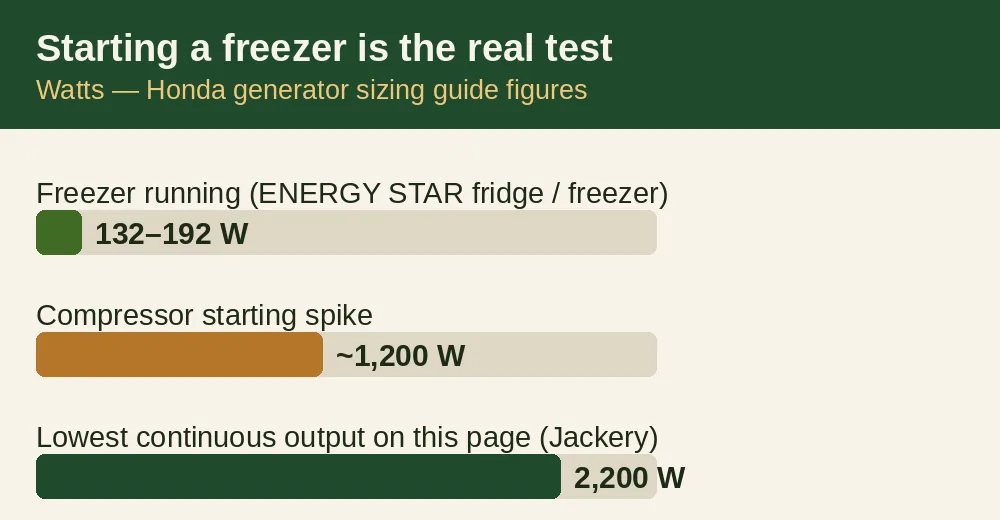
All three stations above can start any home freezer — and starting is the real test, because a freezer’s compressor draws a short spike when it kicks on. Honda’s sizing table lists about 1,200 watts to start an ENERGY STAR fridge or freezer, against running watts of only 132 to 192. A station has to clear that spike every time the compressor cycles, all night. The Jackery’s 2,200W continuous output is the lowest rating here and still clears it with room to spare. Where small stations fail is exactly here: many 500Wh-class boxes surge at 1,200W or less, right at Honda’s figure with no margin, so the freezer starts ten times and fails on the eleventh. If you already own a small station, test it on your freezer on a quiet weekend — an afternoon of cycling tells you more than any spec sheet. Our Power Station Size Calculator runs the same check across your whole outage list.
How long does the food last after the battery dies?
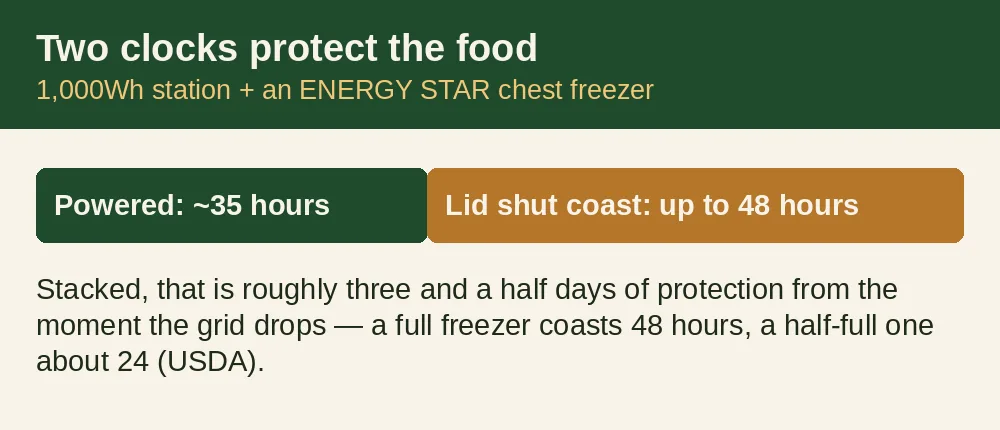
A full freezer keeps food safe for about 48 hours with the lid closed after power stops, and a half-full one about 24 hours — that is USDA food-safety guidance, and it is what makes a freezer the most forgiving load you own. Stack the two clocks and the picture changes: a 1,000Wh station runs a chest freezer for about 35 hours, and when it dies the closed freezer coasts for up to 48 more, so the food is protected for roughly three and a half days from the moment the grid dropped. Two habits protect that second clock. Keep the freezer full — frozen water jugs fill the gaps cheaply, and a full box holds its cold far better than a half-empty one. And do not open the lid to check on things: put an appliance thermometer inside before storm season, and judge by temperature, not by the calendar. Food that still holds ice crystals, or reads 40°F or below, can be refrozen; perishables that sat above 40°F for more than two hours should go.
Does a hot garage change the math?
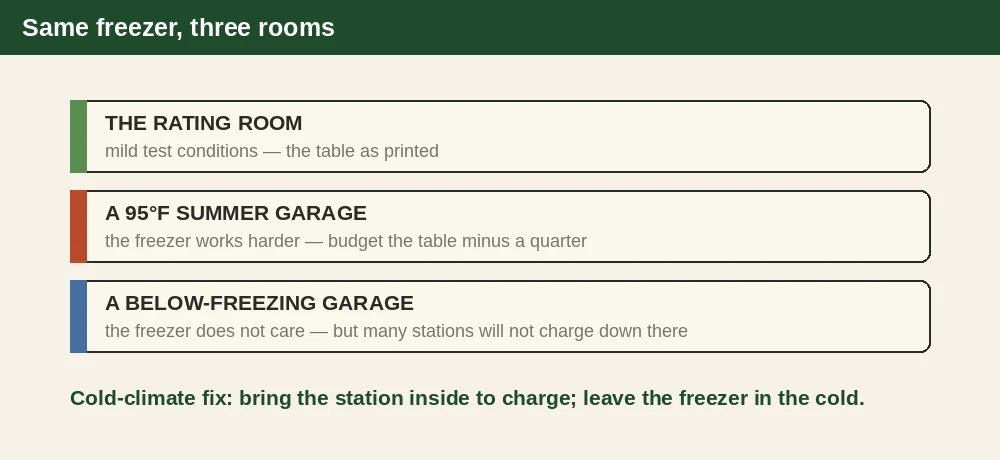
Yes — a freezer in a hot garage works harder than the ENERGY STAR test room assumes, and every extra compressor hour comes straight out of the table’s runtime. Garages are where most chest freezers live, and a Texas or Florida summer garage can sit at 95°F while the rating was measured in a mild room. Budget the table number minus a quarter for a summer outage and you will rarely be disappointed; a winter garage in a cold climate runs the other way, and the freezer may beat the table. The station has a limit of its own in the cold: many power stations will not charge below freezing, so a station that lives in an unheated garage in January may run the freezer fine and then refuse its refill. Bring the station inside to charge, and let the freezer — which does not care — stay in the cold.
Should you run the freezer nonstop, or in bursts?
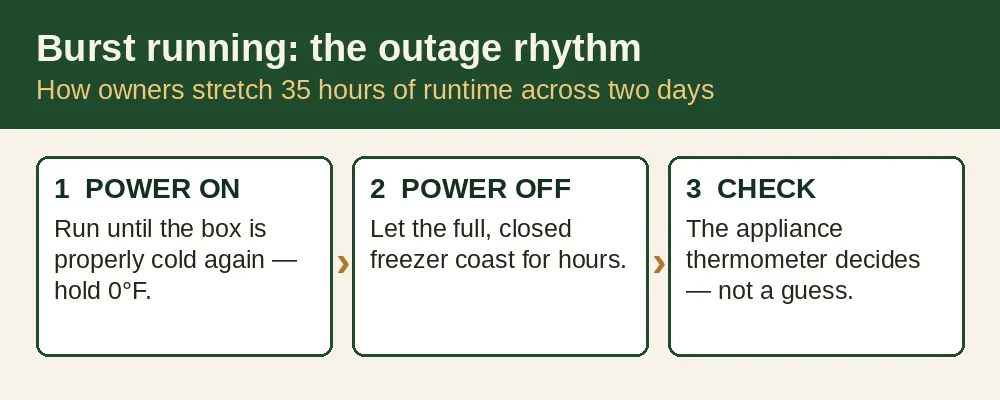
Run it in bursts once the outage stretches past a day: a full freezer coasts for hours at a time with the lid shut, so the rhythm that works is power on until the box is properly cold again, then off while it coasts, with the appliance thermometer telling you the truth instead of a guess. Owners who cycle this way routinely stretch a 1,000Wh station’s 35 hours of chest-freezer runtime across two days of safe food, because the freezer only needs the compressor for a fraction of each day to hold 0°F. Two more habits help. Cool the freezer a few degrees colder than usual while the grid is still up — cold food is stored runtime. And if the outage runs long, this is where a fuel generator still earns its keep: our portable generator picks for fridge and freezer backup cover the boxes that run as long as your stored fuel does.
What does a day of frozen food cost?
There is no fuel and almost no upkeep with any of these three — the honest math is the price per watt-hour and what a day of freezer coverage costs. Per watt-hour: about about 43 cents for the Bluetti Elite 200 V2, about 49 cents for the Jackery Explorer 2000 v2, and about 51 cents for the EcoFlow DELTA 2 Max. Divide each price by its roughly three days of chest-freezer runtime and a day of protection costs about ~$301 with the Bluetti, ~$339 with the Jackery, and ~$354 with the EcoFlow — before the EcoFlow’s expansion path enters it, which is the one route here to a week of freezer coverage without a generator. Set against the alternative — a full chest freezer of meat is easily several hundred dollars of food — even the dearest day on this page is cheap insurance, and it is reusable at every outage for the battery’s rated life: 3,000 to 6,000+ full charges depending on the box.
Honest Caveats
Three things this page will not pretend away. First, every runtime here is EnergyGuide math, not a stopwatch: your freezer’s actual yearly use is printed on its own yellow label, and an older box can use double the ENERGY STAR average — the 600 kWh row in the table is not a scare figure, it is a common garage freezer. Second, the 48-hour coast is a food-safety window with the lid shut, measured from when the food starts warming, not a promise that everything is still rock-hard at hour 47 — the thermometer decides, and food above 40°F for more than two hours goes in the trash however expensive it was. Third, prices on all three stations swing hard with sales — the figures here were checked today, and a holiday sale can move any of them by a couple of hundred dollars in either direction.
Frequently Asked Questions
How long will a 1,000Wh power station run a freezer?
A 1,000Wh station runs an ENERGY STAR chest freezer (about 589Wh a day) for roughly 35 hours, and an ENERGY STAR upright (about 1,082Wh a day) for roughly 19 hours, using the 85% usable-capacity math shown in the table above. When the battery dies, a full closed freezer coasts for up to 48 more hours before the food is at risk.
How long will a 500Wh power station run a freezer?
A 500Wh station runs a chest freezer for about 17 hours and an upright for about 9 hours on paper — but check its surge rating first. Many small stations surge at 1,200W or less, right at the roughly 1,200W a freezer compressor needs to start, so a small box can have the hours and still fail the job.
Can one station run a fridge and a freezer together?
Yes — a 2,000Wh-class station runs a typical fridge and a chest freezer together for roughly a day, because the chest freezer only adds about 589Wh a day to the fridge’s load. In a longer outage, spend the battery on the fridge and let the full freezer coast on its 48-hour closed-lid window; the fridge side gives you only about four hours unpowered.
Which is easier to back up, a chest freezer or an upright?
The chest freezer, by a wide margin: ENERGY STAR’s averages put a certified chest at 215 kWh a year against 395 for a certified upright, so the same station runs the chest about 1.8 times as long. The top-opening lid keeps cold air in the box instead of spilling it at every opening.
How cold does a freezer need to stay in an outage?
A freezer should hold 0°F for frozen storage, and the food-safety line is 40°F: food that still contains ice crystals or reads 40°F or below can be refrozen safely. Perishables held above 40°F for more than two hours should be thrown out — judge by an appliance thermometer inside the box, not by how the food looks or smells.
What size power station do I need for a freezer in a 3-day outage?
For a chest freezer alone, a 2,000Wh-class station covers about three days of powered runtime, and the closed-lid coast covers gaps after that. For an upright, plan on the same station lasting about a day and a half powered — so a 3-day upright plan wants either an expandable station, a solar refill of at least 400W, or burst running with the lid kept shut.
Sources: ENERGY STAR certified freezer averages (chest ~215 kWh/year, upright ~395 kWh/year); USDA Food Safety and Inspection Service power-outage guidance (full freezer ~48 hours, half-full ~24 hours, 40°F rule); Honda generator sizing guide (ENERGY STAR fridge/freezer ~1,200W starting, 132–192W running); manufacturer spec pages for the EcoFlow DELTA 2 Max, Bluetti Elite 200 V2, and Jackery Explorer 2000 v2; aggregated owner feedback from Amazon listings and owner forums. Prices last checked: October 30, 2026. Last updated: October 30, 2026
Talk it over with other readers. The Truly Preserved Community on Facebook is where readers compare notes on food storage, water, and backup power — and where your questions help decide what we research next. Join the group →