
Affiliate Disclosure: Truly Preserved is reader-supported. When you buy through links on this page, we may earn a commission at no extra cost to you. As an Amazon Associate, Truly Preserved earns from qualifying purchases. Read our full affiliate disclosure.
Last updated: October 31, 2026
THE SHORT ANSWER
The water heater, yes — a standard tank holds 30–50 gallons of drinking water that was potable when it went in. Shut the power or gas off, close the inlet valve so contaminated water cannot flow back in, open a hot tap upstairs, and drain from the tank’s spigot; let the first sediment-heavy run go to a bucket for flushing, then filter what you drink. The pool is a different answer: the CDC does not count pool water as drinking water. It is wash-and-flush water. In a true last resort it still has to be filtered and disinfected, and pools treated with algaecide or clarifiers are off the list entirely.
These are the two biggest water sources in most houses, which is why this question follows every outage and boil-water notice. One of them is a genuine reserve hiding in your utility closet. The other is a mirage with a pump attached — useful water, wrong job.
The water heater: your built-in reserve
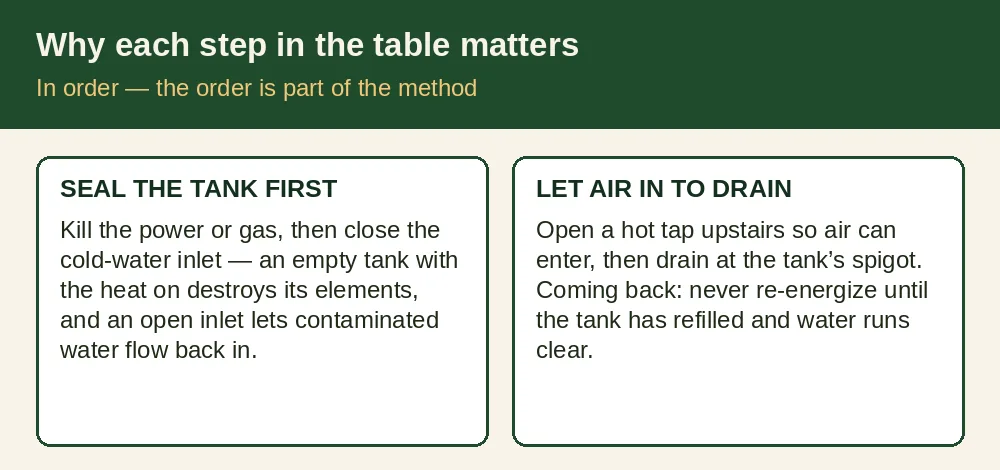
| Step | Do it | Why |
|---|---|---|
| 1 | Kill power at the breaker, or gas to pilot | An empty tank with the heat on destroys its elements |
| 2 | Close the cold-water inlet valve | Seals your clean tank off from a contaminated supply |
| 3 | Open a hot-water tap somewhere upstairs | Lets air in so the tank can drain |
| 4 | Drain at the spigot, first gallon to a bucket | Sediment settles at the bottom and comes out first |
A 40-gallon tank is eighty days of drinking water for one person at the half-gallon-a-day survival floor, or a solid cushion inside the family math in how much water a family of four needs. Treat it like any stored water you did not treat yourself: run drinking water through your filter, and if the outage came with a contamination warning for the supply, disinfect as well — the doses are in our tap water storage page. Tankless heaters, obviously, hold almost nothing — one more reason their owners lean harder on stored containers.
The pool: wash water, not drinking water
- What pool water is good for: flushing toilets, washing, and cleaning — jobs that burn through stored drinking water fast if you let them. A bucket brigade from the pool keeps the plumbing civilized for days.
- Why the CDC keeps it off the drinking list: chlorine levels swing as the water sits, the chemistry includes stabilizers and treatments never meant for a glass, and once the pump stops, a pool is a pond — open to everything the yard offers.
- The last-resort line: if there is genuinely nothing else, filter it and disinfect it like any questionable source — the filter vs purifier line is the one that matters here, because open water can carry viruses a basic filter passes. A pool treated with algaecide, flocculant, or clarifier does not get even the last-resort pass.
- Hot tubs: same family as the pool, worse chemistry per gallon. Wash water at best.
Questions people also ask
What about the water in toilet tanks?
The tank — not the bowl — holds clean supply water, and in a real pinch it is drinkable unless the tank carries a chemical cleaning tablet, in which case it is off the list. It buys about a gallon and a half per bathroom: a bridge, not a supply.
Can I drink rain barrel water if I filter it?
Roof water picks up what the roof holds — the safety answer and the filter standard for it are the same virus-line question covered on the filter vs purifier page. Treat rainwater as a source to purify, not a source to trust.
How long does the water heater trick work after power returns?
Mind the order when things come back: do not re-energize the heater until the tank has refilled completely and water runs clear from a hot tap — the same dry-fire rule as step one, in reverse.
Related questions
- How long can you store tap water — and do you treat or rotate it?
- Can I store water in old milk jugs?
- How much water does a family of four need for two weeks?
This question sits in What People Are Asking About Water Storage — the full list of water-storage questions from real forums, each with a short answer.
Talk it over with other readers
The Truly Preserved Community on Facebook is where readers compare notes on food storage, water, and backup power — and where your questions help decide what we research next.