
Affiliate Disclosure: Truly Preserved is reader-supported. When you buy through links on this page, we may earn a commission at no extra cost to you. As an Amazon Associate, Truly Preserved earns from qualifying purchases. Learn more.
Water Storage — How-To
How Long Can You Store Tap Water — and Do You Treat or Rotate It?
Three of the most-asked water questions in the forums are really one question wearing three hats: how long does stored tap water last, do you treat it before storing, and how often do you rotate it. They collapse into one because the answers lean on each other. Here’s the whole thing in one place, with the doses worked out by container size so nobody has to do drop arithmetic standing at a 55-gallon drum.
THE SHORT ANSWER
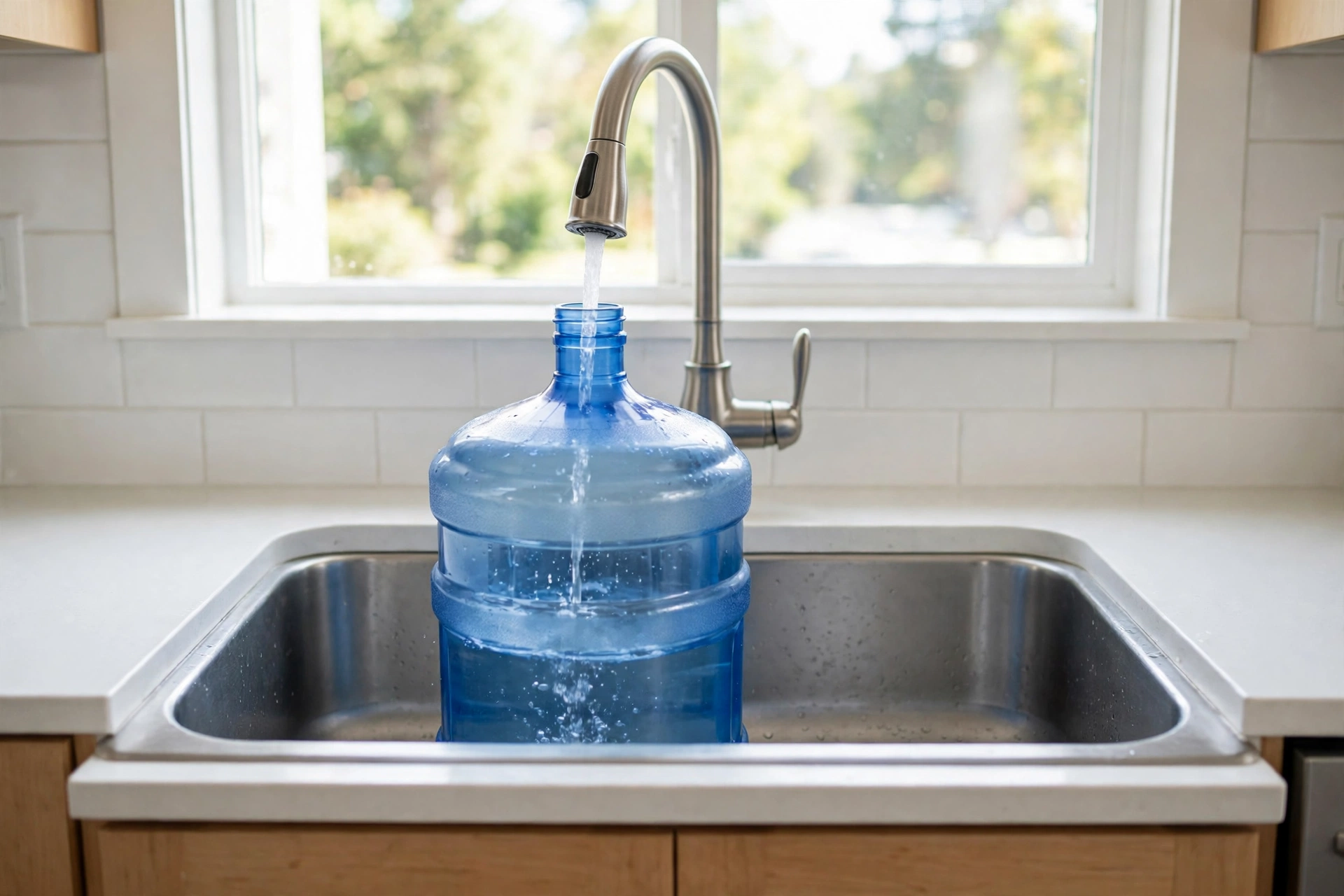
Water you fill yourself keeps six months, then you rotate it — that is the CDC and Ready.gov interval, and it assumes a clean, food-grade container filled from a treated tap. City tap water needs nothing added for those six months. Bleach has two different jobs here, and neither is a routine ingredient: sanitizing the container before you fill it (1 teaspoon of unscented bleach per quart of water) and disinfecting water you’re unsure of (8 drops per gallon, then wait 30 minutes).
Why Six Months
Municipal tap water leaves the plant disinfected, and that protection fades. The chlorine residual that keeps a sealed container quiet dissipates over months, and the CDC and Ready.gov both land on the same interval: replace water you stored yourself every six months. It’s a margin, not a cliff — water doesn’t turn dangerous on day 181 — but the margin is cheap to keep. The easy way to keep it is the one we gave in our two-week water math: tie rotation to the clock changes in spring and fall. Dump the old water on the garden, sanitize the containers, refill, and write the new date on the label.
Store-bought bottled water plays by a different clock. The FDA doesn’t require an expiration date on bottled water and treats properly stored, sealed bottled water as having no set shelf-life limit; the printed date is the maker’s best-by for taste and packaging, usually one to two years. Follow the date on the bottle and keep cases somewhere cool and dark.
Treat or Not?
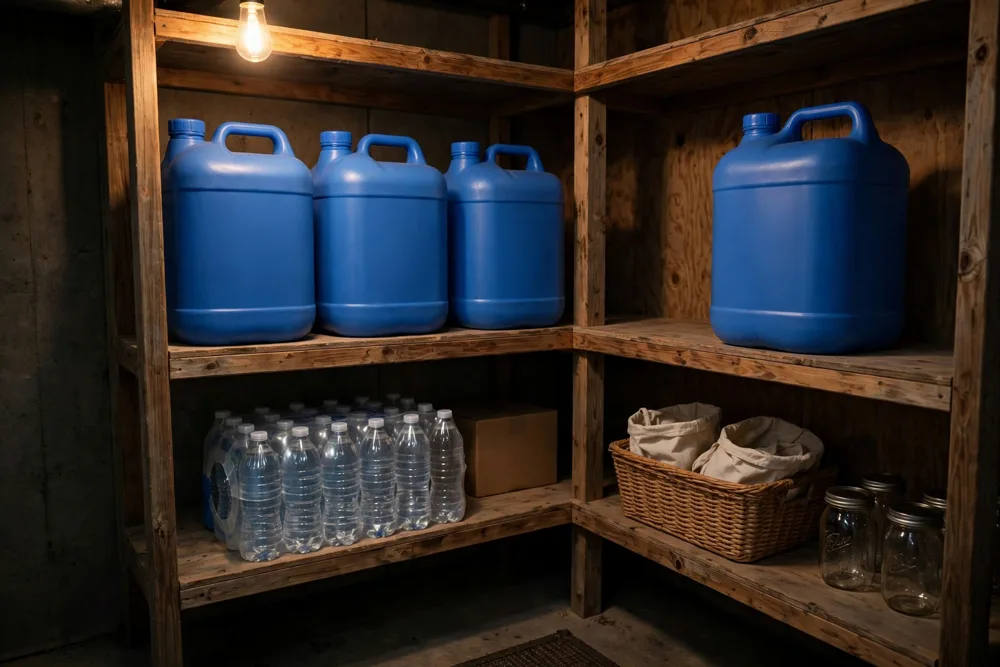
If your tap water comes from a treated municipal supply, the CDC’s storage method adds nothing to it — the treatment is already in the water. Adding bleach “for storage” to clean tap water is the most common unnecessary step in the forums. Bleach earns its place in three situations:
- Sanitizing the container before filling — wash with soap, rinse, then shake a solution of 1 teaspoon unscented household bleach (5–9% sodium hypochlorite) in 1 quart of water so it coats every inside surface, wait at least 30 seconds, pour it out, and air-dry.
- Disinfecting water you’re unsure of — well water, water stored past its rotation, or any water of unknown quality: 8 drops of bleach per gallon for clear water, 16 for cloudy (filter cloudy water through a clean cloth first), stir, and wait at least 30 minutes.
- Well water going into storage — untreated water gets the disinfecting dose above before it goes in the container, not after it has sat.
The one product category you’ll see in the forums is water preserver concentrate, which makers claim keeps treated water safe for up to five years. That is a manufacturer claim, not CDC guidance — the CDC interval for self-filled water stays six months either way. If a preserver stretches your rotation, label it as the claim it is on your own shelf and keep the six-month habit for everything else.
The Doses, by Container
| Container | Drops to disinfect | In kitchen measure |
|---|---|---|
| 1 gallon | 8 drops | About ⅛ teaspoon |
| 5–7 gallon jug | 40–56 drops | About ½–¾ teaspoon |
| 55-gallon drum | 440 drops | About 7 teaspoons (2⅓ tablespoons) |
Those figures are for regular unscented bleach at 5–9% sodium hypochlorite, disinfecting clear water; double them for cloudy water. Concentrated bleach at 8.25% needs slightly less — the CDC’s figure is 6 drops per gallon instead of 8. After dosing, the water should carry a faint chlorine smell after 30 minutes; if it doesn’t, the CDC says repeat the dose and wait 15 more minutes before using it.
The Rotation Schedule, by What You Own
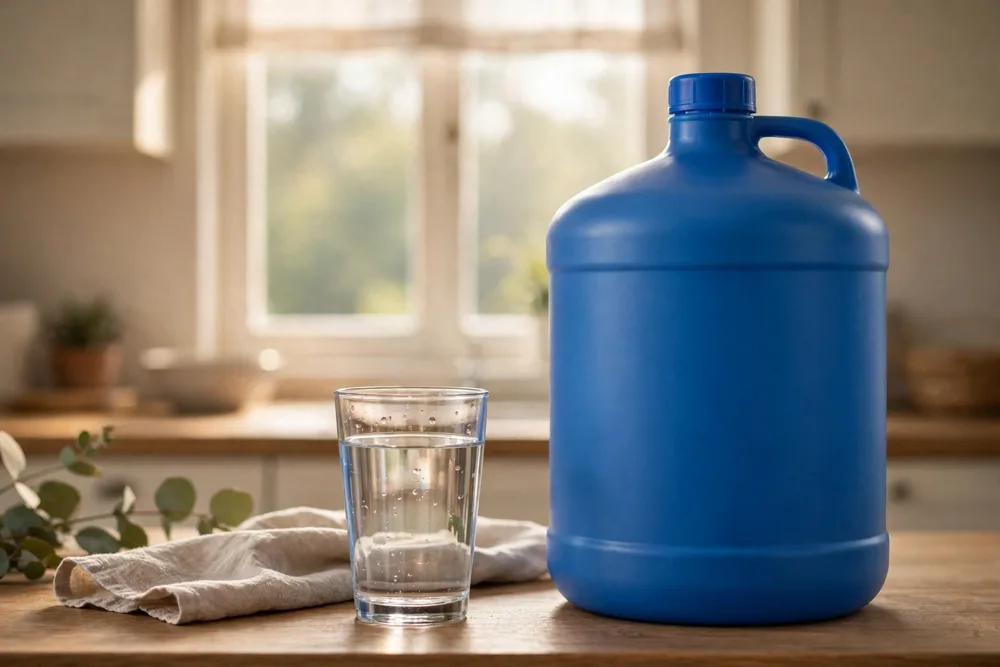
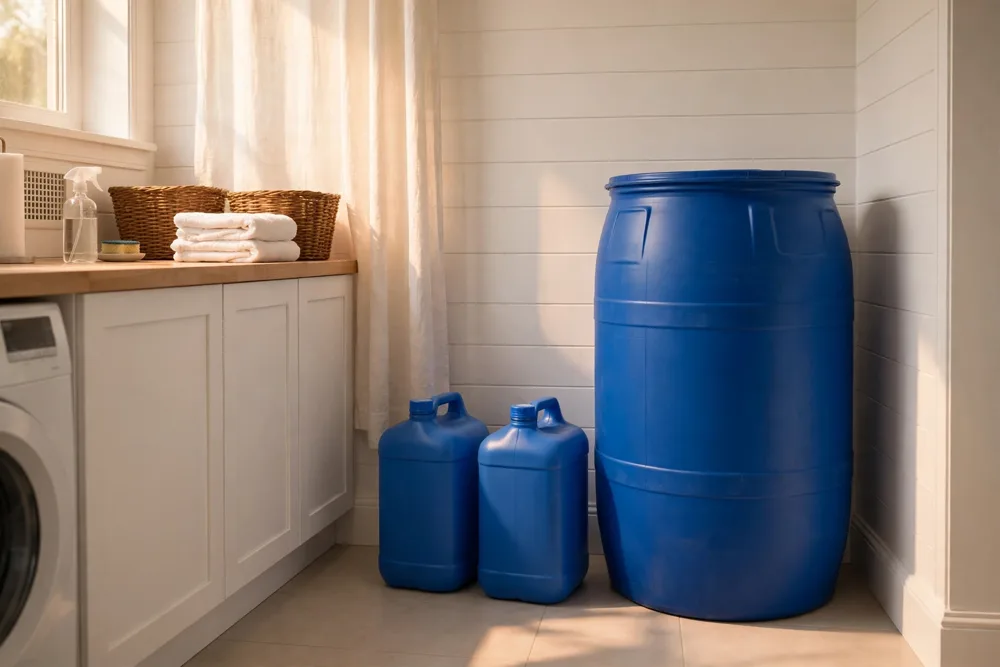
Cases of bottled water: follow the maker’s date, keep them cool and dark, and rotate new cases to the back. Jugs you filled (the 5- and 7-gallon stackables in our containers comparison): six months, dated on the label. A 55-gallon drum you filled: six months by the same CDC interval — the big container doesn’t shrink the guidance, which is why drums are where preserver claims tempt people; decide with your eyes open. Any container that smells of chemicals, or water that’s turned cloudy or green, gets dumped and the container re-sanitized, whatever the calendar says. Store everything at 50–70°F where you can, off bare concrete if it’s a thin jug, and away from gasoline and pesticides — plastic breathes enough to pick up flavors from what sits beside it.
Follow-Up Questions
Can I store water in old milk jugs?
No. Milk jugs are the container every storage guide names to avoid: the thin plastic goes brittle and splits at the seams, and milk protein residue is nearly impossible to wash fully out. Food-grade jugs cost little more and survive years of rotations.
Is the water in my water heater a backup supply?
Yes, with conditions — it’s a tank of municipal water already in the house. Cut the heater’s power or gas first, let the water cool, drain from the bottom valve through a clean cloth to catch sediment, and treat it like stored water of unknown age. Our water questions page covers the pool half of that question, too (short version: flushing and washing, not drinking).
Can I boil old stored water instead of rotating it?
Boiling for one minute (three above 6,500 feet) kills what might have grown in it, and beats drinking it doubtful. But rotation isn’t only about safety — flat, plastic-tasting water that nobody will drink is its own failure. Boiling is the rescue; the six-month rotation is the habit.
Frequently Asked Questions
Does stored water actually expire?
Water itself doesn’t spoil. What expires is the disinfection margin in self-filled containers and the taste of bottled water as its packaging ages. The six-month rule manages the first; the maker’s date manages the second.
I found a jug I filled two years ago. Dump it?
Dumping and refilling is the cheap answer and the one we’d take. If you had to use it, the disinfecting dose — 8 drops per gallon, 30 minutes — is the CDC procedure for water you’re unsure of. Garden first, emergency second.
How do I remember to rotate?
Attach it to something that already happens twice a year: the clock changes, the smoke-alarm battery check, the first cold front. And write the fill date on the container itself — a rotation schedule that lives on a calendar you’ll ignore loses to a date written in marker on the jug.
Last updated: October 27, 2026. Storage and disinfection guidance per the CDC’s emergency water storage publications and Ready.gov. For how much to store in the first place, see How Much Water Does a Family of Four Need for Two Weeks?
This question came from our harvest of what readers ask in the forums. See the rest of the list: What People Are Asking About Water Storage.
Talk it over with other readers
The Truly Preserved Community on Facebook is where readers compare notes on food storage, water, and backup power — and where your questions help decide what we research next.